October 19th

On 19th October 1469, John Fisher was born in Beverley, the eldest son of Robert and Agnes Fisher. Chancellor of Cambridge University, Bishop of Rochester, and chaplain to royalty.  He was executed for treason 22.6.1535 on Tower Hill, for speaking out against Henry VIII’s divorce, and refusing to acknowledge the heirs of Henry and Ann Boleyn as legitimate successors to the throne. A Catholic martyr, he was canonized as St John Fisher.

On 19th October 1781, Rev George Lambert reported in his diary on a very high tide which inundated many houses in Hull.

On 19th October 1826, a Huggate parish jury of 12 men, 2 affearers (assessors of fines) and the pinder, set penalties for anyone allowing cattle into public lanes at night at 2s6d per head, for the first offence, and 5s per head for every offence afterwards; for allowing pigs in the streets without a ring between May Day and Michaelmas 3d per head; for allowing geese in the streets between Old Mayday and Old Lammas, 1s; for allowing anyone to stay who does not have a certificate allowing them to settle, £1 19s 11d.

On 19th October 1890, John Connell, boatman, of Waxholme, in the Coastguard Service, took part in the rescue of crew from the Grimsby vessel Genesta when it ran aground. All were rescued, except the captain, who died of exposure. Connell went on to the vessel as it was breaking up to rescue a man too weak to help himself. Connell was awarded the Humane Society Silver Medal. The unmanned vessel broke free the following day and travelled to Withernsea.

On 19th October 1964, rail passengers took their last trips on the Hull to Withernsea and Hull to Hornsea rail lines, which closed as a result of the Beeching Report. Goods services to Withernsea continued to 30.4.1965, to Hedon 3.5.1965, and to Marfleet to 1972. photo shows part of Hornsea Rail Trail today.
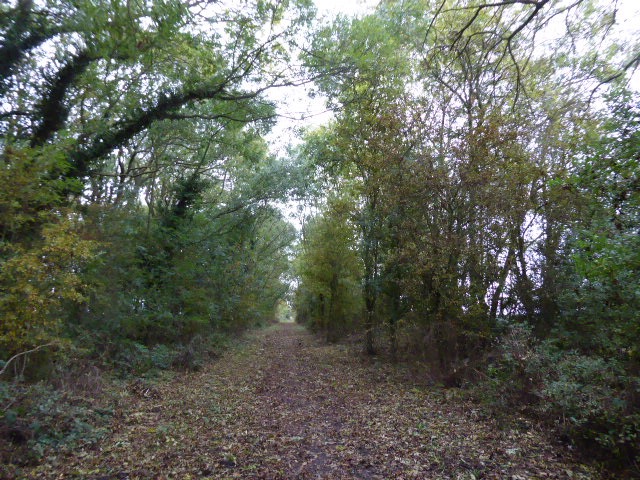
Hornsea Rail Trail


October 11th

ON 11th October 1536, Marmaduke Thomson, vicar of Preston, rang the church bell and called parishioners to meet at Nuthill, where he swore in local men to join the Pilgrimage of Grace. Around 300 Holderness men left to assemble at Sutton Ings. (& see 10.10)

On 11th October 1643, 1500 Parliamentary troops left the besieged town of Hull and after 2 attempts and many hours’ fighting, drove the Royalists out of all their positions around the town.

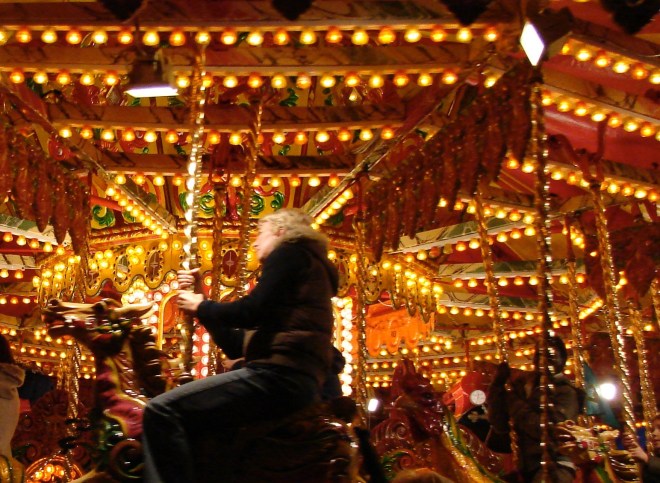
On 11th October 1782, Rev George Lambert described Hull Fair as ‘A season for the amusement of children and the gratification of gluttony’.

On 11th October 1929, Mrs Edith Robson officially opened Hedon Road Maternity Hospital, the successor to the free maternity home for poor mothers, which she gave as a gift, fully equipped, to Hull Corporation in 1915.


fair 07

October 6th

site of Haltemprice Priory

On 6th October 1515, the Sheriff of Hull, Mr Mattison and 200 citizens fought the monks of Haltemprice Priory and threatened to pull down the monastery, over a dispute concerning jurisdiction over Wolfreton and Willerby, and fresh water supplies. Peace was restored by the Mayor of Hull, George Mattison and the issue was eventually resolved in the Star Chamber. One of many incidents in Hull’s ‘water wars’. photo shows site of the monastery.

On 6th October 1613, an enquiry determined that a chantry dedicated to St Mary, and a chaplain to celebrate daily services there, had been paid for by 6 1/4 acres of land, 10 messuages and 3 tofts, given to the town of Hedon by John de Burton and Henry Maupas. Chantries were abolished by Edward VI, along with other signs of Catholicism.

On 6th October 1670, Ann Barone was fined in the Patrington manor court for not making bread according to the assize – i.e. not the regulation size, weight etc.

On 6th October 1748, Mary Jackson, tenant farmer of Everingham, lost 36 of her 45 cattle to rinderpest, the cattle plague then affecting much of the East Riding.

On 6th October 1850, Hedon solicitor James Iveson, died after a long career controlling the political life of Hedon, a Rotten Borough described as ‘Lawyer-ridden’. He was also Town clerk, Mayor, land agent, and steward on behalf of the Constables of the Holderness Seigniory. The Iveson dynasty was involved in land enclosures, surveying and other profitable work. James was renowned for rudeness. Part of an ultra conservative council which for years resisted public health improvements. Collector of architectural remains from demolished churches. Engaged for some 20 years of protracted negotiation with Trinity House over Spurn Point.  portrait in Hedon Town Hall

On 6th October 1890, Chas Collier, aged 17 years, former pupil of Hull Trinity House School, died of typhoid fever in the Barque Miltiades off the west coast of Africa.

James Iveson, Hedon Town Clerk

October 2nd

On 2nd October 1200, King John gave permission for an annual fair at Howden lasting a week; by the 19th Century it had become the biggest horse fair in England, but by 2007 Howden Fair had reduced to a 1-day event.

On 2nd October 1504, Thomas Henrison, husbandman of Skipsea, claimed sanctuary at the church of St John, Beverley, for debt.

On 2nd October 1518, Thomas Weston, a ‘singingman’, from Snaith, claimed sanctuary at the church of St John, Beverley, for debt.

On 2nd October 1541, the Privy Council of England sat in Hull.

On 2nd October 1658, Capt Robert Hildyard of Patrington left £10, half the interest of which was to be used to repair the bell frames, and the other half distributed to the poor for ever. photo shows his memorial in St Mary’s Lowgate, Hull.

On 2nd October 1738, Dick Turpin, alias John Palmer, was arrested for breach of the peace, shooting a gamecock in Brough and threatening to shoot a man. He was held in Beverley, where the JPs committed him to trial at York. It was believed that while living in East Yorkshire posing as a horse dealer, he took frequent trips to Lincolnshire to steal horses. He was hanged in York 7.4.1739. photo – Welton

On 2nd October 1883, Arthur Mallaby Illingworth, aged 7 months, died of scarlet fever. An epidemic had affected Hull since the previous year, killing over 600 people, mostly children under 5.  A brother born the following year, and named Arthur Mallaby Rawnsley Illingworth, died at 18 months, probably of the same cause.


September 30th

On 30th September 1540, King Henry VIII’s commissioners dissolved the priory at Swine.

On 30th September 1541, King Henry VIII took part in (i.e. strongly influenced the outcome of) the Hull mayoral election, and presented the new mayor with his sword.

On 3oth September 1581, Peter Crewe was appointed one of the 2 Hull chamberlains, a week after his fellow aldermen fined him for using faulty weights.

On 30th September 1643, Thomas Raikes, due to stand down after his year as Hull Mayor, was encouraged to stand for a second term, in view of his vigilance on behalf of the town during the events of the Civil War, and in particular the 2nd siege of Hull, which was still ongoing. He was re-elected.

On 30th September 1686, Elizabeth Boyse obtained a licence from Hull town council to sell wine and keep a tavern at her home (described as a mansion house), at the sign of the King’s Head in High Street.

On 30th September 1904, the first of 52 cases of diphtheria were reported in Nafferton; the epidemic killed 7 people, mainly children at the National School.  The school was closed, but infections continued as many local families lived in overcrowded conditions. photo shows modern Nafferton


Nafferton


September 28th

On 28th September 1643, the royalists’ ammunition store at Cottingham blew up, killing Royalist Army’s Firemaster General and 6 others instantly, and destroying nearby houses.

On 28th September 1849, John Ward of Hull, the leading marine artist of his time, died of cholera; one of his paintings, valued at £10k, was stolen from Hull Maritime Museum in 2009 and recovered 3 months later. In 1981 an exhibition of his works was held at the Ferens Art Gallery to coincide with the opening of the Humber Bridge. (b 28.1.1798) photo shows the whalers Swan and Isabella.

John Ward Swan & Isabella

September 27th

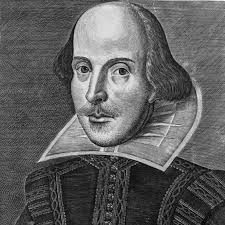
Shakespeare

On 27th September 1599, the Hull Mayor and Aldermen ordered that no Hull resident should attend any play or interlude performed in the town, or risk a fine of 2s6d, and that the owner of any house allowing a play to be performed be fined 20s. It is suggested that the Lord Chamberlain’s Men, Shakespeare’s company, may have paid Hull a visit and performed at the King’s Head, High Street.

On 27th September 1642, the Royalist battery at Paull built for 12 guns in July was destroyed by a bombardment from the Parliamentary ships Lion and Employment; the church was also damaged.

On 27th September 1759, Keith Thomas was baptised in Brandesburton parish church; he later became professor of geography to the Royal household, and published a number of books on mathematics.

On 27th September 1782, less than a year after setting up the Hull General Infirmary charity, funds of £2,876 were raised, enabling a hospital to be opened in temporary premises in George Street (on the site of the Dorchester Cinema)

On 27th September 1813, Altisidora, a filly bred by Richard Watt at Bishop Burton won the St Leger; the village pub is named after her.

September 23rd

On 23rd September 1066, Harold Hardraada, with his Norse troops, fresh from securing York, made his way to Stamford Bridge for a parley with locals about provisions. Instead, he met Harold Godwinson’s army, and he died at the Battle of Stamford Bridge, ‘the most important battle that has ever been fought in England’.

On 23rd September 1581, Hull alderman and merchant Peter Crewe was fined the sum of £1 in 3 instalments for using false weights in selling bales of flax to a merchant called Trewyt of Nottingham and others. (& see 30.9)

On 23rd September 1704, Henry Stork, seaman who served in a man-of-war in the Queen’s Fleet, was buried after 6 months of illness at home in Hutton, after being invalided out of the Navy, fighting in the War of the Spanish Succession, in Europe or in North America. We do not know what he suffered from.

On 23rd September 1779, John Paul Jones, American navy commander, fought the Battle of Flamborough Head: an American squadron attacked a large British merchant convoy and their 2 escort vessels, during the American War of Independence.

On 23rd September 1797, Hull Trinity House paid 18 shillings to Thomas Ward, mate of the Flora, and Thomas Porrell, a seaman, after their ship was captured by the French.

On 23rd September 1897, Frank Percy Bentley, a boy, summoned George Creaser of Nafferton for assault; Creaser pleaded guilty for hitting him ‘once or twice’ with a stick after finding his son and Bentley fighting. The Driffield magistrates also heard at least 6 cases of ‘drunk and disorderly’ behaviour, a case of non-payment of rates and poor rate, a dispute about rates of pay, a summons for allowing horses to stray, a case of begging, and one assault. All despatched before lunch.

stamford bridge3.JPG

September 18th


delapolearmscharterhouse.JPG
Hull’s first blue plaque? On the wall of the Charterhouse.

On 18th September 1415, Michael de la Pole, 2nd Earl of Suffolk, died of disease at Harfleur during Henry V’s military campaign. (Dysentery was a frequent cause of death on military campaigns) He was succeeded by his son Michael, who died in battle at Agincourt.

On 18th September 1470, John de Ferriby in his will left 2 silver salt cellars to the parsons and vicars of Beverley, on condition that they pray every day for his soul.

On 18th September 1664, Theophilus Garlike was found by a Hull jury in the inquest into the death of Gervase Dighton to have killed him in a duel; both men were soldiers in Colonel Gilby’s Company (Dighton a corporal, Garlike a sergeant).

On 18th September 1789, George Thompson, BA, was ordained 27 years after serving as curate in Hollym, Withernsea, Sutton and Wawne, he finally became vicar of St Peter’s, Wawne. He brought in many changes to the music in the church, including the use of fiddles and a singing master to teach new hymns, possibly because of the advances the Methodists were making at this time.

September 16th

On 16th September 1643, an artilleryman with a lighted match blew up the magazine at Hull North blockhouse and killed himself and 4 others.

On 16th September 1698, Robert Prudom established, and was the first pastor of, the first Baptist chapel in East Yorkshire. The building in Applegarth Lane, Bridlington is only 12 feet square. see photo

On 16th September 1829, Dr John Alderson, MD died aged 71, physician to Hull Infirmary from 1795. A polymath, he was one of the founders of the Hull Literary and Philosophical Society, and of the London Geological Society, wrote acclaimed works on fever and paralysis, established Sculcoates Refuge, (which eventually became De la Pole Hospital), and wrote on agriculture, geology, and supernatural apparitions. The funeral of this popular doctor attracted 12-15,000 mourners. He was buried in a family vault at St Mary’s Sculcoates. His statue can be seen on Anlaby Road. (b 1758 Lowestoft)

On 16th September 1846, George Hudson, MP and ‘railway king’ stayed overnight at Sutton on Hull, went to Bridlington Quay for breakfast, back to Hull, then travelled to Northampton. Joseph Robinson Pease marvelled that such a journey within 13 hours would have been unthinkable 20 years before.

Applegarth La chapel