October 24th

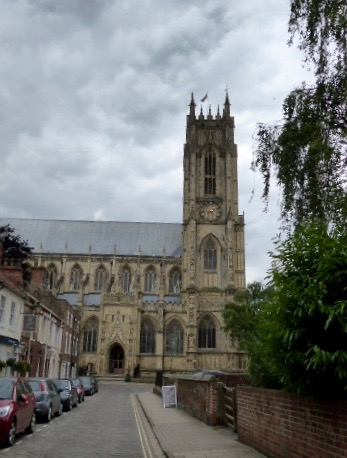
Beverley Minster


On 24th October 1530, at a Coroner’s inquest in Hutton Cranswick over the body of William Aunderson, the jurors reported that John Adayll, a labourer from Driffield, had on 23.10.1530 around 4p.m. assaulted him, with precogitated malice, with an iron fork, killing him instantly. Adayll immediately fled, with the townspeople of Hutton Cranswick pursuing him from town to town, but he escaped to ‘the privilege of Beverley’. Adayll does not appear in the sanctuary register for Beverley, though.

On 24th October 1850, John Branton, lifeboatman, drowned when the lifeboat overturned during the rescue of the brig Cumberland in the Humber near Kilnsea; John Welburn, the mate, was injured and died in 1852 from his injuries. The 9 members of the brig’s crew were rescued. An appeal raised £37 11s 6d for Branton’s widow and 6 children, and the RNLI added £5.

October 22nd

On 22nd October 1517, John Cook, yeoman of Sewerby, claimed sanctuary after assaulting labourer Thomas Stowpes and fled to Flambrough church.  This was not a registered place of sanctuary, but was called ‘taking church’. At a Coroner’s inquest at Sewerby on 5.11.1517, the jurors reported that Cook assaulted Stowpes on 22 Oct, giving him a wound from which he died 3 days later.

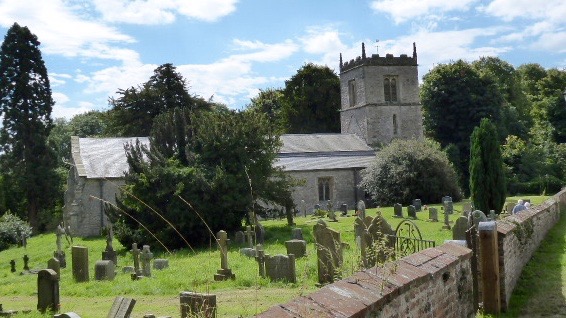
On 22nd October 1611, Lady Margaret Clifford, daughter of the Earl of Cumberland and Thomas Wentworth, future baronet, were married at All Saints, Londesborough. The Earl’s finances were not healthy, due to a protracted legal dispute with Lady Anne Clifford over his inheritance, so the celebrations were low-key, with only 40 in attendance, and a simple dinner of pasties, mince pies and turkey, a speciality of the estate. The artist Augustine Harrison was present, so that the Earl could present his 2 daughters with identical portraits of himself. photo shows Londesbrough church

On 22nd October 1882, William Butler, 16, 4thhand, was lost overboard from Hull trawler Sportsman in the North Sea.

On 22nd October 1972, the new Queen Elizabeth Dock container terminal was opened.


Londesborough


October 14th

On 14th October 1498, Richard Symonde of Beverley claimed sanctuary at the church of St John, Beverley, for debt, to avoid or delay his creditors pursuing him.

On 14th October 1523, Henry Draper, a draper from Snaith, claimed sanctuary at the church of St John for debt.

On 14th October 1654, Elizabeth Roberts of Beverley was charged with witchcraft at York Castle, for attacking John Greencliffe in the forms of a cat and a bee. She seems to have avoided the gallows.

On 14th October 1854, Queen Victoria visited Hull, to huge celebrations; she knighted the Mayor, Sir Henry Cooper, at the pier. In the group of worthies welcoming her were Lord Hotham and Robert Raikes, descendants of the Hull Governor and Mayor who shut the gates against King Charles I.  Joseph Robinson Pease in his diary said ‘Hull has now wiped off the disgrace of 200 years’.

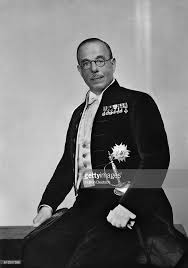
On 14th October 1869, Joseph Duveen was born in English Street, Hull. He became the greatest art dealer of his time, possibly of all time. He was knighted, eventually becoming Lord Duveen, and was made a freeman of Hull in 1929. He sold European Old Masters to the US. Donated works to the Ferens Gallery, British Museum, National Gallery and Tate Gallery. Died 1939.


lord duveen

October 9th

On 9th October 1487, John Kape, husbandman of Kilham, confessed to killing Thomas Holme, labourer, with a dagger, and claimed sanctuary in the church of St John, Beverley.

On 9th October 1830, the whaler Abram was the first of the Hull fleet to return to port after a disastrous season in which 6 Hull ships were lost, and 15 from other ports.  Capt Edward Dannatt of the Progress reported the loss of his ship and the others. Most of those which returned in October and November had very poor catches.

On 9th October 1929, fire officers were called out to a fire at Howden Minster, thought to be arson. They had no access to a water supply, and had to use the moat in the Ashes Park. All 8 bells fell from the tower and had to be recast.

On 9th October 1953, Fred Elwell was made an honorary freeman of Beverley for his contribution to art. Several of his works are in Beverley Treasure House.

Fred Elwell

October 2nd

On 2nd October 1200, King John gave permission for an annual fair at Howden lasting a week; by the 19th Century it had become the biggest horse fair in England, but by 2007 Howden Fair had reduced to a 1-day event.

On 2nd October 1504, Thomas Henrison, husbandman of Skipsea, claimed sanctuary at the church of St John, Beverley, for debt.

On 2nd October 1518, Thomas Weston, a ‘singingman’, from Snaith, claimed sanctuary at the church of St John, Beverley, for debt.

On 2nd October 1541, the Privy Council of England sat in Hull.

On 2nd October 1658, Capt Robert Hildyard of Patrington left £10, half the interest of which was to be used to repair the bell frames, and the other half distributed to the poor for ever. photo shows his memorial in St Mary’s Lowgate, Hull.

On 2nd October 1738, Dick Turpin, alias John Palmer, was arrested for breach of the peace, shooting a gamecock in Brough and threatening to shoot a man. He was held in Beverley, where the JPs committed him to trial at York. It was believed that while living in East Yorkshire posing as a horse dealer, he took frequent trips to Lincolnshire to steal horses. He was hanged in York 7.4.1739. photo – Welton

On 2nd October 1883, Arthur Mallaby Illingworth, aged 7 months, died of scarlet fever. An epidemic had affected Hull since the previous year, killing over 600 people, mostly children under 5.  A brother born the following year, and named Arthur Mallaby Rawnsley Illingworth, died at 18 months, probably of the same cause.


September 26th

On 26th September 1480, Elizabeth Beauwmont, gentlewoman of Hedon, and Robert Beauwmont, clerk of Almondbury, sought sanctuary in the church of St John, Beverley,  for the death of Thomas Aldirlay of Almondbury, killed by them on 5 Oct 1479. (We do not know the relationship between the 2 )

On 26th September 1643, Col Oliver Cromwell and Lord Willoughby crossed the Humber to view the defence of Hull for themselves, and took some of the cavalry back with them, horses being of limited use in the besieged town.

On 26th September 1649, Marmaduke Richardson of Pocklington was hanged at York Castle for praying publicly before his sermon for Charles II, King of Scotland and heir apparent. (Prince of Wales).

On 26th September 1794, John Magnus, a Dane, was buried at Blacktoft after drowning in the Humber and washing up at Thornton Land.

On 26th September 1917, L/Cpl Thomas Edgar Borrill, 20, former Reckitt’s employee,  died on active service with the Sherwood Foresters. He has no known grave.

Oliver Cromwell


September 20th

On 20th September 1188, St John’s church at Beverley and most of the town were damaged by fire. St John’s remains were not found until 1197.

On 20th September 1535, John Colynson and Thomas Savage, yeomen of Holme on Spalding Moor were declared outlaws after spending more than a year in sanctuary in Ripon. They sought sanctuary in 1534, confessing to stealing a horse. Savage confessed to the murder of Amery Burdett, but Colynson did not confess, though a coroner’s jury found them both responsible, and indicted others as accessories.

On 20th September 1769, Felice de Giardini, famous violinist, played at the start of a 3-day festival to celebrate the installation of the new organ at Beverley Minster, the first festival of its type in the north of England. New music by Handel was performed, including the recently completed Messiah; tickets were 2s6d and 5s.

On 20th September 1779, Mr Foster, Bridlington quay master, reported that John Paul Jones’ American squadron of ships had attacked a large fleet of colliers and ran them into the harbour.

On 20th September 1813, Thomas Nutbrown was born in Eastrington.  Probably the same person who, aged 14 in 1828, applied to the Howden poor relief officers for some new clothes, and was granted a second hand coat. He died aged 72 in Leeds Township, Quebec, Canada, on 25 Sept 1885.

On 20th September 1883, Rev Edward Cragg Haynes died aged 62 in Swinefleet, after serving there for 32 years. Born in Barbados, classed as ’free coloured’, had links to the Clapham Sect. Set up a Grammar School in Swinefleet attended among others by Joseph Rank. (christened 3.6.1821)

On 20th September 1902, Stevie Smith was born Florence Margaret Smith in Hull. Poet and novelist, most famous for ‘Not waving but drowning’. D 7.3.1971 see photo

On 20th September 1903, Annie Marshall, 16, domestic servant, from Lissett, was raped, shot twice, suffocated with grass and thrown in the river at Scampston by Charles William Ashton, 19, of Cottingham, farmhand.  Ashton knew her well. He was found guilty of murder and hanged at Hull Prison on 11thDecember the same year.

On 20th September 1954, the Selby to Driffield rail line was closed for regular passenger traffic, a service of one regular non stop train each way plus occasional summer excursions ran until June 1965. The line was abandoned after the last freight train ran later that year.

On 20th September 1955, Robert Greenwood Tarran, of the Wolds, Beverley High Road, Hull, died aged 63. Civil engineering contractor, and founder of Tarran Industries Ltd, former Sheriff of Hull, and chief Air Raid Warden during WW2. He moved the Wilberforce monument, at his own expense, and was responsible for building 20,000 prefabs after the war. He was also suspected of complicity in profiting from deals over council land in Endike Lane, in a law case during which his colleague Digby Willoughby committed suicide.
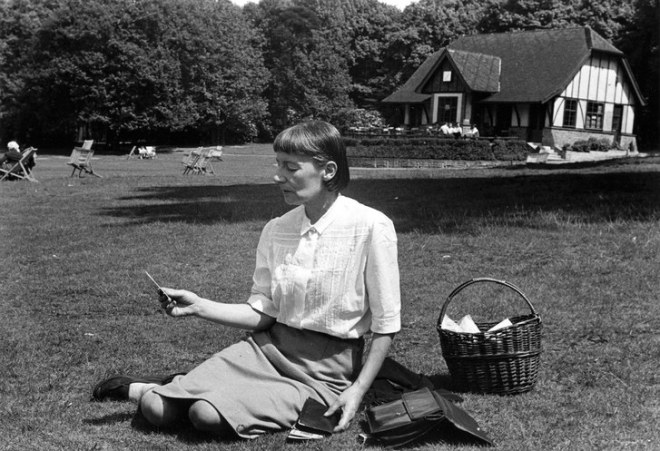
StevieSmith

September 19th

On 19th September 1069, Northumbrians (incl Morcar and Edwin) with help of Danes besieged York and took Sir Wm Mallet hostage; in retaliation, William razed York to the ground and began the Harrying of the North. In effect, this was ethnic cleansing; some villages in the East Riding were still worth a fraction of their value 20 years later, or simply described as ‘waste’.

On 19th September 1532, William Orrell, a gentleman from Hull, was recorded as having been in the sanctuary of Westminster Abbey for about a year.  He had confessed to murdering Hull merchant John Lownde and was involved in complex legal questions as to whether he was an outlaw or not. He lobbied the King for restoration of his properties and positions, and by the 1540s was described as a gentleman of the King’s household.

On 19th September 1576, orders were given by Mayor and aldermen in York that the  house and shop of Gregory Burgess, physician & apothecary, should be shut up, probably because he had moved to Hull the previous year to treat people suffering from plague; and that he should be banned from entering York until further orders.

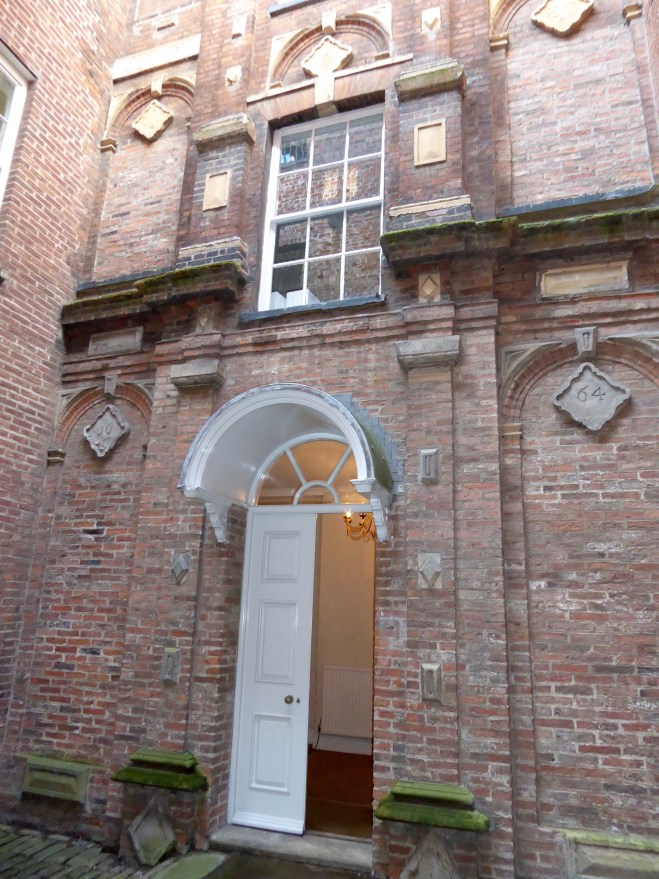
On 19th September 1674, bricklayer/builder William Catlyn, was elected Sheriff of Hull, but petitioned the town, pleading that his work took him to Lincolnshire, and he was unable to carry out the post. His petition seems to have succeeded, but he eventually became sheriff in 1683. Catlyn was responsible for building Wilberforce House, Crowle House, the Charterhouse and Master’s House (1628-1709). Brother of John Catlyn, Master of Hull Grammar School. photo shows Crowle House

On 19th September 1935, Herbert Morrison MP, and later High Steward of Hull, officially opened Queens Gardens, formed after the Queen’s Dock was closed in 1930. On the same day, the Wilberforce Monument, which had been moved from Monument Bridge, was rededicated by Wilberforce’s great granddaughter, Mrs Arnold Reckitt (nee Ann Barbara Wilberforce). Another relative of Morrison’s, Lord Peter Mandelson, later became High Steward of Hull.Crowle House

September 13th

On 13th September 1420, Sir Gerard Usflete III and his wife Elizabeth, Duchess of Norfolk, had no surviving children. His will said that all his lands and tenements in Swanland and Ousefleet should be sold and the proceeds distributed to the poor. In return, the poor were to pray for his soul every year. He fought at Agincourt, was an associate of the De la Poles, and was Sheriff of Yorkshire. Buried at North Ferriby.

On 13th September 1512, Christopher Person, mercer of Routh, claimed sanctuary at the church of St John, Beverley,  for debt.


Beverley Minster

September 2nd

On 2nd September 1643, the Royalists under the Earl of Newcastle began the second siege of Hull. The Governor, Lord Ferdinand Fairfax, sold silver to the value of £400 4s to Hull Trinity House, in order to pay his soldiers. Trinity House sold the silver the following year at a slight profit.

On 2nd September 1861, the lease on Fishwicks’ Mill, butt Lane, Beverley, had expired, and the mill was demolished. The Council tried to repossess the land, but local people considered it to be common land, and 25-30 rioters destroyed the house and burnt it to the ground.

On 2nd September 1871, William (Billy) Ringrose was born in Ganton, where he became a carpenter, but was coached by a cricket professional employed by the Legard family at the Hall, and became a renowned professional cricketer, playing for 57 games for Yorkshire.

On 2nd September 1922, Hull Kingston Rovers played its first game at its new ground, Craven Park, losing 3-0 to Wakefield. The new grounds also had 14 tennis courts, and meeting rooms. The official opening did not take place until November. This was the club’s 4thground, the first 2 being in West Hull.

On 2nd September 1950, MV Dundalk Bay arrived in Hull from Mombasa, bringing 1,014 people displaced by WW2. After processing, they were dispersed to various camps throughout the UK. Many Poles, Latvians, Lithuanians and others unable to return to their homes came to find work and settle in England; some emigrated again to Canada.

On 2nd September 1967, the Flamborough lifeboat Friendly Forester rescued 6 people cut off by the tide.

Old Craven Park EAW207783