October 22nd

On 22nd October 1517, John Cook, yeoman of Sewerby, claimed sanctuary after assaulting labourer Thomas Stowpes and fled to Flambrough church.  This was not a registered place of sanctuary, but was called ‘taking church’. At a Coroner’s inquest at Sewerby on 5.11.1517, the jurors reported that Cook assaulted Stowpes on 22 Oct, giving him a wound from which he died 3 days later.

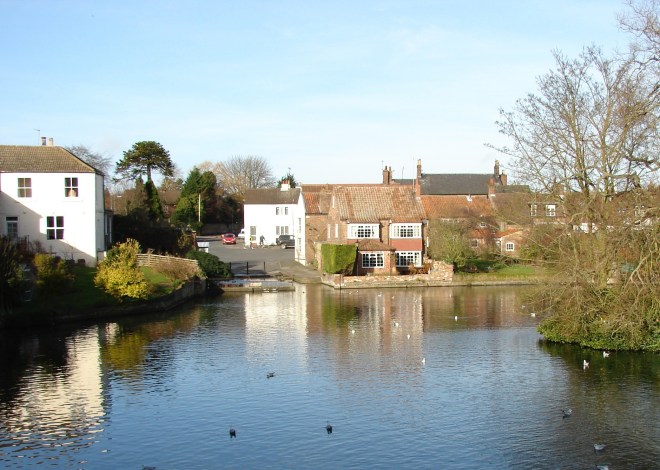
On 22nd October 1611, Lady Margaret Clifford, daughter of the Earl of Cumberland and Thomas Wentworth, future baronet, were married at All Saints, Londesborough. The Earl’s finances were not healthy, due to a protracted legal dispute with Lady Anne Clifford over his inheritance, so the celebrations were low-key, with only 40 in attendance, and a simple dinner of pasties, mince pies and turkey, a speciality of the estate. The artist Augustine Harrison was present, so that the Earl could present his 2 daughters with identical portraits of himself. photo shows Londesbrough church

On 22nd October 1882, William Butler, 16, 4thhand, was lost overboard from Hull trawler Sportsman in the North Sea.

On 22nd October 1972, the new Queen Elizabeth Dock container terminal was opened.
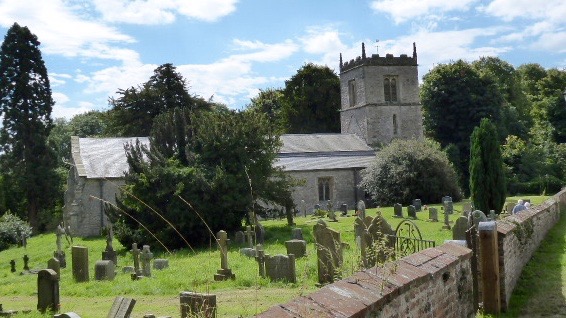
 

Londesborough


October 19th

On 19th October 1469, John Fisher was born in Beverley, the eldest son of Robert and Agnes Fisher. Chancellor of Cambridge University, Bishop of Rochester, and chaplain to royalty.  He was executed for treason 22.6.1535 on Tower Hill, for speaking out against Henry VIII’s divorce, and refusing to acknowledge the heirs of Henry and Ann Boleyn as legitimate successors to the throne. A Catholic martyr, he was canonized as St John Fisher.

On 19th October 1781, Rev George Lambert reported in his diary on a very high tide which inundated many houses in Hull.

On 19th October 1826, a Huggate parish jury of 12 men, 2 affearers (assessors of fines) and the pinder, set penalties for anyone allowing cattle into public lanes at night at 2s6d per head, for the first offence, and 5s per head for every offence afterwards; for allowing pigs in the streets without a ring between May Day and Michaelmas 3d per head; for allowing geese in the streets between Old Mayday and Old Lammas, 1s; for allowing anyone to stay who does not have a certificate allowing them to settle, £1 19s 11d.

On 19th October 1890, John Connell, boatman, of Waxholme, in the Coastguard Service, took part in the rescue of crew from the Grimsby vessel Genesta when it ran aground. All were rescued, except the captain, who died of exposure. Connell went on to the vessel as it was breaking up to rescue a man too weak to help himself. Connell was awarded the Humane Society Silver Medal. The unmanned vessel broke free the following day and travelled to Withernsea.

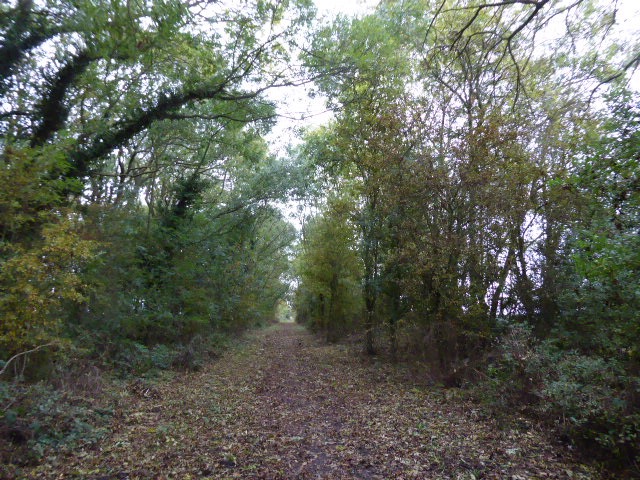
On 19th October 1964, rail passengers took their last trips on the Hull to Withernsea and Hull to Hornsea rail lines, which closed as a result of the Beeching Report. Goods services to Withernsea continued to 30.4.1965, to Hedon 3.5.1965, and to Marfleet to 1972. photo shows part of Hornsea Rail Trail today.

Hornsea Rail Trail


October 16th

john de sutton


On 16th October 1312, John de Sutton of Sutton-on-Hull was listed with other followers of the Earl of Lancaster as pardoned for his part in the death of Piers Gaveston, King Edward II’s favourite and Lord of Holderness. photo of Sutton church

On 16th Ocotber 1617, John Gildas confessed to the Patrington Manor Court that he had 3 times stolen barley and beans from Mr Hall’s (the rector) tithe barn.

On 16th October 1763, Ann Chameron was buried in Hutton with no ceremony, as she was a Catholic. Burial by a Catholic priest would have incurred a £20 fine.

On 16th October 1939, New Theatre (Hull) Limited, Kingston Square, opened with a production of “Me and my Girl’ by Noel Gay.


October 14th

On 14th October 1498, Richard Symonde of Beverley claimed sanctuary at the church of St John, Beverley, for debt, to avoid or delay his creditors pursuing him.

On 14th October 1523, Henry Draper, a draper from Snaith, claimed sanctuary at the church of St John for debt.

On 14th October 1654, Elizabeth Roberts of Beverley was charged with witchcraft at York Castle, for attacking John Greencliffe in the forms of a cat and a bee. She seems to have avoided the gallows.

On 14th October 1854, Queen Victoria visited Hull, to huge celebrations; she knighted the Mayor, Sir Henry Cooper, at the pier. In the group of worthies welcoming her were Lord Hotham and Robert Raikes, descendants of the Hull Governor and Mayor who shut the gates against King Charles I.  Joseph Robinson Pease in his diary said ‘Hull has now wiped off the disgrace of 200 years’.

On 14th October 1869, Joseph Duveen was born in English Street, Hull. He became the greatest art dealer of his time, possibly of all time. He was knighted, eventually becoming Lord Duveen, and was made a freeman of Hull in 1929. He sold European Old Masters to the US. Donated works to the Ferens Gallery, British Museum, National Gallery and Tate Gallery. Died 1939.


lord duveen

October 13th

Wm Bradley


On 13th October 1593, Oswold Ridinge, Robert Greene, William Giltencrosse, Steven Gedney, and William Deane were all before Patrington Manor Court for making affray, upon each other, and upon Thomas Blenckarne, and drawing blood of Oswold Ridinge; fined 3 shillings and 4 pence.

On 13th October 1743, William Wilberfoss Smith III died aged 75 Wrightstown, Bucks County, Province of Pennsylvania, USA. Emigrated from Weighton, Yorkshire in 1684 as an indentured servant to William Penn, and in 1686 built a cabin which is considered to be the oldest continuously occupied home in the United States.

On 13th October 1799, Rev George Lambert was called to pray with a Hull woman who had been in labour for several days, and treated by 4 surgeons who could not deliver the baby. She died.

On 13th October 1815, William Bradley, the Yorkshire Giant,  printed handbills inviting visitors to see him at 15 Queen Street, Hull during Hull Fair for a shilling.

On 13th October 1857, John Johnson, chimney sweep, was fined £5 or 7 days in prison at Beverley Magistrates Court, for employing a boy of 13 to go up a chimney in the house of Wilberforce Herdsman. Employing under 21s as sweeps was not finally outlawed nationally until 1875. Legislation in 1840 set the minimum age at 16, but was rarely enforced.

On 13th October 1859, the Theatre Royal, Humber Street, Hull, burnt down just 10 days after re-opening following a fire in September.

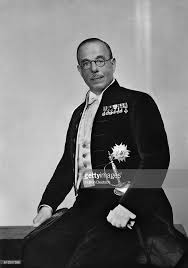
On 13th October 1926, in a 2-day visit to Hull, HRH Prince of Wales laid the foundation stone of the Ferens Art Gallery, visited HERIB and other factories and institutions, and took a trip on the Humber in SS Brocklesby. At Craven Park, 10,000 schoolchildren sang for him. Crowds were estimated at 200,000. this interesting clip begins with a reference to the West Riding, but stick with it, Hull is definitely there. https://www.youtube.com/watch?v=YQhZrcaMUuo

October 2nd

On 2nd October 1200, King John gave permission for an annual fair at Howden lasting a week; by the 19th Century it had become the biggest horse fair in England, but by 2007 Howden Fair had reduced to a 1-day event.

On 2nd October 1504, Thomas Henrison, husbandman of Skipsea, claimed sanctuary at the church of St John, Beverley, for debt.

On 2nd October 1518, Thomas Weston, a ‘singingman’, from Snaith, claimed sanctuary at the church of St John, Beverley, for debt.

On 2nd October 1541, the Privy Council of England sat in Hull.

On 2nd October 1658, Capt Robert Hildyard of Patrington left £10, half the interest of which was to be used to repair the bell frames, and the other half distributed to the poor for ever. photo shows his memorial in St Mary’s Lowgate, Hull.

On 2nd October 1738, Dick Turpin, alias John Palmer, was arrested for breach of the peace, shooting a gamecock in Brough and threatening to shoot a man. He was held in Beverley, where the JPs committed him to trial at York. It was believed that while living in East Yorkshire posing as a horse dealer, he took frequent trips to Lincolnshire to steal horses. He was hanged in York 7.4.1739. photo – Welton

On 2nd October 1883, Arthur Mallaby Illingworth, aged 7 months, died of scarlet fever. An epidemic had affected Hull since the previous year, killing over 600 people, mostly children under 5.  A brother born the following year, and named Arthur Mallaby Rawnsley Illingworth, died at 18 months, probably of the same cause.


September 30th

On 30th September 1540, King Henry VIII’s commissioners dissolved the priory at Swine.

On 30th September 1541, King Henry VIII took part in (i.e. strongly influenced the outcome of) the Hull mayoral election, and presented the new mayor with his sword.

On 3oth September 1581, Peter Crewe was appointed one of the 2 Hull chamberlains, a week after his fellow aldermen fined him for using faulty weights.

On 30th September 1643, Thomas Raikes, due to stand down after his year as Hull Mayor, was encouraged to stand for a second term, in view of his vigilance on behalf of the town during the events of the Civil War, and in particular the 2nd siege of Hull, which was still ongoing. He was re-elected.

On 30th September 1686, Elizabeth Boyse obtained a licence from Hull town council to sell wine and keep a tavern at her home (described as a mansion house), at the sign of the King’s Head in High Street.

On 30th September 1904, the first of 52 cases of diphtheria were reported in Nafferton; the epidemic killed 7 people, mainly children at the National School.  The school was closed, but infections continued as many local families lived in overcrowded conditions. photo shows modern Nafferton


Nafferton


September 29th

On 29th September 1541, King Henry VIII stayed overnight with the Earl of Northumberland at Leconfield.

On 29th September 1638, the Council in the North wrote to the East Riding Commissioner for Sewers at Hedon complaining of the ruinous condition of the banks of the Humber in Drypool.

On 29th September 1829, some postboys were watering the Archbishop of York’s horses at Bar Dyke, Beverley (next to North Bar) after a trip to Rise; one fell in and was saved from drowning by 2 young men. One of the horses dropped dead, whether from exertion or from drinking the dirty water, the Hull Advertiser did not say.

On 29th September 1947, interpreter Sergeant Wadey, and Sgt Cramer were both killed, together with 7 German prisoners of war, when the Army truck they were driving crashed through the railway crossing gates, and stopped on the track in the path of a train heading for Bridlington. 19 other POWs were injured. They were being transported from POW camp 250 at Thorpe Hall, Rudston.

b.agnes level crossing

September 26th

On 26th September 1480, Elizabeth Beauwmont, gentlewoman of Hedon, and Robert Beauwmont, clerk of Almondbury, sought sanctuary in the church of St John, Beverley,  for the death of Thomas Aldirlay of Almondbury, killed by them on 5 Oct 1479. (We do not know the relationship between the 2 )

On 26th September 1643, Col Oliver Cromwell and Lord Willoughby crossed the Humber to view the defence of Hull for themselves, and took some of the cavalry back with them, horses being of limited use in the besieged town.

On 26th September 1649, Marmaduke Richardson of Pocklington was hanged at York Castle for praying publicly before his sermon for Charles II, King of Scotland and heir apparent. (Prince of Wales).

On 26th September 1794, John Magnus, a Dane, was buried at Blacktoft after drowning in the Humber and washing up at Thornton Land.

On 26th September 1917, L/Cpl Thomas Edgar Borrill, 20, former Reckitt’s employee,  died on active service with the Sherwood Foresters. He has no known grave.

Oliver Cromwell


September 24th

On 24th September 1298, an inquisition was held by the Court of Chancery into Sir Osbert de Spaldington’s goods and lands, which were taken by the king. As recently as 1296, Edward had made him Governor of Berwick, when he received Robert the Bruce and imprisoned Sir William Douglas. It is not known what the allegations against him were, and he recovered most of his land by 1300, after living on the generosity of others in the meantime.

On 24th September 1401, Pope Boniface IX declared John of Bridlington a saint. John was born in Thwing, had been the Prior of Bridlington and died of the plague in 1379, aged 59. 15 miracles are recorded during his life, and 12 after his death, including saving the lives of 5 Hartlepool fishermen caught in a storm. photo shows Brid Priory church

On 24th September 1678, the wife of Thomas Richardson of Wyton died and was buried in the Quaker cemetery in Sutton.

On 24th September 1779, Lord Rockingham, High Steward of Hull, chaired a public meeting in Hull Town Hall at which it was decided that 20 18-lb guns and military equipment due to be sent to Woolwich should be used instead to defend Hull from the threat of American attack. A few days later, the threat reduced when the Americans sailed for Holland.

On 24th September 1830, Hull gunsmith Thomas Rosindale was convicted of vagrancy, having been found in the kitchen of the dwelling house of Charles Frost of Albion St. He was sent to Sculcoates House of Correction for 1 month’s hard labour.

On 24th September 1832, Mr J. Dunn caught a 17lb trout near Driffield.


Brid Priory church