October 27th

On 27th October 1720, Ann Watson, nee Headon, of White House, Stoneferry, left her estate at Stoneferry for a hospital for widows or daughters of clergymen, old maids, and for a school. In Sutton she left 26s p.a. to distribute bread to the poor who attended divine service that day.  She left several other bequests in different parishes; Ann Watson Street is later named for her; she is buried in Hedon, and has memorials there and in St James Church, Sutton.

On 27th October 1849, Hull Trinity House purchased chalkstone to protect the Spurn lifeboat cottages from the sea, as high tides and gravel extraction had greatly damaged the Point.

On 27th October 1907, Charles Henry Wilson died aged 74 at Warter Priory. Son of the founder of the Wilson Line, he was MP for Hull, then Hull West, a JP, and High Sheriff of Hull. He paid for the Seaman’s Mission in Posterngate (now the Mission pub). Deputy Lieutenant of the East Riding, he became the 1stLord Nunburnholme in 1906. photo shows part of his memorial in Warter church.

Chas Wilson Nunburnholme

October 16th

john de sutton


On 16th October 1312, John de Sutton of Sutton-on-Hull was listed with other followers of the Earl of Lancaster as pardoned for his part in the death of Piers Gaveston, King Edward II’s favourite and Lord of Holderness. photo of Sutton church

On 16th Ocotber 1617, John Gildas confessed to the Patrington Manor Court that he had 3 times stolen barley and beans from Mr Hall’s (the rector) tithe barn.

On 16th October 1763, Ann Chameron was buried in Hutton with no ceremony, as she was a Catholic. Burial by a Catholic priest would have incurred a £20 fine.

On 16th October 1939, New Theatre (Hull) Limited, Kingston Square, opened with a production of “Me and my Girl’ by Noel Gay.


October 11th

ON 11th October 1536, Marmaduke Thomson, vicar of Preston, rang the church bell and called parishioners to meet at Nuthill, where he swore in local men to join the Pilgrimage of Grace. Around 300 Holderness men left to assemble at Sutton Ings. (& see 10.10)

On 11th October 1643, 1500 Parliamentary troops left the besieged town of Hull and after 2 attempts and many hours’ fighting, drove the Royalists out of all their positions around the town.

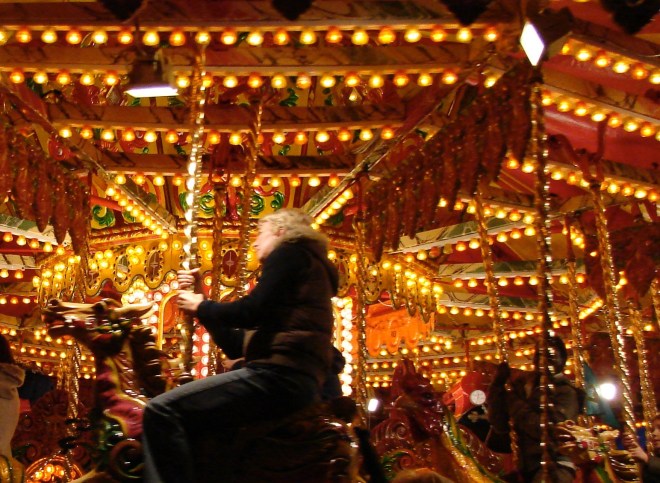
On 11th October 1782, Rev George Lambert described Hull Fair as ‘A season for the amusement of children and the gratification of gluttony’.

On 11th October 1929, Mrs Edith Robson officially opened Hedon Road Maternity Hospital, the successor to the free maternity home for poor mothers, which she gave as a gift, fully equipped, to Hull Corporation in 1915.


fair 07

October 10th

On 10th October 1536, a large crowd of armed men from Holderness supporting the Pilgrimage of Grace met on Beverley Westwood and Sutton Ings and chose captains.

On 10th October 1596, the Howden churchwardens gave 8d to Oswald Metcalfe, a poor man, licensed by My Lord Grace and the Council (i.e. given licence to beg while on his way to his home parish).

On 10th October 1918, former Reckitt’s employee gunner George Henry Saul, 26, died of wounds while serving with the Royal Garrison Artillery. Buried Etaples, France.

Pilgr Grace

October 3rd

On 3rd October 1667, Mark Turington, Peter Gorbut, Christopher Gray & Jane Sansbie were fined at Patrington for having bad fences or fences in bad repair.

On 3rd October 1810, Rev George Lambert of Hull wrote in his diary: ‘times never were more alarming than the present. Failure, bankruptcies and suicide are taking place every day, and public credit shaken to its foundation. No man knows today what will be his circumstances tomorrow’.

On 3rd October 1821, Dr Raffles preached to 600 people on board the Valiant in Queen’s Dock, Hull, a new floating chapel bought by The Port of Hull Society for the Religious Instruction of Seamen. It was used for 28 years until the vessel was leaking and abandoned in 1850.

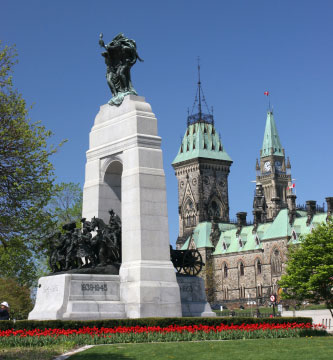
On 3rd October 1884, Elsie March, sculptor, painter and metalworker, was born in Sutton (or Old Hall, Burstwick?), one of 8 artist siblings born to foreman seed crusher George Henry March. Moved to Battersea 1901. With 5 of her brothers, created the Canadian War memorial in Ottawa completed in 1938. see photo (d 1974, Kent)

On 3rd October 1898, Ernst Adolf Powolny opened a restaurant in King Edward Street which became a Hull institution, providing high class food in opulent surroundings, as well as tea dances and catering for civic events. Closed temporarily by a fire in 1934, it finally closed after being destroyed by the Blitz on 8.5.1941. Known affectionately as ‘Polly’s’.

Elsie March

September 24th

On 24th September 1298, an inquisition was held by the Court of Chancery into Sir Osbert de Spaldington’s goods and lands, which were taken by the king. As recently as 1296, Edward had made him Governor of Berwick, when he received Robert the Bruce and imprisoned Sir William Douglas. It is not known what the allegations against him were, and he recovered most of his land by 1300, after living on the generosity of others in the meantime.

On 24th September 1401, Pope Boniface IX declared John of Bridlington a saint. John was born in Thwing, had been the Prior of Bridlington and died of the plague in 1379, aged 59. 15 miracles are recorded during his life, and 12 after his death, including saving the lives of 5 Hartlepool fishermen caught in a storm. photo shows Brid Priory church

On 24th September 1678, the wife of Thomas Richardson of Wyton died and was buried in the Quaker cemetery in Sutton.

On 24th September 1779, Lord Rockingham, High Steward of Hull, chaired a public meeting in Hull Town Hall at which it was decided that 20 18-lb guns and military equipment due to be sent to Woolwich should be used instead to defend Hull from the threat of American attack. A few days later, the threat reduced when the Americans sailed for Holland.

On 24th September 1830, Hull gunsmith Thomas Rosindale was convicted of vagrancy, having been found in the kitchen of the dwelling house of Charles Frost of Albion St. He was sent to Sculcoates House of Correction for 1 month’s hard labour.

On 24th September 1832, Mr J. Dunn caught a 17lb trout near Driffield.


Brid Priory church

September 22nd

On 22nd September 1690, Beverley Corporation gave permission to create a racecourse between the Newbald and Walkington roads. Horse racing had probably taken place on Westwood for 300 years, but this was the first time a course was formally laid out.

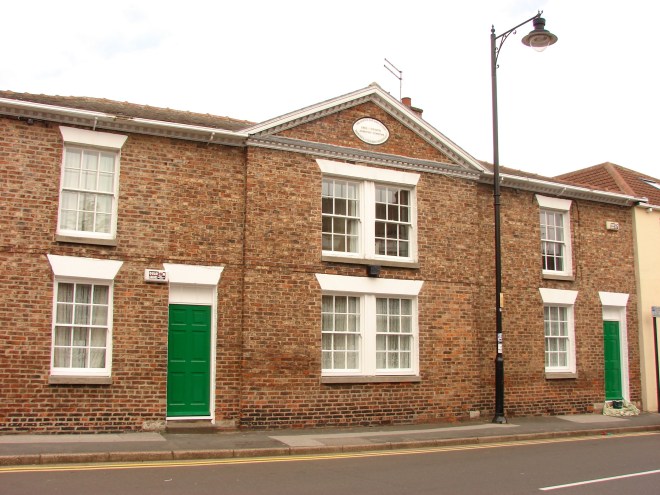
On 22nd September 1716, Leonard Chamberlain, draper, died at Hesslewood House, Hessle, and left property and estates in Sutton, Stoneferry, Selby, Dunswell and Hessle and his charitable bequests continue to this day. A Presbyterian, he supported those who had been discriminated against on religious grounds, gave money for educating the poor ‘of whatever persuasion or denomination soever’.  Commemorated in Chamberlain Road and Chamberlain Street, Sutton. photo shows one of the Sutton properties

On 22nd September 1761, to mark the coronation of King George III and Queen Charlotte, Col Duncombe’s Battalion of militia drilled in Beverley Market Place, and fired volleys, while the Corporation held a dinner for the officers, the bells rang, and in the evening there were illuminations.

On 22nd September 1778 was the official opening of The Dock, Hull. (It became known as Queen’s Dock after Victoria visited the city in 1854). The first ship in was the whaler Manchester, decorated all over with flags of the nations, followed by the Favourite, the largest ship in the port at 1,000 tons (burthen). 20,000 spectators were entertained by cannon fire and a musket salute from the garrison, and the great and the good were fed and sumptuously entertained.

On 22nd September 1856, Count de Werdinsky died in Hull aged 53, in abject poverty, after variously representing himself as a Polish count, inventor and doctor. He was a bankrupt, a fraudster, and had several counts of assault and indecent assault against women. His memorial is in the Western Cemetery

On 22nd September 1914, the crews of HMS Aboukir, Cressy and Hogue, 3 Navy cruisers, were sunk by a German u-boat, with the loss of 1,450 lives. This not only led to a public outcry, but also the need to provide for a large number of orphaned children. Some of the children were admitted by Hull’s Sailors’ Children’s Society and put up in its holiday home in Hornsea, as well as in the Newland Homes. By 1915, 108 children of seamen lost in action were admitted, from across the country.
leonard chamberlain sutton.JPG


September 16th

On 16th September 1643, an artilleryman with a lighted match blew up the magazine at Hull North blockhouse and killed himself and 4 others.

On 16th September 1698, Robert Prudom established, and was the first pastor of, the first Baptist chapel in East Yorkshire. The building in Applegarth Lane, Bridlington is only 12 feet square. see photo

On 16th September 1829, Dr John Alderson, MD died aged 71, physician to Hull Infirmary from 1795. A polymath, he was one of the founders of the Hull Literary and Philosophical Society, and of the London Geological Society, wrote acclaimed works on fever and paralysis, established Sculcoates Refuge, (which eventually became De la Pole Hospital), and wrote on agriculture, geology, and supernatural apparitions. The funeral of this popular doctor attracted 12-15,000 mourners. He was buried in a family vault at St Mary’s Sculcoates. His statue can be seen on Anlaby Road. (b 1758 Lowestoft)

On 16th September 1846, George Hudson, MP and ‘railway king’ stayed overnight at Sutton on Hull, went to Bridlington Quay for breakfast, back to Hull, then travelled to Northampton. Joseph Robinson Pease marvelled that such a journey within 13 hours would have been unthinkable 20 years before.

Applegarth La chapel

August 24th

On 24th August 1399, a schism within the church led to controversy about the post of Meaux Abbot Thomas Burton, and rather than involve the abbey in the costs of litigation, he retired and wrote “The Meaux Chronicle’, the history of the abbey.

On 24th August 1662, on Black Bartholomew’s Day, also known as the Great Ejection, Josiah Holdsworth, curate of Sutton-on-Hull, was dismissed for refusing to conform to the Book of Common Prayer, along with 2,000 other Puritan ministers across the country.  They included Anthony Stephenson at Roos, who stayed in the village as physician, and Stephen Arlush of Howden, who continued to preach in a private house as a Congregationalist, also John Ryther of North Ferriby, who spent some years in prison for illegal preaching. And Mr Robinson at Cottingham, Mr Luddington at Sculcoates, Mr Thos Micklethwaite at Cherry Burton.

On 24th August 1759, William Wilberforce was born in High Street, Hull. The Parliamentary champion of the abolition of slavery, he collaborated for 50 years with Thomas Clarkson. MP for Yorkshire 1812-1825. Buried in Westminster Abbey. (d 29.71833)

On 24th August 1789, the Preston house and shop of William Sanderson were broken into by James Hartley of Manchester. Hartley was hanged at York Castle on 17.4.1790.

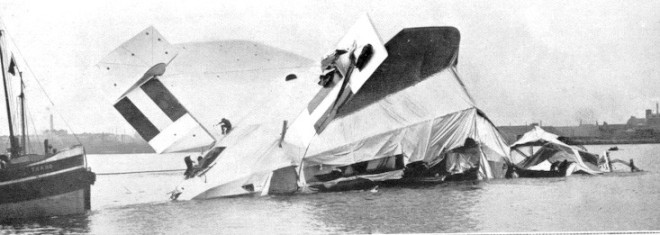
On 24th August 1921, an R38 airship exploded and crashed into the Humber on its last trial flight; 44 members of the crew died. Debris narrowly missed sightseers on Victoria Pier, Hull. photo shows wreckage

On 24th August 1943, Flight Officer Charles Keirl, 23, and 13 other airmen died when 2 Halifax bombers of 78 Squadron collided in fog; one air gunner survived. Keirl is buried in Queensgate Cemetery, Beverley. There is a memorial at Hull Bridge.


R38wreckage1

July 25th

On 25th July each year a traditional football match was held on St James Day, between Sutton and Wawne, starting at Foredyke bridge, boundary between the 2 villages, each village trying to get the ball home. Not known dates played or when abandoned.

On 25th July 1328, King Edward III is said to have closed down the Warter annual fair on St James Feast Day because of the number of murders that had been committed at the fair. There is a record that in 1300 certain manslaughters had been committed in the village by the canons’ men from Warter Priory. In 1328, King Edward III issued an order that it was an offence to go armed into any fair or market. Probably not aimed specifically at Warter.

On 25th July 1768, Joseph Hall was hanged at York Castle for coining at Hull. photo shows  medieval coins being made.

On 25th July 1873, William Dunwell, former Hull Trinity House School pupil, lost his life at sea by jumping overboard to save the life of a shipmate.

On 25th July 1911, Father Ottway, superintendant at the Yorkshire Catholic Reformatory at Market Weighton (actually in Holme on Spalding Moor) reported on rebellion from the boys, including threats to knife masters, which resulted in the attendance of 3 police officers and the thrashing of 6 or 7 boys.

coiner, Hanse Day