June 24th

On 24th June 1381, King Edward III issued a writ ordering rebel supporters of the Peasants’ Revolt to be arrested and punished.

On 24th June 1392, lightning struck Keyingham church and caught fire, and residents took ladders to douse the fire on the roof; a ladder holding 13 men broke, but no-one was injured, which was put down to a miracle of St Philip Ingleberd.

On 24th June 1643, Capt John Hotham,  having escaped from arrest, fled to Lincoln, planning to seize it for the King, and wrote to Parliament to say he could answer all charges against him. From Lincoln, he returned to his father in Hull.

On 24th June 1867, Charles Edward Smith, ship’s surgeon, aged 30, was presented with an illuminated testimonial, and a case of surgical instruments, in recognition of his gallant conduct on the whaler Diana of Hull, which had been trapped for months in ice and whose crew had suffered privations leading to scurvy.

On 24th June 1943, Mr T.R. Gale, of Estcourt Street, Hull, performed an act of gallantry during an air raid, for which he was later awarded the British Empire Medal. On the same night, Civil Defence volunteer Albert Henry Prissick of 15 Mersey Street, lost his wife and baby son, but carried on with the rescue of his neighbours. Hull Municipal Museum, Albion Street, was destroyed by fire.

On 24th June 1981, the Humber Bridge was opened to traffic; for 17 years it was the world’s longest single-span suspension bridge. On the same day, the Humber ferry service ended.

On 24th June 2011, marine artist Colin Verity died aged 87 in Market Weighton. Educated at Malet Lambert School, Hull and School of Architecture, Hull University. Flew Spitfires during WW2. Became principal architect, Hull City Council. Member RIBA, Royal Socy of Marine Artists, President Hornsea Art Society.  (b Darwen Lancs 7.3.1924)


Humber Bridge


June 23rd

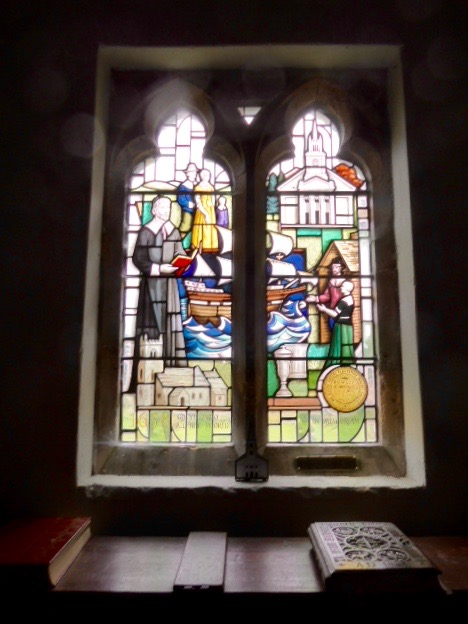
Ezekiel Rogers window

Ezekiel Rogers window, Rowley church.

On 23rd June 1660, Reverend Ezekiel Rogers died aged 70, in Rowley, Massachusetts, after 22 years as vicar of a new Puritan settlement.  The new town was named after Rowley in East Yorkshire, from where he led a group of about 100 Puritans to America in June 1638. Became Rector of Rowley in 1621, aged 31, and served there for 17 years. (b 1590 in Wethersfield, Essex)

On 23rd June 1766, Sara Jenkinson, the infant daughter of Richard Jenkinson of Hutton Cranswick, fell from a little girl’s arms and died within 30 minutes. There was a coroner’s inquest.

On 23rd June 1768, John Courtney, aged 34, gentleman, of Beverley, married Mary Jesse Smelt, aged 24, at St Mary’s, Lowgate. The bride dressed in a white ‘night gown’ and white hat, the groom in a white suit. Only family and servants attended the church and family members dined with them afterwards. The bells of both churches rang for them. They returned to their future home in Beverley in the evening. In his diary, John refers to his future wife at all times as ‘Miss Smelt’.

On 23rd June 1787, the Clerk to the Beverley to Driffield Turnpike Trust wrote to T. Baxter, the owner of Bell Mills, Sunderlandwick, threatening him with prosecution if he allowed anyone to cross his land to avoid paying tolls. 2 months later the Trust asked T. Baxter to lock the gate near his mill, and to prosecute anyone who broke it down.

On 23rd June 1812, Major-General Barnard Foord Bowes of Cowlam was wounded at Battle of Badajoz, but recovered to fight at Salamanca.

On 23rd June 1848, Uckaluk died of measles aboard the Hull ship Truelove, on their way home to Nyadlik, Greenland. She and her husband Memiadluk had visited England to highlight the poor conditions in their homeland.  They took part in talks in Manchester and York. 

On 23rd June 1853, Captain John (or Thomas) Bowlby set sail for Cumberland Sound in the Arctic with 3 ships, with the aim of forming a settlement there; they took goats and building materials. The surgeon on the trip was William Gedney, who had been on board the Truelove with Captain Parker in 1847.

On 23rd June 1898, Winifred Holtby was born at Rudston. Social reformer, novelist and journalist, she was famous and respected for her work in South Africa and elsewhere. ‘South Riding’ became her most famous novel, published after her death. She is buried in Rudston. (d 29.9.1935)

June 19th

On 19th June 1256, the Meaux Abbey chronicler reported losing men and oxen at Orwithfleet, south of Patrington. A major flood of the Humber reached as far north as Cottingham, with many lives lost, livestock and fisheries devastated, and land washed into the river.

On 19th June 1607, Thomas Wincop, Master of Hull Charterhouse, bought, with Hull Mayor George Almond and other trustees, land in Haltemprice Wood abutting on the common fields of Willerby, to support the running costs; the Charterhouse already owned substantial property in and around Hull. photo shows Wincop’s memorial in Hull Minster.

On 19th June 1837, Hull Steam Packet Company launched the paddle steamer Victoria at Medley’s shipyard, Hull; she was considered state of the art. A boiler explosion in 1838 killed 5 crew; there was a second explosion the same year; she ran onto rocks in 1852 and was wrecked, with 8 people killed.

On the same day, Rev Joseph Coltman died in Beverley at the age of 60. He was known for his support of local charities, of the emancipation of Catholics, and of the abolition of slavery. Born in Hull, Coltman Street was named for him, as was Beverley’s Coltman Avenue. At 37 stone 8lbs, he was reputed to be the heaviest man in England, and his death may have been caused by his weight. He employed a manservant to turn him in bed, but he fell asleep and Coltman suffocated in his sleep.

On 19th June 1887, to celebrate Queen Victoria’s Jubilee, a state service was held in Holy Trinity church, Hull, the new Market Hall was opened, as was East Park, and there were festivities in all the city’s wards.

On 19th June 1920, Harry Wilkinson of  Lower Union Street, Hull, was seriously injured by 3 gunshots.  He was part of a mob of white people who attacked and damaged several boarding houses where black seamen lived. Tom Toby, a West African fireman, was charged with wounding, but no white people were arrested. Toby’s plea of self defence was accepted, and he was found not guilty. During the same rioting, Murrell Piggott, faced with a 200-strong crowd, had also fired, but his plea of self defence was not accepted, and he was sentenced to 9 months’ hard labour for unlawful wounding.

On 19th June 1940, the East Hull, docks, suburbs, and River Hull corridor experienced the first night-time raid of World War 2.


Thomas Whincopp memorial

June 16th

On 16th June 1487, John de la Pole, Earl of Lincoln, died aged 22 (or 25), in the Battle of Stoke (near Newark) fighting against Henry VII, attempting to place Lambert Simnel on the English throne.

On 16th June 1793, the 42nd Regiment of Highlanders in Hull and 200 soldiers were sent to service at Fish Street Congregational Chapel.

On 16th June 1872, Sarah Stickney Ellis died aged 73.  A Quaker turned Congregationalist, she was a prolific author, and advocate of women’s education. (Born 1799 at Ridgmont, Burstwick)

On 16th June 2012, Hull-born Joe Longthorne, a singer of Romani heritage, was awarded an MBE for services to charity. (b31.5.1955)


joe longthorne


June 15th

trinity house.JPG


On 15th June 1795, Hull Trinity House agreed to give £100 to the Mayor’s fund to buy corn and resell it to the poor at a discount, as war was causing food scarcities.

On 15th June 1911, due to financial difficulties, the Smith (Smijth) family put the whole of the Windham Estate at Wawne up for auction over 2 days. This included 12 farms, smallholdings, rows of cottages, the Ferry, the pub, post office, grocer’s, tailor’s, the school. Almost the whole village had to find new tenancies. The estate had been in the hands of the Ashe family and their successors since the 17thC.

June 13th

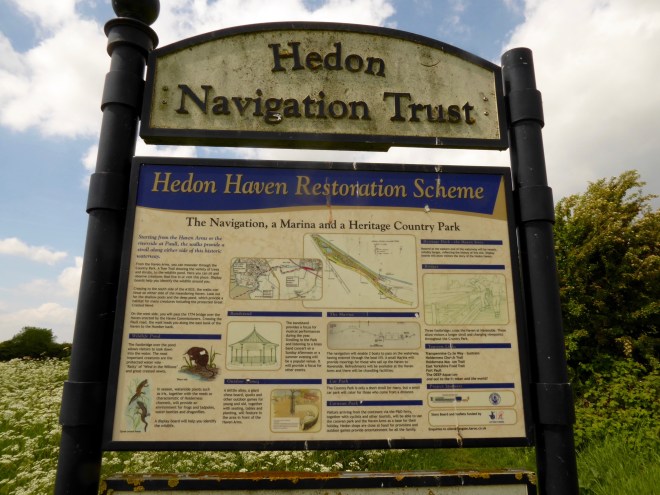
On 13th June 1774, the Hedon Haven Commissioners held their first meeting to create a canal between Hedon and the Humber, so that goods could reach Hedon at all times of the tide. The 44 Commissioners (including 3 knights, 4 clerics, and merchants such as Samuel Standidge, Benjamin Blaydes and Henry Maister) had powers of compulsory purchase of land and to prosecute anyone who obstructed navigation. The canal was opened in December 1775.

On 13th June 1893, William Maclagan, Archbishop of York, visited Spurn in a small boat, saw the lifeboat station, school and lighthouse, and agreed to provide weekly religious services at Spurn. He then walked 31/2 miles to Kilnsea before continuing to Patrington by carriage.

On 13th June 1943, Withernsea Central School teacher Miss Longdon r.eported in the school log that incendiary bombs fell on the school, burnt out Classroom 8 and caused ‘holes in the hall and on the platform’. Some classes had to be accommodated in the Methodist Chapel.

Hedon Haven

June 7th

On 7th June 1614, Francis Clifford, Earl of Cumberland, of Londesborough House, paid for the apprenticeship of his scullery-maid Grace. He trained in London as a barber-surgeon for 7 years, and the Earl continued to support him when he had to transfer employers, as his first employer killed a man (perhaps in the course of treatment).

On 7th June 1672, the residents of Sister-Kirks (Owthorne and Withernsea) reported hearing the sound of the naval battle of Solebay, off the coast of Suffolk. A fleet of 75 Dutch ships surprised a fleet of 93 Anglo-French ships at anchor.

On 7th June 1796, Sir Henry Etherington laid the foundation stone of Hull Anti-Mill, to provide cheaper flour. An early co-operative, it was funded by subscription by poor residents finding the price of flour beyond their reach.

On 7th June 1837, the Union steam packet was in the Humber basin, Hull, Preparing to cross the Humber, when it exploded. 3 other ferries were next to it; 23 people died. The engineer was later charged, but not convicted.

On 7th June 1915, Vere Campey Marshall made a statement to police, stating that he witnessed a 1,000 strong crowd outside the premises of Kress and Wagner, 163/5 Spring Bank, throwing stones, and a girl using a hammer to break a window. Police and military were sent to guard the premises. Anti-German feeling was strong during WW1.

June 6th

On 6th June 1597, Robert Hewitt and his 6 musicians played for the first time at Londesborough House for Sir Francis and Lady Grissell Clifford, and regularly performed there for a number of years. They played shawms (like an oboe), curtals (like a bassoon), sackbuts (an early trombone) and the virginal (an early spinet). At different times, pipers, harpers, drama companies and a jester were hired.

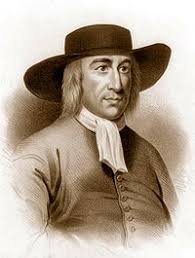
On 6th June 1651, George Fox, Quaker preacher, proclaimed his Quaker beliefs in reply to the sermon at Beverley Minster; the next day he went another church 2 miles away, then to Cranswick, staying with John Hotham (grandson of the late governor of Hull).

On 6th June 1757, the vicar of Hutton Cranswick recorded a fall of snow.

On 6th June 1812, Hull Botanic Gardens were opened; the Band of the Royal Denby Militia played at the opening ceremony (they were based at the fort, as the Napoleonic Wars were still in progress).

On 6th June 1915, Hull residents sheltered under stairs and tables when they received an hour’s warning of the first Zeppelin attack on Hull. There were 11 deaths. Hewetson’s saw mill was destroyed. (other sources says 26 dead, 60 injured)


George Fox

June 5th

On 5th June 1618, ‘Blind Richie’ (Richard Graham of Millhill) had walked from the Scottish borders to seek help from Francis Clifford, Earl of Cumberland, at Londesborough, and was given a pension of 10s a year. It is not known what his relationship was to the Earl, who had lands on the Scottish border.

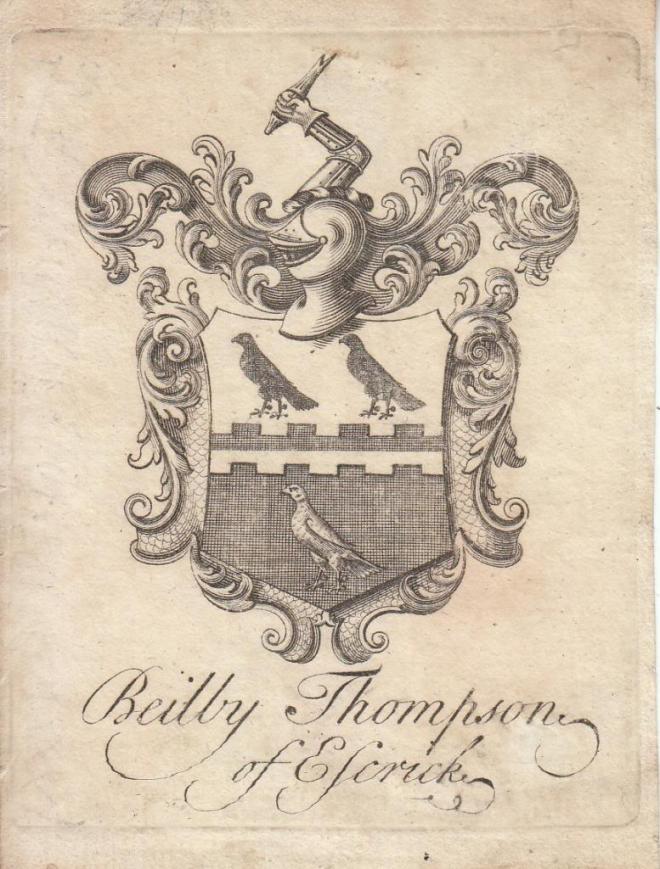
On 5th June 1778, Beilby Thompson of Escrick created a deer park, and demolished most of the village houses, rebuilding them out of sight of the Hall, and recycling the bricks; he paid 5s to Mr Scott the millwright for demolishing the horse mill.

On 5th June 1854, Dr Playfair, from the Dept of Science, reported on the teaching at Hull Trinity House School that no geometry or algebra was taught; geography was badly taught; no empirical data given on laws regulating winds, currents and weather.

On 5th June 1915, German Lieut-Capt Boemack made the first Zeppelin air raid on Yorkshire, dropping bombs on Driffield and Hedon before aborting the mission. There were no casualties, although house windows were broken in Beckside, Driffield, and crops were damaged. Crowds of people flocked to Driffield the following day to view the damage.


beilby thompson

June 3rd

On 3rd June 1642, a few weeks after being refused entry into Hull, King Charles I called a meeting of the Yorkshire gentry at Heworth Moor, near York, and 70,000 attended. 200 young men volunteered to form a bodyguard for the King. The 2 Hilyard brothers of Winestead, Henry and Robert, attended, and volunteered. Many other ER people must also have attended.

On 3rd June 1717, Thomas Watson died aged 80. Born in Hull, he was created Bishop of St David’s, and in 1707 built almshouses in North Church Side. Supported James II in 1688. He lost his ecclesiastical offices in 1699 for selling church property or offices, and reputedly died a rich man. (b 1.3.1637) The picture shows the almshouses.

On 3rd June 1801, when their husbands were killed by the Danes in a military engagement off Copenhagen, the widows of Matthew Cobb and James Davis, Humber pilots, were given financial support by Hull Trinity House at 10s 6d per week, 6 weeks and 4 weeks respectively.


Bishop Watson's Hospital