July 25th

On 25th July each year a traditional football match was held on St James Day, between Sutton and Wawne, starting at Foredyke bridge, boundary between the 2 villages, each village trying to get the ball home. Not known dates played or when abandoned.

On 25th July 1328, King Edward III is said to have closed down the Warter annual fair on St James Feast Day because of the number of murders that had been committed at the fair. There is a record that in 1300 certain manslaughters had been committed in the village by the canons’ men from Warter Priory. In 1328, King Edward III issued an order that it was an offence to go armed into any fair or market. Probably not aimed specifically at Warter.

On 25th July 1768, Joseph Hall was hanged at York Castle for coining at Hull. photo shows  medieval coins being made.

On 25th July 1873, William Dunwell, former Hull Trinity House School pupil, lost his life at sea by jumping overboard to save the life of a shipmate.

On 25th July 1911, Father Ottway, superintendant at the Yorkshire Catholic Reformatory at Market Weighton (actually in Holme on Spalding Moor) reported on rebellion from the boys, including threats to knife masters, which resulted in the attendance of 3 police officers and the thrashing of 6 or 7 boys.

coiner, Hanse Day


July 22nd

On 22nd July  1612 ( or possibly on 12.7) Hull-born navigator and explorer James Hall was employed by the Danish government to survey for minerals, and came upon a group of Greenland Inuit who recognised him from a previous voyage. He had been involved in kidnapping 4 people, who had never returned home. Hall was attacked and died that day of a spear wound in the side. William Baffin was master of the sister ship Patience on the same expedition. Hall was succeeded as master of the Heartsease by Andrew Barker, also of Hull.

On 22nd July 1643, Lord Ferdinando Fairfax was invited by the people of Hull to take up the post of Governor.

On 22nd July 1869, Albert Edward, Prince of Wales, later Edward VII, officially opened the new Albert Dock, Hull.

On 22nd July 1909, Sydney Buxton, Postmaster General, officially opened the new Post Office building in Lowgate, Hull. Despite precautions against action by suffragettes, Charlotte Marsh got close enough to speak to him, and was arrested. She was Yorkshire organiser for the Women’s Social & Political Union and had earlier been arrested at Riverside Quay.

On 22nd July 2004, Florence ‘Flo’ Bilton died aged 82. Goalkeeper, set up a women’s football team at Reckitt’s in 1963, and from  was influential in setting up the Women’s Football Association in 1969. Set up, trained and supported new women’s teams. Acted as membership secretary and chaperone for the national women’s team. Flo Bilton Trophy is contested by girls’ football teams in ER. (b c1921) photo shows 2017 cream plaque presentation in Hull Guildhall by (left) Karen Walker, 86 England caps.

flo bilton

July 15th

On 15th July 1855, Hull-born John Sheppard, a Boatswain’s mate, attempted single-handedly to blow up a Russian warship at Sebastopol, Crimea, and was awarded the Victoria Cross ‘for valour’.

On 1th July 1868, John Ellerthorpe, the ‘Hero of the Humber’ died aged 62. He had rescued 39 people from drowning and was awarded the Royal Humane Society Silver Medal. Buried in Hull General Cemetery. (b 1806)

On the night of 14/15 July 1943, Bill Shepherd, engineer at Wm Jackson & Son Ltd, Derringham St, Hull, died when the factory was bombed; his colleague Sid Charlton escaped injury, as they dived for cover in opposite directions.


July 5th

On 5th July 1532, Henry VIII’s charter was read out in Hull Market Place, and prohibited anyone but Hull burgesses from conducting business in the port; the corporation paid £31 19s4d to obtain the charter, part of which was paid in the form of a sturgeon for Thomas Cromwell.

On 5th July 1657, a major fire in Hedon starting at 1 a.m. resulted in the loss of 42 houses, and others damaged. In August, the Mayor petitioned Parliament for permission to hold a collection to raise money; £4,000 was raised.

On 5th July 1776, John Wesley paid a visit to Howden and preached to a large congregation during a thunderstorm near Station Road, Howden. Wesley’s picture below

On 5th July 1811, Bridlington Collector of Customs Benjamin Milne discovered a tidal spring near the quay, now commemorated by a stone inscription.

On 5th July 1899, Hull Alderman Larard took the controls of the city’s first municipal electric tram (Siemens Bros & Co provided the electrical equipment). A spectator hoping for a good view, climbed on the roof of the public lavatories and fell through.

On 5th July 1930, the annual King’s Cup Air Race took place on this date, and planes had to follow a route of around 800 miles. Hull Aerodrome was a main control station on the route. Tickets were sold for 1s and 2s6d. The winner was Miss Winifred Brown in an Avro Avian III. (N.B. Hull Aerodrome is actually in Preston South.)


john wesley

July 4th

On 4th July 1399, Henry Bolingbroke (later Henry IV) landed at Ravenspurn from France with 60 men, and was joined by the Earls of Northumberland (Percy) and Westmoreland (Neville), to claim the throne from Richard II. Photo shows memorial in Easington church.

On 4th July 1524, William Richerdson, husbandman, of North Newbald claimed sanctuary at the church of St John, Beverley, for the ‘murderation’ of Anthony Godsale, husbandman of Newbald.

On 4th July 1597, William Anlaby or Andleby, a Catholic convert born in Etton, returned to UK as a priest after training in France.   He ministered to Catholic prisoners in Hull. Executed at York as a Catholic missionary priest. Beatified by the Catholic church in 1929.

On 4th July 1642, Sir John Hotham, aware that the Royalists surrounded Hull and had tried to cut off the fresh water supply, gave orders to open the sluices and cut the Humber banks in Drypool and Myton, outside the walls. He told farmers to bring their cattle and goods into the town. Hull was virtually unassailable.

On 4th July 1643, after defeat by the Royalists at Adwalton Moor, Sir Thomas Fairfax retreated to the only Parliamentary stronghold left in Yorkshire, Hull, just a few days after Hotham’s arrest.bolingbroke memorial Easington. jpg

June 24th

On 24th June 1381, King Edward III issued a writ ordering rebel supporters of the Peasants’ Revolt to be arrested and punished.

On 24th June 1392, lightning struck Keyingham church and caught fire, and residents took ladders to douse the fire on the roof; a ladder holding 13 men broke, but no-one was injured, which was put down to a miracle of St Philip Ingleberd.

On 24th June 1643, Capt John Hotham,  having escaped from arrest, fled to Lincoln, planning to seize it for the King, and wrote to Parliament to say he could answer all charges against him. From Lincoln, he returned to his father in Hull.

On 24th June 1867, Charles Edward Smith, ship’s surgeon, aged 30, was presented with an illuminated testimonial, and a case of surgical instruments, in recognition of his gallant conduct on the whaler Diana of Hull, which had been trapped for months in ice and whose crew had suffered privations leading to scurvy.

On 24th June 1943, Mr T.R. Gale, of Estcourt Street, Hull, performed an act of gallantry during an air raid, for which he was later awarded the British Empire Medal. On the same night, Civil Defence volunteer Albert Henry Prissick of 15 Mersey Street, lost his wife and baby son, but carried on with the rescue of his neighbours. Hull Municipal Museum, Albion Street, was destroyed by fire.

On 24th June 1981, the Humber Bridge was opened to traffic; for 17 years it was the world’s longest single-span suspension bridge. On the same day, the Humber ferry service ended.

On 24th June 2011, marine artist Colin Verity died aged 87 in Market Weighton. Educated at Malet Lambert School, Hull and School of Architecture, Hull University. Flew Spitfires during WW2. Became principal architect, Hull City Council. Member RIBA, Royal Socy of Marine Artists, President Hornsea Art Society.  (b Darwen Lancs 7.3.1924)


Humber Bridge


June 21st

On 21st June 1366, Sir William de la Pole died. The first Mayor of Hull, knighted by Edward III, was lord of Myton. He acquired some land just outside Hull where there was a college of 6 secular priests. They were replaced by Franciscans, then Sir William pulled down the buildings and built a hospital. Then he introduced Poor Clare nuns and poor people, but did not live to complete his plans. His son Michael introduced Carthusian monks, and the Charterhouse came into being.

On 21st June 1535, Winestead priest Christopher Michell told his congregation to recognise the Pope as head of the church, in spite of instructions to honour Henry VIII as Supreme Head of the English Church. Michell was jailed in Beverley.

On 21st June 1643, John Pym reported to Parliament on the actions of Capt John Hotham, in charge of troops near Newark, who had allowed his men to harass and steal from local people, turned a gun on Cromwell, and generally acted insolently and in an undisciplined way, and was also suspected of communicating secretly with the Queen. Later, Hotham escaped from prison.

On 21st June 1908, Hull women hired a special train to London for a “Women’s Sunday” rally organised by the WSPU, attended by 300,000 to 500,000; the Hull contingent is said to be the largest from any provincial society.

On 21st June 1915, children from Mappleton School went to Rolston Camp to see the troops depart for France; they marched to Hornsea train station.

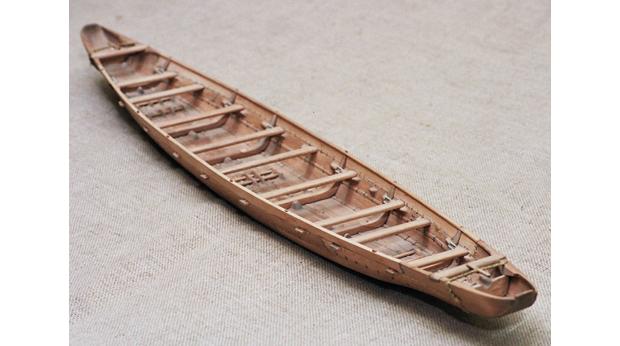
On 21st June 1918, Edward Vere Wright was born in Elloughton. Amateur archaeologist and palaeontologist, he found the first of the 4,000 year old Ferriby boats, with his brother Claude in 1937. In 1940, Ted found a 2ndboat, and with his son Roderick in 1963, a 3rdboat. (d 18.5.2010) photo shows a model of one of the boats in Hull & ER Museum.

On 21st June 1993, Hilary Catherine Brown of Tibthorpe died aged 13. (born Bolzano 12.9.1979) Hilary wrote this verse, which is written on her gravestone in Kirkburn church: The storm finished, the night diminished, the day progressed, bringing a sparkling dawn.


Ferriby boat model ERmuseum

June 20th

Hull Corpn silver


On 20th June 1533, the Hull Mayor and town council sold to Sir Edmund Perkins the ornaments of the churches in the town, for £15. They also gave to Sir Frauncis Jobson, Treasurer of His Majesty’s jewellers, ’24oz of silver plate whereof 7oz were double gilt and the rest part gilt and plain white, handed over for His Majesty’s use’. photo shows some of today’s corporate treasures.

On 20th June 1579, Edward, son of Nicholas Symson of Thorpe, because of the outbreak of plague at Howden, had to be baptised at Eastrington rather than in the parish church.

On 20th June 1583, Hull agreed to 10s compensation to Richard Frere for the loss of hay and his cote during the time when plague was in the town.

On 20th June 1642, Maurice Corney, vicar of St Mary’s Hull and Capt William Thornton, comptroller of customs were discussed by Sir William Strickland, Mr Alured, Mr Peregrine Pelham and Mr John Hotham, as a danger to Parliament’s cause. Sir John Hotham ejected Corney from the town, and he left for York, despite being considered a hero for his work during the recent plague. Thornton was also turned out, and joined the King’s service.

On 20th June 1645, John Blenkarne, master of the Hull ship Anne Dorothy, was moored in Marstrand, Sweden. He accused crewmen Peacock and Dynnis of inciting mutiny when they came aboard drunk, threatened him, and after a night in custody refused to come aboard until threatened with imprisonment. When they returned to home port, the court of Trinity House fined them and jailed them for 24 hours.

On 20th June 1761, Beverley widow Elizabeth Courtney, of Walkergate, paid the bellman to go round the town announcing a reward of 3 guineas to anyone with information about bricks thrown through her windows the previous night.

On 20th June 1810, Hull Trinity House reported raising £300 in 9 weeks towards establishing a lifeboat at Spurn.

On 20th June 1895, an auction was held in 2 fields in Bransholme Lane, Sutton, of ‘The Sweep of the Scythe’ of 25 acres of ‘rich meadow’, and also the ‘Eatage of the Fog’ up to the end of the year. This appears to have been dialect for the sale of hay cut for fodder for cattle.


June 19th

On 19th June 1256, the Meaux Abbey chronicler reported losing men and oxen at Orwithfleet, south of Patrington. A major flood of the Humber reached as far north as Cottingham, with many lives lost, livestock and fisheries devastated, and land washed into the river.

On 19th June 1607, Thomas Wincop, Master of Hull Charterhouse, bought, with Hull Mayor George Almond and other trustees, land in Haltemprice Wood abutting on the common fields of Willerby, to support the running costs; the Charterhouse already owned substantial property in and around Hull. photo shows Wincop’s memorial in Hull Minster.

On 19th June 1837, Hull Steam Packet Company launched the paddle steamer Victoria at Medley’s shipyard, Hull; she was considered state of the art. A boiler explosion in 1838 killed 5 crew; there was a second explosion the same year; she ran onto rocks in 1852 and was wrecked, with 8 people killed.

On the same day, Rev Joseph Coltman died in Beverley at the age of 60. He was known for his support of local charities, of the emancipation of Catholics, and of the abolition of slavery. Born in Hull, Coltman Street was named for him, as was Beverley’s Coltman Avenue. At 37 stone 8lbs, he was reputed to be the heaviest man in England, and his death may have been caused by his weight. He employed a manservant to turn him in bed, but he fell asleep and Coltman suffocated in his sleep.

On 19th June 1887, to celebrate Queen Victoria’s Jubilee, a state service was held in Holy Trinity church, Hull, the new Market Hall was opened, as was East Park, and there were festivities in all the city’s wards.

On 19th June 1920, Harry Wilkinson of  Lower Union Street, Hull, was seriously injured by 3 gunshots.  He was part of a mob of white people who attacked and damaged several boarding houses where black seamen lived. Tom Toby, a West African fireman, was charged with wounding, but no white people were arrested. Toby’s plea of self defence was accepted, and he was found not guilty. During the same rioting, Murrell Piggott, faced with a 200-strong crowd, had also fired, but his plea of self defence was not accepted, and he was sentenced to 9 months’ hard labour for unlawful wounding.

On 19th June 1940, the East Hull, docks, suburbs, and River Hull corridor experienced the first night-time raid of World War 2.


Thomas Whincopp memorial

June 16th

On 16th June 1487, John de la Pole, Earl of Lincoln, died aged 22 (or 25), in the Battle of Stoke (near Newark) fighting against Henry VII, attempting to place Lambert Simnel on the English throne.

On 16th June 1793, the 42nd Regiment of Highlanders in Hull and 200 soldiers were sent to service at Fish Street Congregational Chapel.

On 16th June 1872, Sarah Stickney Ellis died aged 73.  A Quaker turned Congregationalist, she was a prolific author, and advocate of women’s education. (Born 1799 at Ridgmont, Burstwick)

On 16th June 2012, Hull-born Joe Longthorne, a singer of Romani heritage, was awarded an MBE for services to charity. (b31.5.1955)


joe longthorne