October 8th

On 8th October 1536, Beverley men mustered on Westwood Low Green in response to the Lincolnshire rebellion against the Act of Dissolution. Elizabeth Stapleton encouraged them, despite the reluctance of her husband, and her brother-in–law William Stapleton became the rebels’ captain.

On 8th October 1643, Capt Strickland led a failed Royalist attack on Hull’s Hessle Gate, and was shot dead. Many of the attackers were killed.

On 8th October 1708, William Robinson died in Hull. Former Sheriff of Hull, donor of a hospital to Trinity House, left bread for 12 widows to be given each year on Christmas Day. They were required to go to his grave in Holy Trinity churchyard to receive their dole.

On 8th October 1805, Beverley corporation ordered that all rogues and vagabonds found wandering in the town must be apprehended and conveyed to a magistrate. A board  showing this order can be seen in St Mary’s church loft.

On 8th October 1862, Hornsea businessman Joseph Armytage Wade turned the first sod with a silver trowel at a ceremony to mark the start of building the Hull to Hornsea Railway.

On 8th October 1874, George Wombwell visited Beverley on his way to Hull Fair; in Saturday Market he exhibited elephants, giraffes, a rhino, and big cats; other shows also stopped over in the town before going to Hull.

On 8th October 1929, Wm Jackson & Son Ltd opened their landmark store in Paragon Street, Hull, designed by Hull architects Gelder and Kitchen, with a cafeteria and restaurant on the first floor. After the war, when the fire-damaged property was repaired, a 3rd floor was added as a ballroom. This was to become one of the city’s most popular night-spots for many years.

On 8th October 1985, Clive Sullivan MBE died aged 42. 1st black captain of any British national sporting team. He played rugby league with both Hull and Hull Kingston Rovers during his career. Holds records for most tries in a career (250) and most tries in a match (7). Commemorated in Clive Sullivan Way and the Clive Sullivan Memorial Trophy.(b 9.4.1943 Cardiff)

 

Clive Sullivan

October 7th

On 7th October 1659, William Stallen of Patrington was fined for slander, accusing Jeames and Mary Adams of stealing John Reynard’s corn.

On 7th October 1846, the York & North Midland Railway opened the line from Hull to Beverley; on 1.5.1865 the line from York was extended south from Market Weighton.

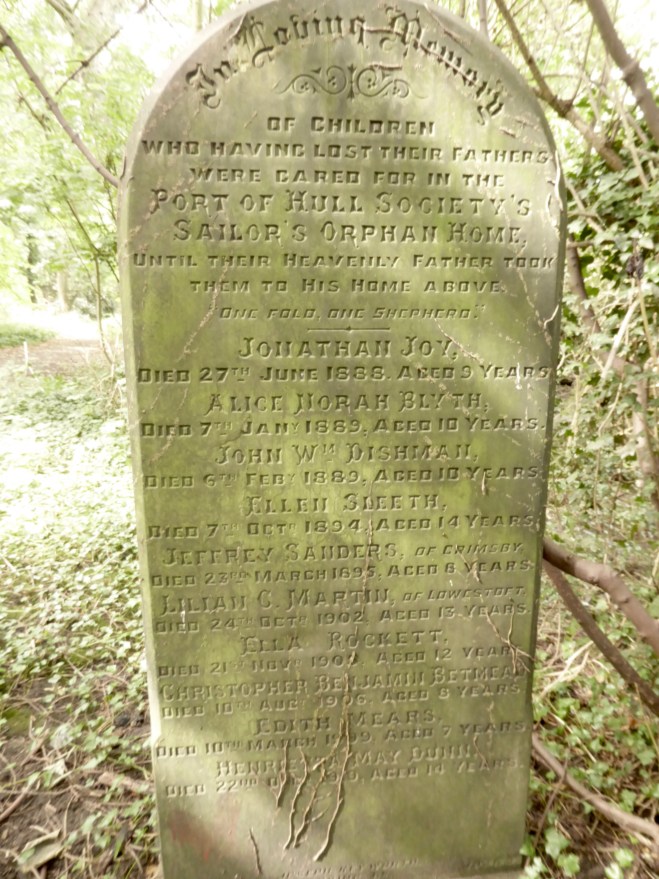
On 7th October 1894, Ellen Sleeth, aged 14, died in the care of the Port of Hull Society’s Sailor’s Orphan Home. There is a memorial in Western General Cemetery

On 7th October 1920, the sale of the Rolston Estate took place after the sudden death of Major Haworth-Booth, with 1577 acres sold, including 9 farms, Rolston Hall, cottages, waterworks and a rifle range.

Orphan deaths, Sailor's Orphan Home

October 2nd

On 2nd October 1200, King John gave permission for an annual fair at Howden lasting a week; by the 19th Century it had become the biggest horse fair in England, but by 2007 Howden Fair had reduced to a 1-day event.

On 2nd October 1504, Thomas Henrison, husbandman of Skipsea, claimed sanctuary at the church of St John, Beverley, for debt.

On 2nd October 1518, Thomas Weston, a ‘singingman’, from Snaith, claimed sanctuary at the church of St John, Beverley, for debt.

On 2nd October 1541, the Privy Council of England sat in Hull.

On 2nd October 1658, Capt Robert Hildyard of Patrington left £10, half the interest of which was to be used to repair the bell frames, and the other half distributed to the poor for ever. photo shows his memorial in St Mary’s Lowgate, Hull.

On 2nd October 1738, Dick Turpin, alias John Palmer, was arrested for breach of the peace, shooting a gamecock in Brough and threatening to shoot a man. He was held in Beverley, where the JPs committed him to trial at York. It was believed that while living in East Yorkshire posing as a horse dealer, he took frequent trips to Lincolnshire to steal horses. He was hanged in York 7.4.1739. photo – Welton

On 2nd October 1883, Arthur Mallaby Illingworth, aged 7 months, died of scarlet fever. An epidemic had affected Hull since the previous year, killing over 600 people, mostly children under 5.  A brother born the following year, and named Arthur Mallaby Rawnsley Illingworth, died at 18 months, probably of the same cause.


September 29th

On 29th September 1541, King Henry VIII stayed overnight with the Earl of Northumberland at Leconfield.

On 29th September 1638, the Council in the North wrote to the East Riding Commissioner for Sewers at Hedon complaining of the ruinous condition of the banks of the Humber in Drypool.

On 29th September 1829, some postboys were watering the Archbishop of York’s horses at Bar Dyke, Beverley (next to North Bar) after a trip to Rise; one fell in and was saved from drowning by 2 young men. One of the horses dropped dead, whether from exertion or from drinking the dirty water, the Hull Advertiser did not say.

On 29th September 1947, interpreter Sergeant Wadey, and Sgt Cramer were both killed, together with 7 German prisoners of war, when the Army truck they were driving crashed through the railway crossing gates, and stopped on the track in the path of a train heading for Bridlington. 19 other POWs were injured. They were being transported from POW camp 250 at Thorpe Hall, Rudston.

b.agnes level crossing

September 26th

On 26th September 1480, Elizabeth Beauwmont, gentlewoman of Hedon, and Robert Beauwmont, clerk of Almondbury, sought sanctuary in the church of St John, Beverley,  for the death of Thomas Aldirlay of Almondbury, killed by them on 5 Oct 1479. (We do not know the relationship between the 2 )

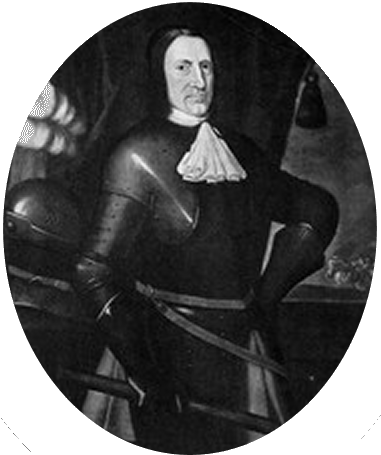
On 26th September 1643, Col Oliver Cromwell and Lord Willoughby crossed the Humber to view the defence of Hull for themselves, and took some of the cavalry back with them, horses being of limited use in the besieged town.

On 26th September 1649, Marmaduke Richardson of Pocklington was hanged at York Castle for praying publicly before his sermon for Charles II, King of Scotland and heir apparent. (Prince of Wales).

On 26th September 1794, John Magnus, a Dane, was buried at Blacktoft after drowning in the Humber and washing up at Thornton Land.

On 26th September 1917, L/Cpl Thomas Edgar Borrill, 20, former Reckitt’s employee,  died on active service with the Sherwood Foresters. He has no known grave.

Oliver Cromwell


September 22nd

On 22nd September 1690, Beverley Corporation gave permission to create a racecourse between the Newbald and Walkington roads. Horse racing had probably taken place on Westwood for 300 years, but this was the first time a course was formally laid out.

On 22nd September 1716, Leonard Chamberlain, draper, died at Hesslewood House, Hessle, and left property and estates in Sutton, Stoneferry, Selby, Dunswell and Hessle and his charitable bequests continue to this day. A Presbyterian, he supported those who had been discriminated against on religious grounds, gave money for educating the poor ‘of whatever persuasion or denomination soever’.  Commemorated in Chamberlain Road and Chamberlain Street, Sutton. photo shows one of the Sutton properties

On 22nd September 1761, to mark the coronation of King George III and Queen Charlotte, Col Duncombe’s Battalion of militia drilled in Beverley Market Place, and fired volleys, while the Corporation held a dinner for the officers, the bells rang, and in the evening there were illuminations.

On 22nd September 1778 was the official opening of The Dock, Hull. (It became known as Queen’s Dock after Victoria visited the city in 1854). The first ship in was the whaler Manchester, decorated all over with flags of the nations, followed by the Favourite, the largest ship in the port at 1,000 tons (burthen). 20,000 spectators were entertained by cannon fire and a musket salute from the garrison, and the great and the good were fed and sumptuously entertained.

On 22nd September 1856, Count de Werdinsky died in Hull aged 53, in abject poverty, after variously representing himself as a Polish count, inventor and doctor. He was a bankrupt, a fraudster, and had several counts of assault and indecent assault against women. His memorial is in the Western Cemetery

On 22nd September 1914, the crews of HMS Aboukir, Cressy and Hogue, 3 Navy cruisers, were sunk by a German u-boat, with the loss of 1,450 lives. This not only led to a public outcry, but also the need to provide for a large number of orphaned children. Some of the children were admitted by Hull’s Sailors’ Children’s Society and put up in its holiday home in Hornsea, as well as in the Newland Homes. By 1915, 108 children of seamen lost in action were admitted, from across the country.

leonard chamberlain sutton.JPG


September 20th

On 20th September 1188, St John’s church at Beverley and most of the town were damaged by fire. St John’s remains were not found until 1197.

On 20th September 1535, John Colynson and Thomas Savage, yeomen of Holme on Spalding Moor were declared outlaws after spending more than a year in sanctuary in Ripon. They sought sanctuary in 1534, confessing to stealing a horse. Savage confessed to the murder of Amery Burdett, but Colynson did not confess, though a coroner’s jury found them both responsible, and indicted others as accessories.

On 20th September 1769, Felice de Giardini, famous violinist, played at the start of a 3-day festival to celebrate the installation of the new organ at Beverley Minster, the first festival of its type in the north of England. New music by Handel was performed, including the recently completed Messiah; tickets were 2s6d and 5s.

On 20th September 1779, Mr Foster, Bridlington quay master, reported that John Paul Jones’ American squadron of ships had attacked a large fleet of colliers and ran them into the harbour.

On 20th September 1813, Thomas Nutbrown was born in Eastrington.  Probably the same person who, aged 14 in 1828, applied to the Howden poor relief officers for some new clothes, and was granted a second hand coat. He died aged 72 in Leeds Township, Quebec, Canada, on 25 Sept 1885.

On 20th September 1883, Rev Edward Cragg Haynes died aged 62 in Swinefleet, after serving there for 32 years. Born in Barbados, classed as ’free coloured’, had links to the Clapham Sect. Set up a Grammar School in Swinefleet attended among others by Joseph Rank. (christened 3.6.1821)

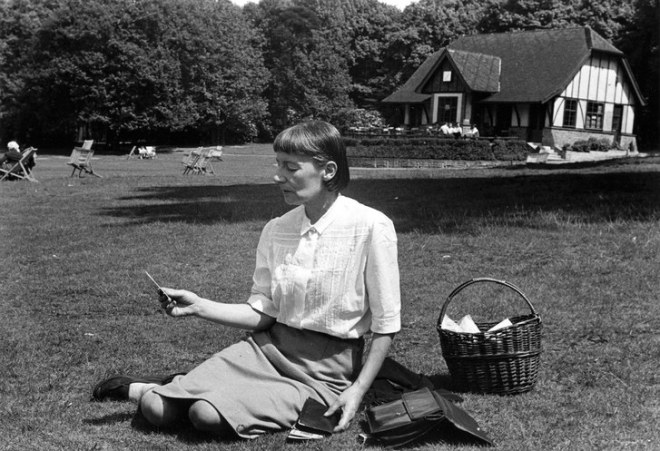
On 20th September 1902, Stevie Smith was born Florence Margaret Smith in Hull. Poet and novelist, most famous for ‘Not waving but drowning’. D 7.3.1971 see photo

On 20th September 1903, Annie Marshall, 16, domestic servant, from Lissett, was raped, shot twice, suffocated with grass and thrown in the river at Scampston by Charles William Ashton, 19, of Cottingham, farmhand.  Ashton knew her well. He was found guilty of murder and hanged at Hull Prison on 11thDecember the same year.

On 20th September 1954, the Selby to Driffield rail line was closed for regular passenger traffic, a service of one regular non stop train each way plus occasional summer excursions ran until June 1965. The line was abandoned after the last freight train ran later that year.

On 20th September 1955, Robert Greenwood Tarran, of the Wolds, Beverley High Road, Hull, died aged 63. Civil engineering contractor, and founder of Tarran Industries Ltd, former Sheriff of Hull, and chief Air Raid Warden during WW2. He moved the Wilberforce monument, at his own expense, and was responsible for building 20,000 prefabs after the war. He was also suspected of complicity in profiting from deals over council land in Endike Lane, in a law case during which his colleague Digby Willoughby committed suicide.

StevieSmith

September 18th


delapolearmscharterhouse.JPG
Hull’s first blue plaque? On the wall of the Charterhouse.

On 18th September 1415, Michael de la Pole, 2nd Earl of Suffolk, died of disease at Harfleur during Henry V’s military campaign. (Dysentery was a frequent cause of death on military campaigns) He was succeeded by his son Michael, who died in battle at Agincourt.

On 18th September 1470, John de Ferriby in his will left 2 silver salt cellars to the parsons and vicars of Beverley, on condition that they pray every day for his soul.

On 18th September 1664, Theophilus Garlike was found by a Hull jury in the inquest into the death of Gervase Dighton to have killed him in a duel; both men were soldiers in Colonel Gilby’s Company (Dighton a corporal, Garlike a sergeant).

On 18th September 1789, George Thompson, BA, was ordained 27 years after serving as curate in Hollym, Withernsea, Sutton and Wawne, he finally became vicar of St Peter’s, Wawne. He brought in many changes to the music in the church, including the use of fiddles and a singing master to teach new hymns, possibly because of the advances the Methodists were making at this time.

September 17th

On 17th September 1523, Hull widow Dame Joan Thurscross in her will left £30 for new vestments for St Mary’s church, £35 to hire a priest for seven years to sing for her soul, the souls of her three husbands, of her parents, and of her son, £4 to the building works at the White Friars’, £20 for mending the causeway between Beverley and Anlaby, thirteen white gowns for thirteen poor women, and silver for Hull Charterhouse.

On 17th September 1584, Peter Copley, clothier, was stripped of his status as burgess of Hull and disenfranchised, as a penalty for dyeing the clothes of people from outside the town and bartering the goods of ‘strangers’ as though they were his own. As he was ill at the time, he was not informed of this until he recovered.

On 17th September 1679, Rev Thomas Sedgwick died, aged 58. Puritan theologian and Vicar of St Giles, Marfleet between 1639 and 1672, he is commemorated with a memorial in the church, for the unusual feat of surviving in his post through the Civil War and Reformation.  photos show memorial and translation

On 17th September 1864, 3 residents of Hessle Road, Hull aboard the Humber ferry were gored when a bull being carried across broke loose and ran amok.

September 15th

On 15th September 1415, Henry V issued a General Pardon to the Mayor and town of Hull.  It is not clear for what they were being pardoned, though it may have been a general relaxation of taxes in gratitude for providing soldiers – or ships – after his success at Agincourt.

On 15th September 1561, William Calverde rented from Hull Corporation land called Hurne Close in Myton, with the right to pasture 20 sheep in the Common Carr of Myton.

On 15th September 1636, Hull Corporation was warned to prevent seamen arriving from ports infected with plague from coming ashore. Hull was in the midst of a serious 3-year outbreak which began in 1635.

On 15th September 1636, James II turned out of office 11 of the 13 elected Hull aldermen, the Mayor, High Steward, Recorder and Town Clerk, and replaced them with his own choice. This put Marmaduke Lord Langdale, in the powerful position of Governor of the garrison and Recorder, backed by 1199 soldiers, billeted on the residents. In December that year, Langdale was himself ejected.

Marmaduke_Langdale2

On 15th September 1864, Crown Prince Umberto of Italy stayed overnight at the Beverley Arms, after attending the St Leger at Doncaster, and left to visit James Hall’s stud at Scorborough.

On 15th September 1948, Mr J.H. Wilson, 33, labourer-driver, employed by East Riding  Agricultural Committee, was badly injured when he drove a lorry across a temporary rail crossing at Garton on the Wolds. The lorry was wrecked by a train, killing 3 Polish and Hungarian workers, and injuring another 4. The workers were people displaced by WW2, who were travelling to a Garton farm to help with the harvest. An enquiry recommended steps to improve the crossing.