November 6th

whalebone arch Pat.JPG

On 6th November 1584, Rowlande Wilkingson was awarded a pension of 10shillings a year by Hull town on account of his age and poverty, and the good service he had done the town.

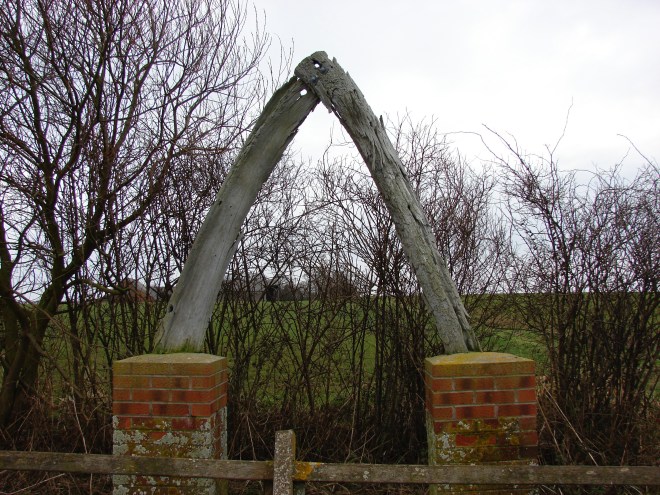
On 6th November 1822, Hull Literary and Philosophical Society was formed to promote self education; one of its first actions was to create a museum in the Assembly Rooms, Kingston Square.  This is mentioned in Herman Melville’s ‘Moby Dick’, as it contained whale skeletons, as well as an Eskimo kayak and natural history materials. Photo shows whale jawbones at Patrington

On 6th November 1829, Robert Sharp of South Cave reported in his diary on the usual celebration of 5thNovember, with bonfires, bellringing and hare feasts in the pubs.

On 6th November 1850, Samuel Davis was saved from drowning in Hull Harbour by John Ellerthorpe, named ‘The Hero of the Humber’ for his many rescues, and awarded the Royal Humane Society’s Silver Medal.

On 6th November 1914, Herbert St Quintin presided over the last meeting of the Court Leet and Court Baron, as lord of the manor of Nafferton. Changes in the law left them with no effective jurisdiction, and later meetings were attended mainly for the Rent Dinners provided for his tenants.

October 9th

On 9th October 1487, John Kape, husbandman of Kilham, confessed to killing Thomas Holme, labourer, with a dagger, and claimed sanctuary in the church of St John, Beverley.

On 9th October 1830, the whaler Abram was the first of the Hull fleet to return to port after a disastrous season in which 6 Hull ships were lost, and 15 from other ports.  Capt Edward Dannatt of the Progress reported the loss of his ship and the others. Most of those which returned in October and November had very poor catches.

On 9th October 1929, fire officers were called out to a fire at Howden Minster, thought to be arson. They had no access to a water supply, and had to use the moat in the Ashes Park. All 8 bells fell from the tower and had to be recast.

On 9th October 1953, Fred Elwell was made an honorary freeman of Beverley for his contribution to art. Several of his works are in Beverley Treasure House.

Fred Elwell

September 22nd

On 22nd September 1690, Beverley Corporation gave permission to create a racecourse between the Newbald and Walkington roads. Horse racing had probably taken place on Westwood for 300 years, but this was the first time a course was formally laid out.

On 22nd September 1716, Leonard Chamberlain, draper, died at Hesslewood House, Hessle, and left property and estates in Sutton, Stoneferry, Selby, Dunswell and Hessle and his charitable bequests continue to this day. A Presbyterian, he supported those who had been discriminated against on religious grounds, gave money for educating the poor ‘of whatever persuasion or denomination soever’.  Commemorated in Chamberlain Road and Chamberlain Street, Sutton. photo shows one of the Sutton properties

On 22nd September 1761, to mark the coronation of King George III and Queen Charlotte, Col Duncombe’s Battalion of militia drilled in Beverley Market Place, and fired volleys, while the Corporation held a dinner for the officers, the bells rang, and in the evening there were illuminations.

On 22nd September 1778 was the official opening of The Dock, Hull. (It became known as Queen’s Dock after Victoria visited the city in 1854). The first ship in was the whaler Manchester, decorated all over with flags of the nations, followed by the Favourite, the largest ship in the port at 1,000 tons (burthen). 20,000 spectators were entertained by cannon fire and a musket salute from the garrison, and the great and the good were fed and sumptuously entertained.

On 22nd September 1856, Count de Werdinsky died in Hull aged 53, in abject poverty, after variously representing himself as a Polish count, inventor and doctor. He was a bankrupt, a fraudster, and had several counts of assault and indecent assault against women. His memorial is in the Western Cemetery

On 22nd September 1914, the crews of HMS Aboukir, Cressy and Hogue, 3 Navy cruisers, were sunk by a German u-boat, with the loss of 1,450 lives. This not only led to a public outcry, but also the need to provide for a large number of orphaned children. Some of the children were admitted by Hull’s Sailors’ Children’s Society and put up in its holiday home in Hornsea, as well as in the Newland Homes. By 1915, 108 children of seamen lost in action were admitted, from across the country.

leonard chamberlain sutton.JPG


September 3rd

On 3rd September 1292, King Edward I stayed in his royal castle at Burstwick for 2 days, on his way back from Scotland. At some point he visited Wyke, and asked for a survey as part of plans to create a new town.

On 3rd September 1812, Abel Scurr, captain of Hull whaler Comet, left port for a whaling trip in the southern ocean, in the seas off the Galapagos. He was caught up in the Peruvian revolution, detained for a year, and then died before the ship began whaling, returning to port on 3.12.1815.

On 3rd September 1917, former Reckitt’s employee and driver G. Gill died of wounds received on active service with 37thDivision Ammunition Column and is buried in Bailleul Cemetery, France.

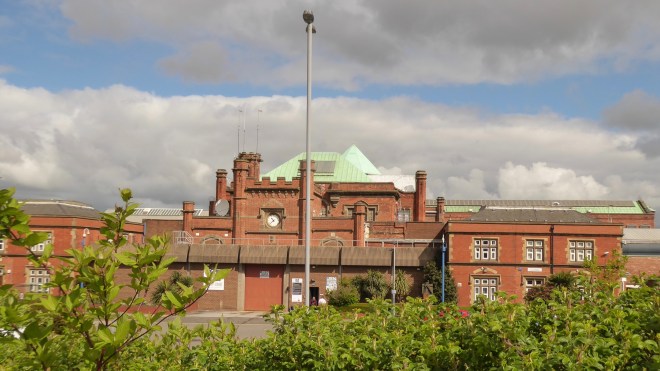
On 3rd September 1976, about 100 prisoners in Hull Prison, Hedon Road, took over 3 of the 4 wings, after a prisoner was beaten up by prison officers, citing grievances about conditions. Held a rooftop protest which lasted 67 hours. Huge amounts of damage were done to the prison, which was closed for a year.


Prison

August 26th

On 26th August 1310, King Edward II visited Beverley.

On 26th August 1346, Sir John de Sutton fought on the English side at the Battle of Crecy.

On 26th August 1800, Hull surgeon Edward Oxley advertised in the Hull Packet his invention Modena Fossil, as a speedy and effectual cure for ‘hooping-cough, palsy, rheumatism, asthmatic fits, … diseases of the breasts…’ The Medical Observer was very scathing of this product which it described as oil of amber.

On 26th August 1809, Hedon borough constable Edward Hoe received £1 8s wages for transporting Agnes Sharp and her son William to Friskney in Lincolnshire (her husband’s parish), as Hedon parish was not liable to pay her benefit. Her 9 year-old-daughter Rachel was entitled to settle in Hedon, and was left behind.

On 26th August 1824, on the traditional day of Swine Feast, the Feast mainly consisted of dancing and ‘riot’, most residents providing food for their friends on the Sunday before, leading to disorder which the magistrates could not control, reported author Thomas Thompson.

On 26th August 1833, Captain Richard Wallis Humphreys of the whaler Isabella in Baffin Bay picked up explorer Captain John Ross and 19 of the crew of his ship Victory. It had become stuck in ice and been thought lost for 4 years.  Humphreys was awarded a silver cup by the town of Hull at a dinner given at the Vittoria Hotel in January 1834. (The Isabella herself was trapped in ice and sank in 1835.)


John_Ross_rescued_by_Isabella,_1833


August 9th

Bishop's Palace, Howden

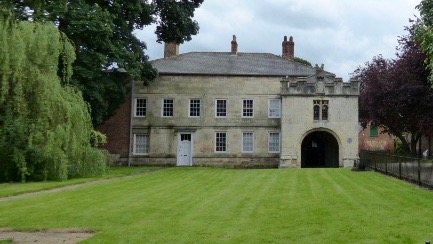
On 9th August 1260, Walter of Kirkham, Bishop of Durham, died at the Bishop’s Palace, Howden. His body was taken to Durham for burial but his viscera were buried in the church. photo shows what remains of Bishop’s Palace.

On 9th August 1516, Sir Ralph Ellerker of Risby confessed to Cardinal Thomas Wolsey, Archbishop of York, that he ordered his servants Henry Norham and Roberte Hunt to kidnap George Millet, keeper of Beverley Parks, and imprison him in Cottingham Park so that he could hunt on the Archbishop’s land. Pleading poverty, he was bound over in the sum of £200.

On 9th August 1769, John Burrill of Skipsea assaulted John Warcup with swords, staves, knives and clubs so that his life was threatened and ‘other wrongs’. Burrill was indicted in September, found guilty on 24.4.1770, and sentenced 2.10.1770 to a fine of £20 and to remain in gaol until the fine was paid.

On 9th August 1785, Rev George Lambert went to see a 24 foot whale killed and displayed at South End, Hull (near modern pier); described by sailors as a young bottlenecked grampus.

On 9th August 1859, Hansard records the 29.4.1859 election in Beverley void; Ralph Walters was declared ‘not a Burgess to serve in this present Parliament for the Borough of Beverley’ and Henry Edwards was declared MP in his place. Joseph Robinson Pease in his diary called Walters ‘an adventurer, arriving 3 days previously’, ‘by open bribery …. carried the day.’

On 9th August 1902, William Day Keyworth junior, sculptor, died aged 59 in Spring Bank, Hull. He produced many statues of civic dignitaries, including Andrew Marvell, Anthony Bannister and William Wilberforce (now outside Wilberforce House). Shot himself in the head at his home, but left no suicide note.

On the same day, Nafferton villagers were celebrating King Edward VII’s coronation with, among other events, a ‘comic’ cricket match, gentlemen vs ladies, which the ladies won. The score is not recorded.

On 9th August 1915, 17 Goole residents, mostly women and children, were killed by a Zeppelin raid on the town and docks.

On 9th August 1916, a Zeppelin raid on Anlaby Road, Hull,  killed John Broadley aged 3 and at least 7 other residents, and injured about 20. 2 people died of shock. Rev A.W. Carter, Assistant Priest of Newington Church, was badly hurt.


August 3rd

On 3rd August 1349, John de Preston was elected Prior of North Ferriby on the death of John de Beverley, himself elected Prior just 10 days earlier on 24thJuly, when he succeeded the previous Prior Walter de Hessell on his death. This outbreak of the Black Death killed 35 out of 95 parish priests in East Yorkshire, and presumably a similar proportion of the general population.

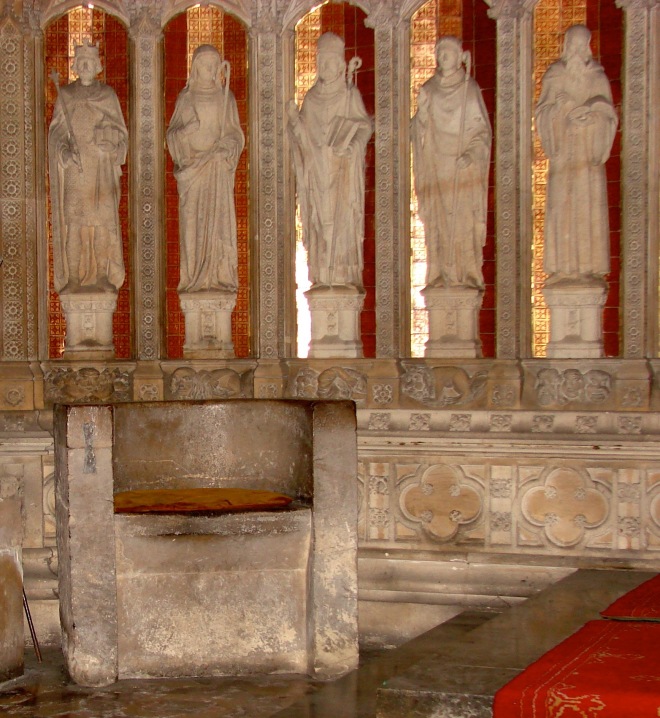
On 3rd August 1523, Thomas Senexer, yeoman, of Holme on Spalding Moor, claimed sanctuary at the church of St John, Beverley, for debt. photo shows the Frith Stool (sanctuary chair)

On 3rd August 1732, Robert Cook was killed when he fell from a wagon at one of the chalk pits in Hutton.

On 3rd August 1798, Press Gang seamen John Sykes and John Burnock or Burnick were killed when attempting to press the crew of the returning whaler Blenheim (& see 2.8). The fight was watched by crowds on the dockside. Capt Mitchinson was charged with murder (& see 31.3) The navy men were buried in Drypool Cemetery.

On 3rd August 1878, for 1d working people could attend a lecture on ‘The Yorkshire Wolds in Prehistory’ as part of Hull Literary and Philosophical Society’s new series of lectures to the working classes in the Exchange Building, aimed at keeping working people occupied during the new Saturday half holiday.

On 3rd August 1942, Mrs Frances Snowden, Lieut Stanley Lawrence and Charles Cross were killed when 4 bombs were dropped on Flemingate, Beverley, damaging Hodgson’s Tannery and destroying a house, a medical centre and a warden’s post. 15 people were injured, some of them machine-gunned by the German bomber.

minster - frith stool.JPG

August 2nd

On 2nd August 1806, Capt Welburn, James Simon, ship’s surgeon, and crew of Hull whaler Blenheim were returning from the Davis Straits when the ship was taken by 2 French frigates, L’Syrene and Le Revenge. The Blenheim was burnt, its crew landed at Pampoule near St Malo, and conveyed to Arras where they were imprisoned. They were later moved to other prisons, and only released in 1814, after years of privation and misery, when the allies entered Paris. Dr Simon was subsequently in practice in Aldborough, Holderness where he died in 1845.

On 2nd August 1860, Hedon Magdalen Fair was finally abolished; in the latter years the owner of the field had to persuade, or bribe, those who wished to attend the fair not to meet there. The event had included a market, music, games, sports, juggling, fire-eaters, and badger baiting.

On 2nd August 1913, Charles William Loten and Terence Charles Carroll, 18, died at Hornsea whilst trying to save a child from drowning. A memorial brass in Hornsea church was paid for by public subscription.

On 2nd August 1916, Joseph Bennett, 17,  died in Hull from bubonic plague. photo shows his memorial in the columbarium, Hedon Road.

plague victim.JPG

July 30th

whalebone arch Pat.JPG

On 30th July  1526, Preston butcher John Erdy claimed sanctuary at the church of St John, Beverley, for felony and debt.

On 30th July 1643, the parish clerk of St Mary’s, Beverley, reported in the parish register that they buried 13 men killed on the King’s side in the Civil War.

On 30th July 1782, the crew of Hull whaler Benjamin landed 135 butts of blubber and over 2 tons of whalebone, the product of 3 whales caught in the Davis Strait. (Rev George Lambert had shares in the ship). photo shows whalebone arch outside Patrington

On 30th July 1861, John Ellerthorpe, aged 55, rescued John Eaby, who had fallen into the Humber Dock Basin, Hull. This was Ellerthorpe’s 39thand last rescue. Named ‘The Hero of the Humber’, he was awarded with the Royal Humane Society’s Silver Medal.

On 30th July 1891, Mary Jane Langley, 18 years, of Westfield Farm, Long Lane (now Neat Marsh Road) Preston, was last seen alive when she walked to Marfleet and took the train to Hull to have her photo taken. Her body was found in a ditch near her home. Her throat had been cut. John Rennard was arrested and tried, but not convicted.


July 26th

On 26th July 1826, the Aire & Calder Navigation Company officially opened the new canal at Goole, locks for ships and barges, dock, and canal basin linking Goole to the west. A new town was built around the small hamlet of Goole (population in 1822: 450).

On 26th July 1845, Capt Dannatt and crew of Hull whaler Prince of Wales came across Sir John Franklin and his expedition to find the North West Passage, in Lancaster Sound, in the Arctic, and invited him and his officers on board. This was the last known sighting of the expedition.

On 26th July 1850, Hull Advertiser printed a report of the deaths by drowning during a riot of 4 Irish navvies (Patrick Langthon, John Dowling, Barney M’Jay and Thomas Twomey) working on the embankment of Sunk Island.

On 26th July 1986, 8 rail passengers and 1 person travelling in a van died when the van was struck by the 9.33 Bridlington to Hull train at Lockington level crossing, and the train was derailed. 51 people were injured, 10 of them seriously. There is a memorial to those who died in Driffield Memorial Garden.


lockington crash memorial