October 26th

On 26th October 1515, Hull shoemaker William Baker claimed sanctuary at the church of St John, Beverley, for a felony (no details given)

On 26th October 1587, the wife of Dr Vavasour of Hesslewood & her 2 daughters died after being taken prisoner, (presumably in Hull Castle) with her 2 daughters, in 1581. She was questioned in 1576 about her failing to attend church. In 1578 her husband’s goods were seized to pay her fines.

On 26th October 1662, 7 poor residents of North Ferriby parish received money from the Poor Rate of between 1s and 2s every 4 weeks (presumably dependent on the number of children they had); of the 7, three were widows, one a single woman, and three men. Those 83 ratepayers who could afford to contribute paid between 2d and 15s a year.

On 26th October 1866, Lord Hotham officially opened the Sykes Monument, as a memorial to Sir Tatton Sykes (d 1863), the money being raised by subscription by local people. The monument is a local landmark, on Garton Hill, near Sledmere, and can be seen from many miles away.

On 26th October 1950, Garden Village (Hull) Ltd was dissolved after the death of Sir Philip Reckitt; rents had been held at 1914 levels.
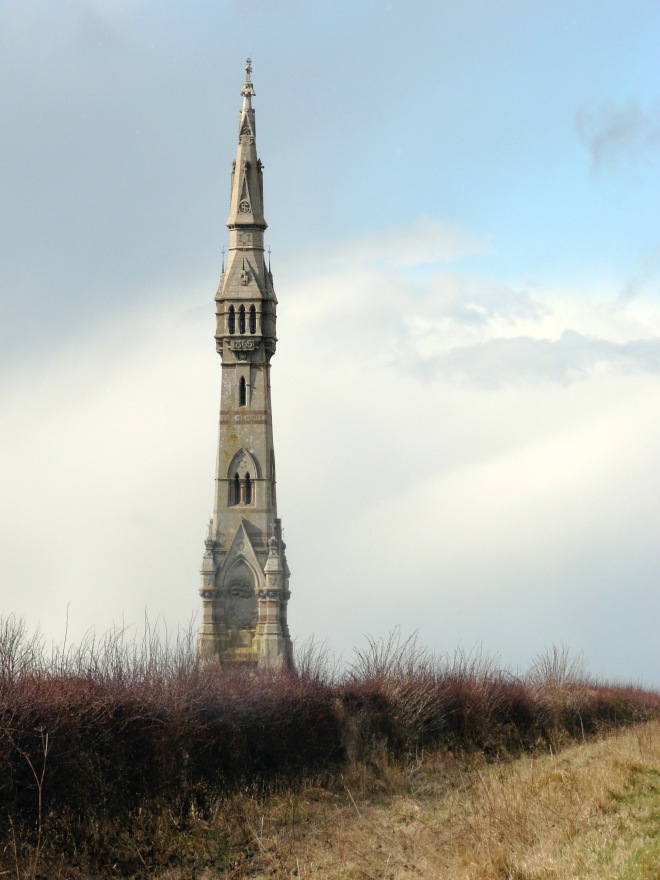
 

Sledmere


October 25th

On 25th October 1037, Aelfric, Archbishop of York, placed the relics of the recently canonised St John of Beverley in a new shrine of gold and silver, ornamented with precious stones in the Collegiate Church of St John the Evangelist, Beverley.

On 25th October 1415, Michael de la Pole, 3rdEarl of Suffolk, died in battle, with 2 of his brothers. His brother William succeeded as Earl.

On 25th October 1841, Private Stephen Bennington, of Lockington, 20, batman to vet surgeon John Gloag, rode into the Russian guns at the Charge of the Light Brigade, Balaclava, and survived.  He was awarded the Crimea Medal with clasps. Also served at Inkerman and Sebastopol and was discharged from the service in 1859 with long service and good conduct medals. Gloag did not take part in the charge.

Light Brigade


October 23rd

On 23rd October 1667, Richard Sterne, Archbishop of York, excommunicated a number of people, both male and female, at Beverley, and required them to make public penances, for crimes including adultery, fornication, and incest.

On 23rd October 1908, Wm Jackson & Son Ltd, Hull grocers & bakers, bought the company’s first motor vehicle (having previously used only horse-drawn transport and hand carts); by 1933 they had a fleet of 30 motor vehicles.

On 23rd October 1909, Rev Canon Joseph Malet Lambert, Hull philanthropist  and his wife Rose were charged at Dollgellau Magistrates Court, while at their holiday home in Barmouth, with cruelty against Mary Rose Inman, 11 years, whom they had adopted to save her from the workhouse and to train for domestic service. The girl had been starved (weighed 48lb) and beaten, and hidden from visitors. It appears that Mrs Lambert was convicted and sentenced. photo shows the school named after the Canon.

Malet_lambert


October 19th

On 19th October 1469, John Fisher was born in Beverley, the eldest son of Robert and Agnes Fisher. Chancellor of Cambridge University, Bishop of Rochester, and chaplain to royalty.  He was executed for treason 22.6.1535 on Tower Hill, for speaking out against Henry VIII’s divorce, and refusing to acknowledge the heirs of Henry and Ann Boleyn as legitimate successors to the throne. A Catholic martyr, he was canonized as St John Fisher.

On 19th October 1781, Rev George Lambert reported in his diary on a very high tide which inundated many houses in Hull.

On 19th October 1826, a Huggate parish jury of 12 men, 2 affearers (assessors of fines) and the pinder, set penalties for anyone allowing cattle into public lanes at night at 2s6d per head, for the first offence, and 5s per head for every offence afterwards; for allowing pigs in the streets without a ring between May Day and Michaelmas 3d per head; for allowing geese in the streets between Old Mayday and Old Lammas, 1s; for allowing anyone to stay who does not have a certificate allowing them to settle, £1 19s 11d.

On 19th October 1890, John Connell, boatman, of Waxholme, in the Coastguard Service, took part in the rescue of crew from the Grimsby vessel Genesta when it ran aground. All were rescued, except the captain, who died of exposure. Connell went on to the vessel as it was breaking up to rescue a man too weak to help himself. Connell was awarded the Humane Society Silver Medal. The unmanned vessel broke free the following day and travelled to Withernsea.

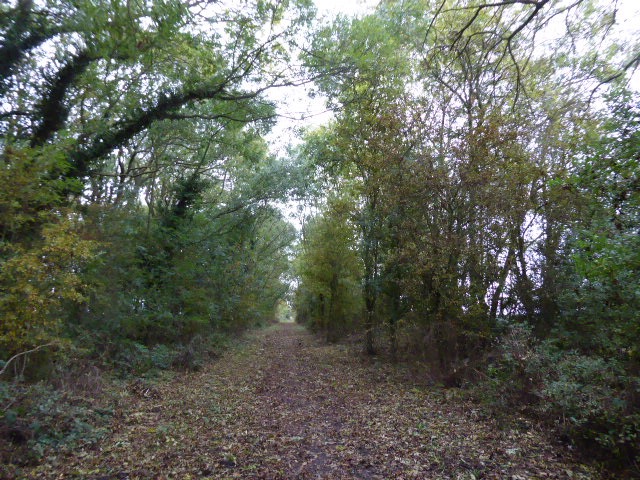
On 19th October 1964, rail passengers took their last trips on the Hull to Withernsea and Hull to Hornsea rail lines, which closed as a result of the Beeching Report. Goods services to Withernsea continued to 30.4.1965, to Hedon 3.5.1965, and to Marfleet to 1972. photo shows part of Hornsea Rail Trail today.

Hornsea Rail Trail


October 18th

On 18th October it was the tradition, on St Luke’s Day, to appoint an official dog-whipper to keep dogs out of church, and to whip any dogs found in the streets; the tradition is said to have begun when a dog ate a consecrated wafer in York Minster.

On 18th October 1654, The Petition of the Three Colonels or The Humble Petition of Several Colonels of the Army was published, authored by Alured, John Okey and Thos Saunders. Colonel Matthew Alured, brother of Hedon MP John Alured, lost his commission, and was imprisoned for a year for stirring up dissatisfaction with Parliament among English troops in Ireland.

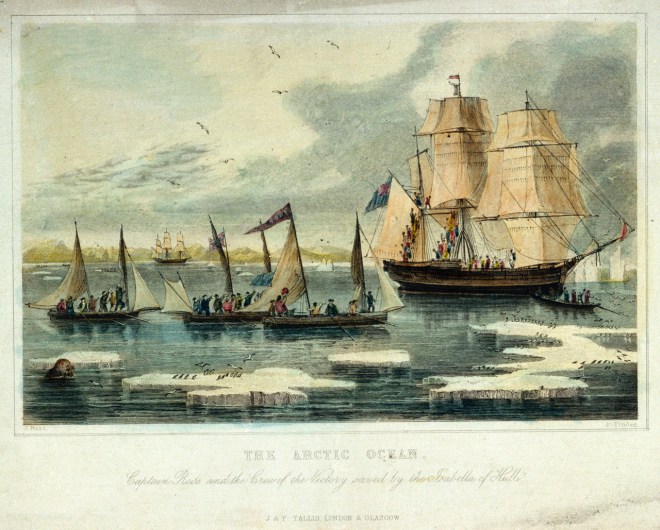
On 18th October 1833, Capt John Ross was granted the Freedom of the Town of Hull. Having returned to Hull on expedition to find the lost Isabella, was then himself thought lost.  (He was also granted the freedoms of London, Liverpool, Bristol and Wicklow)

On 18th October 1850, the Hull Advertiser reported that the ring leaders of a riot which resulted in the deaths of 4 Irish labourers on Sunk Island in July were found guilty of riot and sentenced to 4 months each with hard labour.They were: Robert Smith, John Londsbro, George Bellamy, John Dent, George Bielby and Fewson Towse.


John_Ross_rescued_by_Isabella,_1833

October 16th

john de sutton


On 16th October 1312, John de Sutton of Sutton-on-Hull was listed with other followers of the Earl of Lancaster as pardoned for his part in the death of Piers Gaveston, King Edward II’s favourite and Lord of Holderness. photo of Sutton church

On 16th Ocotber 1617, John Gildas confessed to the Patrington Manor Court that he had 3 times stolen barley and beans from Mr Hall’s (the rector) tithe barn.

On 16th October 1763, Ann Chameron was buried in Hutton with no ceremony, as she was a Catholic. Burial by a Catholic priest would have incurred a £20 fine.

On 16th October 1939, New Theatre (Hull) Limited, Kingston Square, opened with a production of “Me and my Girl’ by Noel Gay.


October 6th

site of Haltemprice Priory

On 6th October 1515, the Sheriff of Hull, Mr Mattison and 200 citizens fought the monks of Haltemprice Priory and threatened to pull down the monastery, over a dispute concerning jurisdiction over Wolfreton and Willerby, and fresh water supplies. Peace was restored by the Mayor of Hull, George Mattison and the issue was eventually resolved in the Star Chamber. One of many incidents in Hull’s ‘water wars’. photo shows site of the monastery.

On 6th October 1613, an enquiry determined that a chantry dedicated to St Mary, and a chaplain to celebrate daily services there, had been paid for by 6 1/4 acres of land, 10 messuages and 3 tofts, given to the town of Hedon by John de Burton and Henry Maupas. Chantries were abolished by Edward VI, along with other signs of Catholicism.

On 6th October 1670, Ann Barone was fined in the Patrington manor court for not making bread according to the assize – i.e. not the regulation size, weight etc.

On 6th October 1748, Mary Jackson, tenant farmer of Everingham, lost 36 of her 45 cattle to rinderpest, the cattle plague then affecting much of the East Riding.

On 6th October 1850, Hedon solicitor James Iveson, died after a long career controlling the political life of Hedon, a Rotten Borough described as ‘Lawyer-ridden’. He was also Town clerk, Mayor, land agent, and steward on behalf of the Constables of the Holderness Seigniory. The Iveson dynasty was involved in land enclosures, surveying and other profitable work. James was renowned for rudeness. Part of an ultra conservative council which for years resisted public health improvements. Collector of architectural remains from demolished churches. Engaged for some 20 years of protracted negotiation with Trinity House over Spurn Point.  portrait in Hedon Town Hall

On 6th October 1890, Chas Collier, aged 17 years, former pupil of Hull Trinity House School, died of typhoid fever in the Barque Miltiades off the west coast of Africa.

James Iveson, Hedon Town Clerk

October 3rd

On 3rd October 1667, Mark Turington, Peter Gorbut, Christopher Gray & Jane Sansbie were fined at Patrington for having bad fences or fences in bad repair.

On 3rd October 1810, Rev George Lambert of Hull wrote in his diary: ‘times never were more alarming than the present. Failure, bankruptcies and suicide are taking place every day, and public credit shaken to its foundation. No man knows today what will be his circumstances tomorrow’.

On 3rd October 1821, Dr Raffles preached to 600 people on board the Valiant in Queen’s Dock, Hull, a new floating chapel bought by The Port of Hull Society for the Religious Instruction of Seamen. It was used for 28 years until the vessel was leaking and abandoned in 1850.

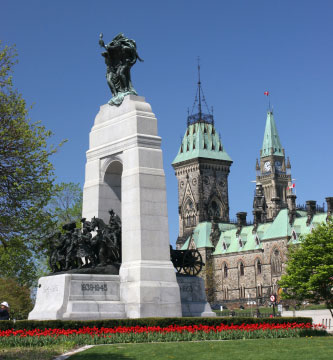
On 3rd October 1884, Elsie March, sculptor, painter and metalworker, was born in Sutton (or Old Hall, Burstwick?), one of 8 artist siblings born to foreman seed crusher George Henry March. Moved to Battersea 1901. With 5 of her brothers, created the Canadian War memorial in Ottawa completed in 1938. see photo (d 1974, Kent)

On 3rd October 1898, Ernst Adolf Powolny opened a restaurant in King Edward Street which became a Hull institution, providing high class food in opulent surroundings, as well as tea dances and catering for civic events. Closed temporarily by a fire in 1934, it finally closed after being destroyed by the Blitz on 8.5.1941. Known affectionately as ‘Polly’s’.

Elsie March

September 24th

On 24th September 1298, an inquisition was held by the Court of Chancery into Sir Osbert de Spaldington’s goods and lands, which were taken by the king. As recently as 1296, Edward had made him Governor of Berwick, when he received Robert the Bruce and imprisoned Sir William Douglas. It is not known what the allegations against him were, and he recovered most of his land by 1300, after living on the generosity of others in the meantime.

On 24th September 1401, Pope Boniface IX declared John of Bridlington a saint. John was born in Thwing, had been the Prior of Bridlington and died of the plague in 1379, aged 59. 15 miracles are recorded during his life, and 12 after his death, including saving the lives of 5 Hartlepool fishermen caught in a storm. photo shows Brid Priory church

On 24th September 1678, the wife of Thomas Richardson of Wyton died and was buried in the Quaker cemetery in Sutton.

On 24th September 1779, Lord Rockingham, High Steward of Hull, chaired a public meeting in Hull Town Hall at which it was decided that 20 18-lb guns and military equipment due to be sent to Woolwich should be used instead to defend Hull from the threat of American attack. A few days later, the threat reduced when the Americans sailed for Holland.

On 24th September 1830, Hull gunsmith Thomas Rosindale was convicted of vagrancy, having been found in the kitchen of the dwelling house of Charles Frost of Albion St. He was sent to Sculcoates House of Correction for 1 month’s hard labour.

On 24th September 1832, Mr J. Dunn caught a 17lb trout near Driffield.


Brid Priory church

September 22nd

On 22nd September 1690, Beverley Corporation gave permission to create a racecourse between the Newbald and Walkington roads. Horse racing had probably taken place on Westwood for 300 years, but this was the first time a course was formally laid out.

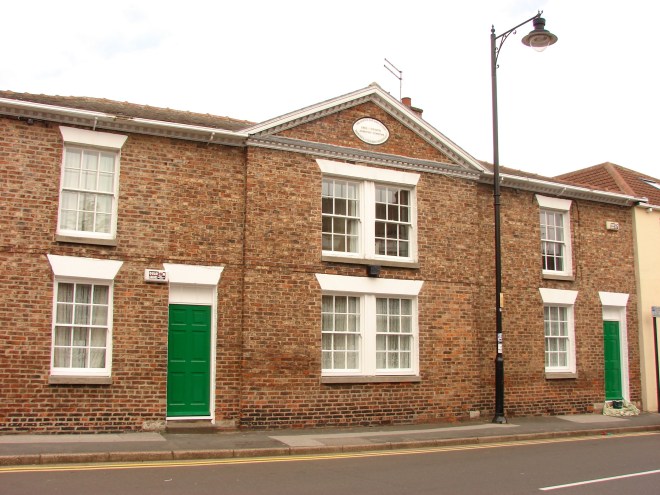
On 22nd September 1716, Leonard Chamberlain, draper, died at Hesslewood House, Hessle, and left property and estates in Sutton, Stoneferry, Selby, Dunswell and Hessle and his charitable bequests continue to this day. A Presbyterian, he supported those who had been discriminated against on religious grounds, gave money for educating the poor ‘of whatever persuasion or denomination soever’.  Commemorated in Chamberlain Road and Chamberlain Street, Sutton. photo shows one of the Sutton properties

On 22nd September 1761, to mark the coronation of King George III and Queen Charlotte, Col Duncombe’s Battalion of militia drilled in Beverley Market Place, and fired volleys, while the Corporation held a dinner for the officers, the bells rang, and in the evening there were illuminations.

On 22nd September 1778 was the official opening of The Dock, Hull. (It became known as Queen’s Dock after Victoria visited the city in 1854). The first ship in was the whaler Manchester, decorated all over with flags of the nations, followed by the Favourite, the largest ship in the port at 1,000 tons (burthen). 20,000 spectators were entertained by cannon fire and a musket salute from the garrison, and the great and the good were fed and sumptuously entertained.

On 22nd September 1856, Count de Werdinsky died in Hull aged 53, in abject poverty, after variously representing himself as a Polish count, inventor and doctor. He was a bankrupt, a fraudster, and had several counts of assault and indecent assault against women. His memorial is in the Western Cemetery

On 22nd September 1914, the crews of HMS Aboukir, Cressy and Hogue, 3 Navy cruisers, were sunk by a German u-boat, with the loss of 1,450 lives. This not only led to a public outcry, but also the need to provide for a large number of orphaned children. Some of the children were admitted by Hull’s Sailors’ Children’s Society and put up in its holiday home in Hornsea, as well as in the Newland Homes. By 1915, 108 children of seamen lost in action were admitted, from across the country.

leonard chamberlain sutton.JPG