October 4th

On 4th October 1253, heavy flooding in Holderness resulted from a dry year and heavy rain. The River Hull changed its course.

On 4th October 1541, the Privy Council of England again sat in Hull.

On 4th October 1642, Capt John Hotham, after the Yorkshire Treaty of Neutrality was signed, began to return from Doncaster to Hull. The treaty was rejected by Parliament, and he detoured and captured Cawood Castle for Parliament, the Archbishop having fled.

On 4th October 1643, 400 Parliamentary soldiers went out of the besieged town of Hull and destroyed the Royalist forts in Sculcoates and Derringham Bank.

On 4th October 1785, Thomas Jackson of Blackfriargate, Hull, complained to the Mayor and corporation about nuisance caused by one of the town waites (official musicians) holding dancing lessons in Hales Entry.

On 4th October 1909, Hornsea Urban District Council conducted a poll of ratepayers, who voted to allow the council to enclose the Promenade Gardens and charge for admission.

On 4th October 1952, ship’s cook Cyril Brown, 44, and 19 shipmates were lost when Hull trawler Norman was wrecked. The sole survivor was Norman Spencer, 19. see Pathe news https://www.britishpathe.com/video/one-survivor-aka-trawler-disaster

 

October 1st

On 1st October 1646, Sir Henry Griffith of Burton Agnes was fined £7,547 as a Colonel in the Royalist army (a delinquent) in order to recover his goods which had been sequestered by Parliament. His fine was reduced in 1650 to £5,122.

On 1st October 1782, William Spence was born in Bishop Burton. He became famous for writings on entomology, a Fellow of the Royal Society, the first editor of the Hull newspaper the Rockingham, and involved with the Hull firm of Blundell Spence. Died 6.1.1860  see photo

On 1st October 1857, Thomas Bentley Locke, retired banker, JP of Hessle Mount committed suicide by shooting himself in the head with a pistol, apparently believing he might be implicated in the failure of the Harrison Watson & Locke bank, from which he had retired over 20 years before.

William_Spence_

September 27th

Shakespeare

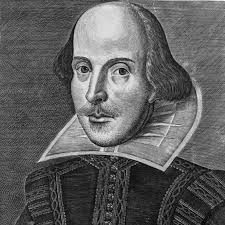
On 27th September 1599, the Hull Mayor and Aldermen ordered that no Hull resident should attend any play or interlude performed in the town, or risk a fine of 2s6d, and that the owner of any house allowing a play to be performed be fined 20s. It is suggested that the Lord Chamberlain’s Men, Shakespeare’s company, may have paid Hull a visit and performed at the King’s Head, High Street.

On 27th September 1642, the Royalist battery at Paull built for 12 guns in July was destroyed by a bombardment from the Parliamentary ships Lion and Employment; the church was also damaged.

On 27th September 1759, Keith Thomas was baptised in Brandesburton parish church; he later became professor of geography to the Royal household, and published a number of books on mathematics.

On 27th September 1782, less than a year after setting up the Hull General Infirmary charity, funds of £2,876 were raised, enabling a hospital to be opened in temporary premises in George Street (on the site of the Dorchester Cinema)

On 27th September 1813, Altisidora, a filly bred by Richard Watt at Bishop Burton won the St Leger; the village pub is named after her.

September 17th

On 17th September 1523, Hull widow Dame Joan Thurscross in her will left £30 for new vestments for St Mary’s church, £35 to hire a priest for seven years to sing for her soul, the souls of her three husbands, of her parents, and of her son, £4 to the building works at the White Friars’, £20 for mending the causeway between Beverley and Anlaby, thirteen white gowns for thirteen poor women, and silver for Hull Charterhouse.

On 17th September 1584, Peter Copley, clothier, was stripped of his status as burgess of Hull and disenfranchised, as a penalty for dyeing the clothes of people from outside the town and bartering the goods of ‘strangers’ as though they were his own. As he was ill at the time, he was not informed of this until he recovered.

On 17th September 1679, Rev Thomas Sedgwick died, aged 58. Puritan theologian and Vicar of St Giles, Marfleet between 1639 and 1672, he is commemorated with a memorial in the church, for the unusual feat of surviving in his post through the Civil War and Reformation.  photos show memorial and translation

On 17th September 1864, 3 residents of Hessle Road, Hull aboard the Humber ferry were gored when a bull being carried across broke loose and ran amok.

September 16th

On 16th September 1643, an artilleryman with a lighted match blew up the magazine at Hull North blockhouse and killed himself and 4 others.

On 16th September 1698, Robert Prudom established, and was the first pastor of, the first Baptist chapel in East Yorkshire. The building in Applegarth Lane, Bridlington is only 12 feet square. see photo

On 16th September 1829, Dr John Alderson, MD died aged 71, physician to Hull Infirmary from 1795. A polymath, he was one of the founders of the Hull Literary and Philosophical Society, and of the London Geological Society, wrote acclaimed works on fever and paralysis, established Sculcoates Refuge, (which eventually became De la Pole Hospital), and wrote on agriculture, geology, and supernatural apparitions. The funeral of this popular doctor attracted 12-15,000 mourners. He was buried in a family vault at St Mary’s Sculcoates. His statue can be seen on Anlaby Road. (b 1758 Lowestoft)

On 16th September 1846, George Hudson, MP and ‘railway king’ stayed overnight at Sutton on Hull, went to Bridlington Quay for breakfast, back to Hull, then travelled to Northampton. Joseph Robinson Pease marvelled that such a journey within 13 hours would have been unthinkable 20 years before.

Applegarth La chapel

September 9th

On 9th September 1513, Marmaduke Constable, of Flamborough was knighted for his role in the Battleof Flodden Field, and a letter of thanks from Henry VIII is displayed in Wassand Hall. Ralph Ellerker, senior of Risby and his son Ralph were also both knighted. This causes some confusion in the historical record, as there were 2 Sir Ralph Ellerkers alive at the same time.

On 9th September 1643, Rev James Sibree reported that on Sunday he had preached twice, visited the cemetery 3 times, and interred 43 bodies of his fellow citizens. During the cholera outbreak, many church services were held outdoors in the Market Place, by ministers of different denominations, and attended by more than 3,000 people. photo shows Cholera Memorial in Western Geneeral Cemetery.

On 9th September 1878, George Carr, aged 45 and Joseph Carr, aged 26, accidentally drowned in Hornsea.

On 9th September 1956, Captain Erik Ohsman, and Chief Steward V. Stenros, of SS Lona, were rescued by firemen when they were found unconscious after fire was discoveredon their Swedish ship, loaded with over 3k tons of pit props. Both recovered. The fire, which started in the engine room, spread to the cargo, and after several hours the ship had to be scuttled in the dock to prevent greater damage. She was raised on 11 October and repaired. Cholera memorial

September 7th

On 7th September 1316, King Edward II issued orders to Beverley to arm the whole male population between ages 16 and 60 against the Scottish threat.

On 7th September 1643, Sir John Hotham was taken from the Tower of London to Parliament to be formally ejected from his seat as MP for Yorkshire.

On 7th September 1646, Sir Michael Wharton of Beverley, considered a Royalist (delinquent) for attending a meeting at Heworth Moor addressed by the King, was fined £4,000 in order to recover his goods which had been sequestered by Parliament. His fine was reduced in 1652. photo shows Warton’s Hospital, Keldgate, Beverley.Warton's Hospital.JPG

On 7th September 1854, Robert Isaac Wilberforce, vicar of Burton Agnes and Archdeacon of the East Riding, resigned his Church of England posts and joined the Catholic Church.  Robert was the second son of William Wilberforce. Of William Wilberforce’s 4 sons, 3 converted to Catholicism and Samuel Wilberforce Bishop of Oxford, then Winchester, was an extreme Anglo-Catholic.

On 7th September 1866, Bull lightship in the Humber was struck by the Prussian barque Emma Johanna and damaged, holed below the water-line. It was taken to Victoria Dock, Hull for repairs by Hull Trinity House.

September 6th


greenlandmap

On 6th September 1611, Thomas Marmaduke, Master of the Hull ship Heartsease, and junior brother of Hull Trinity House, returned from the Arctic with a cargo of whale and walrus hides and blubber, the first cargo of the whaling trade on behalf of the Muscovy Company. He was credited with a number of discoveries, none of them substantiated, and a bay in Greenland was named for him Marmaduke’s Cove, which the Dutch called Dusko, and was later known as Disko.

On 6th September 1640, Sir Thomas Glemham was appointed Governor of Hull by King Charles I; the Mayor and Aldermen objected to Lord Strafford about the creation of this new post, in addition to the Mayor’s role, but was advised to go along with it, to prevent the King’s anger.

On 6th September 1650, John Ramsden was removed from his office as Hull alderman for refusing to take an oath recognising the authority of the government without King or House of Lords.  In 1659 he became MP for Hull.


September 2nd

On 2nd September 1643, the Royalists under the Earl of Newcastle began the second siege of Hull. The Governor, Lord Ferdinand Fairfax, sold silver to the value of £400 4s to Hull Trinity House, in order to pay his soldiers. Trinity House sold the silver the following year at a slight profit.

On 2nd September 1861, the lease on Fishwicks’ Mill, butt Lane, Beverley, had expired, and the mill was demolished. The Council tried to repossess the land, but local people considered it to be common land, and 25-30 rioters destroyed the house and burnt it to the ground.

On 2nd September 1871, William (Billy) Ringrose was born in Ganton, where he became a carpenter, but was coached by a cricket professional employed by the Legard family at the Hall, and became a renowned professional cricketer, playing for 57 games for Yorkshire.

On 2nd September 1922, Hull Kingston Rovers played its first game at its new ground, Craven Park, losing 3-0 to Wakefield. The new grounds also had 14 tennis courts, and meeting rooms. The official opening did not take place until November. This was the club’s 4thground, the first 2 being in West Hull.

On 2nd September 1950, MV Dundalk Bay arrived in Hull from Mombasa, bringing 1,014 people displaced by WW2. After processing, they were dispersed to various camps throughout the UK. Many Poles, Latvians, Lithuanians and others unable to return to their homes came to find work and settle in England; some emigrated again to Canada.

On 2nd September 1967, the Flamborough lifeboat Friendly Forester rescued 6 people cut off by the tide.

Old Craven Park EAW207783

August 28th

On 28th August 1643, after the Parliamentarian army fell back to Hull, the Royalists looted and plundered Beverley and nearby villages, even the residents who were Royalist supporters. Another band of Royalists entered Cottingham, and many residents fled to Hull, including Robert Burton, the agent of Sir Thomas Barrington, who had land in Cottingham.

On 28th August 1860, Pearson Park, Hull’s first public park, was inaugurated with a 2-day event and a parade 2 miles long. 30,000 visitors came to Hull by train to take part in the event, which included tree planting, a formal dinner, and fireworks.

On 28th August 1900, Duggie Wakefield was born in Hull. Comedian, star of 13 films in the 1930s, and revue artiste. Also brother in law of Gracie Fields. Considered as popular in the North as Max Miller was in the South. Died 14.4.51

On 28th August 1915, Percy Cawkwell, aged 19, was on top of a tram in Beverley Road, Hull, when a teenage girl called him a ‘slacker’ for not being in uniform.  He immediately decided to sign up, despite being blind in one eye. He was accepted into the Royal Army Medical Corps and became a stretcher bearer.

On 28th August 1952, Mary Dawson Elwell died, aged 78, at Bar House, Beverley. Artist, her early works in the name MD Holmes. She married Fred Elwell RA in 1914, and later works signed are M D Elwell.  (b Liverpool 13.8.1874) photo shows ‘A garden in Beverley’


Mary Elwell A gdn in Bev