October 20th

On 20th October 1536, Sir Robert Constable of Flamborough took command of Hull after a siege lasting 5 days, by the East Riding rebels of the Pilgrimage of Grace. The only condition the inhabitants made was that no-one would be forced to take the pilgrims’ oath.

On 20th October 1580, Rowlande Burton was called before the Hull mayor and aldermen to answer a charge of dealing in hops without paying a customs charge. They agreed that he would pay the charges due.

On 20th October 1586, Luke Fox (or Foxe) was born in Hull. He explored much of the Hudson Bay in search of the Northwest Passage. Later became a brother of Hull Trinity House and in 1635 published ‘North-west Fox, or Fox from the Northwest Passage’. Died approx 15.7.1635.

On 20th October 1749, a ’sudden and dreadful’ fire broke out at night when the Stamford Bridge Mills machinery overheated.

On 20th October 1890, Withernsea pier was damaged for a third time since its opening 12 years before, when an unmanned Grimsby fishing smack, the Genesta, smashed into it, and destroyed half of the remaining pier (see 19.10). Another boat, the Henry Parr, smashed into it in 1893, leaving only 50 feet, which remnant was removed in 1903 during work on the sea wall.

On 20th October 1958, the Malton to Driffield Railway closed to freight traffic, passenger traffic having ceased in 1950.


W'sea pier

October 8th

On 8th October 1536, Beverley men mustered on Westwood Low Green in response to the Lincolnshire rebellion against the Act of Dissolution. Elizabeth Stapleton encouraged them, despite the reluctance of her husband, and her brother-in–law William Stapleton became the rebels’ captain.

On 8th October 1643, Capt Strickland led a failed Royalist attack on Hull’s Hessle Gate, and was shot dead. Many of the attackers were killed.

On 8th October 1708, William Robinson died in Hull. Former Sheriff of Hull, donor of a hospital to Trinity House, left bread for 12 widows to be given each year on Christmas Day. They were required to go to his grave in Holy Trinity churchyard to receive their dole.

On 8th October 1805, Beverley corporation ordered that all rogues and vagabonds found wandering in the town must be apprehended and conveyed to a magistrate. A board  showing this order can be seen in St Mary’s church loft.

On 8th October 1862, Hornsea businessman Joseph Armytage Wade turned the first sod with a silver trowel at a ceremony to mark the start of building the Hull to Hornsea Railway.

On 8th October 1874, George Wombwell visited Beverley on his way to Hull Fair; in Saturday Market he exhibited elephants, giraffes, a rhino, and big cats; other shows also stopped over in the town before going to Hull.

On 8th October 1929, Wm Jackson & Son Ltd opened their landmark store in Paragon Street, Hull, designed by Hull architects Gelder and Kitchen, with a cafeteria and restaurant on the first floor. After the war, when the fire-damaged property was repaired, a 3rd floor was added as a ballroom. This was to become one of the city’s most popular night-spots for many years.

On 8th October 1985, Clive Sullivan MBE died aged 42. 1st black captain of any British national sporting team. He played rugby league with both Hull and Hull Kingston Rovers during his career. Holds records for most tries in a career (250) and most tries in a match (7). Commemorated in Clive Sullivan Way and the Clive Sullivan Memorial Trophy.(b 9.4.1943 Cardiff)


Clive Sullivan

October 6th

site of Haltemprice Priory

On 6th October 1515, the Sheriff of Hull, Mr Mattison and 200 citizens fought the monks of Haltemprice Priory and threatened to pull down the monastery, over a dispute concerning jurisdiction over Wolfreton and Willerby, and fresh water supplies. Peace was restored by the Mayor of Hull, George Mattison and the issue was eventually resolved in the Star Chamber. One of many incidents in Hull’s ‘water wars’. photo shows site of the monastery.

On 6th October 1613, an enquiry determined that a chantry dedicated to St Mary, and a chaplain to celebrate daily services there, had been paid for by 6 1/4 acres of land, 10 messuages and 3 tofts, given to the town of Hedon by John de Burton and Henry Maupas. Chantries were abolished by Edward VI, along with other signs of Catholicism.

On 6th October 1670, Ann Barone was fined in the Patrington manor court for not making bread according to the assize – i.e. not the regulation size, weight etc.

On 6th October 1748, Mary Jackson, tenant farmer of Everingham, lost 36 of her 45 cattle to rinderpest, the cattle plague then affecting much of the East Riding.

On 6th October 1850, Hedon solicitor James Iveson, died after a long career controlling the political life of Hedon, a Rotten Borough described as ‘Lawyer-ridden’. He was also Town clerk, Mayor, land agent, and steward on behalf of the Constables of the Holderness Seigniory. The Iveson dynasty was involved in land enclosures, surveying and other profitable work. James was renowned for rudeness. Part of an ultra conservative council which for years resisted public health improvements. Collector of architectural remains from demolished churches. Engaged for some 20 years of protracted negotiation with Trinity House over Spurn Point.  portrait in Hedon Town Hall

On 6th October 1890, Chas Collier, aged 17 years, former pupil of Hull Trinity House School, died of typhoid fever in the Barque Miltiades off the west coast of Africa.

James Iveson, Hedon Town Clerk

September 23rd

On 23rd September 1066, Harold Hardraada, with his Norse troops, fresh from securing York, made his way to Stamford Bridge for a parley with locals about provisions. Instead, he met Harold Godwinson’s army, and he died at the Battle of Stamford Bridge, ‘the most important battle that has ever been fought in England’.

On 23rd September 1581, Hull alderman and merchant Peter Crewe was fined the sum of £1 in 3 instalments for using false weights in selling bales of flax to a merchant called Trewyt of Nottingham and others. (& see 30.9)

On 23rd September 1704, Henry Stork, seaman who served in a man-of-war in the Queen’s Fleet, was buried after 6 months of illness at home in Hutton, after being invalided out of the Navy, fighting in the War of the Spanish Succession, in Europe or in North America. We do not know what he suffered from.

On 23rd September 1779, John Paul Jones, American navy commander, fought the Battle of Flamborough Head: an American squadron attacked a large British merchant convoy and their 2 escort vessels, during the American War of Independence.

On 23rd September 1797, Hull Trinity House paid 18 shillings to Thomas Ward, mate of the Flora, and Thomas Porrell, a seaman, after their ship was captured by the French.

On 23rd September 1897, Frank Percy Bentley, a boy, summoned George Creaser of Nafferton for assault; Creaser pleaded guilty for hitting him ‘once or twice’ with a stick after finding his son and Bentley fighting. The Driffield magistrates also heard at least 6 cases of ‘drunk and disorderly’ behaviour, a case of non-payment of rates and poor rate, a dispute about rates of pay, a summons for allowing horses to stray, a case of begging, and one assault. All despatched before lunch.

stamford bridge3.JPG

September 7th

On 7th September 1316, King Edward II issued orders to Beverley to arm the whole male population between ages 16 and 60 against the Scottish threat.

On 7th September 1643, Sir John Hotham was taken from the Tower of London to Parliament to be formally ejected from his seat as MP for Yorkshire.

On 7th September 1646, Sir Michael Wharton of Beverley, considered a Royalist (delinquent) for attending a meeting at Heworth Moor addressed by the King, was fined £4,000 in order to recover his goods which had been sequestered by Parliament. His fine was reduced in 1652. photo shows Warton’s Hospital, Keldgate, Beverley.Warton's Hospital.JPG

On 7th September 1854, Robert Isaac Wilberforce, vicar of Burton Agnes and Archdeacon of the East Riding, resigned his Church of England posts and joined the Catholic Church.  Robert was the second son of William Wilberforce. Of William Wilberforce’s 4 sons, 3 converted to Catholicism and Samuel Wilberforce Bishop of Oxford, then Winchester, was an extreme Anglo-Catholic.

On 7th September 1866, Bull lightship in the Humber was struck by the Prussian barque Emma Johanna and damaged, holed below the water-line. It was taken to Victoria Dock, Hull for repairs by Hull Trinity House.

September 6th


greenlandmap

On 6th September 1611, Thomas Marmaduke, Master of the Hull ship Heartsease, and junior brother of Hull Trinity House, returned from the Arctic with a cargo of whale and walrus hides and blubber, the first cargo of the whaling trade on behalf of the Muscovy Company. He was credited with a number of discoveries, none of them substantiated, and a bay in Greenland was named for him Marmaduke’s Cove, which the Dutch called Dusko, and was later known as Disko.

On 6th September 1640, Sir Thomas Glemham was appointed Governor of Hull by King Charles I; the Mayor and Aldermen objected to Lord Strafford about the creation of this new post, in addition to the Mayor’s role, but was advised to go along with it, to prevent the King’s anger.

On 6th September 1650, John Ramsden was removed from his office as Hull alderman for refusing to take an oath recognising the authority of the government without King or House of Lords.  In 1659 he became MP for Hull.


September 2nd

On 2nd September 1643, the Royalists under the Earl of Newcastle began the second siege of Hull. The Governor, Lord Ferdinand Fairfax, sold silver to the value of £400 4s to Hull Trinity House, in order to pay his soldiers. Trinity House sold the silver the following year at a slight profit.

On 2nd September 1861, the lease on Fishwicks’ Mill, butt Lane, Beverley, had expired, and the mill was demolished. The Council tried to repossess the land, but local people considered it to be common land, and 25-30 rioters destroyed the house and burnt it to the ground.

On 2nd September 1871, William (Billy) Ringrose was born in Ganton, where he became a carpenter, but was coached by a cricket professional employed by the Legard family at the Hall, and became a renowned professional cricketer, playing for 57 games for Yorkshire.

On 2nd September 1922, Hull Kingston Rovers played its first game at its new ground, Craven Park, losing 3-0 to Wakefield. The new grounds also had 14 tennis courts, and meeting rooms. The official opening did not take place until November. This was the club’s 4thground, the first 2 being in West Hull.

On 2nd September 1950, MV Dundalk Bay arrived in Hull from Mombasa, bringing 1,014 people displaced by WW2. After processing, they were dispersed to various camps throughout the UK. Many Poles, Latvians, Lithuanians and others unable to return to their homes came to find work and settle in England; some emigrated again to Canada.

On 2nd September 1967, the Flamborough lifeboat Friendly Forester rescued 6 people cut off by the tide.

Old Craven Park EAW207783

August 23rd

On 23rd August 1326, Richard Furnewes, barber to the Archbishop of York, was appointed to keep the park at Bishop Burton and the deer, at a salary of 2d per day.

On 23rd August 1601, Lord Burley, Queen’s Lieutenant and President of the Council of the North, visited Hull. His visit was marked with a firework display in the Market Place. Tragically, the cannon misfired, and at least 4 died, and several others were injured.

On 23rd August 1619, a woman bonesetter from South Dalton attended Londesborough House to treat Earl Francis’s shoulder, dislocated in a fall while out hawking. She was paid £1 5s for the treatment, which included 2 visits. (A physician might charge £2 a visit).

On 23rd August 1653, Robert Acklam was fined £5 by Hull Trinity House for taking the ship Blessing from Hull to London and from there crossing to Holland without the correct licence.

On 23rd August 1830, 60 farm workers rioted in Burton Pidsea, armed with clubs, scythes and stones, and visited every farmhouse where there were known to be Irish labourers, aiming to drive them out of the neighbourhood. 6 of them attacked Irish men working in a field belonging to Mr Baxter. The Hull Packet reported on 10.9. 1830 that the 6 ringleaders had been arrested and would be tried at the next Quarter Sessions in Beverley.

On 23rd August 1886, former Hull Trinity House pupil John Lester, aged 20, was killed by a fall from aloft on the Schooner Welsh Belle travelling from Hull to Newfoundland.

On 23rd August 1934, the Yorkshire Post reported on a cliff collapse along a 100-yard stretch at Aldbrough, which resulted in thousands of tons of material falling onto the beach, destroying the boat slipway. No-one was hurt. photo shows more recent erosion at Ulrome.


erosion Ulrome

August 15th

On 15th August 1690, Robert Lumley, ship’s master, was fined 10s by Hull Trinity House for sailing out of the port without supplying the House with a list of men and their wages.

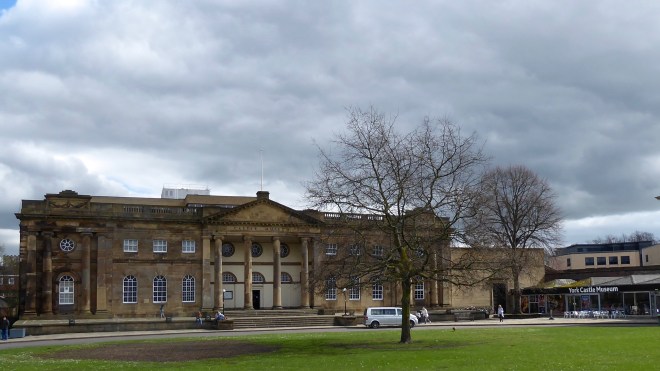
On 15th August 1764, Abraham Clayton, 35, of Howden, was hanged at York Castle for murdering his wife Elizabeth; his body was given to surgeons ‘to be anatomized’.

On 15th August 1808, Robert Pattinson,  grazier and agriculturist, died aged 82, and left 4 acres of land in Skeffling, the rent to be used to educate poor children in Easington.

On 15th August 1924, Harry Blanshard Wood, VC, died aged 42 in Devon, after a traffic accident. Born in Newton-on-Derwent, he was a corporal in the 2ndBattalion, Scots Guards when on 13.10.1918 in St Python, France, he took command when his platoon sergeant was killed, and showed gallant conduct and initiative, for which he was awarded the Victoria Cross.

On the same day, BBC radio station 6KH began broadcasting local items from bishop Lane, Hull, including sport, talks, children’s shows, and music featuring local musicians, e.g. Powolny’s Restaurant Bijou Orchestra. In 1928, the station closed, and there was no local station until Radio Humberside opened in 1971.

On 15th August 1940, 13 military personnel and 1 civilian died, and 16 injured in this daytime air raid on Driffield airfield and Southburn, including Aircraftwoman M. Hudson, the first WRAF fatality.

August 6th

On 6th August 1778, the question of who owned Spurn Point was resolved in favour of the William Constable of Burton Constable; the legal dispute began in 1609.

On 6th August 1785, John Beck of Lelley was hanged at York Castle for setting fire to a house and corn mill belonging to William Jackson of Danthorpe, with Robert Crosby and John Edwards, also of Lelley; Edwards and Crosby escaped.

On 6th August 1859, John Riley, 36, of Hull, was hanged at York Castle for the murder of his wife, Alice.

On 6th August 1888, former Trinity House School pupil George Smith, age 15, drowned after a collision between the Barque Cambrian and a French Barque during a great storm in Valparaiso harbour.

On the same day, a Bank Holiday Monday, a popular trip out from Hull Corporation Pier was to Paull by boat to watch the Army’s Submarine Miners in training and holding boat races and athletic competitions. Several boats left the Pier during the day.

York Castle