November 30th

On 30th November 1219, William de Forz II, count of Aumale, Lord of Holderness, was declared a rebel and excommunicated for offences against the Crown and the sheriffs of 6 counties were instructed not to give him any help; he had held onto castles after being ordered to restore them to their owners.

On 30th November 1280, the residents of Hedon petitioned government to fix their tax (fee farm) as they were ‘few and poor’ and competition from Ravenserod and Hull were increasing from day to day. The port was firmly in decline. Hedon ship motif can be found in St Augustine’s church.

Hedon ship, St Augustine's

On 30th November 1587, Alexander Crowe, Catholic priest, aged approx 34, was executed in York. Born in Howden, worked as a shoemaker and travelled to Douai; ordained at Rheims 1583. Captured at South Duffield while baptising the baby of Cecily Garnett.

On 30th November 1644, Sir John Hotham began his trial for treason at the Guildhall, London.

On 30th November 1832, Henry John Shepherd, attorney and JP, of Beverley, went bankrupt, having speculated in building projects; his creditors were reported to include mainly individuals who had given him money for investment with no security; the bankruptcy register describes him as ‘dealer and chapman’. Shepherd was again practising as a solicitor in 1833.
 

October 26th

On 26th October 1515, Hull shoemaker William Baker claimed sanctuary at the church of St John, Beverley, for a felony (no details given)

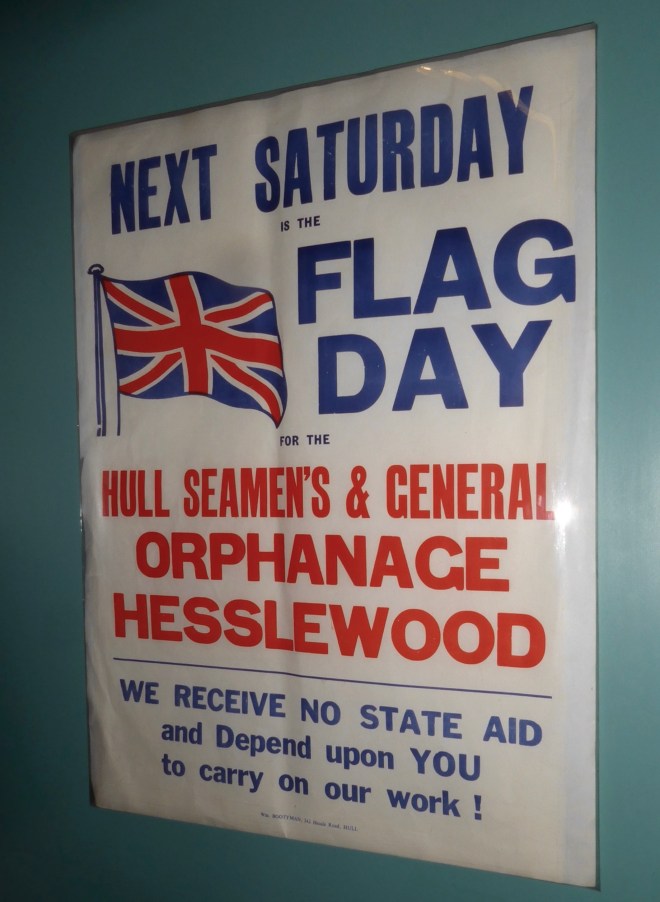
On 26th October 1587, the wife of Dr Vavasour of Hesslewood & her 2 daughters died after being taken prisoner, (presumably in Hull Castle) with her 2 daughters, in 1581. She was questioned in 1576 about her failing to attend church. In 1578 her husband’s goods were seized to pay her fines.

On 26th October 1662, 7 poor residents of North Ferriby parish received money from the Poor Rate of between 1s and 2s every 4 weeks (presumably dependent on the number of children they had); of the 7, three were widows, one a single woman, and three men. Those 83 ratepayers who could afford to contribute paid between 2d and 15s a year.

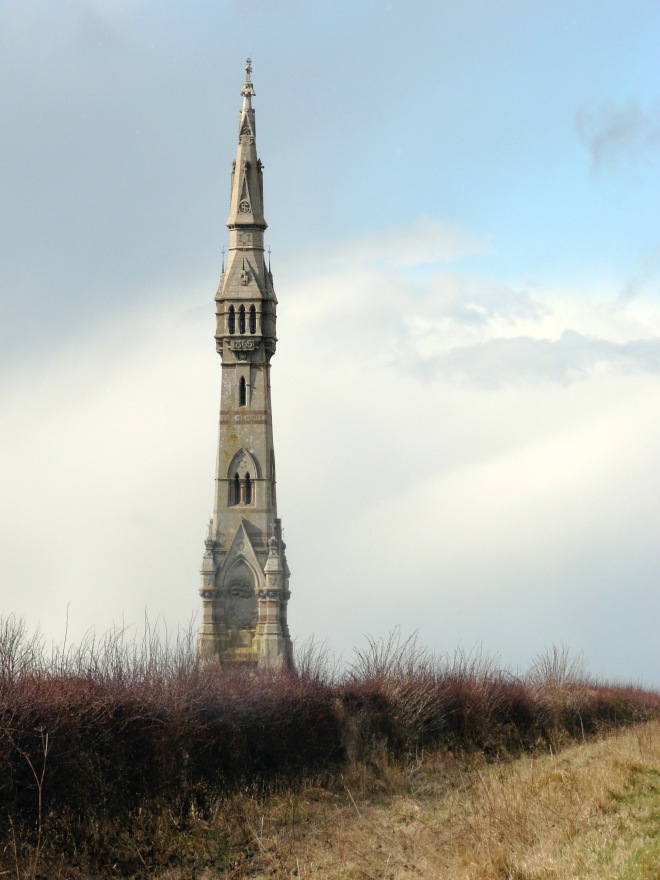
On 26th October 1866, Lord Hotham officially opened the Sykes Monument, as a memorial to Sir Tatton Sykes (d 1863), the money being raised by subscription by local people. The monument is a local landmark, on Garton Hill, near Sledmere, and can be seen from many miles away.

On 26th October 1950, Garden Village (Hull) Ltd was dissolved after the death of Sir Philip Reckitt; rents had been held at 1914 levels.


Sledmere


October 4th

On 4th October 1253, heavy flooding in Holderness resulted from a dry year and heavy rain. The River Hull changed its course.

On 4th October 1541, the Privy Council of England again sat in Hull.

On 4th October 1642, Capt John Hotham, after the Yorkshire Treaty of Neutrality was signed, began to return from Doncaster to Hull. The treaty was rejected by Parliament, and he detoured and captured Cawood Castle for Parliament, the Archbishop having fled.

On 4th October 1643, 400 Parliamentary soldiers went out of the besieged town of Hull and destroyed the Royalist forts in Sculcoates and Derringham Bank.

On 4th October 1785, Thomas Jackson of Blackfriargate, Hull, complained to the Mayor and corporation about nuisance caused by one of the town waites (official musicians) holding dancing lessons in Hales Entry.

On 4th October 1909, Hornsea Urban District Council conducted a poll of ratepayers, who voted to allow the council to enclose the Promenade Gardens and charge for admission.

On 4th October 1952, ship’s cook Cyril Brown, 44, and 19 shipmates were lost when Hull trawler Norman was wrecked. The sole survivor was Norman Spencer, 19. see Pathe news https://www.britishpathe.com/video/one-survivor-aka-trawler-disaster


September 21st

On 21st September 1638, Mountjoy Blount, Earl of Newport, sent King Charles’s thanks to Captain William Legge (who replaced Sir John Hotham as governor of Hull) for fortifying Hull and setting up an arsenal for the Scottish campaign.

On 21st September 1875, John William Duncan, aged 14, orphan, left Spring Bank  orphanage to become a cabin boy on a steam ship leaving Hull for Savannah, USA. photo refers to a different organisation – Spring Bank was the home of Hull Mariners’ Church Sailors’ Orphan Society


Seamen's orphanage

September 7th

On 7th September 1316, King Edward II issued orders to Beverley to arm the whole male population between ages 16 and 60 against the Scottish threat.

On 7th September 1643, Sir John Hotham was taken from the Tower of London to Parliament to be formally ejected from his seat as MP for Yorkshire.

On 7th September 1646, Sir Michael Wharton of Beverley, considered a Royalist (delinquent) for attending a meeting at Heworth Moor addressed by the King, was fined £4,000 in order to recover his goods which had been sequestered by Parliament. His fine was reduced in 1652. photo shows Warton’s Hospital, Keldgate, Beverley.Warton's Hospital.JPG

On 7th September 1854, Robert Isaac Wilberforce, vicar of Burton Agnes and Archdeacon of the East Riding, resigned his Church of England posts and joined the Catholic Church.  Robert was the second son of William Wilberforce. Of William Wilberforce’s 4 sons, 3 converted to Catholicism and Samuel Wilberforce Bishop of Oxford, then Winchester, was an extreme Anglo-Catholic.

On 7th September 1866, Bull lightship in the Humber was struck by the Prussian barque Emma Johanna and damaged, holed below the water-line. It was taken to Victoria Dock, Hull for repairs by Hull Trinity House.

July 7th

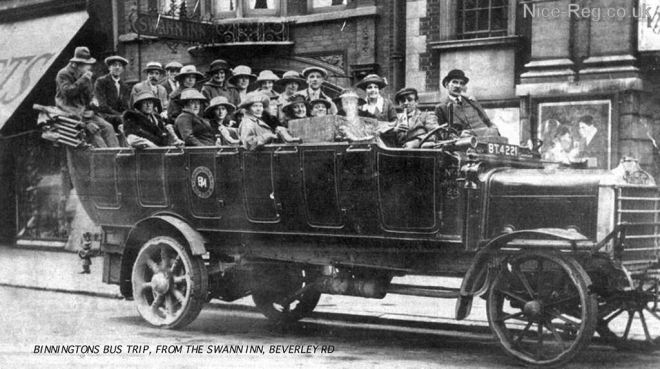
charabanc

On 7th July 1626, the Council in the North ordered Hull Corporation to fortify the town against threat from the Spanish.

On 7th July 1643, the Mayor and Aldermen of Hull  wrote to William Lenthall, Speaker of the House of Commons, to say that after suffering the tyrannical government of the town by Sir John Hotham,  (arrested the week before) they wished to have Lord Ferdinando Fairfax remain in the town as governor.

On 7th July 1788, George Wether(h)ill, butcher, of Hull, aged 80, died aged 80, killed by a bull’s leg. He is buried in Preston.

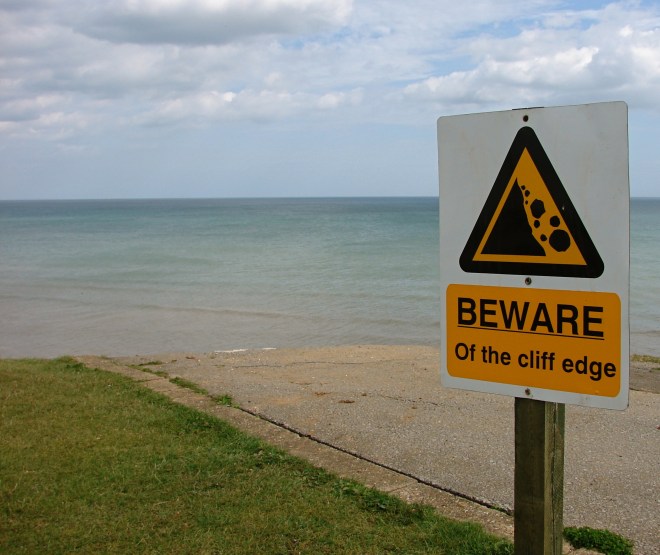
On 7th July 1928, the staff of Woolworths Ltd (Hull branch) went on their staff outing to Aldbrough by Binnington’s saloon buses. I hope someone had cut steps to the beach. (see yesterday’s item).


July 6th

On 6th July 1381, William Haldene of Beverley had his brains literally knocked out by John Erghom and others, with a pole-axe, 2 battle-axes, 6 swords, 2 forks and other weapons, before his body was thrown into the beck in Walker Lane.

On 6th July 1382, Sir Michael de la Pole leased to John de Hedersee and John of Dimlington land in Myton which included arable land, pasture and at least 30 acres of meadow, with houses, sheepfolds, 600 sheep and 160 lambs. Myton was clearly very rural then.

On 6th July 1537, the body of Sir Robert Constable of Flamborough was displayed on Beverley Gate, Hull, after he was hanged for his part in the Pilgrimage of Grace, despite having been pardoned the previous year.

On 6th July 1538, Hull agreed to give a place in the Charterhouse to the wife of a blind man named Ralph, as his carer during his lifetime, taking up a place normally reserved for a man.

On 6th July 1642, Robert & Christopher Hildyard of Winestead, Francis Cobbe of Ottringham, and 300 other Holderness people met King Charles I at Keyingham and handed him a petition against Sir John Hotham’s actions in flooding farmland and taking livestock into Hull. The King was visiting The Providence, which had landed arms from Holland. The King sympathised, but said he could do nothing except raise troops, as he had no power to control Hotham.

On 6th July 1644, the Hull Committee of Sequestrations formally adjudged alderman James Watkinson a delinquent, 2 years after he left Hull to join the Royalist army, and they ordered that his post as alderman be filled by election.

On 6th July 1901, G.E. Conrad Naewiger complained in a letter to the Hull Daily Mail of the lack of steps to Aldbrough beach, a popular destination for works outings from Hull. photo shows Aldbrough cliff.

On 6th July 1910, Arthur Geoffrey Dickens was born in Hull. Professor of History at the University of Hull, he was elected Fellow of the British Academy. Considered the leading historian of the Reformation of his time. Awarded the Order of Merit by the German Government. (died 31.7.2001)

On 6th July 1921, Tilworth Grange was opened to ‘Female mental defectives’ (people with learning disabilities), the first provision in Hull for people who previously were sent to institutions in Bristol, Chesterfield and Ormskirk. Winestead Hall was bought in 1931 for men.


erosion aldboro.JPG

July 4th

On 4th July 1399, Henry Bolingbroke (later Henry IV) landed at Ravenspurn from France with 60 men, and was joined by the Earls of Northumberland (Percy) and Westmoreland (Neville), to claim the throne from Richard II. Photo shows memorial in Easington church.

On 4th July 1524, William Richerdson, husbandman, of North Newbald claimed sanctuary at the church of St John, Beverley, for the ‘murderation’ of Anthony Godsale, husbandman of Newbald.

On 4th July 1597, William Anlaby or Andleby, a Catholic convert born in Etton, returned to UK as a priest after training in France.   He ministered to Catholic prisoners in Hull. Executed at York as a Catholic missionary priest. Beatified by the Catholic church in 1929.

On 4th July 1642, Sir John Hotham, aware that the Royalists surrounded Hull and had tried to cut off the fresh water supply, gave orders to open the sluices and cut the Humber banks in Drypool and Myton, outside the walls. He told farmers to bring their cattle and goods into the town. Hull was virtually unassailable.

On 4th July 1643, after defeat by the Royalists at Adwalton Moor, Sir Thomas Fairfax retreated to the only Parliamentary stronghold left in Yorkshire, Hull, just a few days after Hotham’s arrest.bolingbroke memorial Easington. jpg

June 30th

On 30th June 1493, William Hall of Hull claimed sanctuary in the church of St John, Beverley, for the death of Thomas Harwed, a glover, also of Hull.

On 30th June 1643, Nicholas Pearson, Parish clerk, a Puritan, reported on a ‘great scrimmage’ in the town, the day before. ‘God gave us the victory’ meaning that Parliament won. 13 Royalists were buried the same day.

On the same day in Hull, the Committee of Defence ordered that 8 men guard Captain  Hotham to prevent his escape. His father, Sir John, was kept in the Hercules in the Humber before both were taken to the Tower of London.

On 30th June 1945, Hull Aldermen Hewitt and Stark acted as driver and conductor on the last ever Hull tram, illuminated with 800 fairy lights, and watched by up to 50,000 people. Trams had operated since 1899.

On 30th June 1999, Hull’s Lord Mayor Brian Petch presided at a ceremony to note the renovation and restoration of the gates of the former RAF station in Sutton, installed at the Gillshill Road entrance to East Park.

eastparkgates1

June 29th

On 29th June 1643, Captain Hotham was arrested in Hull, but Sir John escaped and tried to cross the river to make his way to his fortified house at Scorborough. Not being able to cross at Stoneferry or Wawne, he rode to Beverley, where he found a troop of Parliamentary soldiers. He put himself at their head and ordered them to follow him.  Their commander, Matthew Boynton, countermanded the order and Hotham tried to escape through the streets, but was knocked off his horse and arrested. The Mayor, aldermen and other burgesses met to appoint a temporary Governor and committee, until Parliament could give directions.

On 29th June 1840, John Tasker was convicted of larceny at Beverley Sessions Court, and sentenced to 7 years’ transportation. At the same sessions, Joshua Needham was sentenced to 14 year’s transportation for receiving stolen goods.

On 29th June 1870, Frederick William Elwell was born in Beverley.  Painter and member of the Royal Academy, he painted portraits of King George V and TR Ferens, amongst others. His wife Mary was also an accomplished artist. (d 3.1.1958)

On 29th June 1939, the body of Thomas Smith, 27, spare hand, washed up at Paull, and was identified as one of the crew of the Lady Jeanette, which sank on 8.3.1939.

elwell