July 13th

On 13th July 1496, Bartholomew Pereson of Driffield claimed sanctuary at the church of St John, Beverley, for the murder of John Elyot.

On 13th July 1854, 3 men and a boy drowned when they fell off the Dowthorpe as it was being launched. About 300 people had boarded the ship before the launch, and deliberately rocked the boat. Many fell into the water and 4 drowned. A tug “Ann Scarborough’ was capsized by the number of people trying to board her from the water.

On 13th July 1936, Oswald Mosley, leader of British Union of Fascists,  found himself unable to book a hall in Hull. Mosley planned to give a speech in Corporation Fields, to recruit blackshirts to his organisation, but they were met with a large and hostile group of local people, and a riot ensued. Mosley was not able to give his speech.

On 13th July 1951, a fire broke out in No 1 Shed, Humber Dock, Hull, destroying £100,000’s worth of cargo awaiting shipping. The probable cause was said to be a discarded cigarette, and made worse by a gas leak.

Dowthorpe July 1854?


July 8th

On 8th July 1497, Thomas Thompson, labourer of Stamford Bridge, claimed sanctuary at the church of St John ‘for the security of his body’. The register does not state why he was in fear for his life.

On 8th July 1642, King Charles I sent a troop of infantry and cavalry to set fire to windmills outside Hull, aiming to starve the besieged town; they were repulsed. John Shawe, Holy Trinity lecturer said this incident incensed many previously uncommitted Hull people and turned them against the Royalists. Charles also issued a proclamation from ‘our court at Beverley’, part of the continuing ‘paper war’.

On 8th July 1840, the 3rd day of a horse racing meet at the George Inn, Aldbrough, offered prizes up to £4, and included a men’s foot race for a hat valued at 10s, and a wrestling match to win a pair of gloves. In later years, the prizes for the horse race included a purse of gold, saddles and bridles.  However, the field where the sports were held may have been lost to the sea.

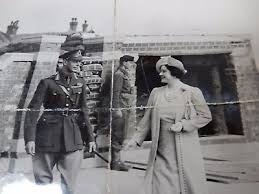
On 8th July 1940, Mrs Evelyn Cardwell of East Carlton Farm, Aldbrough, arrested and disarmed a German airman who had parachuted from a crashed bomber. She was presented on 1.8 with the British Empire Medal by King George VI at Marine Hotel, Hornsea.


royal visit Hornsea

July 6th

On 6th July 1381, William Haldene of Beverley had his brains literally knocked out by John Erghom and others, with a pole-axe, 2 battle-axes, 6 swords, 2 forks and other weapons, before his body was thrown into the beck in Walker Lane.

On 6th July 1382, Sir Michael de la Pole leased to John de Hedersee and John of Dimlington land in Myton which included arable land, pasture and at least 30 acres of meadow, with houses, sheepfolds, 600 sheep and 160 lambs. Myton was clearly very rural then.

On 6th July 1537, the body of Sir Robert Constable of Flamborough was displayed on Beverley Gate, Hull, after he was hanged for his part in the Pilgrimage of Grace, despite having been pardoned the previous year.

On 6th July 1538, Hull agreed to give a place in the Charterhouse to the wife of a blind man named Ralph, as his carer during his lifetime, taking up a place normally reserved for a man.

On 6th July 1642, Robert & Christopher Hildyard of Winestead, Francis Cobbe of Ottringham, and 300 other Holderness people met King Charles I at Keyingham and handed him a petition against Sir John Hotham’s actions in flooding farmland and taking livestock into Hull. The King was visiting The Providence, which had landed arms from Holland. The King sympathised, but said he could do nothing except raise troops, as he had no power to control Hotham.

On 6th July 1644, the Hull Committee of Sequestrations formally adjudged alderman James Watkinson a delinquent, 2 years after he left Hull to join the Royalist army, and they ordered that his post as alderman be filled by election.

On 6th July 1901, G.E. Conrad Naewiger complained in a letter to the Hull Daily Mail of the lack of steps to Aldbrough beach, a popular destination for works outings from Hull. photo shows Aldbrough cliff.

On 6th July 1910, Arthur Geoffrey Dickens was born in Hull. Professor of History at the University of Hull, he was elected Fellow of the British Academy. Considered the leading historian of the Reformation of his time. Awarded the Order of Merit by the German Government. (died 31.7.2001)

On 6th July 1921, Tilworth Grange was opened to ‘Female mental defectives’ (people with learning disabilities), the first provision in Hull for people who previously were sent to institutions in Bristol, Chesterfield and Ormskirk. Winestead Hall was bought in 1931 for men.
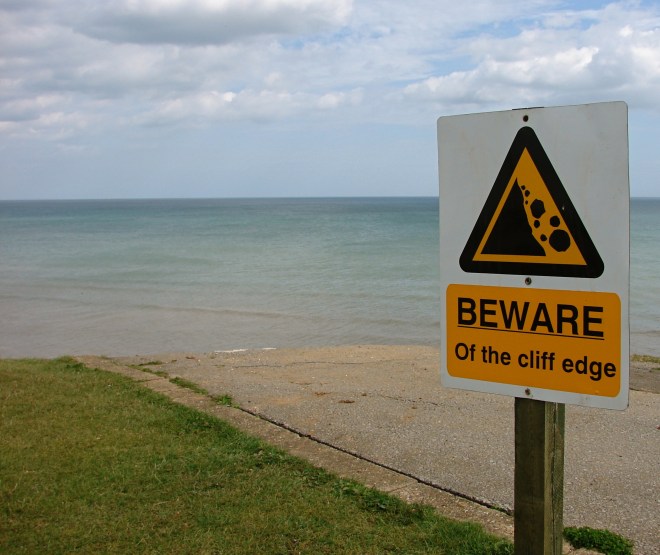
 

erosion aldboro.JPG

July 4th

On 4th July 1399, Henry Bolingbroke (later Henry IV) landed at Ravenspurn from France with 60 men, and was joined by the Earls of Northumberland (Percy) and Westmoreland (Neville), to claim the throne from Richard II. Photo shows memorial in Easington church.

On 4th July 1524, William Richerdson, husbandman, of North Newbald claimed sanctuary at the church of St John, Beverley, for the ‘murderation’ of Anthony Godsale, husbandman of Newbald.

On 4th July 1597, William Anlaby or Andleby, a Catholic convert born in Etton, returned to UK as a priest after training in France.   He ministered to Catholic prisoners in Hull. Executed at York as a Catholic missionary priest. Beatified by the Catholic church in 1929.

On 4th July 1642, Sir John Hotham, aware that the Royalists surrounded Hull and had tried to cut off the fresh water supply, gave orders to open the sluices and cut the Humber banks in Drypool and Myton, outside the walls. He told farmers to bring their cattle and goods into the town. Hull was virtually unassailable.

On 4th July 1643, after defeat by the Royalists at Adwalton Moor, Sir Thomas Fairfax retreated to the only Parliamentary stronghold left in Yorkshire, Hull, just a few days after Hotham’s arrest.bolingbroke memorial Easington. jpg

July 3rd

On 3rd July 1267, Alice Falketon was given permission by the church authorities to build herself a house in St Nicholas Churchyard, so that she could live as an anchoress. Enquiries had been made as to whether she was a fit person, with enough funds to maintain herself, and if this would be convenient to the parish.

On 3rd July 1524, Peter Gornarr, tanner, of Bridlington, claimed sanctuary at the church of St John, Beverley, for the murder of Robert Skelton of Bridlington, a tailor.

On 3rd July 1642, King Charles I set up his court in Beverley at the house of Lady Gee, North Bar Within, and quartered his forces (about 3,000 infantry and 1,000 cavalry) in and around Anlaby, Cottingham and Newland.

On 3rd July 1797, Hull Trinity House paid £2 10s to William Brand, James Hayes, Samuel Harrison and J. Peterson, whose ship the Argo had been captured.

On 3rd July 1850, Mr T. Firbank, Chairman of Hull Dock Company,  opened Victoria Dock, the first of Hull’s docks east of the River Hull.

On 3rd July 1892, a great flood at Langtoft reached a height of 7 ½ feet.

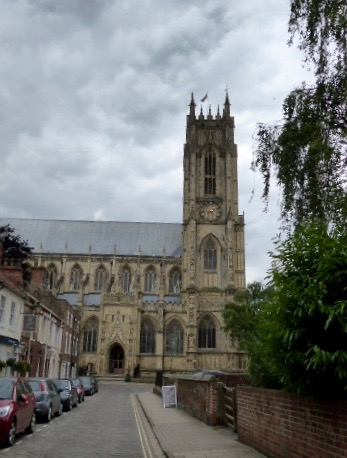
Beverley Minster

July 1st

On 1st July 1643, cannoneer John Stevenson was buried in St Mary’s Beverley, having died in the town in a ‘great scrimmage’ in the Civil War (possibly the day before).

On 1st July 1801, Hull Subscription Mill Ltd opened to provide cheap flour to the poor of Hull, 3 years or so after the opening of Hull Anti-Mill, one of the first co-operatives in the country.

On 1st July 1830, the Hull whaler Eagle had been stuck in the ice of Baffin Bay for 5 days.   With the help of 200 men from nearby ships, Captain Matthew Wright and crew, were finally able to repair the keel and heave the ship upright again.

On 1st July 1903, Amy Johnson was born in St George’s Road, Hull. She went on to become the first woman to fly solo to Australia, and to break many aviation records. (d5.1.1941)

On 1st July 1918, Hull coroner Colonel Alfred Thorney held inquests on 2 early cases in the flu epidemic: Kate Denman, aged 11, daughter of a labourer of Hodgson Street, and Elsie Barton, aged 9, daughter of a soldier, of Arthur’s Terrace Courtney Street. Both died within 24 hours of being taken ill, of influenza followed by pneumonia.

On 1st July 1940, the first-ever daylight air-raid on the British mainland attacked Saltend oil terminal.  Between 16.40 and 17.00, bombs caused a 2,500-ton tank of oil to explode, and threatened to spread to other tanks. For preventing even greater damage, the following were all awarded the George Medal: Clifford Turner, leading fireman; William Sigsworth, Manager, Anglo-American Oil Co Ltd; George Samuel Sewell, engineer, Shell-Mex & BP Ltd; Jack Owen, fireman; George Archibald Howe, Manager, Shell-Mex & BP Ltd. No loss of life.

On 1st July 1976, Withernsea Lighthouse ceased operating, after 82 years, having been superseded by modern navigational aids. It is now open to the public as a museum to Kay Kendall, to local history and the lifeboat service.Withernsea

June 30th

On 30th June 1493, William Hall of Hull claimed sanctuary in the church of St John, Beverley, for the death of Thomas Harwed, a glover, also of Hull.

On 30th June 1643, Nicholas Pearson, Parish clerk, a Puritan, reported on a ‘great scrimmage’ in the town, the day before. ‘God gave us the victory’ meaning that Parliament won. 13 Royalists were buried the same day.

On the same day in Hull, the Committee of Defence ordered that 8 men guard Captain  Hotham to prevent his escape. His father, Sir John, was kept in the Hercules in the Humber before both were taken to the Tower of London.

On 30th June 1945, Hull Aldermen Hewitt and Stark acted as driver and conductor on the last ever Hull tram, illuminated with 800 fairy lights, and watched by up to 50,000 people. Trams had operated since 1899.

On 30th June 1999, Hull’s Lord Mayor Brian Petch presided at a ceremony to note the renovation and restoration of the gates of the former RAF station in Sutton, installed at the Gillshill Road entrance to East Park.

eastparkgates1

June 29th

On 29th June 1643, Captain Hotham was arrested in Hull, but Sir John escaped and tried to cross the river to make his way to his fortified house at Scorborough. Not being able to cross at Stoneferry or Wawne, he rode to Beverley, where he found a troop of Parliamentary soldiers. He put himself at their head and ordered them to follow him.  Their commander, Matthew Boynton, countermanded the order and Hotham tried to escape through the streets, but was knocked off his horse and arrested. The Mayor, aldermen and other burgesses met to appoint a temporary Governor and committee, until Parliament could give directions.

On 29th June 1840, John Tasker was convicted of larceny at Beverley Sessions Court, and sentenced to 7 years’ transportation. At the same sessions, Joshua Needham was sentenced to 14 year’s transportation for receiving stolen goods.

On 29th June 1870, Frederick William Elwell was born in Beverley.  Painter and member of the Royal Academy, he painted portraits of King George V and TR Ferens, amongst others. His wife Mary was also an accomplished artist. (d 3.1.1958)

On 29th June 1939, the body of Thomas Smith, 27, spare hand, washed up at Paull, and was identified as one of the crew of the Lady Jeanette, which sank on 8.3.1939.

elwell

June 26th

On 26th June 1793, Captain William Hammond died aged 65 in Kirk Ella. Hull sea captain, shipowner and merchant, supporter of abolition, Chairman of Hull Dock Company, Warden of Trinity House, and diplomat. (He and David Hartley MP met Benjamin Franklin and John Adams in Paris on a possible spying mission) Buried in Welton. (b 1727 York). Photo shows a door in the Maritime Museum, former Dock Offices.

On 26th June 1854, at an event to celebrate the opening of the Hull-Withernsea railway line, 500 guests travelled from Hull on the first ever train (which was 20 minutes late, due to late arrival of guests) and part of the lunch marquee collapsed; there were no injuries. Joseph Robinson Pease in his diary recorded heavy showers and high winds threatened to tear the marquee to pieces, but that it subsided and all passed off well.

On 26th June 1920, the National Federation of Women Workers called its Hull laundry worker members out on strike, as they were paid less than in other towns. Hull Trades Council supported the strike and organised a parade on 17 July. Strike breakers were reported being smuggled in to work in laundry baskets.

Hull Dock Co

June 25th

On 25th June 1488, brewers Cornelius Jonson and William Rowyll, both of Hull, claimed sanctuary at the church of St John, Beverley, for a murder they both admitted; unfortunately, the register does not record who they killed, or why.

On 25th June 2007, Michael Barnett died of hypothermia in Hessle during catastrophic flooding when he became trapped trying to unblock a drain; 10,500 homes were evacuated in Hull and East Riding; many people were unable to return home for several months. photo shows Wold Road area of Hull.

On 25th June 2010, Alan Plater, playwright and prolific TV dramatist, died on this day. Lived in Hull from age 3, and a life-long Hull City supporter. In 1970, co-founded the Humberside Arts Centre, in Spring Street (later Humberside, then Spring St Theatre). Wrote ‘Don’t build a bridge, drain the river’ about Hull, and ‘Sweet Sorrow’ for Hull Truck about Philip Larkin. Awarded several BAFTAs and a Lifetime Achievement Award from the Writers’ Guild of Great Britain. (b 15.4.1935 Jarrow)

Hull Floods 2007