August 21st

On 21st August 1821, Zachariah Charles Pearson was born in Hull.  Ship’s captain, later ship owner.  Sheriff of Hull 1858, Mayor 1859 – 1862. In 1860, he gave 27 acres to the town for a public park, now Pearson Park. During the American Civil War, he sold arms and equipment to the Confederates, it is said to ensure a supply of cotton to the Hull cotton mills.   He lost several ships to action by the US Federal Navy and was made bankrupt in 1863. He resigned all public posts, and was disgraced, never regaining his former position. Died 29.10.1891

On 21st August 1833, the flying buttresses at the northeast of the tower of St Patrick’s church, Patrington, were blown down and damaged the roof during a violent storm.

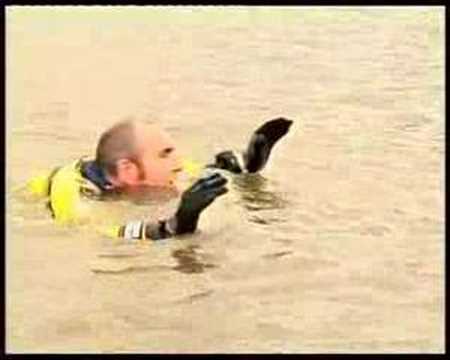
On 21st August 2005, Hull businessman Graham Boanas waded across the Humber, from Brough to Whitton, one of the most dangerous waterways in the UK, to raise money for charity.  The only recorded instance of this feat.

graham boanas

August 15th

On 15th August 1690, Robert Lumley, ship’s master, was fined 10s by Hull Trinity House for sailing out of the port without supplying the House with a list of men and their wages.

On 15th August 1764, Abraham Clayton, 35, of Howden, was hanged at York Castle for murdering his wife Elizabeth; his body was given to surgeons ‘to be anatomized’.

On 15th August 1808, Robert Pattinson,  grazier and agriculturist, died aged 82, and left 4 acres of land in Skeffling, the rent to be used to educate poor children in Easington.

On 15th August 1924, Harry Blanshard Wood, VC, died aged 42 in Devon, after a traffic accident. Born in Newton-on-Derwent, he was a corporal in the 2ndBattalion, Scots Guards when on 13.10.1918 in St Python, France, he took command when his platoon sergeant was killed, and showed gallant conduct and initiative, for which he was awarded the Victoria Cross.

On the same day, BBC radio station 6KH began broadcasting local items from bishop Lane, Hull, including sport, talks, children’s shows, and music featuring local musicians, e.g. Powolny’s Restaurant Bijou Orchestra. In 1928, the station closed, and there was no local station until Radio Humberside opened in 1971.

On 15th August 1940, 13 military personnel and 1 civilian died, and 16 injured in this daytime air raid on Driffield airfield and Southburn, including Aircraftwoman M. Hudson, the first WRAF fatality.

August 14th

On 14th August 1715, John Burdas, bricklayer, aged 26, placed a “ffaine” (possibly a weather vane?) on top of the newly-repaired top of the steeple of St Patrick’s church. This required him to stand for some hours with one foot on the top stone and the other foot on the top of a ladder ‘to everyone’s wonder and admiration’.

On 14th August 1831,  William Stephenson of Beverley had his will registered at York Assizes, the main beneficiary being Dr Alexander Turnbull of Hull. The doctor sued witnesses to the will who alleged it had been improperly drawn up. He lost his case, and left Hull soon afterwards.

On 14th June 1934, coxswain George Leng of Flamborough lifeboat Forester rescued 4 men from the cliffs at Thornwick Bay; they were in danger of drowning and unable to climb higher, in great danger as the tide had not reached its height. He threw them a line and got them into the lifeboat.

On 14th August 1937, Hull Baseball Club won the National Baseball Assn Open Challenge Cup 5-1 against Romford Wasps. Baseball was played at Craven Park until the outbreak of WW2.

On 14th August 1943, a company of 200 ‘British Pioneers’ was drafted to Hull for work on the docks, due to an increase in the number of ships carrying cargoes of war materials.


Pat church

August 12th

On 12th August 1349, the Meaux Abbot and 5 monks died of the Black Death; more were to die – only 10 of the 50 in the community survived. Afterwards, their serfs at Wawne went on strike, and the monks imprisoned them.

On 12th August 1536, North Ferriby Priory was dissolved (Prior and 8 monks, and 34 servants homeless and jobless); the first wave of Henry VIII closures followed an enquiry which found that the prior together with 2 of his canons had allegedly been guilty of fornication and 4 canons of abusing themselves.

On 12th August 1646, Robert Leedes of Molescroft swore an oath in support of Parliament. Having been a supporter of King Charles I, he was considered ‘delinquent’. As well as the oath, he was fined for lands and money worth £90.

On 12th August 1895,  Isaac Leggott, water bailiff, died instantly when a shell exploded at Alexandra Dock, Hull. It was thought to be an unexploded artillery shell, and Leggott had removed the fuse, prior to throwing it in the water. Henry Cook, dock gate man, was also seriously injured.

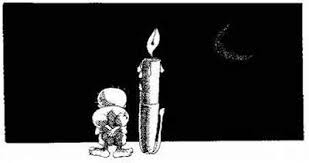
On 12th August 1987, Ismail Sowan, Hull College researcher, was arrested when police searched his flat in Westbourne Avenue in connection with the death of Palestinian cartoonist Naji al-Ali.  They found assault rifles, bomb-making equipment, explosive and grenades. Sowan, a Mossad agent, was arrested, imprisoned and deported.


naji al-ali

August 11th

On 11th August 1916, former Reckitt’s employee Private James Blain, 41, died of his wounds while serving with the East Yorkshire Regiment (3rdHull Pals) at the Somme; he had also served in Egypt. Buried at St Vaast Post Military Cemetery, France.

On 11th August 1930, Amy Johnson landed Jason at Hedon Aerodrome to a civic reception, then went to Hull in a motorcade for a reception and banquet at the City Hall. http://www.yorkshirefilmarchive.com/film/amy-johnson-hedon

On 11th August 2012, Hull’s Luke Campbell, 24, boxer, won Olympic gold bantamweight boxing medal.


August 9th

Bishop's Palace, Howden

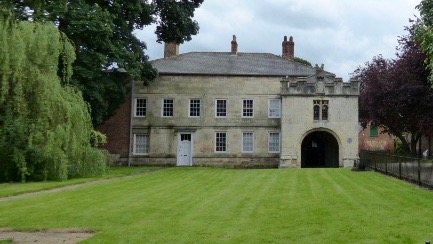
On 9th August 1260, Walter of Kirkham, Bishop of Durham, died at the Bishop’s Palace, Howden. His body was taken to Durham for burial but his viscera were buried in the church. photo shows what remains of Bishop’s Palace.

On 9th August 1516, Sir Ralph Ellerker of Risby confessed to Cardinal Thomas Wolsey, Archbishop of York, that he ordered his servants Henry Norham and Roberte Hunt to kidnap George Millet, keeper of Beverley Parks, and imprison him in Cottingham Park so that he could hunt on the Archbishop’s land. Pleading poverty, he was bound over in the sum of £200.

On 9th August 1769, John Burrill of Skipsea assaulted John Warcup with swords, staves, knives and clubs so that his life was threatened and ‘other wrongs’. Burrill was indicted in September, found guilty on 24.4.1770, and sentenced 2.10.1770 to a fine of £20 and to remain in gaol until the fine was paid.

On 9th August 1785, Rev George Lambert went to see a 24 foot whale killed and displayed at South End, Hull (near modern pier); described by sailors as a young bottlenecked grampus.

On 9th August 1859, Hansard records the 29.4.1859 election in Beverley void; Ralph Walters was declared ‘not a Burgess to serve in this present Parliament for the Borough of Beverley’ and Henry Edwards was declared MP in his place. Joseph Robinson Pease in his diary called Walters ‘an adventurer, arriving 3 days previously’, ‘by open bribery …. carried the day.’

On 9th August 1902, William Day Keyworth junior, sculptor, died aged 59 in Spring Bank, Hull. He produced many statues of civic dignitaries, including Andrew Marvell, Anthony Bannister and William Wilberforce (now outside Wilberforce House). Shot himself in the head at his home, but left no suicide note.

On the same day, Nafferton villagers were celebrating King Edward VII’s coronation with, among other events, a ‘comic’ cricket match, gentlemen vs ladies, which the ladies won. The score is not recorded.

On 9th August 1915, 17 Goole residents, mostly women and children, were killed by a Zeppelin raid on the town and docks.

On 9th August 1916, a Zeppelin raid on Anlaby Road, Hull,  killed John Broadley aged 3 and at least 7 other residents, and injured about 20. 2 people died of shock. Rev A.W. Carter, Assistant Priest of Newington Church, was badly hurt.
 

August 5th

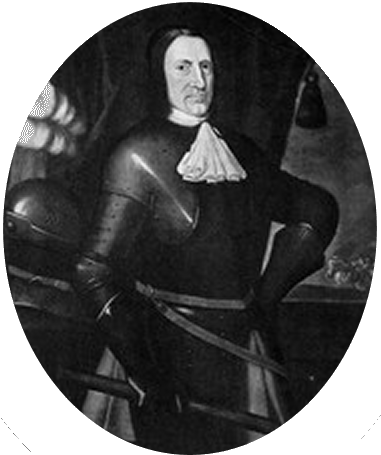
On 5th August 1661, Marmaduke Langdale, 1stBaron Langdale of Holme, died, aged 63, at Holme on Spalding Moor. High Sheriff of Yorkshire 1639. Joined the Royalist side in the Civil War, and had a distinguished military career, being imprisoned and escaping twice. He was ennobled by Charles II in exile and returned from exile at the Restoration, becoming Lieutenant of the West Riding.

On 5th August 1664, Peter Rawson of Hull was indicted as a common disturber of the peace.

On 5th August 1918, the last Zeppelin raid on Hull took place.  Visibility was good, and it was driven away by searchlights. No casualties.Marmaduke_Langdale2

August 4th

On 4th August 1511, John Hessey, husbandman of Belby, nr Howden, claimed sanctuary at the church of St John, Beverley, for the murder of William Smyth of Didyngham (anyone know where this is?)

On 4th August 1652, Keyingham manor court fined 18 villagers for allowing their geese and pigs into the fields outside the stipulated times.

On 4th August 1795, Hull residents rioted against inflationary food prices and shortages. Much corn was being taken by the army, (Napoleonic Wars) in a year of poor weather. A few windows broken.

On 4th August 1834, John Venn, was born in Drypool, son of the vicar. Left Hull at age 8. Fellow of the Royal Society, famous mathematician, who introduced the Venn diagram. Commemorated in Hull University by the Venn Building. (d 4.4.1923) and by Drypool Bridge.

On 4th August 1851, G. Hought of Hutton Cranswick was killed by lightning, as he sheltered under a tree during a thunderstorm. He left a wife and 2 children.

On 4th August 1884, all 11 Walgate brothers of Aldbrough formed one cricket team in a match held at Rise Hall; the Walgates won the match by 3 wickets.

On 4th August 1969, HM Queen Elizabeth opened Queen Elizabeth Dock, the last major dock to be opened in Hull, accompanied by HRH Duke of Edinburgh and Princess Anne.


Drypool Bridge

August 3rd

On 3rd August 1349, John de Preston was elected Prior of North Ferriby on the death of John de Beverley, himself elected Prior just 10 days earlier on 24thJuly, when he succeeded the previous Prior Walter de Hessell on his death. This outbreak of the Black Death killed 35 out of 95 parish priests in East Yorkshire, and presumably a similar proportion of the general population.

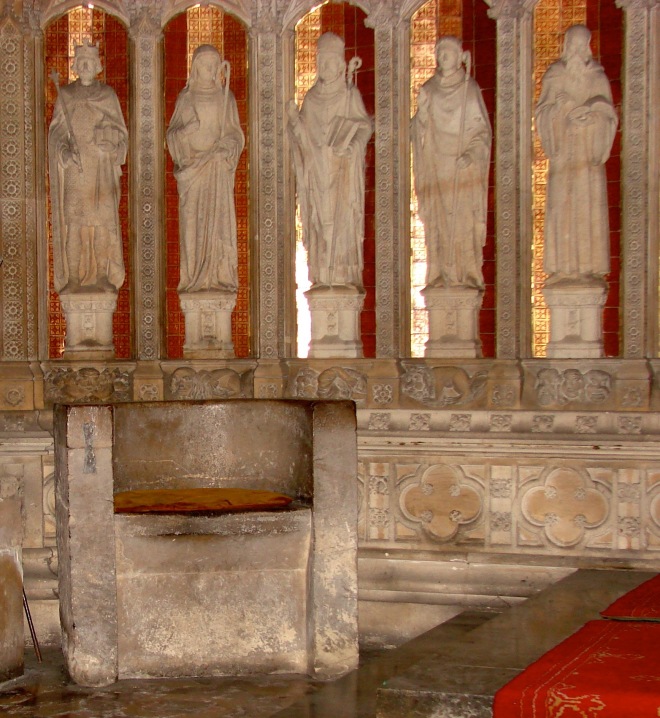
On 3rd August 1523, Thomas Senexer, yeoman, of Holme on Spalding Moor, claimed sanctuary at the church of St John, Beverley, for debt. photo shows the Frith Stool (sanctuary chair)

On 3rd August 1732, Robert Cook was killed when he fell from a wagon at one of the chalk pits in Hutton.

On 3rd August 1798, Press Gang seamen John Sykes and John Burnock or Burnick were killed when attempting to press the crew of the returning whaler Blenheim (& see 2.8). The fight was watched by crowds on the dockside. Capt Mitchinson was charged with murder (& see 31.3) The navy men were buried in Drypool Cemetery.

On 3rd August 1878, for 1d working people could attend a lecture on ‘The Yorkshire Wolds in Prehistory’ as part of Hull Literary and Philosophical Society’s new series of lectures to the working classes in the Exchange Building, aimed at keeping working people occupied during the new Saturday half holiday.

On 3rd August 1942, Mrs Frances Snowden, Lieut Stanley Lawrence and Charles Cross were killed when 4 bombs were dropped on Flemingate, Beverley, damaging Hodgson’s Tannery and destroying a house, a medical centre and a warden’s post. 15 people were injured, some of them machine-gunned by the German bomber.

minster - frith stool.JPG

August 1st

On 1st August 1506, William Ryplay, labourer, of Leconfield, claimed sanctuary at the church of St John, Beverley, for debt.

On 1st August 1639, Robert Skelton, 32, of Hull, was hanged at York Castle for forging a will belonging to Thomas Bell of Hull.

On 1st August 1648, Hull Recorder Francis Thorpe wrote to the Mayor concerning the shipment of pistols to the town, and about the case of Bacchus, a delinquent (i.e. a supporter of the Royalist cause in the Civil War).

On 1st August 1670, Mrs Mary Barnard of Barmston had been ordered to do work to the drain called Gallow Clow (on Myton Carr, near the road to Anlaby) on land which she owned, and had failed to carry it out; a jury under the Commissioner of Sewers gave notice of their intention to view the drain or creek.

On 1st August 1834, Richard Bethell MP laid the foundation stone for William Wilberforce’s statue on Monument Bridge, Hull, on the same day as the Slavery Abolition Act came into force.

On 1st August 1873, the Fisk Jubilee Singers arrived in Hull and visited the Wilberforce monument on the anniversary of the Abolition of Slavery Act. They performed several times, and were so popular they returned to Hull twice more before returning to the US August 1874. They were on a European tour, including singing for Queen Victoria, to raise money for the Fisk University for freed slaves. Several of the singers were born slaves.


Wilberforce memorial plinth