August 29th

minster - frith stool.JPG


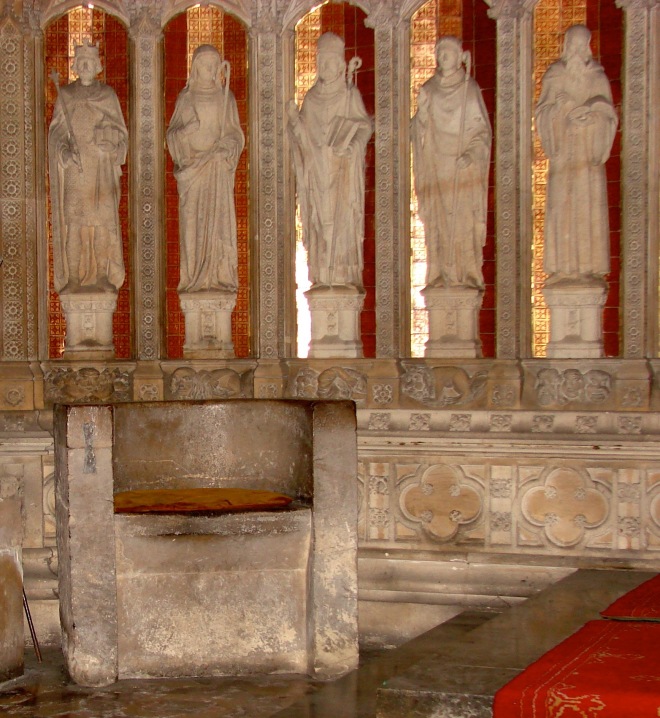
On 29th August 1524, John Rotherford, labourer, of Kirby upon Wold (K. Underdale or K. Grindalythe?) claimed sanctuary at the church of St John, Beverley, for murder and felony. A 2ndman entered the sanctuary that day – Nicholas Pryas, husbandman, of Reedness, claimed sanctuary for the death of  a man called Wademan of Cross House.

On 29th August 1584, Sir Francis Walsingham, Queen Elizabeth’s Principal Secretary, was  appointed Hull’s first High Steward, to act as mediator between the town and the Queen. Walsingham was Elizabeth’s ‘spymaster’. The post was much later given to Lord Mandelson.

On 29th August 1867, a Humber pilot was fined £32 to repair the damage he did to the Bull Lightship while handling a vessel in the river.

August 28th

On 28th August 1643, after the Parliamentarian army fell back to Hull, the Royalists looted and plundered Beverley and nearby villages, even the residents who were Royalist supporters. Another band of Royalists entered Cottingham, and many residents fled to Hull, including Robert Burton, the agent of Sir Thomas Barrington, who had land in Cottingham.

On 28th August 1860, Pearson Park, Hull’s first public park, was inaugurated with a 2-day event and a parade 2 miles long. 30,000 visitors came to Hull by train to take part in the event, which included tree planting, a formal dinner, and fireworks.

On 28th August 1900, Duggie Wakefield was born in Hull. Comedian, star of 13 films in the 1930s, and revue artiste. Also brother in law of Gracie Fields. Considered as popular in the North as Max Miller was in the South. Died 14.4.51

On 28th August 1915, Percy Cawkwell, aged 19, was on top of a tram in Beverley Road, Hull, when a teenage girl called him a ‘slacker’ for not being in uniform.  He immediately decided to sign up, despite being blind in one eye. He was accepted into the Royal Army Medical Corps and became a stretcher bearer.

On 28th August 1952, Mary Dawson Elwell died, aged 78, at Bar House, Beverley. Artist, her early works in the name MD Holmes. She married Fred Elwell RA in 1914, and later works signed are M D Elwell.  (b Liverpool 13.8.1874) photo shows ‘A garden in Beverley’


Mary Elwell A gdn in Bev

August 27th

On 27th August 1473, John Warter’s ship Nicholas left Hedon with exports belonging to 14 different merchants, mostly wool and sheepskins. The tax record does not indicate where the ship travelled to. photo shows the Hedon ship design, found in St Augustine’s church.

On 27th August 1586, Daniell Morton was arrested for attempting to travel overseas against government order, and was retained in custody in Hull until further order.

On 27th August 1643, Lord Ferdinando Fairfax, Governor of Hull, ordered that Royalist sympathisers (termed malignants) have their property seized to support Parliament’s cause.

On 27th August 1902, Trooper H.B. Adamson, and Sergeant T. Burn were soldiers returning home to Hornsea from the Boer War. They were greeted by large crowds, the Town Band and a detachment of the Artillery Volunteers, and paraded round the town in a carriage. Sadly, Trooper E. Dabb arrived 4 days later unexpectedly and without ceremony.

On 27th August 1940, Mrs Spetch’s cottage at Mappleton was severely damaged by an enemy bomb, which also destroyed several windows in the church. The cottage site is now occupied by the Maple Garage.

Hedon ship, St Augustine's

August 26th

On 26th August 1310, King Edward II visited Beverley.

On 26th August 1346, Sir John de Sutton fought on the English side at the Battle of Crecy.

On 26th August 1800, Hull surgeon Edward Oxley advertised in the Hull Packet his invention Modena Fossil, as a speedy and effectual cure for ‘hooping-cough, palsy, rheumatism, asthmatic fits, … diseases of the breasts…’ The Medical Observer was very scathing of this product which it described as oil of amber.

On 26th August 1809, Hedon borough constable Edward Hoe received £1 8s wages for transporting Agnes Sharp and her son William to Friskney in Lincolnshire (her husband’s parish), as Hedon parish was not liable to pay her benefit. Her 9 year-old-daughter Rachel was entitled to settle in Hedon, and was left behind.

On 26th August 1824, on the traditional day of Swine Feast, the Feast mainly consisted of dancing and ‘riot’, most residents providing food for their friends on the Sunday before, leading to disorder which the magistrates could not control, reported author Thomas Thompson.

On 26th August 1833, Captain Richard Wallis Humphreys of the whaler Isabella in Baffin Bay picked up explorer Captain John Ross and 19 of the crew of his ship Victory. It had become stuck in ice and been thought lost for 4 years.  Humphreys was awarded a silver cup by the town of Hull at a dinner given at the Vittoria Hotel in January 1834. (The Isabella herself was trapped in ice and sank in 1835.)


John_Ross_rescued_by_Isabella,_1833


August 25th

On 25th August 1929, 4 boys were on the dockside on a Sunday evening when fire broke out. They helped to save equipment and rescued a cat from one of the trawlers. The fire destroyed the recently refurbished No 2 Market, 100 offices, 105 railway wagons, and set alight 7 trawlers, 3 of which were totally burnt out. Damage was variously valued at £250,000 and £750,000. The cause was probably an electrical fault.

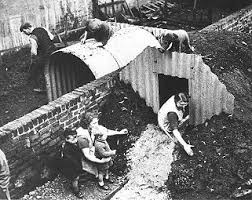
On 25th August 1940, 6 residents of Rustenburg Street, Hull, in their Anderson shelter, were the first fatalities due to Hull air raids. photo shows an Anderson shelter in construction.

On 25th August, 1956, A train of empty coaches hit the buffers at speed and went up onto the platform at Filey Holiday Camp Rail Station.  An enquiry found that the brakes were not properly coupled. Driver Goforth,  Fireman Bentley and Guard Wharam were slightly injured.

On 25th August 1972, the crew of the Flamborough lifeboat Friendly Forester rescued 2 people cut off by the tide at Flamborough.


Anderson shelter

August 24th

On 24th August 1399, a schism within the church led to controversy about the post of Meaux Abbot Thomas Burton, and rather than involve the abbey in the costs of litigation, he retired and wrote “The Meaux Chronicle’, the history of the abbey.

On 24th August 1662, on Black Bartholomew’s Day, also known as the Great Ejection, Josiah Holdsworth, curate of Sutton-on-Hull, was dismissed for refusing to conform to the Book of Common Prayer, along with 2,000 other Puritan ministers across the country.  They included Anthony Stephenson at Roos, who stayed in the village as physician, and Stephen Arlush of Howden, who continued to preach in a private house as a Congregationalist, also John Ryther of North Ferriby, who spent some years in prison for illegal preaching. And Mr Robinson at Cottingham, Mr Luddington at Sculcoates, Mr Thos Micklethwaite at Cherry Burton.

On 24th August 1759, William Wilberforce was born in High Street, Hull. The Parliamentary champion of the abolition of slavery, he collaborated for 50 years with Thomas Clarkson. MP for Yorkshire 1812-1825. Buried in Westminster Abbey. (d 29.71833)

On 24th August 1789, the Preston house and shop of William Sanderson were broken into by James Hartley of Manchester. Hartley was hanged at York Castle on 17.4.1790.

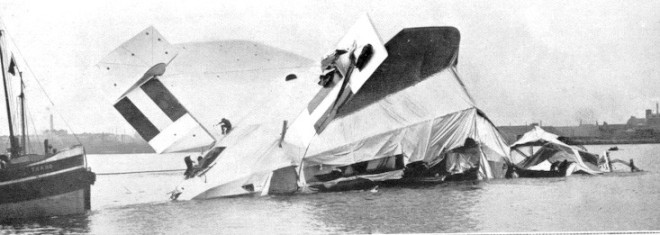
On 24th August 1921, an R38 airship exploded and crashed into the Humber on its last trial flight; 44 members of the crew died. Debris narrowly missed sightseers on Victoria Pier, Hull. photo shows wreckage

On 24th August 1943, Flight Officer Charles Keirl, 23, and 13 other airmen died when 2 Halifax bombers of 78 Squadron collided in fog; one air gunner survived. Keirl is buried in Queensgate Cemetery, Beverley. There is a memorial at Hull Bridge.


R38wreckage1

August 23rd

On 23rd August 1326, Richard Furnewes, barber to the Archbishop of York, was appointed to keep the park at Bishop Burton and the deer, at a salary of 2d per day.

On 23rd August 1601, Lord Burley, Queen’s Lieutenant and President of the Council of the North, visited Hull. His visit was marked with a firework display in the Market Place. Tragically, the cannon misfired, and at least 4 died, and several others were injured.

On 23rd August 1619, a woman bonesetter from South Dalton attended Londesborough House to treat Earl Francis’s shoulder, dislocated in a fall while out hawking. She was paid £1 5s for the treatment, which included 2 visits. (A physician might charge £2 a visit).

On 23rd August 1653, Robert Acklam was fined £5 by Hull Trinity House for taking the ship Blessing from Hull to London and from there crossing to Holland without the correct licence.

On 23rd August 1830, 60 farm workers rioted in Burton Pidsea, armed with clubs, scythes and stones, and visited every farmhouse where there were known to be Irish labourers, aiming to drive them out of the neighbourhood. 6 of them attacked Irish men working in a field belonging to Mr Baxter. The Hull Packet reported on 10.9. 1830 that the 6 ringleaders had been arrested and would be tried at the next Quarter Sessions in Beverley.

On 23rd August 1886, former Hull Trinity House pupil John Lester, aged 20, was killed by a fall from aloft on the Schooner Welsh Belle travelling from Hull to Newfoundland.

On 23rd August 1934, the Yorkshire Post reported on a cliff collapse along a 100-yard stretch at Aldbrough, which resulted in thousands of tons of material falling onto the beach, destroying the boat slipway. No-one was hurt. photo shows more recent erosion at Ulrome.

 

erosion Ulrome

August 21st

On 21st August 1821, Zachariah Charles Pearson was born in Hull.  Ship’s captain, later ship owner.  Sheriff of Hull 1858, Mayor 1859 – 1862. In 1860, he gave 27 acres to the town for a public park, now Pearson Park. During the American Civil War, he sold arms and equipment to the Confederates, it is said to ensure a supply of cotton to the Hull cotton mills.   He lost several ships to action by the US Federal Navy and was made bankrupt in 1863. He resigned all public posts, and was disgraced, never regaining his former position. Died 29.10.1891

On 21st August 1833, the flying buttresses at the northeast of the tower of St Patrick’s church, Patrington, were blown down and damaged the roof during a violent storm.

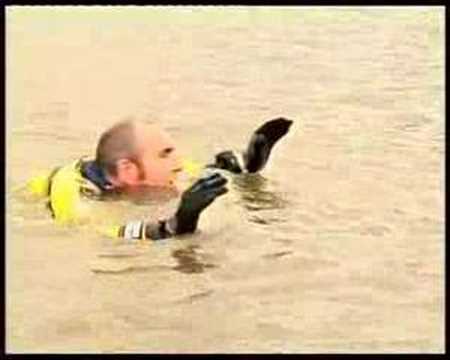
On 21st August 2005, Hull businessman Graham Boanas waded across the Humber, from Brough to Whitton, one of the most dangerous waterways in the UK, to raise money for charity.  The only recorded instance of this feat.

graham boanas

August20th

wm le grosOn 20th August 1179, William le Gros, Count of Aumale, Lord of Holderness, died aged 64 after 50 years as Count. As Earl of York, the most powerful man in the north of England during the Anarchy, a soldier, and founder of religious houses, including Meaux Abbey, and Newton Grange leper hospital.

On 20th August 1526, John Dove, a labourer from Burstwick, and William Bayne, a tallow chandler from Withernwick, separately arrived and claimed sanctuary at the church of St John, Beverley, for debt. On a busy day at the sanctuary, a 3rddebtor arrived from Wakefield.

On 20th August 1535, Richard Browne, vicar of North Cave, confessed to heresy by preaching Lutheranism; he was absolved, after suspension for 2 months.