November 5th

On 5th November  1605, Sir Thomas Knyvet of Escrick, as Gentleman of the Bedchamber to King James I, he went to the House of Lords cellar to investigate a rumour and discovered Guy Fawkes and some gunpowder …

On 5th November 1740, Elizabeth Johnson’s charity distributed money to the 4 poorest families in Cherry Burton every year on this date.  Daughter of Dr Hodgson Johnson, she left £40 to be invested, adding to the 40s left by her father 16 years before.

On 5th November 1804, 7 of the 8 crew of the Cecilia Margaretha of the Duchy of Holstein died when the ship was driven ashore at Mappleton and wrecked on a trip from Liepaja, Russia, to Lisbon. photo shows Mappleton today

On 5th November 1854, James Elliott, private in the Coldstream Guards, died aged 22 at the Battle of Inkerman, Crimea; his memorial in Hedon church was ‘erected … to commemorate the event and to show that Hedon contributed its unit in defence of the liberties of Europe’.

mappleton.JPG

October 24th

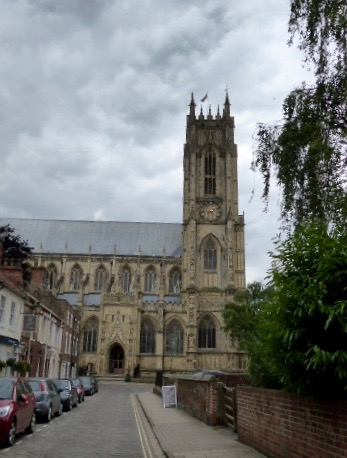
Beverley Minster


On 24th October 1530, at a Coroner’s inquest in Hutton Cranswick over the body of William Aunderson, the jurors reported that John Adayll, a labourer from Driffield, had on 23.10.1530 around 4p.m. assaulted him, with precogitated malice, with an iron fork, killing him instantly. Adayll immediately fled, with the townspeople of Hutton Cranswick pursuing him from town to town, but he escaped to ‘the privilege of Beverley’. Adayll does not appear in the sanctuary register for Beverley, though.

On 24th October 1850, John Branton, lifeboatman, drowned when the lifeboat overturned during the rescue of the brig Cumberland in the Humber near Kilnsea; John Welburn, the mate, was injured and died in 1852 from his injuries. The 9 members of the brig’s crew were rescued. An appeal raised £37 11s 6d for Branton’s widow and 6 children, and the RNLI added £5.

October 22nd

On 22nd October 1517, John Cook, yeoman of Sewerby, claimed sanctuary after assaulting labourer Thomas Stowpes and fled to Flambrough church.  This was not a registered place of sanctuary, but was called ‘taking church’. At a Coroner’s inquest at Sewerby on 5.11.1517, the jurors reported that Cook assaulted Stowpes on 22 Oct, giving him a wound from which he died 3 days later.

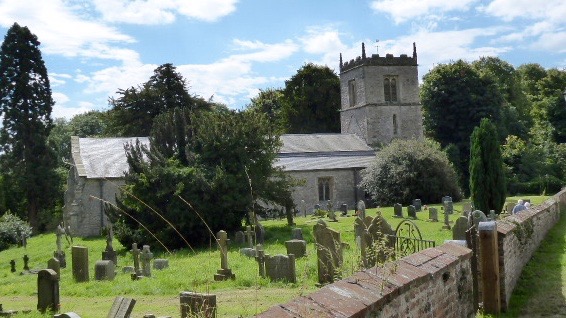
On 22nd October 1611, Lady Margaret Clifford, daughter of the Earl of Cumberland and Thomas Wentworth, future baronet, were married at All Saints, Londesborough. The Earl’s finances were not healthy, due to a protracted legal dispute with Lady Anne Clifford over his inheritance, so the celebrations were low-key, with only 40 in attendance, and a simple dinner of pasties, mince pies and turkey, a speciality of the estate. The artist Augustine Harrison was present, so that the Earl could present his 2 daughters with identical portraits of himself. photo shows Londesbrough church

On 22nd October 1882, William Butler, 16, 4thhand, was lost overboard from Hull trawler Sportsman in the North Sea.

On 22nd October 1972, the new Queen Elizabeth Dock container terminal was opened.


Londesborough


October 21st

On 21st October 1823, Mr Gleadow, commander of the customs cutter Bee, seized 31,324 barrels of contraband, including 250 lbs of tea, 720 lbs of tobacco, and 976 gallons of spirits, mostly gin, from the Lunatic asylum, Brandesburton Moor.

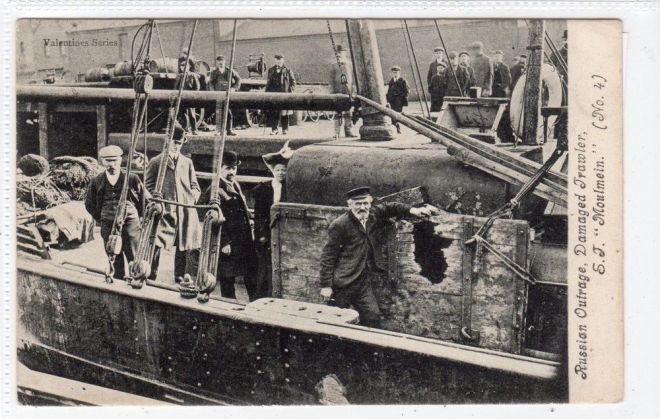
On 21st October 1904, the Gamecock trawler fleet from Hull was fired on by the Russian Baltic fleet, claiming they mistook them for the Japanese Navy. The trawler Crane was sunk and her captain and second mate killed; 30 others were injured. There is a memorial statue to the ‘Russian Outrage’ at the corner of Boulevard/Hessle Road.

On 21st October 1905, Ellen Borrill, of William’s Terrace, Hull, was murdered at Danthorpe by Peter Williams, her partner. He cut her throat in a field, walked to Burton Pidsea, and then gave himself up to the police at Roos. He claimed she had tried to kill herself, and asked him to finish her off. On 2nd December, Williams was sentenced to death, but was reprieved.

On 21st October 1921, Jim Graham and Cam Connor, out of work shipwrights from South Shields, bought a 14-seater Model T. Ford and set up Easington’s first bus service, just 2 years after East Yorkshire’s first bus service was set up in Elloughton by E.J. Lee, also using a 14-seater Model T.

Russian Outrage


October 19th

On 19th October 1469, John Fisher was born in Beverley, the eldest son of Robert and Agnes Fisher. Chancellor of Cambridge University, Bishop of Rochester, and chaplain to royalty.  He was executed for treason 22.6.1535 on Tower Hill, for speaking out against Henry VIII’s divorce, and refusing to acknowledge the heirs of Henry and Ann Boleyn as legitimate successors to the throne. A Catholic martyr, he was canonized as St John Fisher.

On 19th October 1781, Rev George Lambert reported in his diary on a very high tide which inundated many houses in Hull.

On 19th October 1826, a Huggate parish jury of 12 men, 2 affearers (assessors of fines) and the pinder, set penalties for anyone allowing cattle into public lanes at night at 2s6d per head, for the first offence, and 5s per head for every offence afterwards; for allowing pigs in the streets without a ring between May Day and Michaelmas 3d per head; for allowing geese in the streets between Old Mayday and Old Lammas, 1s; for allowing anyone to stay who does not have a certificate allowing them to settle, £1 19s 11d.

On 19th October 1890, John Connell, boatman, of Waxholme, in the Coastguard Service, took part in the rescue of crew from the Grimsby vessel Genesta when it ran aground. All were rescued, except the captain, who died of exposure. Connell went on to the vessel as it was breaking up to rescue a man too weak to help himself. Connell was awarded the Humane Society Silver Medal. The unmanned vessel broke free the following day and travelled to Withernsea.

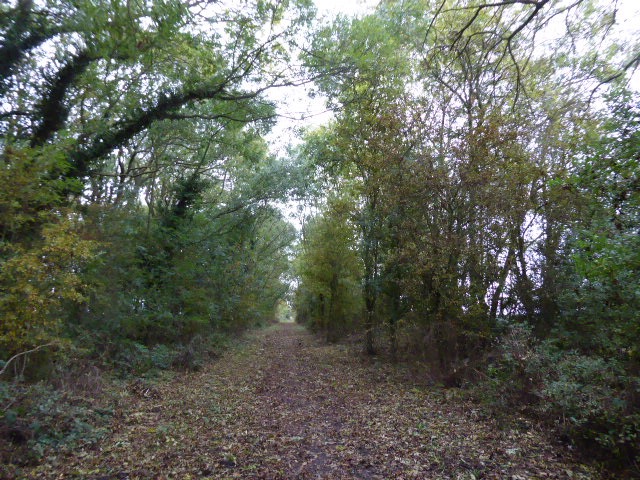
On 19th October 1964, rail passengers took their last trips on the Hull to Withernsea and Hull to Hornsea rail lines, which closed as a result of the Beeching Report. Goods services to Withernsea continued to 30.4.1965, to Hedon 3.5.1965, and to Marfleet to 1972. photo shows part of Hornsea Rail Trail today.

Hornsea Rail Trail


October 9th

On 9th October 1487, John Kape, husbandman of Kilham, confessed to killing Thomas Holme, labourer, with a dagger, and claimed sanctuary in the church of St John, Beverley.

On 9th October 1830, the whaler Abram was the first of the Hull fleet to return to port after a disastrous season in which 6 Hull ships were lost, and 15 from other ports.  Capt Edward Dannatt of the Progress reported the loss of his ship and the others. Most of those which returned in October and November had very poor catches.

On 9th October 1929, fire officers were called out to a fire at Howden Minster, thought to be arson. They had no access to a water supply, and had to use the moat in the Ashes Park. All 8 bells fell from the tower and had to be recast.

On 9th October 1953, Fred Elwell was made an honorary freeman of Beverley for his contribution to art. Several of his works are in Beverley Treasure House.

Fred Elwell

October 5th

On 5th October 1643, Sir John Meldrum was sent by Parliament with troops and supplies to help in the defence of Hull from attack by the Royalists.

On 5th October 1801, the residents and business people of Pocklington resolved, at a meeting in the Black Bull Inn, to create a canal to serve the town. The war with the French may have delayed matters, as it was 14 years before a Bill was presented to Parliament and passed. photo shows the canal today

On 5th October 1931, Matthew Stirling died, aged 74 in Hull. Mechanical engineer, designer of locomotives for Hull & Barnsley Railway, many of his designs including his powerful H&BR Class A(LNER Class Q10) 0-8-0freight locomotives were heavily used during World War I. (Born 27.11.1856, Kilmarnock)

On 5th October 1945, Frederick Bryan, 50, 3rd hand,  was lost with 8 shipmates when Hull trawler Grenada struck a mine (at 51 11N 8 10W).

Pocklington canal

October 4th

On 4th October 1253, heavy flooding in Holderness resulted from a dry year and heavy rain. The River Hull changed its course.

On 4th October 1541, the Privy Council of England again sat in Hull.

On 4th October 1642, Capt John Hotham, after the Yorkshire Treaty of Neutrality was signed, began to return from Doncaster to Hull. The treaty was rejected by Parliament, and he detoured and captured Cawood Castle for Parliament, the Archbishop having fled.

On 4th October 1643, 400 Parliamentary soldiers went out of the besieged town of Hull and destroyed the Royalist forts in Sculcoates and Derringham Bank.

On 4th October 1785, Thomas Jackson of Blackfriargate, Hull, complained to the Mayor and corporation about nuisance caused by one of the town waites (official musicians) holding dancing lessons in Hales Entry.

On 4th October 1909, Hornsea Urban District Council conducted a poll of ratepayers, who voted to allow the council to enclose the Promenade Gardens and charge for admission.

On 4th October 1952, ship’s cook Cyril Brown, 44, and 19 shipmates were lost when Hull trawler Norman was wrecked. The sole survivor was Norman Spencer, 19. see Pathe news https://www.britishpathe.com/video/one-survivor-aka-trawler-disaster


September 26th

On 26th September 1480, Elizabeth Beauwmont, gentlewoman of Hedon, and Robert Beauwmont, clerk of Almondbury, sought sanctuary in the church of St John, Beverley,  for the death of Thomas Aldirlay of Almondbury, killed by them on 5 Oct 1479. (We do not know the relationship between the 2 )

On 26th September 1643, Col Oliver Cromwell and Lord Willoughby crossed the Humber to view the defence of Hull for themselves, and took some of the cavalry back with them, horses being of limited use in the besieged town.

On 26th September 1649, Marmaduke Richardson of Pocklington was hanged at York Castle for praying publicly before his sermon for Charles II, King of Scotland and heir apparent. (Prince of Wales).

On 26th September 1794, John Magnus, a Dane, was buried at Blacktoft after drowning in the Humber and washing up at Thornton Land.

On 26th September 1917, L/Cpl Thomas Edgar Borrill, 20, former Reckitt’s employee,  died on active service with the Sherwood Foresters. He has no known grave.

Oliver Cromwell


September 22nd

On 22nd September 1690, Beverley Corporation gave permission to create a racecourse between the Newbald and Walkington roads. Horse racing had probably taken place on Westwood for 300 years, but this was the first time a course was formally laid out.

On 22nd September 1716, Leonard Chamberlain, draper, died at Hesslewood House, Hessle, and left property and estates in Sutton, Stoneferry, Selby, Dunswell and Hessle and his charitable bequests continue to this day. A Presbyterian, he supported those who had been discriminated against on religious grounds, gave money for educating the poor ‘of whatever persuasion or denomination soever’.  Commemorated in Chamberlain Road and Chamberlain Street, Sutton. photo shows one of the Sutton properties

On 22nd September 1761, to mark the coronation of King George III and Queen Charlotte, Col Duncombe’s Battalion of militia drilled in Beverley Market Place, and fired volleys, while the Corporation held a dinner for the officers, the bells rang, and in the evening there were illuminations.

On 22nd September 1778 was the official opening of The Dock, Hull. (It became known as Queen’s Dock after Victoria visited the city in 1854). The first ship in was the whaler Manchester, decorated all over with flags of the nations, followed by the Favourite, the largest ship in the port at 1,000 tons (burthen). 20,000 spectators were entertained by cannon fire and a musket salute from the garrison, and the great and the good were fed and sumptuously entertained.

On 22nd September 1856, Count de Werdinsky died in Hull aged 53, in abject poverty, after variously representing himself as a Polish count, inventor and doctor. He was a bankrupt, a fraudster, and had several counts of assault and indecent assault against women. His memorial is in the Western Cemetery

On 22nd September 1914, the crews of HMS Aboukir, Cressy and Hogue, 3 Navy cruisers, were sunk by a German u-boat, with the loss of 1,450 lives. This not only led to a public outcry, but also the need to provide for a large number of orphaned children. Some of the children were admitted by Hull’s Sailors’ Children’s Society and put up in its holiday home in Hornsea, as well as in the Newland Homes. By 1915, 108 children of seamen lost in action were admitted, from across the country.
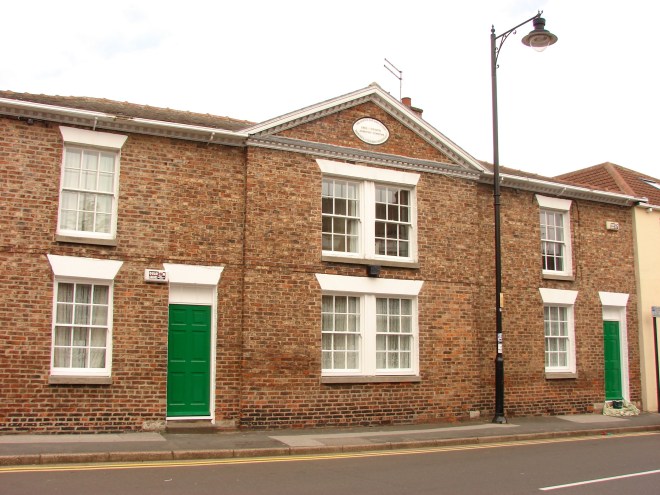
leonard chamberlain sutton.JPG