October 29th

On 29th October 1810, Hull Trinity House delivered the first Spurn lifeboat, arriving at the Point from South Shields towed by the brig Thomas. (and see 15.11)

On 29th October 1889, Daniel Patten, aged 25, died of enteric fever at the Colonial Hospital, Gibraltar; the former pupil of Hull Trinity House School was 2nd officer of the SS Marengo.

On 29th October 1829, Rawcliffe merchant and eccentric Jemmy Hirst, died aged 91.  He travelled in a wicker carriage, driven by sails or by his pet bull, Jupiter. Created a flying machine and other contraptions. Wore a waistcoat of drakes’ feathers, a lambskin hat 3 yards in circumference, harlequin breeches and a red coat with blue sleeves to the races. Went hunting riding his pet bull and used pigs as pointers.

Jemmy Hirst

October 28th


charterhouse.JPGOn 28th October 1451, the Mayor and town of Hull and the Prior and Convent of the Charterhouse reached agreement on 8 areas of dispute between them, chiefly relating to ownership of land and streets between the town walls and the Charterhouse, including the Trippett and the northern part of Pole Street, the rent due for them, and garden fences of the Charterhouse encroaching on the public highway.

On 28th October 1510, William Sedyngton of Flambrough claimed sanctuary at the church of St John, Beverley, for debt.

On 28th October 1880, during a storm, the Saffron, Jabez, and Earl of Derby separately crashed into the piers at Withernsea and Hornsea, 2 at Withernsea and 1 at Hornsea; both piers were substantially damaged. The Hornsea pier had only opened 5 months before, and was completely demolished in 1897. The Withernsea pier had been open 2 years, and was to have several more ships crash into it before being demolished, apart from the 2 remaining towers.

On 28th October 1910, the Aldbrough Rocket Brigade rescued the crew of the trawler Castor of Grimsby, which ran aground on Aldbrough beach, whilst the Hornsea Lifeboat crew took an hour against high winds to row to the site. Later the Secretary of the Hornsea branch of the RNLI said that Hornsea did not have strong men like they had in Bridlington and it was the worst place on the coast to get a lifeboat.

October 20th

On 20th October 1536, Sir Robert Constable of Flamborough took command of Hull after a siege lasting 5 days, by the East Riding rebels of the Pilgrimage of Grace. The only condition the inhabitants made was that no-one would be forced to take the pilgrims’ oath.

On 20th October 1580, Rowlande Burton was called before the Hull mayor and aldermen to answer a charge of dealing in hops without paying a customs charge. They agreed that he would pay the charges due.

On 20th October 1586, Luke Fox (or Foxe) was born in Hull. He explored much of the Hudson Bay in search of the Northwest Passage. Later became a brother of Hull Trinity House and in 1635 published ‘North-west Fox, or Fox from the Northwest Passage’. Died approx 15.7.1635.

On 20th October 1749, a ’sudden and dreadful’ fire broke out at night when the Stamford Bridge Mills machinery overheated.

On 20th October 1890, Withernsea pier was damaged for a third time since its opening 12 years before, when an unmanned Grimsby fishing smack, the Genesta, smashed into it, and destroyed half of the remaining pier (see 19.10). Another boat, the Henry Parr, smashed into it in 1893, leaving only 50 feet, which remnant was removed in 1903 during work on the sea wall.

On 20th October 1958, the Malton to Driffield Railway closed to freight traffic, passenger traffic having ceased in 1950.


W'sea pier

October 19th

On 19th October 1469, John Fisher was born in Beverley, the eldest son of Robert and Agnes Fisher. Chancellor of Cambridge University, Bishop of Rochester, and chaplain to royalty.  He was executed for treason 22.6.1535 on Tower Hill, for speaking out against Henry VIII’s divorce, and refusing to acknowledge the heirs of Henry and Ann Boleyn as legitimate successors to the throne. A Catholic martyr, he was canonized as St John Fisher.

On 19th October 1781, Rev George Lambert reported in his diary on a very high tide which inundated many houses in Hull.

On 19th October 1826, a Huggate parish jury of 12 men, 2 affearers (assessors of fines) and the pinder, set penalties for anyone allowing cattle into public lanes at night at 2s6d per head, for the first offence, and 5s per head for every offence afterwards; for allowing pigs in the streets without a ring between May Day and Michaelmas 3d per head; for allowing geese in the streets between Old Mayday and Old Lammas, 1s; for allowing anyone to stay who does not have a certificate allowing them to settle, £1 19s 11d.

On 19th October 1890, John Connell, boatman, of Waxholme, in the Coastguard Service, took part in the rescue of crew from the Grimsby vessel Genesta when it ran aground. All were rescued, except the captain, who died of exposure. Connell went on to the vessel as it was breaking up to rescue a man too weak to help himself. Connell was awarded the Humane Society Silver Medal. The unmanned vessel broke free the following day and travelled to Withernsea.

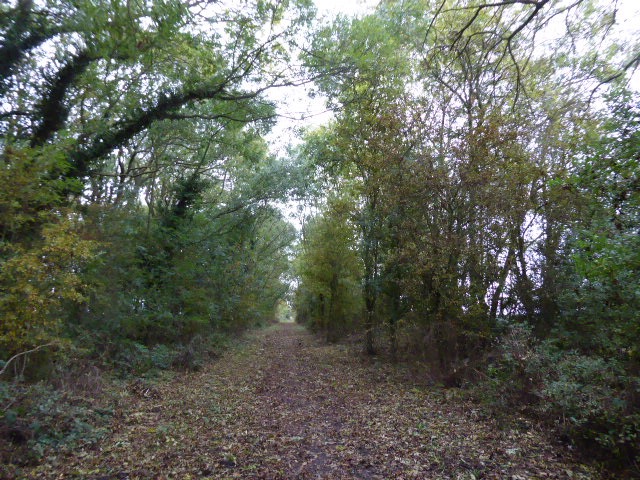
On 19th October 1964, rail passengers took their last trips on the Hull to Withernsea and Hull to Hornsea rail lines, which closed as a result of the Beeching Report. Goods services to Withernsea continued to 30.4.1965, to Hedon 3.5.1965, and to Marfleet to 1972. photo shows part of Hornsea Rail Trail today.

Hornsea Rail Trail


October 12th

On 12th October 1536, 9,000 armed men from across East Yorkshire mustered on Market Weighton Hill as part of the Pilgrimage of Grace. Robert Aske led one group to York via Pocklington, and William Stapleton led a march on Hull, besieged it and captured it for the rebels. Holderness gentry Sir John Constable, Sir Wm Constable and Sir Ralph Ellerker had taken refuge in the town from the revolt.

On 12th October 1643, the Earl of Newcastle abandoned the 2ndsiege of Hull after 5 weeks and withdrew Royalist forces to York. To prevent pursuit, the Royalists destroyed bridges and roads and cut the banks of waterways as they retreated. The date was observed as a day of public thanksgiving in Hull until the Restoration.

On 12th October 1697, Robert Pattinson, Humber pilot, was fined 30shillings for damaging the ‘dolphin’ at the entrance to the River Hull while handling a vessel entering the Haven.

On 12th October 1767, Beverley gentleman John Courtney reported in his diary seeing a firework display for the first time, in the Market Place, paid for by subscription.

On 12th October 1896, at Hull Fair, one of the attrractions was the first showing in Hull of moving pictures, only 8 months after Louis Lumiere’s first performance, included scenes of Whitefriargate, the W’force Monument, the Corporation Pier, the Humber Ferry.

On 12th October 1933, Louis Armstrong performed at Beverley Road Baths, Hull, during his European Tour.


louis armstrong

October 9th

On 9th October 1487, John Kape, husbandman of Kilham, confessed to killing Thomas Holme, labourer, with a dagger, and claimed sanctuary in the church of St John, Beverley.

On 9th October 1830, the whaler Abram was the first of the Hull fleet to return to port after a disastrous season in which 6 Hull ships were lost, and 15 from other ports.  Capt Edward Dannatt of the Progress reported the loss of his ship and the others. Most of those which returned in October and November had very poor catches.

On 9th October 1929, fire officers were called out to a fire at Howden Minster, thought to be arson. They had no access to a water supply, and had to use the moat in the Ashes Park. All 8 bells fell from the tower and had to be recast.

On 9th October 1953, Fred Elwell was made an honorary freeman of Beverley for his contribution to art. Several of his works are in Beverley Treasure House.

Fred Elwell

October 6th

site of Haltemprice Priory

On 6th October 1515, the Sheriff of Hull, Mr Mattison and 200 citizens fought the monks of Haltemprice Priory and threatened to pull down the monastery, over a dispute concerning jurisdiction over Wolfreton and Willerby, and fresh water supplies. Peace was restored by the Mayor of Hull, George Mattison and the issue was eventually resolved in the Star Chamber. One of many incidents in Hull’s ‘water wars’. photo shows site of the monastery.

On 6th October 1613, an enquiry determined that a chantry dedicated to St Mary, and a chaplain to celebrate daily services there, had been paid for by 6 1/4 acres of land, 10 messuages and 3 tofts, given to the town of Hedon by John de Burton and Henry Maupas. Chantries were abolished by Edward VI, along with other signs of Catholicism.

On 6th October 1670, Ann Barone was fined in the Patrington manor court for not making bread according to the assize – i.e. not the regulation size, weight etc.

On 6th October 1748, Mary Jackson, tenant farmer of Everingham, lost 36 of her 45 cattle to rinderpest, the cattle plague then affecting much of the East Riding.

On 6th October 1850, Hedon solicitor James Iveson, died after a long career controlling the political life of Hedon, a Rotten Borough described as ‘Lawyer-ridden’. He was also Town clerk, Mayor, land agent, and steward on behalf of the Constables of the Holderness Seigniory. The Iveson dynasty was involved in land enclosures, surveying and other profitable work. James was renowned for rudeness. Part of an ultra conservative council which for years resisted public health improvements. Collector of architectural remains from demolished churches. Engaged for some 20 years of protracted negotiation with Trinity House over Spurn Point.  portrait in Hedon Town Hall

On 6th October 1890, Chas Collier, aged 17 years, former pupil of Hull Trinity House School, died of typhoid fever in the Barque Miltiades off the west coast of Africa.

James Iveson, Hedon Town Clerk

October 3rd

On 3rd October 1667, Mark Turington, Peter Gorbut, Christopher Gray & Jane Sansbie were fined at Patrington for having bad fences or fences in bad repair.

On 3rd October 1810, Rev George Lambert of Hull wrote in his diary: ‘times never were more alarming than the present. Failure, bankruptcies and suicide are taking place every day, and public credit shaken to its foundation. No man knows today what will be his circumstances tomorrow’.

On 3rd October 1821, Dr Raffles preached to 600 people on board the Valiant in Queen’s Dock, Hull, a new floating chapel bought by The Port of Hull Society for the Religious Instruction of Seamen. It was used for 28 years until the vessel was leaking and abandoned in 1850.

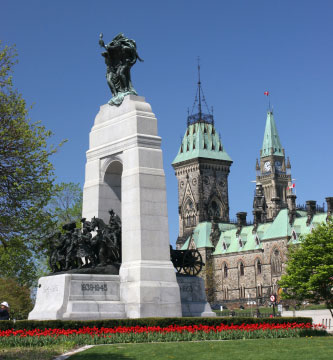
On 3rd October 1884, Elsie March, sculptor, painter and metalworker, was born in Sutton (or Old Hall, Burstwick?), one of 8 artist siblings born to foreman seed crusher George Henry March. Moved to Battersea 1901. With 5 of her brothers, created the Canadian War memorial in Ottawa completed in 1938. see photo (d 1974, Kent)

On 3rd October 1898, Ernst Adolf Powolny opened a restaurant in King Edward Street which became a Hull institution, providing high class food in opulent surroundings, as well as tea dances and catering for civic events. Closed temporarily by a fire in 1934, it finally closed after being destroyed by the Blitz on 8.5.1941. Known affectionately as ‘Polly’s’.

Elsie March

September 23rd

On 23rd September 1066, Harold Hardraada, with his Norse troops, fresh from securing York, made his way to Stamford Bridge for a parley with locals about provisions. Instead, he met Harold Godwinson’s army, and he died at the Battle of Stamford Bridge, ‘the most important battle that has ever been fought in England’.

On 23rd September 1581, Hull alderman and merchant Peter Crewe was fined the sum of £1 in 3 instalments for using false weights in selling bales of flax to a merchant called Trewyt of Nottingham and others. (& see 30.9)

On 23rd September 1704, Henry Stork, seaman who served in a man-of-war in the Queen’s Fleet, was buried after 6 months of illness at home in Hutton, after being invalided out of the Navy, fighting in the War of the Spanish Succession, in Europe or in North America. We do not know what he suffered from.

On 23rd September 1779, John Paul Jones, American navy commander, fought the Battle of Flamborough Head: an American squadron attacked a large British merchant convoy and their 2 escort vessels, during the American War of Independence.

On 23rd September 1797, Hull Trinity House paid 18 shillings to Thomas Ward, mate of the Flora, and Thomas Porrell, a seaman, after their ship was captured by the French.

On 23rd September 1897, Frank Percy Bentley, a boy, summoned George Creaser of Nafferton for assault; Creaser pleaded guilty for hitting him ‘once or twice’ with a stick after finding his son and Bentley fighting. The Driffield magistrates also heard at least 6 cases of ‘drunk and disorderly’ behaviour, a case of non-payment of rates and poor rate, a dispute about rates of pay, a summons for allowing horses to stray, a case of begging, and one assault. All despatched before lunch.

stamford bridge3.JPG

September 22nd

On 22nd September 1690, Beverley Corporation gave permission to create a racecourse between the Newbald and Walkington roads. Horse racing had probably taken place on Westwood for 300 years, but this was the first time a course was formally laid out.

On 22nd September 1716, Leonard Chamberlain, draper, died at Hesslewood House, Hessle, and left property and estates in Sutton, Stoneferry, Selby, Dunswell and Hessle and his charitable bequests continue to this day. A Presbyterian, he supported those who had been discriminated against on religious grounds, gave money for educating the poor ‘of whatever persuasion or denomination soever’.  Commemorated in Chamberlain Road and Chamberlain Street, Sutton. photo shows one of the Sutton properties

On 22nd September 1761, to mark the coronation of King George III and Queen Charlotte, Col Duncombe’s Battalion of militia drilled in Beverley Market Place, and fired volleys, while the Corporation held a dinner for the officers, the bells rang, and in the evening there were illuminations.

On 22nd September 1778 was the official opening of The Dock, Hull. (It became known as Queen’s Dock after Victoria visited the city in 1854). The first ship in was the whaler Manchester, decorated all over with flags of the nations, followed by the Favourite, the largest ship in the port at 1,000 tons (burthen). 20,000 spectators were entertained by cannon fire and a musket salute from the garrison, and the great and the good were fed and sumptuously entertained.

On 22nd September 1856, Count de Werdinsky died in Hull aged 53, in abject poverty, after variously representing himself as a Polish count, inventor and doctor. He was a bankrupt, a fraudster, and had several counts of assault and indecent assault against women. His memorial is in the Western Cemetery

On 22nd September 1914, the crews of HMS Aboukir, Cressy and Hogue, 3 Navy cruisers, were sunk by a German u-boat, with the loss of 1,450 lives. This not only led to a public outcry, but also the need to provide for a large number of orphaned children. Some of the children were admitted by Hull’s Sailors’ Children’s Society and put up in its holiday home in Hornsea, as well as in the Newland Homes. By 1915, 108 children of seamen lost in action were admitted, from across the country.
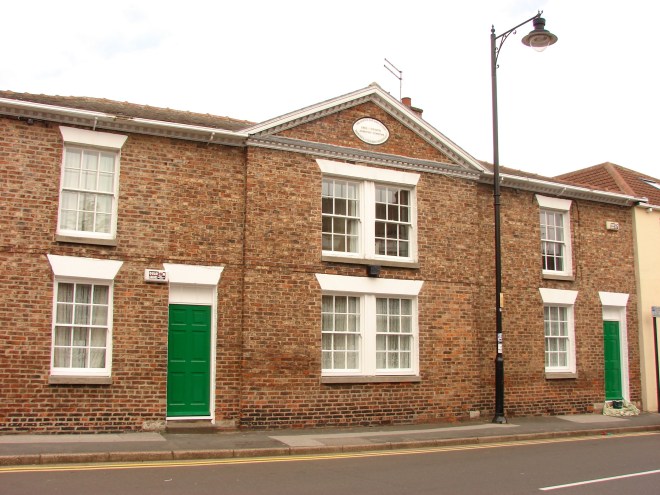
leonard chamberlain sutton.JPG