September 8th

On 8th September 1069, the Danish king Sweyn Estrithson and a fleet of 240 ships anchored in the Humber accompanied by Edgar of Wessex who claimed England’s throne. They marched on York.

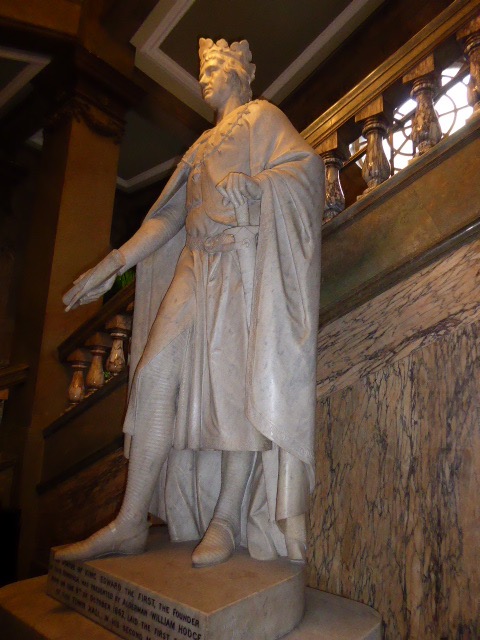
On 8th September 1292, King Edward I stayed in Beverley on his progress through East Yorkshire. photo shows his statue in Hull Guildhall

On 8th September 1402, William Asleby and other rioters from West Hull villages who had rioted as part of Hull’s ‘water wars’ had to do penance every year on the Friday nearest the Feast of the Nativity of Our Lady, by processing through Holy Trinity church naked, bare-headed and with bare feet, through the church during mass, carrying a 3lb burning candle. If they failed to comply, they would be fined £40 – though none of them had any goods of value.

On 8th September 1667, Richard Leeming, Mayor of Grantham, wrote to the Hull Mayor to notify him of the escape of a prisoner committed for murder supposed to be making for Hull.

On 8th September 1730, an accidental fire destroyed the house of John Mason and Richard Dagger, their goods, clothing and hay, making them destitute and entitled to poor relief from the parish.
Edward I
Guildhall


September 4th

On 4th September 1303, Sir Ralph de Heengham and a jury of 12 men held an inquiry into ownership of land in Hull and Myton, west to Ferriby, and of a highway to and through Anlaby to Ferriby.

On 4th September 1650, Ann Hudson of Skipsea was tried as a witch at York Assizes, and evidence was given to the court by Dynah Hunmansby and Alice Stevenson that her victim, Susannah Keld, had been bewitched and very ill until she had scratched Ann Hudson and drawn blood, when she began to recover. The events had happened 12 years previously. The surviving records do not say whether Ann Hudson was convicted and sentenced.

On 4th September 1709, the congregation of Cottingham church gave 3s6d in a collection for the Market Rasen fire, Lincolnshire. A collection in the dissenters’ meeting place raised 4s 6d.

September 1st

On 1st September 1505, John and Thomas Mudd of Tunstall claimed sanctuary in the church of St Cuthbert  for homicide, stating that on 1.8.1505, in self-defence, they had struck Henry Raw also of Tunstall on the head with a pikestaff, giving him a blow from which he died on 30.8.1505. On 2.9.1505 Oliver Mudd and John Mudd jnr (son of John) also sought sanctuary as accessories to the homicide, having been present when the first 2 struck Henry.

On 1st September 1512, Ralph Thorneton, a smith, of Rise, claimed sanctuary at the church of St John, Beverley, for debt.

On 1st September 1784, Hull General Infirmary charity officially opened a hospital with 70 beds in Prospect Street, a site chosen for its fresh country air. The 3 physicians and 3 surgeons provided their services free. In its centenary year, Queen Victoria agreed to a change of name to Hull Royal Infirmary.

On 1st September 1800, John Batman lost his place at Hull Charterhouse  ‘on account of his immoral and disorderly conduct and of the great expences (sic) which the Town have sustained by the maintenance of his bastard children’.


Charterhouse 1780

August 31st

On 31st August 1292, King Edward I stayed at Kilham, on his return from Scotland, where he judged on the claims of Robert the Bruce and John Balliol for the crown, he also made several other stops in East Yorkshire.

On 31st August 1516,  Robert Chorkyls, husbandman, of Wyton, claimed sanctuary at the church of St John, Beverley, for the murder of John Rotheram.

On 31st August 1579, Howden records state that 158 people died in the previous 5 months, at least 110 above the average, due to plague. The city of York forbade anyone from Howden or Snaith from entering the city.

On 31st August 1941, Minnie Leveson, nurse, aged 20, was killed by an air-raid on her home in Willerby; she is buried in De la Pole Hospital cemetery.

On 31st August 1943, 15 Wellington bombers took off from RAF Leconfield and 2 of them collided over Goole, killing both crews and 2 residents of North Street.

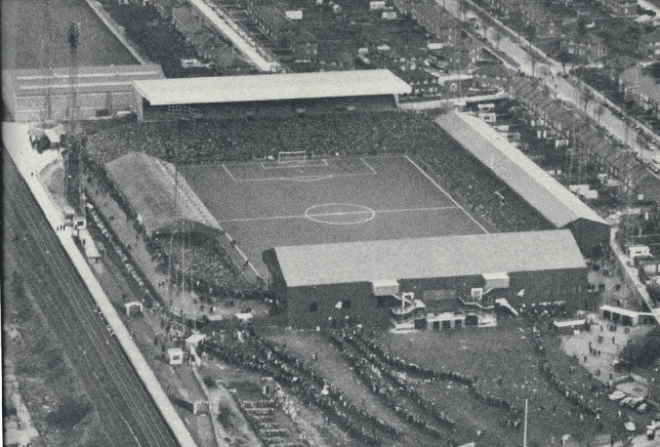
On 31st August 1946, Hull Lord Mayor Herbert Harrison officially opened Hull City AFC’s new stadium, Boothferry Park. The crowd of 25,586 were entertained by the band of the 2ndBattalion East Yorkshire Regiment. The match was against Lincoln City, the result 0-0.

boothferrypk

August 30th


Brid Priory churchOn 30th August 1510, Bridlington tanner Henry Braderig claimed sanctuary at the church of St Cuthbert, Durham, for killing Robert Lelome in the grounds of Bridlington Abbey. With 2 other tanners, Roland Hall and Robert Yong, he had struck Lelome with a dagger, and he died 2 weeks later. The attack happened 11 months earlier, in September.   photo shows Bridlington Abbey church today
On 30th August 1767, James Savage was born in Howden.  Journalist, printer and bookseller, librarian, antiquarian, and newspaper editor. Wrote ‘A History of Howden Church’ 1799 and a history of Wressle in 1805, and a number of other books. (Died  Taunton 19.3.1845). (Suggestion, unverified, that he was Howden town clerk, was accused of claiming excessive expenses, and left Howden 1801 with the parish records, refusing to return them until the town paid him monies due; the books were not recovered).

On 30th August 1854, Robert Wilberforce, rector of Burton Agnes and Archdeacon of the East Riding, resigned after leading a doctrinal controversy which raged in the Hull newspapers for many weeks. Shortly after this, he joined the Catholic church.  He died before he could be ordained. He was a son of William Wilberforce.

On 30th August 1913, Elizabeth Barr, 25, was shot at Watton by former partner and the father of her child, Henry Moore of Kelk, who then shot himself. A letter from Moore to his father indicates his action was premeditated. Barr died 2 days later, and Moore the following week. A coroner’s jury found Barr’s death was due to wilful murder.

On 30th August 1940, Abdo Nassa, age 50, fireman, died by enemy action whilst a merchant seaman in Atlantic convoy, on board SS Chelsea of Hull.

August 29th

minster - frith stool.JPG


On 29th August 1524, John Rotherford, labourer, of Kirby upon Wold (K. Underdale or K. Grindalythe?) claimed sanctuary at the church of St John, Beverley, for murder and felony. A 2ndman entered the sanctuary that day – Nicholas Pryas, husbandman, of Reedness, claimed sanctuary for the death of  a man called Wademan of Cross House.

On 29th August 1584, Sir Francis Walsingham, Queen Elizabeth’s Principal Secretary, was  appointed Hull’s first High Steward, to act as mediator between the town and the Queen. Walsingham was Elizabeth’s ‘spymaster’. The post was much later given to Lord Mandelson.

On 29th August 1867, a Humber pilot was fined £32 to repair the damage he did to the Bull Lightship while handling a vessel in the river.

August 27th

On 27th August 1473, John Warter’s ship Nicholas left Hedon with exports belonging to 14 different merchants, mostly wool and sheepskins. The tax record does not indicate where the ship travelled to. photo shows the Hedon ship design, found in St Augustine’s church.

On 27th August 1586, Daniell Morton was arrested for attempting to travel overseas against government order, and was retained in custody in Hull until further order.

On 27th August 1643, Lord Ferdinando Fairfax, Governor of Hull, ordered that Royalist sympathisers (termed malignants) have their property seized to support Parliament’s cause.

On 27th August 1902, Trooper H.B. Adamson, and Sergeant T. Burn were soldiers returning home to Hornsea from the Boer War. They were greeted by large crowds, the Town Band and a detachment of the Artillery Volunteers, and paraded round the town in a carriage. Sadly, Trooper E. Dabb arrived 4 days later unexpectedly and without ceremony.

On 27th August 1940, Mrs Spetch’s cottage at Mappleton was severely damaged by an enemy bomb, which also destroyed several windows in the church. The cottage site is now occupied by the Maple Garage.

Hedon ship, St Augustine's

August 24th

On 24th August 1399, a schism within the church led to controversy about the post of Meaux Abbot Thomas Burton, and rather than involve the abbey in the costs of litigation, he retired and wrote “The Meaux Chronicle’, the history of the abbey.

On 24th August 1662, on Black Bartholomew’s Day, also known as the Great Ejection, Josiah Holdsworth, curate of Sutton-on-Hull, was dismissed for refusing to conform to the Book of Common Prayer, along with 2,000 other Puritan ministers across the country.  They included Anthony Stephenson at Roos, who stayed in the village as physician, and Stephen Arlush of Howden, who continued to preach in a private house as a Congregationalist, also John Ryther of North Ferriby, who spent some years in prison for illegal preaching. And Mr Robinson at Cottingham, Mr Luddington at Sculcoates, Mr Thos Micklethwaite at Cherry Burton.

On 24th August 1759, William Wilberforce was born in High Street, Hull. The Parliamentary champion of the abolition of slavery, he collaborated for 50 years with Thomas Clarkson. MP for Yorkshire 1812-1825. Buried in Westminster Abbey. (d 29.71833)

On 24th August 1789, the Preston house and shop of William Sanderson were broken into by James Hartley of Manchester. Hartley was hanged at York Castle on 17.4.1790.

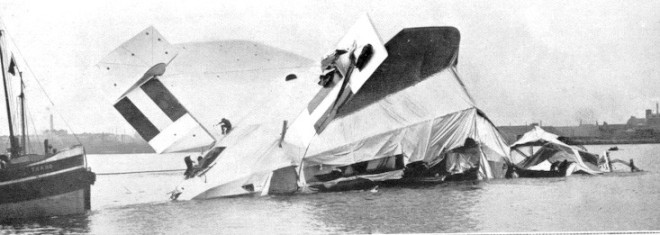
On 24th August 1921, an R38 airship exploded and crashed into the Humber on its last trial flight; 44 members of the crew died. Debris narrowly missed sightseers on Victoria Pier, Hull. photo shows wreckage

On 24th August 1943, Flight Officer Charles Keirl, 23, and 13 other airmen died when 2 Halifax bombers of 78 Squadron collided in fog; one air gunner survived. Keirl is buried in Queensgate Cemetery, Beverley. There is a memorial at Hull Bridge.


R38wreckage1

August 23rd

On 23rd August 1326, Richard Furnewes, barber to the Archbishop of York, was appointed to keep the park at Bishop Burton and the deer, at a salary of 2d per day.

On 23rd August 1601, Lord Burley, Queen’s Lieutenant and President of the Council of the North, visited Hull. His visit was marked with a firework display in the Market Place. Tragically, the cannon misfired, and at least 4 died, and several others were injured.

On 23rd August 1619, a woman bonesetter from South Dalton attended Londesborough House to treat Earl Francis’s shoulder, dislocated in a fall while out hawking. She was paid £1 5s for the treatment, which included 2 visits. (A physician might charge £2 a visit).

On 23rd August 1653, Robert Acklam was fined £5 by Hull Trinity House for taking the ship Blessing from Hull to London and from there crossing to Holland without the correct licence.

On 23rd August 1830, 60 farm workers rioted in Burton Pidsea, armed with clubs, scythes and stones, and visited every farmhouse where there were known to be Irish labourers, aiming to drive them out of the neighbourhood. 6 of them attacked Irish men working in a field belonging to Mr Baxter. The Hull Packet reported on 10.9. 1830 that the 6 ringleaders had been arrested and would be tried at the next Quarter Sessions in Beverley.

On 23rd August 1886, former Hull Trinity House pupil John Lester, aged 20, was killed by a fall from aloft on the Schooner Welsh Belle travelling from Hull to Newfoundland.

On 23rd August 1934, the Yorkshire Post reported on a cliff collapse along a 100-yard stretch at Aldbrough, which resulted in thousands of tons of material falling onto the beach, destroying the boat slipway. No-one was hurt. photo shows more recent erosion at Ulrome.


erosion Ulrome

August 22nd

On 22nd August, 1138, William le Gros, Earl of Albemarle and Lord of Holderness, was made Earl of York, in recognition of his prowess in the Battle of the Standard at Cowton Moor, Northallerton. The 4 standards of St John of Beverley, St Peter of York, St Cuthbert of Durham, and St Wilfred of Ripon, were used as a rallying point for the English against the Scots. The East Riding contingent included a Percy and a de Stuteville. (and see 20.8)

On 22nd August 1572, Thomas Percy, 7thEarl of Northumberland, was executed at York for treason, as leader of the Rising of the North. He was offered mercy if he renounced Catholicism, and refused.  Beatified by the Catholic church. (b 1528, probably in  Leconfield)

On 22nd August 1711, James Rand left £160 in his will for ‘the poor and needful of Preston’. Rands Estate in the village is named for him.

On 22nd August 1917, a bomb from a German Zeppelin destroyed the Primitive Methodist chapel, Baxtergate, Hedon.

On 22nd August 1918, Alfred Buchanan Cheetham of Bean Street, Hull, was killed when the SS Prunelle was torpedoed in the North Sea by a German U-boat. He took part in 3 Polar expeditions, and spent a total of 6 years in the Antarctic, with both Scott and Shackleton. Awarded the Silver Polar Medal clasp, he claimed to have crossed the Antarctic Circle 14 times. Cape Cheetham is named for him. (b 6.5.1867 Liverpool)

On 22nd August 1925, Robin Skelton died aged 72 in victoria, Canada. Poet, literary editor, professor and author of books on wicca. Born in Easington 12.10.1925


robin skelton