November 16th

On 16th November 1503, Elizabeth of York, Duchess of Suffolk, died, aged 58. She was married to John de la Pole, 2ndDuke of Suffolk. The lands she held in Hull and Myton reverted to the Crown, and in 1514 Henry VIII gave them to William Sidney, buying them back in 1539 to build his fortifications in the town. She held 1,000 acres of land, including meadow, pasture, 100 dwelling houses, a mansion and gardens and the patronage of the Charterhouse.

On 16th November 1857, ‘A Dissenter’ issued a campaign leaflet encouraging religious dissenters to oppose plans by the Church of England to close down the school run by the Leonard Chamberlain Charity, the trustees of which were all dissenters. The writer estimated that 1/3 of Hessle people were not CofE members. The school remained open for a further 45 years.

On 16th November 1918, PC244 Harry Burgess filed a statement at Hull Central Police Station, reporting on 3 US sailors and 1 American soldier being followed by a large crowd. The Americans used obscene language, threatened to fight, and refused to go to their billets. Police escorted them to the Grosvenor Hotel, guarded the gate and dispersed the crowd, who accused the Americans of attacking British and Canadian soldiers.  The US commander later ordered his men, based at Killingholme US Naval Air Station, not to visit Hull without orders.

On 16th November 2017, Queen Elizabeth II visited Hull and met some of the City of Culture volunteers, had lunch with the Bee Lady among others, visited Siemens, and the new Allam Medical Centre at Hull University.


royal visit 2017

November 5th

On 5th November  1605, Sir Thomas Knyvet of Escrick, as Gentleman of the Bedchamber to King James I, he went to the House of Lords cellar to investigate a rumour and discovered Guy Fawkes and some gunpowder …

On 5th November 1740, Elizabeth Johnson’s charity distributed money to the 4 poorest families in Cherry Burton every year on this date.  Daughter of Dr Hodgson Johnson, she left £40 to be invested, adding to the 40s left by her father 16 years before.

On 5th November 1804, 7 of the 8 crew of the Cecilia Margaretha of the Duchy of Holstein died when the ship was driven ashore at Mappleton and wrecked on a trip from Liepaja, Russia, to Lisbon. photo shows Mappleton today

On 5th November 1854, James Elliott, private in the Coldstream Guards, died aged 22 at the Battle of Inkerman, Crimea; his memorial in Hedon church was ‘erected … to commemorate the event and to show that Hedon contributed its unit in defence of the liberties of Europe’.

mappleton.JPG

November 2nd

On 2nd November 1304, Lord Walter de Fauconberg, first Baron Fauconberg, of Rise, died aged about 80 at Rise (or Withernwick) and was buried at Nunkeeling. He had a long military career, and supported Simon de Montfort in his rebellion against King Henry III, for which he lost his lands for several years to Robert Bruce, but redeemed them in 1268.  Married Agnes de Brus.

On 2nd November 1595, John Thorgey left 5s per year for ever, to be distributed by Patrington church wardens to the poor. photo shows Patrington church

On 2nd November 1988, one of the worst industrial fires in Hull killed employee Jennifer Powley, 17, and left Janine Gilfillan with serious burns when a fire led to explosions and evacuation of nearby houses.

Pat church

October 30th

de Ros arms

On 30th October 1472, an inquisition post mortem was called to verify the date of birth of Eleanor de Roos, of Breighton, daughter of Sir Robert Roos, in relation to inherited lands. George Layburn confirmed that she was born 55 years earlier, on 30thSeptember, a date he remembered because on the day of her birth one John Forder, fisherman, at Bryghton, in the water of Derwent, netted a big fish, of great length, with a head like a dog’s. 

On 30th October 1833, John Brown, 35, died in a field near Withernwick, during a prize fight against William Hackney, oyster vendor of Hull.  Brown, 18 lbs lighter than Hackney and 11 years older, fell after 1 hour and 36 minutes, in the 65thround, before 4p.m., and died at 10p.m. Hackney, his second Thomas Wilkinson, and Brown’s second, William Thompson, were found guilty at the inquest of wilful murder. A court had earlier found Thompson not guilty, and Hackney and Wilkinson guilty of manslaughter, and both were sentenced to 4 month’s hard labour at Beverley House of Correction.

On 30th October 2017, the Trustees of the Nafferton Feoffees Charities Trust submitted their annual report on a charity which originated with a bequest to the local poor from Thomas Robinson in 1698, and continued since that time, with additional bequests as recent as 1950.


October 27th

On 27th October 1720, Ann Watson, nee Headon, of White House, Stoneferry, left her estate at Stoneferry for a hospital for widows or daughters of clergymen, old maids, and for a school. In Sutton she left 26s p.a. to distribute bread to the poor who attended divine service that day.  She left several other bequests in different parishes; Ann Watson Street is later named for her; she is buried in Hedon, and has memorials there and in St James Church, Sutton.

On 27th October 1849, Hull Trinity House purchased chalkstone to protect the Spurn lifeboat cottages from the sea, as high tides and gravel extraction had greatly damaged the Point.

On 27th October 1907, Charles Henry Wilson died aged 74 at Warter Priory. Son of the founder of the Wilson Line, he was MP for Hull, then Hull West, a JP, and High Sheriff of Hull. He paid for the Seaman’s Mission in Posterngate (now the Mission pub). Deputy Lieutenant of the East Riding, he became the 1stLord Nunburnholme in 1906. photo shows part of his memorial in Warter church.

Chas Wilson Nunburnholme

October 11th

ON 11th October 1536, Marmaduke Thomson, vicar of Preston, rang the church bell and called parishioners to meet at Nuthill, where he swore in local men to join the Pilgrimage of Grace. Around 300 Holderness men left to assemble at Sutton Ings. (& see 10.10)

On 11th October 1643, 1500 Parliamentary troops left the besieged town of Hull and after 2 attempts and many hours’ fighting, drove the Royalists out of all their positions around the town.

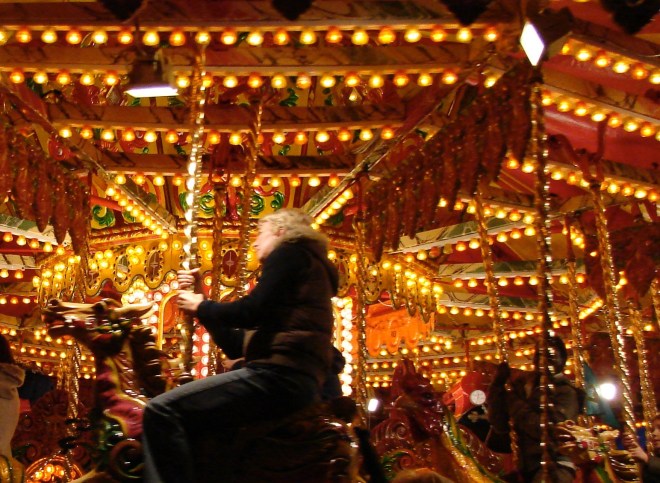
On 11th October 1782, Rev George Lambert described Hull Fair as ‘A season for the amusement of children and the gratification of gluttony’.

On 11th October 1929, Mrs Edith Robson officially opened Hedon Road Maternity Hospital, the successor to the free maternity home for poor mothers, which she gave as a gift, fully equipped, to Hull Corporation in 1915.


fair 07

October 10th

On 10th October 1536, a large crowd of armed men from Holderness supporting the Pilgrimage of Grace met on Beverley Westwood and Sutton Ings and chose captains.

On 10th October 1596, the Howden churchwardens gave 8d to Oswald Metcalfe, a poor man, licensed by My Lord Grace and the Council (i.e. given licence to beg while on his way to his home parish).

On 10th October 1918, former Reckitt’s employee gunner George Henry Saul, 26, died of wounds while serving with the Royal Garrison Artillery. Buried Etaples, France.

Pilgr Grace

October 8th

On 8th October 1536, Beverley men mustered on Westwood Low Green in response to the Lincolnshire rebellion against the Act of Dissolution. Elizabeth Stapleton encouraged them, despite the reluctance of her husband, and her brother-in–law William Stapleton became the rebels’ captain.

On 8th October 1643, Capt Strickland led a failed Royalist attack on Hull’s Hessle Gate, and was shot dead. Many of the attackers were killed.

On 8th October 1708, William Robinson died in Hull. Former Sheriff of Hull, donor of a hospital to Trinity House, left bread for 12 widows to be given each year on Christmas Day. They were required to go to his grave in Holy Trinity churchyard to receive their dole.

On 8th October 1805, Beverley corporation ordered that all rogues and vagabonds found wandering in the town must be apprehended and conveyed to a magistrate. A board  showing this order can be seen in St Mary’s church loft.

On 8th October 1862, Hornsea businessman Joseph Armytage Wade turned the first sod with a silver trowel at a ceremony to mark the start of building the Hull to Hornsea Railway.

On 8th October 1874, George Wombwell visited Beverley on his way to Hull Fair; in Saturday Market he exhibited elephants, giraffes, a rhino, and big cats; other shows also stopped over in the town before going to Hull.

On 8th October 1929, Wm Jackson & Son Ltd opened their landmark store in Paragon Street, Hull, designed by Hull architects Gelder and Kitchen, with a cafeteria and restaurant on the first floor. After the war, when the fire-damaged property was repaired, a 3rd floor was added as a ballroom. This was to become one of the city’s most popular night-spots for many years.

On 8th October 1985, Clive Sullivan MBE died aged 42. 1st black captain of any British national sporting team. He played rugby league with both Hull and Hull Kingston Rovers during his career. Holds records for most tries in a career (250) and most tries in a match (7). Commemorated in Clive Sullivan Way and the Clive Sullivan Memorial Trophy.(b 9.4.1943 Cardiff)


Clive Sullivan

October 2nd

On 2nd October 1200, King John gave permission for an annual fair at Howden lasting a week; by the 19th Century it had become the biggest horse fair in England, but by 2007 Howden Fair had reduced to a 1-day event.

On 2nd October 1504, Thomas Henrison, husbandman of Skipsea, claimed sanctuary at the church of St John, Beverley, for debt.

On 2nd October 1518, Thomas Weston, a ‘singingman’, from Snaith, claimed sanctuary at the church of St John, Beverley, for debt.

On 2nd October 1541, the Privy Council of England sat in Hull.

On 2nd October 1658, Capt Robert Hildyard of Patrington left £10, half the interest of which was to be used to repair the bell frames, and the other half distributed to the poor for ever. photo shows his memorial in St Mary’s Lowgate, Hull.

On 2nd October 1738, Dick Turpin, alias John Palmer, was arrested for breach of the peace, shooting a gamecock in Brough and threatening to shoot a man. He was held in Beverley, where the JPs committed him to trial at York. It was believed that while living in East Yorkshire posing as a horse dealer, he took frequent trips to Lincolnshire to steal horses. He was hanged in York 7.4.1739. photo – Welton

On 2nd October 1883, Arthur Mallaby Illingworth, aged 7 months, died of scarlet fever. An epidemic had affected Hull since the previous year, killing over 600 people, mostly children under 5.  A brother born the following year, and named Arthur Mallaby Rawnsley Illingworth, died at 18 months, probably of the same cause.


September 27th

Shakespeare

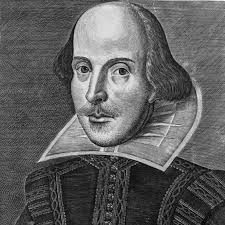
On 27th September 1599, the Hull Mayor and Aldermen ordered that no Hull resident should attend any play or interlude performed in the town, or risk a fine of 2s6d, and that the owner of any house allowing a play to be performed be fined 20s. It is suggested that the Lord Chamberlain’s Men, Shakespeare’s company, may have paid Hull a visit and performed at the King’s Head, High Street.

On 27th September 1642, the Royalist battery at Paull built for 12 guns in July was destroyed by a bombardment from the Parliamentary ships Lion and Employment; the church was also damaged.

On 27th September 1759, Keith Thomas was baptised in Brandesburton parish church; he later became professor of geography to the Royal household, and published a number of books on mathematics.

On 27th September 1782, less than a year after setting up the Hull General Infirmary charity, funds of £2,876 were raised, enabling a hospital to be opened in temporary premises in George Street (on the site of the Dorchester Cinema)

On 27th September 1813, Altisidora, a filly bred by Richard Watt at Bishop Burton won the St Leger; the village pub is named after her.