August 3rd

On 3rd August 1349, John de Preston was elected Prior of North Ferriby on the death of John de Beverley, himself elected Prior just 10 days earlier on 24thJuly, when he succeeded the previous Prior Walter de Hessell on his death. This outbreak of the Black Death killed 35 out of 95 parish priests in East Yorkshire, and presumably a similar proportion of the general population.

On 3rd August 1523, Thomas Senexer, yeoman, of Holme on Spalding Moor, claimed sanctuary at the church of St John, Beverley, for debt. photo shows the Frith Stool (sanctuary chair)

On 3rd August 1732, Robert Cook was killed when he fell from a wagon at one of the chalk pits in Hutton.

On 3rd August 1798, Press Gang seamen John Sykes and John Burnock or Burnick were killed when attempting to press the crew of the returning whaler Blenheim (& see 2.8). The fight was watched by crowds on the dockside. Capt Mitchinson was charged with murder (& see 31.3) The navy men were buried in Drypool Cemetery.

On 3rd August 1878, for 1d working people could attend a lecture on ‘The Yorkshire Wolds in Prehistory’ as part of Hull Literary and Philosophical Society’s new series of lectures to the working classes in the Exchange Building, aimed at keeping working people occupied during the new Saturday half holiday.

On 3rd August 1942, Mrs Frances Snowden, Lieut Stanley Lawrence and Charles Cross were killed when 4 bombs were dropped on Flemingate, Beverley, damaging Hodgson’s Tannery and destroying a house, a medical centre and a warden’s post. 15 people were injured, some of them machine-gunned by the German bomber.
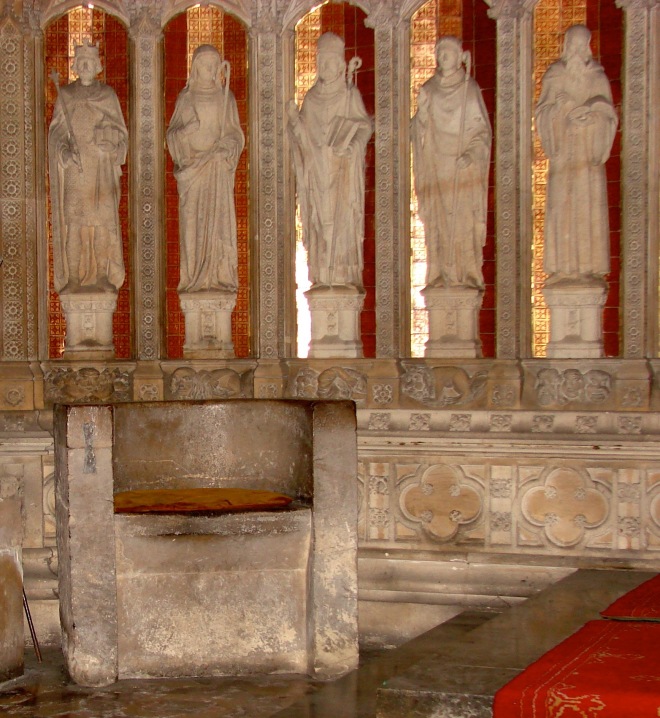
minster - frith stool.JPG

August 1st

On 1st August 1506, William Ryplay, labourer, of Leconfield, claimed sanctuary at the church of St John, Beverley, for debt.

On 1st August 1639, Robert Skelton, 32, of Hull, was hanged at York Castle for forging a will belonging to Thomas Bell of Hull.

On 1st August 1648, Hull Recorder Francis Thorpe wrote to the Mayor concerning the shipment of pistols to the town, and about the case of Bacchus, a delinquent (i.e. a supporter of the Royalist cause in the Civil War).

On 1st August 1670, Mrs Mary Barnard of Barmston had been ordered to do work to the drain called Gallow Clow (on Myton Carr, near the road to Anlaby) on land which she owned, and had failed to carry it out; a jury under the Commissioner of Sewers gave notice of their intention to view the drain or creek.

On 1st August 1834, Richard Bethell MP laid the foundation stone for William Wilberforce’s statue on Monument Bridge, Hull, on the same day as the Slavery Abolition Act came into force.

On 1st August 1873, the Fisk Jubilee Singers arrived in Hull and visited the Wilberforce monument on the anniversary of the Abolition of Slavery Act. They performed several times, and were so popular they returned to Hull twice more before returning to the US August 1874. They were on a European tour, including singing for Queen Victoria, to raise money for the Fisk University for freed slaves. Several of the singers were born slaves.


Wilberforce memorial plinth


July 30th

whalebone arch Pat.JPG

On 30th July  1526, Preston butcher John Erdy claimed sanctuary at the church of St John, Beverley, for felony and debt.

On 30th July 1643, the parish clerk of St Mary’s, Beverley, reported in the parish register that they buried 13 men killed on the King’s side in the Civil War.

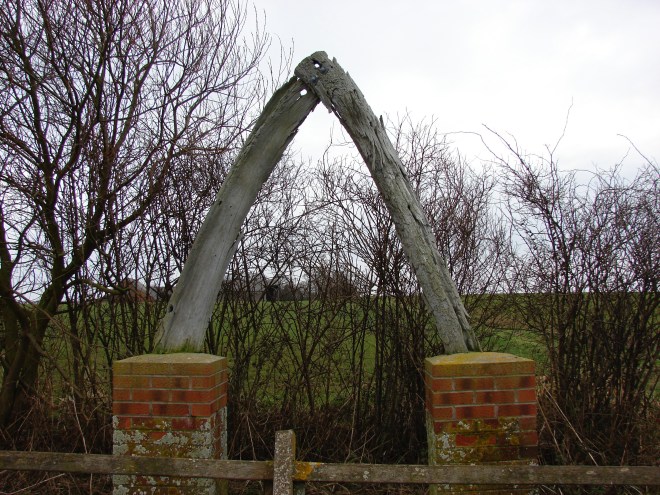
On 30th July 1782, the crew of Hull whaler Benjamin landed 135 butts of blubber and over 2 tons of whalebone, the product of 3 whales caught in the Davis Strait. (Rev George Lambert had shares in the ship). photo shows whalebone arch outside Patrington

On 30th July 1861, John Ellerthorpe, aged 55, rescued John Eaby, who had fallen into the Humber Dock Basin, Hull. This was Ellerthorpe’s 39thand last rescue. Named ‘The Hero of the Humber’, he was awarded with the Royal Humane Society’s Silver Medal.

On 30th July 1891, Mary Jane Langley, 18 years, of Westfield Farm, Long Lane (now Neat Marsh Road) Preston, was last seen alive when she walked to Marfleet and took the train to Hull to have her photo taken. Her body was found in a ditch near her home. Her throat had been cut. John Rennard was arrested and tried, but not convicted.


July 29th

On 29th July 1527, John Flower, labourer of Burstwick, claimed sanctuary at the church of St John, Beverley, for the death of Roland Stephenson.

On 29th July 1678, Andrew Marvell, MP for Hull, had what turned out to be his last meeting with Hull Corporation. He returned to London shortly after, and died suddenly, aged 58, on 16thAugust, some supposed of poison.

On 29th July 1828, Hull banker Joseph Robinson Pease visited his land in Winestead to discover ‘hundreds of acres nearly a foot under water’ in the wettest July on record, a disaster for crops of hay, corn and potatoes. He said most local landowners had reduced rents, farmers ‘having literally nothing to pay with’.


Andrew Marvell

July 27th

On 27th July 1643, Hull widow Ann Stevenson, whose husband died at Beverley in Parliament’s service as a cannoneer, petitioned the town of Hull to pay her the 35 shillings wages due to him; the committee agreed, in view of her poverty, to let her have 20s.

On 27th July 1782, Rev George Lambert of Fish Street, Hull reported in his diary on a violent thunderstorm in the evening, and lightning killed a cow very near their house, and scorched the hedges.

On 27th July 1796, jockey George Heron was thrown by his horse at Hull racecourse, Newington, and killed.

On 27th July 1855, James McLoughlin, aged 13, asked Hull Magistrates Court for the protection of the court on account of his mother having beaten him severely with a stick and a fire poker because he would not go out stealing for her.

On 27th July 1996, HMS Rose visited Hull’s Albert Dock; this was an exact replica of a frigate built in Hull by the Blaydes yard in 1757 and sunk in Savannah, Georgia in 1779. The only difference from the original ship was that the sails were made from recycled plastic bottles.

HMS Rose replica

July 24th

On 24th July 1614, Ralph Hansby founded almshouses for 3 poor persons at Bishop Burton.

On 24th July 1622, Lawrence Taylor, rector of Londesborough,  died intestate, and the York Consistory (Ecclesiastical) Court gave custody of his 6 children, and a 7thchild born in October, to his brother William, to be supported until age 21. No information on the fate of his widow.

On 24th July 1894, John William Russell was shot dead on Albert Dock, Hull, by Arthur Kendall. Russell was trying to defend Crossland from Kendall. Kendall was convicted at York Assizes, his sentence commuted to penal servitude.

On 24th July 1912, a heavy cloudburst over Westwood brought flooding to Beverley town centre. Water was a foot deep on Walkergate.

On 24th July 1942, bus inspector Ernest Goddard, aged 50, and 14 others, including 5 children, were killed in an air raid on Withernsea; as well as 2 bombs, in Queen Street and the bowling green, the German Dornier bomber had used small arms fire on local people.

On 24th July 2011, 5 thieves stole the 300kg statue from Nelson Street, Hull; called Voyage, the statue was created by Steinunn Thorarinsdottir, as a symbol of the relationship between Hull and Iceland.  A replacement statue was unveiled 11.5.2012.

iceland statue plinth.JPGphoto shows the empty plinth.

July 23rd

On 23rd July 1525, carpenter John Algood of Wheldrake claimed sanctuary at the church of St John, Beverley, for debt.

On 23rd July 1856, Capt Bryan Stapleton became the first governor of the Yorkshire Catholic Reformatory School for Boys, at Holme on Spalding Moor.  The reformatory movement campaigned to keep children out of prisons, but the first Yorkshire school was Church of England only.

On 23rd July 1941, an air raid on Alexandra Dock, Hull, sank 3 lighters, killing 2 people and injuring 5, and damaged No 11 quay, 2 steamers and a diving boat.

On 23rd July 2012, the Royal Engineers carried out 15 controlled explosions on the beach at Mappleton, after a landslide (on Sat 21.7) revealed at least 1,000 rockets, grenades and bombs from WW2.

mappleton bomb

July 20th

On 20th July 700 AD, St Osanne (or Osana or Osmanna) died aged 30 (at least, this is her saint’s day). Sister of Osred I, King of Northumbria (or daughter of Aldfrith), she was a nun at Jouarre, France. Her miracles are recorded: when a concubine of the Howden rector was so impious as to sit upon Osana’s tomb, Osana stuck her to it so that she could not be removed.

On 20th July 1332, Edward Balliol gathered a fleet of 88 ships in the Humber, and joined by a number of other Scottish nobles, set off for Fife to claim the Scottish throne from the Bruce family.

On 20th July 1413, Pope John XXI wrote to residents of West Hull villages, solemnly reminding them of the judgements to come if they did not maintain the water courses providing fresh water to Hull.

On 20th July 1495, John Halyday, carrier, of Watton, claimed sanctuary at the church of St John, Beverley, for the murder at Watton of Agnes Lathe.

On 20th July 1631, Henry Lord Clifford made the first payment to Dutch painter Hendrick de Keyser the younger, following a fashion for painting set by Charles I; de Keyser was employed for 7 years, unusual for a great house in the North. No work attributed to de Keyser has survived.

On 20th July 1662, Rev Nicholas Osgodby was reinstated as vicar of St Mary’s after being removed from his post during the Commonwealth.

On 20th July 1798, press gang officer Lieutenant Loten was attacked in the street in Hull by a sailor with a Greenland knife, and escaped to his house. A riot began which took the militia 3 hours to quell.

On 20th July 1934, the crew of Hull tug Autocrat were rescued when she was pulled over and sank near Whitton, in the Humber, while helping the Goole tug Salvage to refloat the SS Ouse. The tug was raised and returned to service.

St Mary's Beverley


July 18th

On 18th July 1509, Lockington labourer Christopher Wylton claimed sanctuary at the church of St John, Beverley, for theft.

On 18th July 1511, Tailor Thomas Mateson, of Stamford Bridge, claimed sanctuary at Beverley for the homicide of John Pott, also of Stamford Bridge, labourer.

On 18th July 1642, the first Hull siege ended after 17 days; as the Royalists withdrew to Beverley, they destroyed the sluice at Hull Bank, causing flooding in Newland, and probably set fire to St Andrew’s Church at Paull.

On 18th July 1833, the work of the Humber Pilots involved more than directing ships into harbour; the day’s work included: relaying 14 buoys; taking carpenters to Bull Float and relaying Transport buoy (at the entrance of the River Hull).

On 18th July 1878, Anthony Bannister JP died at Hessle aged 61; twice Sheriff and twice Mayor of Hull, Vice commodore of the Royal Yorkshire Yacht Club. Promoted the Hull to Withernsea rail line; he is commemorated by a street in Withernsea, by a statue in Hull, and an effigy in Hessle.

On 18th July 1929, Boothferry Bridge opened to traffic across the River Ouse, replacing the ferry which had operated there since the 14thcentury.

On 18th July 1941, Ernest Dean Hodgson of Deepdale Grove, Hull, member of the Rescue Service, was commended for the rescue of Mrs Pounder and her 3 children from a damaged air raid shelter in rustenburg St. For their actions on the same night, John Joseph McHugh of Lilly Grove, and Arthur George Dixon were both awarded the British Empire Medal.  The same raid caused major damage to Reckitt’s Dansom Lane HQ, about 75% of the buildings being destroyed.

On 18th July 1969, Barry Francis, 22, decky learner, was lost overboard from Hull trawler Arctic Vandal off the North Cape.

July 16th

On 16th July 1796, 10 days after the introduction of the Dog Tax of 5s per dog per year, the Hull Advertiser reported a considerable number of rotting dog carcases, after owners killed their dogs and threw them in the street.

On 16th July 1802, Dorothy Wordsworth, sister of poet William, visited Beverley with friends, commenting on the beauty of the town and the minster.

On 16th July 1807, a Bastardy examination of Ann Linwood, single woman of Hedon
revealed that the father of her son, born on 28 Jun 1807 in Hull was gunsmith Owen Probin. Owen Probin was murdered 7 years later (the events are probably not related).

On 16th July 1885, Hull & Barnsley Railway and the Alexandra Dock officially opened.

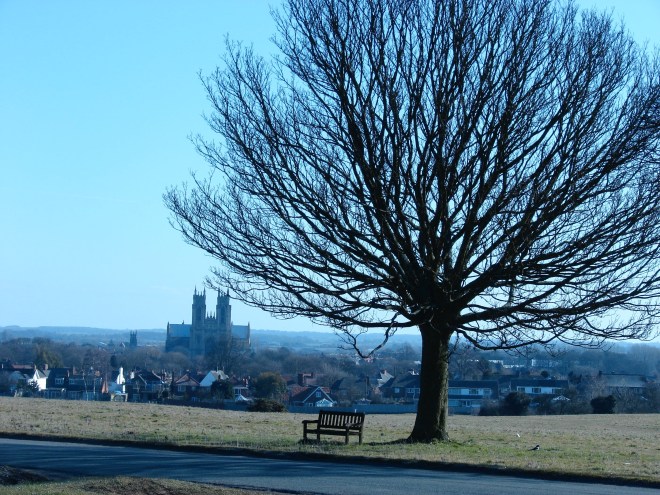
On 16th July 1904, the Beverley Guardian reported a new phenomenon, ‘the hatless brigade’, when pedestriansof both sexes had been seen in Hornsea without any head covering whatsoever.minster beverley.JPG