October 8th

On 8th October 1536, Beverley men mustered on Westwood Low Green in response to the Lincolnshire rebellion against the Act of Dissolution. Elizabeth Stapleton encouraged them, despite the reluctance of her husband, and her brother-in–law William Stapleton became the rebels’ captain.

On 8th October 1643, Capt Strickland led a failed Royalist attack on Hull’s Hessle Gate, and was shot dead. Many of the attackers were killed.

On 8th October 1708, William Robinson died in Hull. Former Sheriff of Hull, donor of a hospital to Trinity House, left bread for 12 widows to be given each year on Christmas Day. They were required to go to his grave in Holy Trinity churchyard to receive their dole.

On 8th October 1805, Beverley corporation ordered that all rogues and vagabonds found wandering in the town must be apprehended and conveyed to a magistrate. A board  showing this order can be seen in St Mary’s church loft.

On 8th October 1862, Hornsea businessman Joseph Armytage Wade turned the first sod with a silver trowel at a ceremony to mark the start of building the Hull to Hornsea Railway.

On 8th October 1874, George Wombwell visited Beverley on his way to Hull Fair; in Saturday Market he exhibited elephants, giraffes, a rhino, and big cats; other shows also stopped over in the town before going to Hull.

On 8th October 1929, Wm Jackson & Son Ltd opened their landmark store in Paragon Street, Hull, designed by Hull architects Gelder and Kitchen, with a cafeteria and restaurant on the first floor. After the war, when the fire-damaged property was repaired, a 3rd floor was added as a ballroom. This was to become one of the city’s most popular night-spots for many years.

On 8th October 1985, Clive Sullivan MBE died aged 42. 1st black captain of any British national sporting team. He played rugby league with both Hull and Hull Kingston Rovers during his career. Holds records for most tries in a career (250) and most tries in a match (7). Commemorated in Clive Sullivan Way and the Clive Sullivan Memorial Trophy.(b 9.4.1943 Cardiff)


Clive Sullivan

October 5th

On 5th October 1643, Sir John Meldrum was sent by Parliament with troops and supplies to help in the defence of Hull from attack by the Royalists.

On 5th October 1801, the residents and business people of Pocklington resolved, at a meeting in the Black Bull Inn, to create a canal to serve the town. The war with the French may have delayed matters, as it was 14 years before a Bill was presented to Parliament and passed. photo shows the canal today

On 5th October 1931, Matthew Stirling died, aged 74 in Hull. Mechanical engineer, designer of locomotives for Hull & Barnsley Railway, many of his designs including his powerful H&BR Class A(LNER Class Q10) 0-8-0freight locomotives were heavily used during World War I. (Born 27.11.1856, Kilmarnock)

On 5th October 1945, Frederick Bryan, 50, 3rd hand,  was lost with 8 shipmates when Hull trawler Grenada struck a mine (at 51 11N 8 10W).

Pocklington canal

October 4th

On 4th October 1253, heavy flooding in Holderness resulted from a dry year and heavy rain. The River Hull changed its course.

On 4th October 1541, the Privy Council of England again sat in Hull.

On 4th October 1642, Capt John Hotham, after the Yorkshire Treaty of Neutrality was signed, began to return from Doncaster to Hull. The treaty was rejected by Parliament, and he detoured and captured Cawood Castle for Parliament, the Archbishop having fled.

On 4th October 1643, 400 Parliamentary soldiers went out of the besieged town of Hull and destroyed the Royalist forts in Sculcoates and Derringham Bank.

On 4th October 1785, Thomas Jackson of Blackfriargate, Hull, complained to the Mayor and corporation about nuisance caused by one of the town waites (official musicians) holding dancing lessons in Hales Entry.

On 4th October 1909, Hornsea Urban District Council conducted a poll of ratepayers, who voted to allow the council to enclose the Promenade Gardens and charge for admission.

On 4th October 1952, ship’s cook Cyril Brown, 44, and 19 shipmates were lost when Hull trawler Norman was wrecked. The sole survivor was Norman Spencer, 19. see Pathe news https://www.britishpathe.com/video/one-survivor-aka-trawler-disaster


October 1st

On 1st October 1646, Sir Henry Griffith of Burton Agnes was fined £7,547 as a Colonel in the Royalist army (a delinquent) in order to recover his goods which had been sequestered by Parliament. His fine was reduced in 1650 to £5,122.

On 1st October 1782, William Spence was born in Bishop Burton. He became famous for writings on entomology, a Fellow of the Royal Society, the first editor of the Hull newspaper the Rockingham, and involved with the Hull firm of Blundell Spence. Died 6.1.1860  see photo

On 1st October 1857, Thomas Bentley Locke, retired banker, JP of Hessle Mount committed suicide by shooting himself in the head with a pistol, apparently believing he might be implicated in the failure of the Harrison Watson & Locke bank, from which he had retired over 20 years before.

William_Spence_

September 30th

On 30th September 1540, King Henry VIII’s commissioners dissolved the priory at Swine.

On 30th September 1541, King Henry VIII took part in (i.e. strongly influenced the outcome of) the Hull mayoral election, and presented the new mayor with his sword.

On 3oth September 1581, Peter Crewe was appointed one of the 2 Hull chamberlains, a week after his fellow aldermen fined him for using faulty weights.

On 30th September 1643, Thomas Raikes, due to stand down after his year as Hull Mayor, was encouraged to stand for a second term, in view of his vigilance on behalf of the town during the events of the Civil War, and in particular the 2nd siege of Hull, which was still ongoing. He was re-elected.

On 30th September 1686, Elizabeth Boyse obtained a licence from Hull town council to sell wine and keep a tavern at her home (described as a mansion house), at the sign of the King’s Head in High Street.

On 30th September 1904, the first of 52 cases of diphtheria were reported in Nafferton; the epidemic killed 7 people, mainly children at the National School.  The school was closed, but infections continued as many local families lived in overcrowded conditions. photo shows modern Nafferton


Nafferton


September 29th

On 29th September 1541, King Henry VIII stayed overnight with the Earl of Northumberland at Leconfield.

On 29th September 1638, the Council in the North wrote to the East Riding Commissioner for Sewers at Hedon complaining of the ruinous condition of the banks of the Humber in Drypool.

On 29th September 1829, some postboys were watering the Archbishop of York’s horses at Bar Dyke, Beverley (next to North Bar) after a trip to Rise; one fell in and was saved from drowning by 2 young men. One of the horses dropped dead, whether from exertion or from drinking the dirty water, the Hull Advertiser did not say.

On 29th September 1947, interpreter Sergeant Wadey, and Sgt Cramer were both killed, together with 7 German prisoners of war, when the Army truck they were driving crashed through the railway crossing gates, and stopped on the track in the path of a train heading for Bridlington. 19 other POWs were injured. They were being transported from POW camp 250 at Thorpe Hall, Rudston.

b.agnes level crossing

September 28th

On 28th September 1643, the royalists’ ammunition store at Cottingham blew up, killing Royalist Army’s Firemaster General and 6 others instantly, and destroying nearby houses.

On 28th September 1849, John Ward of Hull, the leading marine artist of his time, died of cholera; one of his paintings, valued at £10k, was stolen from Hull Maritime Museum in 2009 and recovered 3 months later. In 1981 an exhibition of his works was held at the Ferens Art Gallery to coincide with the opening of the Humber Bridge. (b 28.1.1798) photo shows the whalers Swan and Isabella.

John Ward Swan & Isabella

September 27th

Shakespeare

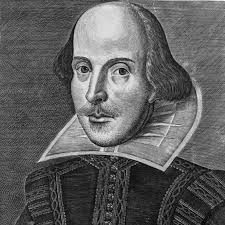
On 27th September 1599, the Hull Mayor and Aldermen ordered that no Hull resident should attend any play or interlude performed in the town, or risk a fine of 2s6d, and that the owner of any house allowing a play to be performed be fined 20s. It is suggested that the Lord Chamberlain’s Men, Shakespeare’s company, may have paid Hull a visit and performed at the King’s Head, High Street.

On 27th September 1642, the Royalist battery at Paull built for 12 guns in July was destroyed by a bombardment from the Parliamentary ships Lion and Employment; the church was also damaged.

On 27th September 1759, Keith Thomas was baptised in Brandesburton parish church; he later became professor of geography to the Royal household, and published a number of books on mathematics.

On 27th September 1782, less than a year after setting up the Hull General Infirmary charity, funds of £2,876 were raised, enabling a hospital to be opened in temporary premises in George Street (on the site of the Dorchester Cinema)

On 27th September 1813, Altisidora, a filly bred by Richard Watt at Bishop Burton won the St Leger; the village pub is named after her.

September 26th

On 26th September 1480, Elizabeth Beauwmont, gentlewoman of Hedon, and Robert Beauwmont, clerk of Almondbury, sought sanctuary in the church of St John, Beverley,  for the death of Thomas Aldirlay of Almondbury, killed by them on 5 Oct 1479. (We do not know the relationship between the 2 )

On 26th September 1643, Col Oliver Cromwell and Lord Willoughby crossed the Humber to view the defence of Hull for themselves, and took some of the cavalry back with them, horses being of limited use in the besieged town.

On 26th September 1649, Marmaduke Richardson of Pocklington was hanged at York Castle for praying publicly before his sermon for Charles II, King of Scotland and heir apparent. (Prince of Wales).

On 26th September 1794, John Magnus, a Dane, was buried at Blacktoft after drowning in the Humber and washing up at Thornton Land.

On 26th September 1917, L/Cpl Thomas Edgar Borrill, 20, former Reckitt’s employee,  died on active service with the Sherwood Foresters. He has no known grave.

Oliver Cromwell


September 25th

On 25th September 1781, the Church authorities had Auburn Chapel taken down before it joined the rest of the village at the bottom of the cliff.

On 25th September 1882, Alfred Deakin, 11 and Frederick Gillett, 12, died as a result of an accident at a fireworks display in Hull Botanice Gardens. Several others were injured, 3 of them seriously. The inquest gave a finding of accidental death.

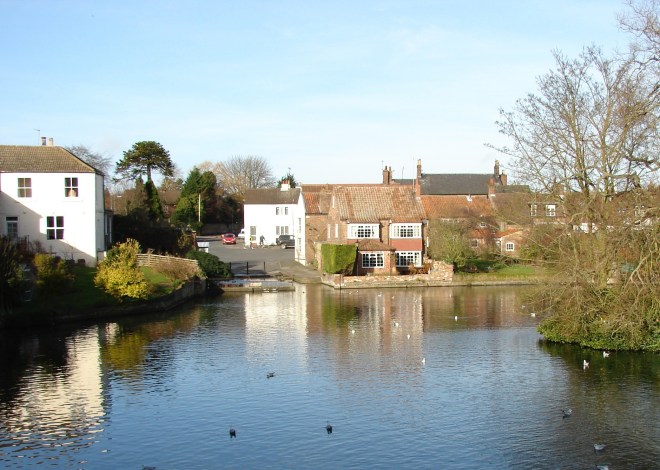
On 25th September 1917, Army gunners at Paull Point Battery prevented a Zeppelin attack on Hull, holding the craft in their searchlight until it was chased off by a fighter plane. The Battery was to the right of the houses on the photo – now known as Fort Paull.

On 25th September 1991, Officer cadet Kate Saunders, 22, became the first woman to eject from an aircraft when a bird strike caused her RAF Harrier to crash; she suffered a broken leg, broken pelvis, crushed vertebrae and 20% burns. The pilot, Sqn Ldr Ashley Stevenson, pulled her from the burning wreckage, and was awarded the Queens Commendation for Brave Conduct.

Paull