Coming up this week

August 10th

On 10th August 1530, Gilbert Cornevell, fishmonger of Beverley, claimed sanctuary at the church of St John, Beverley, ‘for a felony committed at Kirkelly (Kirk Ella) and because he engaged in false coining and for other reasons’.

On 10th August 1785, Rev George Lambert of Hull saw a 2ndwhale displayed at South End, which had beached near Wintringham.

On 10th August 1889, 30 Hull workmen left Hull on a trip to the Paris Exhibition, at the expense of Hull Central MP Henry King. They included sculptor John S. Holmes, jeweller James Lord, stonemason Edwin Quibell, with painters, fitters joiners etc.

On 10th August 1915, Ralph Thomas was born in Hull. Film director, best known for directing the “Doctor” series of films and other comedies, but also directed the 1959 version of ‘The 39 Steps’, ‘Tale of  Two Cities’, ‘Campbell’s Kingdom’ etc.  His brother Gerald directed the ‘Carry On’ series. (d 17.3.2001)


Ralph thomas_

August 9th

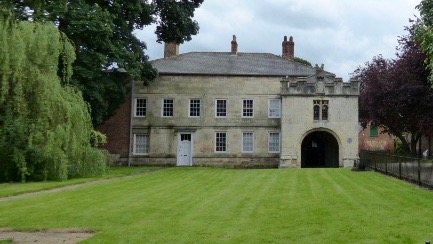
Bishop's Palace, Howden

On 9th August 1260, Walter of Kirkham, Bishop of Durham, died at the Bishop’s Palace, Howden. His body was taken to Durham for burial but his viscera were buried in the church. photo shows what remains of Bishop’s Palace.

On 9th August 1516, Sir Ralph Ellerker of Risby confessed to Cardinal Thomas Wolsey, Archbishop of York, that he ordered his servants Henry Norham and Roberte Hunt to kidnap George Millet, keeper of Beverley Parks, and imprison him in Cottingham Park so that he could hunt on the Archbishop’s land. Pleading poverty, he was bound over in the sum of £200.

On 9th August 1769, John Burrill of Skipsea assaulted John Warcup with swords, staves, knives and clubs so that his life was threatened and ‘other wrongs’. Burrill was indicted in September, found guilty on 24.4.1770, and sentenced 2.10.1770 to a fine of £20 and to remain in gaol until the fine was paid.

On 9th August 1785, Rev George Lambert went to see a 24 foot whale killed and displayed at South End, Hull (near modern pier); described by sailors as a young bottlenecked grampus.

On 9th August 1859, Hansard records the 29.4.1859 election in Beverley void; Ralph Walters was declared ‘not a Burgess to serve in this present Parliament for the Borough of Beverley’ and Henry Edwards was declared MP in his place. Joseph Robinson Pease in his diary called Walters ‘an adventurer, arriving 3 days previously’, ‘by open bribery …. carried the day.’

On 9th August 1902, William Day Keyworth junior, sculptor, died aged 59 in Spring Bank, Hull. He produced many statues of civic dignitaries, including Andrew Marvell, Anthony Bannister and William Wilberforce (now outside Wilberforce House). Shot himself in the head at his home, but left no suicide note.

On the same day, Nafferton villagers were celebrating King Edward VII’s coronation with, among other events, a ‘comic’ cricket match, gentlemen vs ladies, which the ladies won. The score is not recorded.

On 9th August 1915, 17 Goole residents, mostly women and children, were killed by a Zeppelin raid on the town and docks.

On 9th August 1916, a Zeppelin raid on Anlaby Road, Hull,  killed John Broadley aged 3 and at least 7 other residents, and injured about 20. 2 people died of shock. Rev A.W. Carter, Assistant Priest of Newington Church, was badly hurt.


August 8th

On 8th August 1576, Sarah Houslay, aged 27, from Shipton(thorpe) was hanged with Edward de Satre at York Tyburn, outside Micklegate Bar, and their bodies buried near the River Foss. They were convicted of passing forged promissory notes at an inn in Leeds.

On 8th August 1586, John  Finglow or Fingley, aged 32, was executed by hanging, drawing and quartering at York for being a Catholic priest and reconciling English subjects to the Catholic church. Studied at Caius College, Cambridge, and was ordained at Reims in 1581. He was beatified in 1987 as a Catholic martyr. (baptised Barmby in the Marsh 1553)

On 8th August 1871,  William Colbeck was born in Myton Place, Hull. He took part in the first expedition to overwinter in the Antarctic, 1898-1900. Awarded Royal Geographic Society’s Back Award. Took part in the expedition to locate Captain Scott’s Discovery.  Cape Colbeck in the Ross Sea is named for him, and he is commemorated by a cream plaque in Hull. (Died 1930.)

On 8th August 1991, former Hull University student John McCarthy was released after 5 years as a hostage in  Beirut.


William_Colbeck_-_Southern_Cross_Expedition_1899.

August 7th

On 7th August 1385, Joan of Kent (the Fair Maid of Kent), mother of King Richard II, died, it is said, of a broken heart.  She was unable to persuade her son King Richard to pardon another son, Sir John Holland, for the murder of Ralph, son of the Earl of Stafford. Holland was in sanctuary in Beverley Minster, and the murder took place nearby, when Richard’s troops were outside Beverley, on their way to the Scottish wars. Holland was pardoned within the year.

On 7th August 1427, Pope Martin V, in reply to a petition (from the parishioners of both Aughton and Bubwith churches and Peter de la Hay), granted permission that, when they were hindered in winter by floods, snow and hail from reaching their parish churches, they could use the chapel of St James in Spaldington for mass and other offices ‘while the hindrances last’.

On 7th August 1663, Robert Hardy of Hessle was enjoined by the Archbishop of York to do penance in Hessle church for his adultery. photo shows All Saints Church, Hessle

On 7th August 1840, a Serious rail accident took place in Howden, in which 4 passengers were killed, and 9 injured. The Hull and Selby Railway had only opened in full on 1st July. The accident was the subject of the first ever report by the Board of Trade into a railway accident.All Saints, Hessle

August 6th

On 6th August 1778, the question of who owned Spurn Point was resolved in favour of the William Constable of Burton Constable; the legal dispute began in 1609.

On 6th August 1785, John Beck of Lelley was hanged at York Castle for setting fire to a house and corn mill belonging to William Jackson of Danthorpe, with Robert Crosby and John Edwards, also of Lelley; Edwards and Crosby escaped.

On 6th August 1859, John Riley, 36, of Hull, was hanged at York Castle for the murder of his wife, Alice.

On 6th August 1888, former Trinity House School pupil George Smith, age 15, drowned after a collision between the Barque Cambrian and a French Barque during a great storm in Valparaiso harbour.

On the same day, a Bank Holiday Monday, a popular trip out from Hull Corporation Pier was to Paull by boat to watch the Army’s Submarine Miners in training and holding boat races and athletic competitions. Several boats left the Pier during the day.

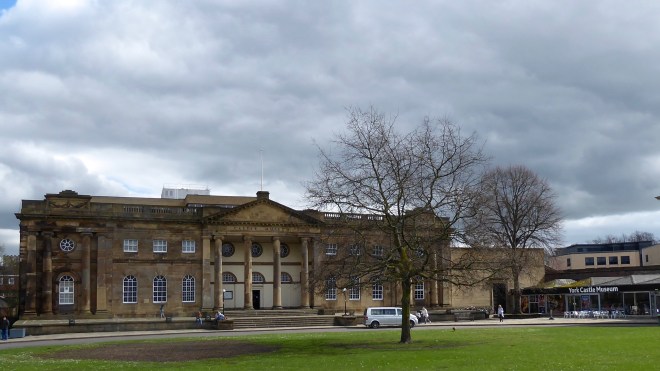
York Castle


August 5th

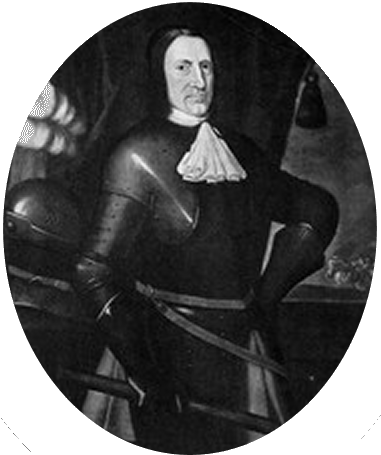
On 5th August 1661, Marmaduke Langdale, 1stBaron Langdale of Holme, died, aged 63, at Holme on Spalding Moor. High Sheriff of Yorkshire 1639. Joined the Royalist side in the Civil War, and had a distinguished military career, being imprisoned and escaping twice. He was ennobled by Charles II in exile and returned from exile at the Restoration, becoming Lieutenant of the West Riding.

On 5th August 1664, Peter Rawson of Hull was indicted as a common disturber of the peace.

On 5th August 1918, the last Zeppelin raid on Hull took place.  Visibility was good, and it was driven away by searchlights. No casualties.Marmaduke_Langdale2

August 4th

On 4th August 1511, John Hessey, husbandman of Belby, nr Howden, claimed sanctuary at the church of St John, Beverley, for the murder of William Smyth of Didyngham (anyone know where this is?)

On 4th August 1652, Keyingham manor court fined 18 villagers for allowing their geese and pigs into the fields outside the stipulated times.

On 4th August 1795, Hull residents rioted against inflationary food prices and shortages. Much corn was being taken by the army, (Napoleonic Wars) in a year of poor weather. A few windows broken.

On 4th August 1834, John Venn, was born in Drypool, son of the vicar. Left Hull at age 8. Fellow of the Royal Society, famous mathematician, who introduced the Venn diagram. Commemorated in Hull University by the Venn Building. (d 4.4.1923) and by Drypool Bridge.

On 4th August 1851, G. Hought of Hutton Cranswick was killed by lightning, as he sheltered under a tree during a thunderstorm. He left a wife and 2 children.

On 4th August 1884, all 11 Walgate brothers of Aldbrough formed one cricket team in a match held at Rise Hall; the Walgates won the match by 3 wickets.

On 4th August 1969, HM Queen Elizabeth opened Queen Elizabeth Dock, the last major dock to be opened in Hull, accompanied by HRH Duke of Edinburgh and Princess Anne.


Drypool Bridge

August 3rd

On 3rd August 1349, John de Preston was elected Prior of North Ferriby on the death of John de Beverley, himself elected Prior just 10 days earlier on 24thJuly, when he succeeded the previous Prior Walter de Hessell on his death. This outbreak of the Black Death killed 35 out of 95 parish priests in East Yorkshire, and presumably a similar proportion of the general population.

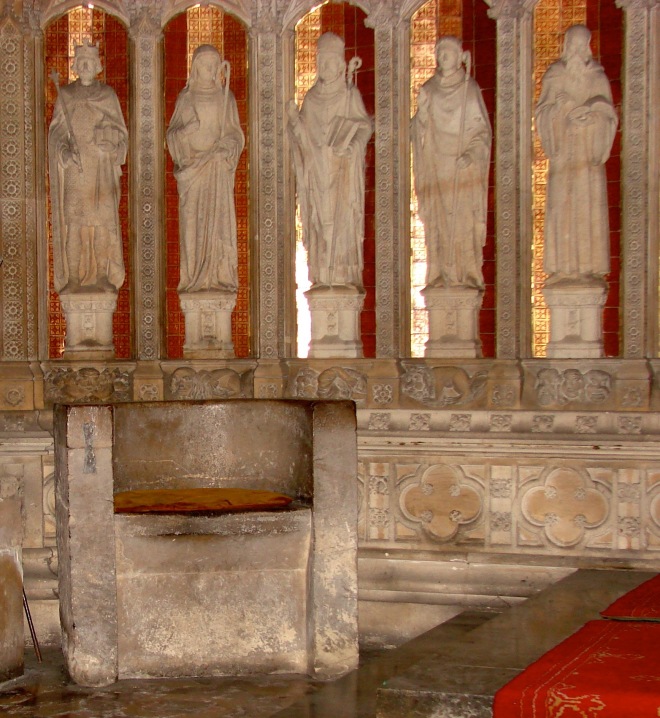
On 3rd August 1523, Thomas Senexer, yeoman, of Holme on Spalding Moor, claimed sanctuary at the church of St John, Beverley, for debt. photo shows the Frith Stool (sanctuary chair)

On 3rd August 1732, Robert Cook was killed when he fell from a wagon at one of the chalk pits in Hutton.

On 3rd August 1798, Press Gang seamen John Sykes and John Burnock or Burnick were killed when attempting to press the crew of the returning whaler Blenheim (& see 2.8). The fight was watched by crowds on the dockside. Capt Mitchinson was charged with murder (& see 31.3) The navy men were buried in Drypool Cemetery.

On 3rd August 1878, for 1d working people could attend a lecture on ‘The Yorkshire Wolds in Prehistory’ as part of Hull Literary and Philosophical Society’s new series of lectures to the working classes in the Exchange Building, aimed at keeping working people occupied during the new Saturday half holiday.

On 3rd August 1942, Mrs Frances Snowden, Lieut Stanley Lawrence and Charles Cross were killed when 4 bombs were dropped on Flemingate, Beverley, damaging Hodgson’s Tannery and destroying a house, a medical centre and a warden’s post. 15 people were injured, some of them machine-gunned by the German bomber.

minster - frith stool.JPG

August 2nd

On 2nd August 1806, Capt Welburn, James Simon, ship’s surgeon, and crew of Hull whaler Blenheim were returning from the Davis Straits when the ship was taken by 2 French frigates, L’Syrene and Le Revenge. The Blenheim was burnt, its crew landed at Pampoule near St Malo, and conveyed to Arras where they were imprisoned. They were later moved to other prisons, and only released in 1814, after years of privation and misery, when the allies entered Paris. Dr Simon was subsequently in practice in Aldborough, Holderness where he died in 1845.

On 2nd August 1860, Hedon Magdalen Fair was finally abolished; in the latter years the owner of the field had to persuade, or bribe, those who wished to attend the fair not to meet there. The event had included a market, music, games, sports, juggling, fire-eaters, and badger baiting.

On 2nd August 1913, Charles William Loten and Terence Charles Carroll, 18, died at Hornsea whilst trying to save a child from drowning. A memorial brass in Hornsea church was paid for by public subscription.

On 2nd August 1916, Joseph Bennett, 17,  died in Hull from bubonic plague. photo shows his memorial in the columbarium, Hedon Road.

plague victim.JPG

August 1st

On 1st August 1506, William Ryplay, labourer, of Leconfield, claimed sanctuary at the church of St John, Beverley, for debt.

On 1st August 1639, Robert Skelton, 32, of Hull, was hanged at York Castle for forging a will belonging to Thomas Bell of Hull.

On 1st August 1648, Hull Recorder Francis Thorpe wrote to the Mayor concerning the shipment of pistols to the town, and about the case of Bacchus, a delinquent (i.e. a supporter of the Royalist cause in the Civil War).

On 1st August 1670, Mrs Mary Barnard of Barmston had been ordered to do work to the drain called Gallow Clow (on Myton Carr, near the road to Anlaby) on land which she owned, and had failed to carry it out; a jury under the Commissioner of Sewers gave notice of their intention to view the drain or creek.

On 1st August 1834, Richard Bethell MP laid the foundation stone for William Wilberforce’s statue on Monument Bridge, Hull, on the same day as the Slavery Abolition Act came into force.

On 1st August 1873, the Fisk Jubilee Singers arrived in Hull and visited the Wilberforce monument on the anniversary of the Abolition of Slavery Act. They performed several times, and were so popular they returned to Hull twice more before returning to the US August 1874. They were on a European tour, including singing for Queen Victoria, to raise money for the Fisk University for freed slaves. Several of the singers were born slaves.


Wilberforce memorial plinth