September 29th

On 29th September 1541, King Henry VIII stayed overnight with the Earl of Northumberland at Leconfield.

On 29th September 1638, the Council in the North wrote to the East Riding Commissioner for Sewers at Hedon complaining of the ruinous condition of the banks of the Humber in Drypool.

On 29th September 1829, some postboys were watering the Archbishop of York’s horses at Bar Dyke, Beverley (next to North Bar) after a trip to Rise; one fell in and was saved from drowning by 2 young men. One of the horses dropped dead, whether from exertion or from drinking the dirty water, the Hull Advertiser did not say.

On 29th September 1947, interpreter Sergeant Wadey, and Sgt Cramer were both killed, together with 7 German prisoners of war, when the Army truck they were driving crashed through the railway crossing gates, and stopped on the track in the path of a train heading for Bridlington. 19 other POWs were injured. They were being transported from POW camp 250 at Thorpe Hall, Rudston.

b.agnes level crossing

September 28th

On 28th September 1643, the royalists’ ammunition store at Cottingham blew up, killing Royalist Army’s Firemaster General and 6 others instantly, and destroying nearby houses.

On 28th September 1849, John Ward of Hull, the leading marine artist of his time, died of cholera; one of his paintings, valued at £10k, was stolen from Hull Maritime Museum in 2009 and recovered 3 months later. In 1981 an exhibition of his works was held at the Ferens Art Gallery to coincide with the opening of the Humber Bridge. (b 28.1.1798) photo shows the whalers Swan and Isabella.

John Ward Swan & Isabella

September 27th

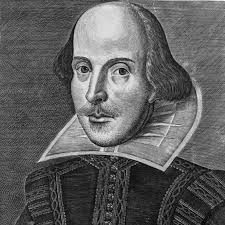
Shakespeare

On 27th September 1599, the Hull Mayor and Aldermen ordered that no Hull resident should attend any play or interlude performed in the town, or risk a fine of 2s6d, and that the owner of any house allowing a play to be performed be fined 20s. It is suggested that the Lord Chamberlain’s Men, Shakespeare’s company, may have paid Hull a visit and performed at the King’s Head, High Street.

On 27th September 1642, the Royalist battery at Paull built for 12 guns in July was destroyed by a bombardment from the Parliamentary ships Lion and Employment; the church was also damaged.

On 27th September 1759, Keith Thomas was baptised in Brandesburton parish church; he later became professor of geography to the Royal household, and published a number of books on mathematics.

On 27th September 1782, less than a year after setting up the Hull General Infirmary charity, funds of £2,876 were raised, enabling a hospital to be opened in temporary premises in George Street (on the site of the Dorchester Cinema)

On 27th September 1813, Altisidora, a filly bred by Richard Watt at Bishop Burton won the St Leger; the village pub is named after her.

September 26th

On 26th September 1480, Elizabeth Beauwmont, gentlewoman of Hedon, and Robert Beauwmont, clerk of Almondbury, sought sanctuary in the church of St John, Beverley,  for the death of Thomas Aldirlay of Almondbury, killed by them on 5 Oct 1479. (We do not know the relationship between the 2 )

On 26th September 1643, Col Oliver Cromwell and Lord Willoughby crossed the Humber to view the defence of Hull for themselves, and took some of the cavalry back with them, horses being of limited use in the besieged town.

On 26th September 1649, Marmaduke Richardson of Pocklington was hanged at York Castle for praying publicly before his sermon for Charles II, King of Scotland and heir apparent. (Prince of Wales).

On 26th September 1794, John Magnus, a Dane, was buried at Blacktoft after drowning in the Humber and washing up at Thornton Land.

On 26th September 1917, L/Cpl Thomas Edgar Borrill, 20, former Reckitt’s employee,  died on active service with the Sherwood Foresters. He has no known grave.

Oliver Cromwell


September 25th

On 25th September 1781, the Church authorities had Auburn Chapel taken down before it joined the rest of the village at the bottom of the cliff.

On 25th September 1882, Alfred Deakin, 11 and Frederick Gillett, 12, died as a result of an accident at a fireworks display in Hull Botanice Gardens. Several others were injured, 3 of them seriously. The inquest gave a finding of accidental death.

On 25th September 1917, Army gunners at Paull Point Battery prevented a Zeppelin attack on Hull, holding the craft in their searchlight until it was chased off by a fighter plane. The Battery was to the right of the houses on the photo – now known as Fort Paull.

On 25th September 1991, Officer cadet Kate Saunders, 22, became the first woman to eject from an aircraft when a bird strike caused her RAF Harrier to crash; she suffered a broken leg, broken pelvis, crushed vertebrae and 20% burns. The pilot, Sqn Ldr Ashley Stevenson, pulled her from the burning wreckage, and was awarded the Queens Commendation for Brave Conduct.

Paull

September 24th

On 24th September 1298, an inquisition was held by the Court of Chancery into Sir Osbert de Spaldington’s goods and lands, which were taken by the king. As recently as 1296, Edward had made him Governor of Berwick, when he received Robert the Bruce and imprisoned Sir William Douglas. It is not known what the allegations against him were, and he recovered most of his land by 1300, after living on the generosity of others in the meantime.

On 24th September 1401, Pope Boniface IX declared John of Bridlington a saint. John was born in Thwing, had been the Prior of Bridlington and died of the plague in 1379, aged 59. 15 miracles are recorded during his life, and 12 after his death, including saving the lives of 5 Hartlepool fishermen caught in a storm. photo shows Brid Priory church

On 24th September 1678, the wife of Thomas Richardson of Wyton died and was buried in the Quaker cemetery in Sutton.

On 24th September 1779, Lord Rockingham, High Steward of Hull, chaired a public meeting in Hull Town Hall at which it was decided that 20 18-lb guns and military equipment due to be sent to Woolwich should be used instead to defend Hull from the threat of American attack. A few days later, the threat reduced when the Americans sailed for Holland.

On 24th September 1830, Hull gunsmith Thomas Rosindale was convicted of vagrancy, having been found in the kitchen of the dwelling house of Charles Frost of Albion St. He was sent to Sculcoates House of Correction for 1 month’s hard labour.

On 24th September 1832, Mr J. Dunn caught a 17lb trout near Driffield.


Brid Priory church

September 23rd

On 23rd September 1066, Harold Hardraada, with his Norse troops, fresh from securing York, made his way to Stamford Bridge for a parley with locals about provisions. Instead, he met Harold Godwinson’s army, and he died at the Battle of Stamford Bridge, ‘the most important battle that has ever been fought in England’.

On 23rd September 1581, Hull alderman and merchant Peter Crewe was fined the sum of £1 in 3 instalments for using false weights in selling bales of flax to a merchant called Trewyt of Nottingham and others. (& see 30.9)

On 23rd September 1704, Henry Stork, seaman who served in a man-of-war in the Queen’s Fleet, was buried after 6 months of illness at home in Hutton, after being invalided out of the Navy, fighting in the War of the Spanish Succession, in Europe or in North America. We do not know what he suffered from.

On 23rd September 1779, John Paul Jones, American navy commander, fought the Battle of Flamborough Head: an American squadron attacked a large British merchant convoy and their 2 escort vessels, during the American War of Independence.

On 23rd September 1797, Hull Trinity House paid 18 shillings to Thomas Ward, mate of the Flora, and Thomas Porrell, a seaman, after their ship was captured by the French.

On 23rd September 1897, Frank Percy Bentley, a boy, summoned George Creaser of Nafferton for assault; Creaser pleaded guilty for hitting him ‘once or twice’ with a stick after finding his son and Bentley fighting. The Driffield magistrates also heard at least 6 cases of ‘drunk and disorderly’ behaviour, a case of non-payment of rates and poor rate, a dispute about rates of pay, a summons for allowing horses to stray, a case of begging, and one assault. All despatched before lunch.

stamford bridge3.JPG

September 22nd

On 22nd September 1690, Beverley Corporation gave permission to create a racecourse between the Newbald and Walkington roads. Horse racing had probably taken place on Westwood for 300 years, but this was the first time a course was formally laid out.

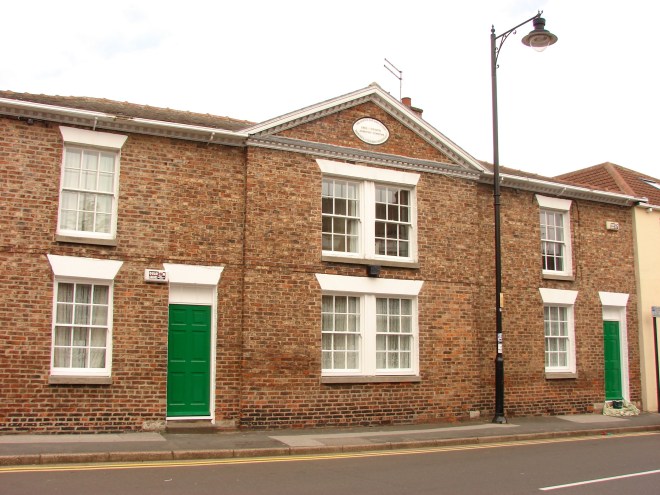
On 22nd September 1716, Leonard Chamberlain, draper, died at Hesslewood House, Hessle, and left property and estates in Sutton, Stoneferry, Selby, Dunswell and Hessle and his charitable bequests continue to this day. A Presbyterian, he supported those who had been discriminated against on religious grounds, gave money for educating the poor ‘of whatever persuasion or denomination soever’.  Commemorated in Chamberlain Road and Chamberlain Street, Sutton. photo shows one of the Sutton properties

On 22nd September 1761, to mark the coronation of King George III and Queen Charlotte, Col Duncombe’s Battalion of militia drilled in Beverley Market Place, and fired volleys, while the Corporation held a dinner for the officers, the bells rang, and in the evening there were illuminations.

On 22nd September 1778 was the official opening of The Dock, Hull. (It became known as Queen’s Dock after Victoria visited the city in 1854). The first ship in was the whaler Manchester, decorated all over with flags of the nations, followed by the Favourite, the largest ship in the port at 1,000 tons (burthen). 20,000 spectators were entertained by cannon fire and a musket salute from the garrison, and the great and the good were fed and sumptuously entertained.

On 22nd September 1856, Count de Werdinsky died in Hull aged 53, in abject poverty, after variously representing himself as a Polish count, inventor and doctor. He was a bankrupt, a fraudster, and had several counts of assault and indecent assault against women. His memorial is in the Western Cemetery

On 22nd September 1914, the crews of HMS Aboukir, Cressy and Hogue, 3 Navy cruisers, were sunk by a German u-boat, with the loss of 1,450 lives. This not only led to a public outcry, but also the need to provide for a large number of orphaned children. Some of the children were admitted by Hull’s Sailors’ Children’s Society and put up in its holiday home in Hornsea, as well as in the Newland Homes. By 1915, 108 children of seamen lost in action were admitted, from across the country.

leonard chamberlain sutton.JPG


September 21st

On 21st September 1638, Mountjoy Blount, Earl of Newport, sent King Charles’s thanks to Captain William Legge (who replaced Sir John Hotham as governor of Hull) for fortifying Hull and setting up an arsenal for the Scottish campaign.

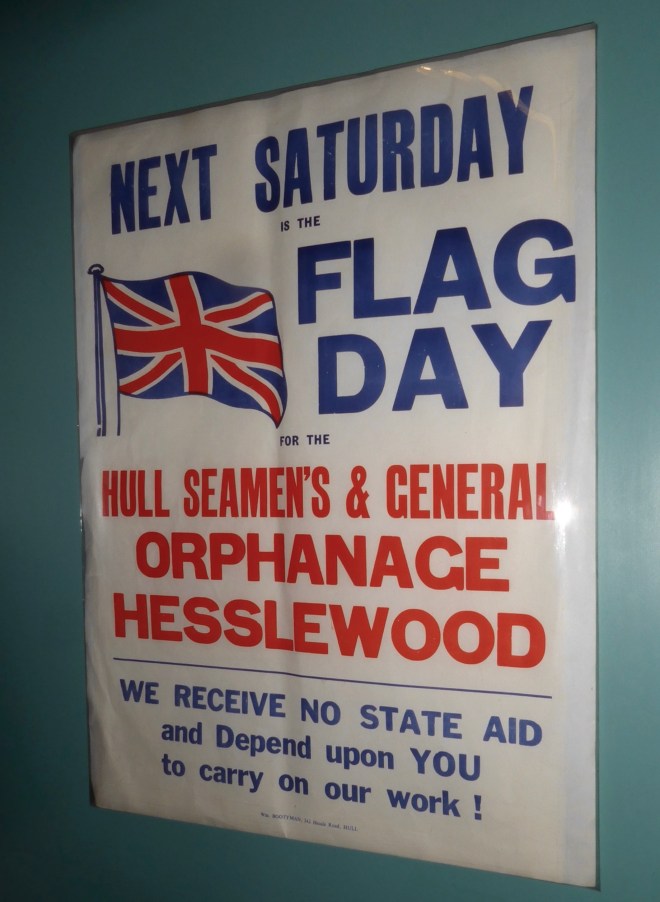
On 21st September 1875, John William Duncan, aged 14, orphan, left Spring Bank  orphanage to become a cabin boy on a steam ship leaving Hull for Savannah, USA. photo refers to a different organisation – Spring Bank was the home of Hull Mariners’ Church Sailors’ Orphan Society


Seamen's orphanage

September 20th

On 20th September 1188, St John’s church at Beverley and most of the town were damaged by fire. St John’s remains were not found until 1197.

On 20th September 1535, John Colynson and Thomas Savage, yeomen of Holme on Spalding Moor were declared outlaws after spending more than a year in sanctuary in Ripon. They sought sanctuary in 1534, confessing to stealing a horse. Savage confessed to the murder of Amery Burdett, but Colynson did not confess, though a coroner’s jury found them both responsible, and indicted others as accessories.

On 20th September 1769, Felice de Giardini, famous violinist, played at the start of a 3-day festival to celebrate the installation of the new organ at Beverley Minster, the first festival of its type in the north of England. New music by Handel was performed, including the recently completed Messiah; tickets were 2s6d and 5s.

On 20th September 1779, Mr Foster, Bridlington quay master, reported that John Paul Jones’ American squadron of ships had attacked a large fleet of colliers and ran them into the harbour.

On 20th September 1813, Thomas Nutbrown was born in Eastrington.  Probably the same person who, aged 14 in 1828, applied to the Howden poor relief officers for some new clothes, and was granted a second hand coat. He died aged 72 in Leeds Township, Quebec, Canada, on 25 Sept 1885.

On 20th September 1883, Rev Edward Cragg Haynes died aged 62 in Swinefleet, after serving there for 32 years. Born in Barbados, classed as ’free coloured’, had links to the Clapham Sect. Set up a Grammar School in Swinefleet attended among others by Joseph Rank. (christened 3.6.1821)

On 20th September 1902, Stevie Smith was born Florence Margaret Smith in Hull. Poet and novelist, most famous for ‘Not waving but drowning’. D 7.3.1971 see photo

On 20th September 1903, Annie Marshall, 16, domestic servant, from Lissett, was raped, shot twice, suffocated with grass and thrown in the river at Scampston by Charles William Ashton, 19, of Cottingham, farmhand.  Ashton knew her well. He was found guilty of murder and hanged at Hull Prison on 11thDecember the same year.

On 20th September 1954, the Selby to Driffield rail line was closed for regular passenger traffic, a service of one regular non stop train each way plus occasional summer excursions ran until June 1965. The line was abandoned after the last freight train ran later that year.

On 20th September 1955, Robert Greenwood Tarran, of the Wolds, Beverley High Road, Hull, died aged 63. Civil engineering contractor, and founder of Tarran Industries Ltd, former Sheriff of Hull, and chief Air Raid Warden during WW2. He moved the Wilberforce monument, at his own expense, and was responsible for building 20,000 prefabs after the war. He was also suspected of complicity in profiting from deals over council land in Endike Lane, in a law case during which his colleague Digby Willoughby committed suicide.
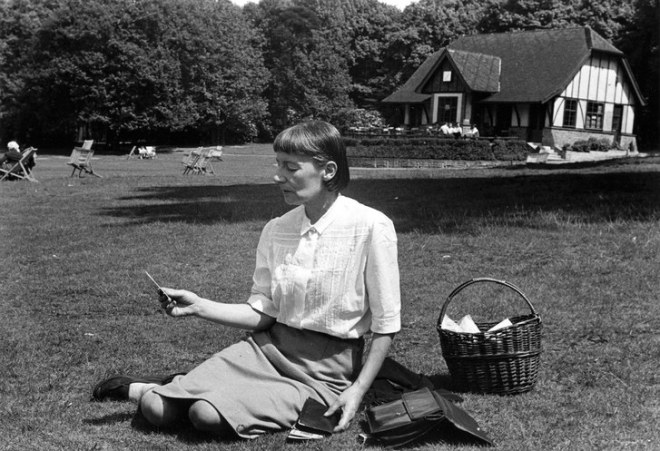
StevieSmith