September 2nd

On 2nd September 1643, the Royalists under the Earl of Newcastle began the second siege of Hull. The Governor, Lord Ferdinand Fairfax, sold silver to the value of £400 4s to Hull Trinity House, in order to pay his soldiers. Trinity House sold the silver the following year at a slight profit.

On 2nd September 1861, the lease on Fishwicks’ Mill, butt Lane, Beverley, had expired, and the mill was demolished. The Council tried to repossess the land, but local people considered it to be common land, and 25-30 rioters destroyed the house and burnt it to the ground.

On 2nd September 1871, William (Billy) Ringrose was born in Ganton, where he became a carpenter, but was coached by a cricket professional employed by the Legard family at the Hall, and became a renowned professional cricketer, playing for 57 games for Yorkshire.

On 2nd September 1922, Hull Kingston Rovers played its first game at its new ground, Craven Park, losing 3-0 to Wakefield. The new grounds also had 14 tennis courts, and meeting rooms. The official opening did not take place until November. This was the club’s 4thground, the first 2 being in West Hull.

On 2nd September 1950, MV Dundalk Bay arrived in Hull from Mombasa, bringing 1,014 people displaced by WW2. After processing, they were dispersed to various camps throughout the UK. Many Poles, Latvians, Lithuanians and others unable to return to their homes came to find work and settle in England; some emigrated again to Canada.

On 2nd September 1967, the Flamborough lifeboat Friendly Forester rescued 6 people cut off by the tide.

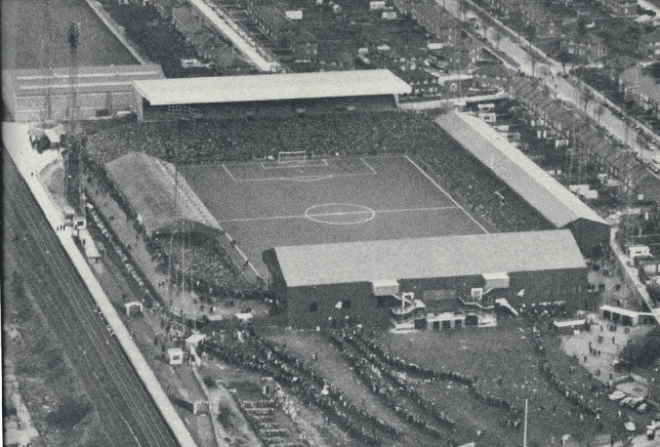
Old Craven Park EAW207783

August 31st

On 31st August 1292, King Edward I stayed at Kilham, on his return from Scotland, where he judged on the claims of Robert the Bruce and John Balliol for the crown, he also made several other stops in East Yorkshire.

On 31st August 1516,  Robert Chorkyls, husbandman, of Wyton, claimed sanctuary at the church of St John, Beverley, for the murder of John Rotheram.

On 31st August 1579, Howden records state that 158 people died in the previous 5 months, at least 110 above the average, due to plague. The city of York forbade anyone from Howden or Snaith from entering the city.

On 31st August 1941, Minnie Leveson, nurse, aged 20, was killed by an air-raid on her home in Willerby; she is buried in De la Pole Hospital cemetery.

On 31st August 1943, 15 Wellington bombers took off from RAF Leconfield and 2 of them collided over Goole, killing both crews and 2 residents of North Street.

On 31st August 1946, Hull Lord Mayor Herbert Harrison officially opened Hull City AFC’s new stadium, Boothferry Park. The crowd of 25,586 were entertained by the band of the 2ndBattalion East Yorkshire Regiment. The match was against Lincoln City, the result 0-0.

boothferrypk

August 30th


Brid Priory churchOn 30th August 1510, Bridlington tanner Henry Braderig claimed sanctuary at the church of St Cuthbert, Durham, for killing Robert Lelome in the grounds of Bridlington Abbey. With 2 other tanners, Roland Hall and Robert Yong, he had struck Lelome with a dagger, and he died 2 weeks later. The attack happened 11 months earlier, in September.   photo shows Bridlington Abbey church today

On 30th August 1767, James Savage was born in Howden.  Journalist, printer and bookseller, librarian, antiquarian, and newspaper editor. Wrote ‘A History of Howden Church’ 1799 and a history of Wressle in 1805, and a number of other books. (Died  Taunton 19.3.1845). (Suggestion, unverified, that he was Howden town clerk, was accused of claiming excessive expenses, and left Howden 1801 with the parish records, refusing to return them until the town paid him monies due; the books were not recovered).

On 30th August 1854, Robert Wilberforce, rector of Burton Agnes and Archdeacon of the East Riding, resigned after leading a doctrinal controversy which raged in the Hull newspapers for many weeks. Shortly after this, he joined the Catholic church.  He died before he could be ordained. He was a son of William Wilberforce.

On 30th August 1913, Elizabeth Barr, 25, was shot at Watton by former partner and the father of her child, Henry Moore of Kelk, who then shot himself. A letter from Moore to his father indicates his action was premeditated. Barr died 2 days later, and Moore the following week. A coroner’s jury found Barr’s death was due to wilful murder.

On 30th August 1940, Abdo Nassa, age 50, fireman, died by enemy action whilst a merchant seaman in Atlantic convoy, on board SS Chelsea of Hull.

August 27th

On 27th August 1473, John Warter’s ship Nicholas left Hedon with exports belonging to 14 different merchants, mostly wool and sheepskins. The tax record does not indicate where the ship travelled to. photo shows the Hedon ship design, found in St Augustine’s church.

On 27th August 1586, Daniell Morton was arrested for attempting to travel overseas against government order, and was retained in custody in Hull until further order.

On 27th August 1643, Lord Ferdinando Fairfax, Governor of Hull, ordered that Royalist sympathisers (termed malignants) have their property seized to support Parliament’s cause.

On 27th August 1902, Trooper H.B. Adamson, and Sergeant T. Burn were soldiers returning home to Hornsea from the Boer War. They were greeted by large crowds, the Town Band and a detachment of the Artillery Volunteers, and paraded round the town in a carriage. Sadly, Trooper E. Dabb arrived 4 days later unexpectedly and without ceremony.

On 27th August 1940, Mrs Spetch’s cottage at Mappleton was severely damaged by an enemy bomb, which also destroyed several windows in the church. The cottage site is now occupied by the Maple Garage.

Hedon ship, St Augustine's

August 26th

On 26th August 1310, King Edward II visited Beverley.

On 26th August 1346, Sir John de Sutton fought on the English side at the Battle of Crecy.

On 26th August 1800, Hull surgeon Edward Oxley advertised in the Hull Packet his invention Modena Fossil, as a speedy and effectual cure for ‘hooping-cough, palsy, rheumatism, asthmatic fits, … diseases of the breasts…’ The Medical Observer was very scathing of this product which it described as oil of amber.

On 26th August 1809, Hedon borough constable Edward Hoe received £1 8s wages for transporting Agnes Sharp and her son William to Friskney in Lincolnshire (her husband’s parish), as Hedon parish was not liable to pay her benefit. Her 9 year-old-daughter Rachel was entitled to settle in Hedon, and was left behind.

On 26th August 1824, on the traditional day of Swine Feast, the Feast mainly consisted of dancing and ‘riot’, most residents providing food for their friends on the Sunday before, leading to disorder which the magistrates could not control, reported author Thomas Thompson.

On 26th August 1833, Captain Richard Wallis Humphreys of the whaler Isabella in Baffin Bay picked up explorer Captain John Ross and 19 of the crew of his ship Victory. It had become stuck in ice and been thought lost for 4 years.  Humphreys was awarded a silver cup by the town of Hull at a dinner given at the Vittoria Hotel in January 1834. (The Isabella herself was trapped in ice and sank in 1835.)


John_Ross_rescued_by_Isabella,_1833


August 25th

On 25th August 1929, 4 boys were on the dockside on a Sunday evening when fire broke out. They helped to save equipment and rescued a cat from one of the trawlers. The fire destroyed the recently refurbished No 2 Market, 100 offices, 105 railway wagons, and set alight 7 trawlers, 3 of which were totally burnt out. Damage was variously valued at £250,000 and £750,000. The cause was probably an electrical fault.

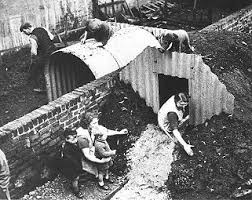
On 25th August 1940, 6 residents of Rustenburg Street, Hull, in their Anderson shelter, were the first fatalities due to Hull air raids. photo shows an Anderson shelter in construction.

On 25th August, 1956, A train of empty coaches hit the buffers at speed and went up onto the platform at Filey Holiday Camp Rail Station.  An enquiry found that the brakes were not properly coupled. Driver Goforth,  Fireman Bentley and Guard Wharam were slightly injured.

On 25th August 1972, the crew of the Flamborough lifeboat Friendly Forester rescued 2 people cut off by the tide at Flamborough.


Anderson shelter

August 22nd

On 22nd August, 1138, William le Gros, Earl of Albemarle and Lord of Holderness, was made Earl of York, in recognition of his prowess in the Battle of the Standard at Cowton Moor, Northallerton. The 4 standards of St John of Beverley, St Peter of York, St Cuthbert of Durham, and St Wilfred of Ripon, were used as a rallying point for the English against the Scots. The East Riding contingent included a Percy and a de Stuteville. (and see 20.8)

On 22nd August 1572, Thomas Percy, 7thEarl of Northumberland, was executed at York for treason, as leader of the Rising of the North. He was offered mercy if he renounced Catholicism, and refused.  Beatified by the Catholic church. (b 1528, probably in  Leconfield)

On 22nd August 1711, James Rand left £160 in his will for ‘the poor and needful of Preston’. Rands Estate in the village is named for him.

On 22nd August 1917, a bomb from a German Zeppelin destroyed the Primitive Methodist chapel, Baxtergate, Hedon.

On 22nd August 1918, Alfred Buchanan Cheetham of Bean Street, Hull, was killed when the SS Prunelle was torpedoed in the North Sea by a German U-boat. He took part in 3 Polar expeditions, and spent a total of 6 years in the Antarctic, with both Scott and Shackleton. Awarded the Silver Polar Medal clasp, he claimed to have crossed the Antarctic Circle 14 times. Cape Cheetham is named for him. (b 6.5.1867 Liverpool)

On 22nd August 1925, Robin Skelton died aged 72 in victoria, Canada. Poet, literary editor, professor and author of books on wicca. Born in Easington 12.10.1925


robin skelton

August 21st

On 21st August 1821, Zachariah Charles Pearson was born in Hull.  Ship’s captain, later ship owner.  Sheriff of Hull 1858, Mayor 1859 – 1862. In 1860, he gave 27 acres to the town for a public park, now Pearson Park. During the American Civil War, he sold arms and equipment to the Confederates, it is said to ensure a supply of cotton to the Hull cotton mills.   He lost several ships to action by the US Federal Navy and was made bankrupt in 1863. He resigned all public posts, and was disgraced, never regaining his former position. Died 29.10.1891

On 21st August 1833, the flying buttresses at the northeast of the tower of St Patrick’s church, Patrington, were blown down and damaged the roof during a violent storm.

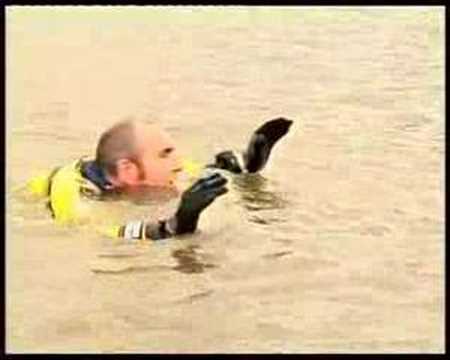
On 21st August 2005, Hull businessman Graham Boanas waded across the Humber, from Brough to Whitton, one of the most dangerous waterways in the UK, to raise money for charity.  The only recorded instance of this feat.

graham boanas

August 18th

On 18th August 1522, Thomas Webster, a weaver from Lowthorpe, claimed sanctuary in St John’s Church, Beverley, for the death of Thomas Ayke of Littlebeck. On the same day, a 2nd man entered the sanctuary – John Thorp, a husbandman of Eastrington, for a felony.

On 18th August 1552, Church commissioners seized items of value from St Giles Church, Marfleet, no longer needed in plainer protestant services, including a silver chalice, brass candlesticks, bells and a brass holy water vat. Witnesses from the parish were Marmaduke Loickwos, Herry Birkett, Richard Walker, and Thomas Almonde.

On 18th August 1782, Rev George Lambert reported seeing a meteor or fireball pass over the town in the morning, which alarmed many people.

On 18th August 1808, Margaret Kissling, nee Moxon, was born in Sculcoates.  She married a Lutheran missionary, worked in Sierra Leone and settled in New Zealand as teacher and nurse. (d 20.9.1891)

On 18th August 1832, Charles Winn, Tory candidate, issued a poster to refute allegations that he supported slavery, during his General Election campaign.

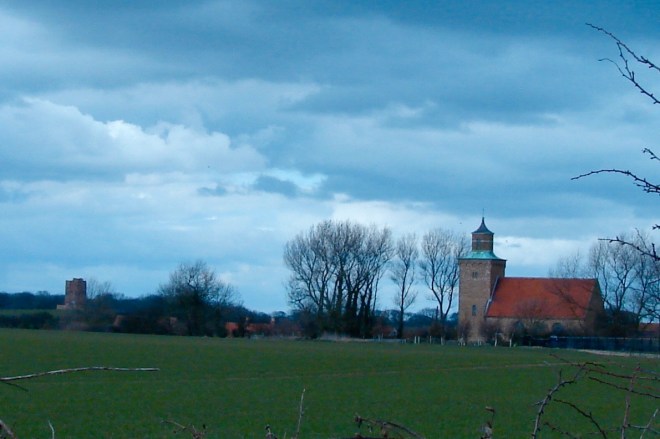
On 18th August 1941, an air raid destroyed St Margaret’s Church, Hilston, the 3rdchurch on this site, its predecessor having been replaced in 1862 by Sir Tatton Sykes. The only remnant of the first church is its Norman doorway. The current church was consecrated in 1957, built by local architect Francis Johnson, and was listed in 2017.


hilston church & tower.JPG


August 17th

On 17th August 1377, King Richard II issued a charter allowing the town of Hull to ensure the town walls and moats were kept in good repair, and to compel every householder to contribute to the cost of repair.

On 17th August 1427, Thomas Brygman, vicar of Foston, asked the Pope to relax the penances paid by those who did not visit church on holy days or give alms, because the church buildings were ruinous, and lacking a bell tower to call parishioners to prayer, and because the parishioners were too poor to repair the church. Their poverty was caused by ‘divers burdens’ imposed by King Henry to fight wars, and also because of the high mortality level in the area.

On 17th August 1863, Dr T.T. Pierson of Bridlington Quay apologised for signing a certificate at The Retreat asylum, Kilham, to declare a woman insane (whom he had known since they were at school) at the request of her husband; she turned out to be suffering only from the effects of alcohol.

On 17th August 1905, Hull merchant Frederick Harker was fined £2 plus costs for speeding at Harpham – travelling at 28 miles per hour in a 20mph zone. It was reported that the method used, of 3 police officers timing him over a measured distance, had not been used before.

On 17th August 1920, Sir Luke White, MP, died at Driffield, aged 75. Liberal MP for Buckrose since 1900, he died a pauper and under investigation for bankruptcy, having covered his political expenses by using money entrusted to him by the clients of his business as a solicitor.

On 17th August 1954, workers at King George Dock, Hull, began a strike against unsafe working conditions called the ‘Filling Strike’; within hours, 4,000 dockers were on strike and 60 ships lay idle. The strike ended after 11 days.


1954 dock strike