September 1st

On 1st September 1505, John and Thomas Mudd of Tunstall claimed sanctuary in the church of St Cuthbert  for homicide, stating that on 1.8.1505, in self-defence, they had struck Henry Raw also of Tunstall on the head with a pikestaff, giving him a blow from which he died on 30.8.1505. On 2.9.1505 Oliver Mudd and John Mudd jnr (son of John) also sought sanctuary as accessories to the homicide, having been present when the first 2 struck Henry.

On 1st September 1512, Ralph Thorneton, a smith, of Rise, claimed sanctuary at the church of St John, Beverley, for debt.

On 1st September 1784, Hull General Infirmary charity officially opened a hospital with 70 beds in Prospect Street, a site chosen for its fresh country air. The 3 physicians and 3 surgeons provided their services free. In its centenary year, Queen Victoria agreed to a change of name to Hull Royal Infirmary.

On 1st September 1800, John Batman lost his place at Hull Charterhouse  ‘on account of his immoral and disorderly conduct and of the great expences (sic) which the Town have sustained by the maintenance of his bastard children’.


Charterhouse 1780

August 31st

On 31st August 1292, King Edward I stayed at Kilham, on his return from Scotland, where he judged on the claims of Robert the Bruce and John Balliol for the crown, he also made several other stops in East Yorkshire.

On 31st August 1516,  Robert Chorkyls, husbandman, of Wyton, claimed sanctuary at the church of St John, Beverley, for the murder of John Rotheram.

On 31st August 1579, Howden records state that 158 people died in the previous 5 months, at least 110 above the average, due to plague. The city of York forbade anyone from Howden or Snaith from entering the city.

On 31st August 1941, Minnie Leveson, nurse, aged 20, was killed by an air-raid on her home in Willerby; she is buried in De la Pole Hospital cemetery.

On 31st August 1943, 15 Wellington bombers took off from RAF Leconfield and 2 of them collided over Goole, killing both crews and 2 residents of North Street.

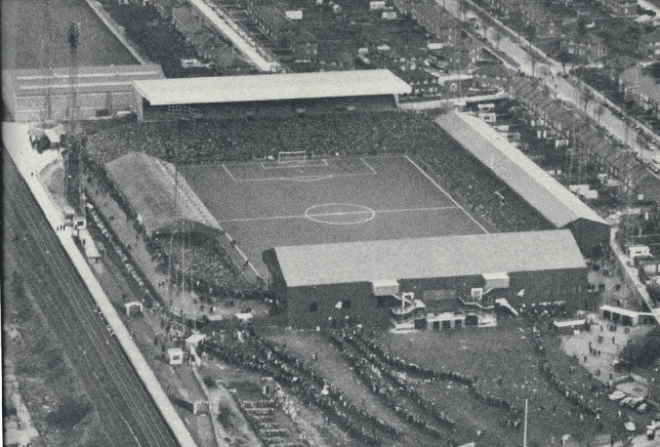
On 31st August 1946, Hull Lord Mayor Herbert Harrison officially opened Hull City AFC’s new stadium, Boothferry Park. The crowd of 25,586 were entertained by the band of the 2ndBattalion East Yorkshire Regiment. The match was against Lincoln City, the result 0-0.

boothferrypk

August 29th

minster - frith stool.JPG


On 29th August 1524, John Rotherford, labourer, of Kirby upon Wold (K. Underdale or K. Grindalythe?) claimed sanctuary at the church of St John, Beverley, for murder and felony. A 2ndman entered the sanctuary that day – Nicholas Pryas, husbandman, of Reedness, claimed sanctuary for the death of  a man called Wademan of Cross House.

On 29th August 1584, Sir Francis Walsingham, Queen Elizabeth’s Principal Secretary, was  appointed Hull’s first High Steward, to act as mediator between the town and the Queen. Walsingham was Elizabeth’s ‘spymaster’. The post was much later given to Lord Mandelson.

On 29th August 1867, a Humber pilot was fined £32 to repair the damage he did to the Bull Lightship while handling a vessel in the river.

August20th

wm le grosOn 20th August 1179, William le Gros, Count of Aumale, Lord of Holderness, died aged 64 after 50 years as Count. As Earl of York, the most powerful man in the north of England during the Anarchy, a soldier, and founder of religious houses, including Meaux Abbey, and Newton Grange leper hospital.
On 20th August 1526, John Dove, a labourer from Burstwick, and William Bayne, a tallow chandler from Withernwick, separately arrived and claimed sanctuary at the church of St John, Beverley, for debt. On a busy day at the sanctuary, a 3rddebtor arrived from Wakefield.

On 20th August 1535, Richard Browne, vicar of North Cave, confessed to heresy by preaching Lutheranism; he was absolved, after suspension for 2 months.


August 18th

On 18th August 1522, Thomas Webster, a weaver from Lowthorpe, claimed sanctuary in St John’s Church, Beverley, for the death of Thomas Ayke of Littlebeck. On the same day, a 2nd man entered the sanctuary – John Thorp, a husbandman of Eastrington, for a felony.

On 18th August 1552, Church commissioners seized items of value from St Giles Church, Marfleet, no longer needed in plainer protestant services, including a silver chalice, brass candlesticks, bells and a brass holy water vat. Witnesses from the parish were Marmaduke Loickwos, Herry Birkett, Richard Walker, and Thomas Almonde.

On 18th August 1782, Rev George Lambert reported seeing a meteor or fireball pass over the town in the morning, which alarmed many people.

On 18th August 1808, Margaret Kissling, nee Moxon, was born in Sculcoates.  She married a Lutheran missionary, worked in Sierra Leone and settled in New Zealand as teacher and nurse. (d 20.9.1891)

On 18th August 1832, Charles Winn, Tory candidate, issued a poster to refute allegations that he supported slavery, during his General Election campaign.

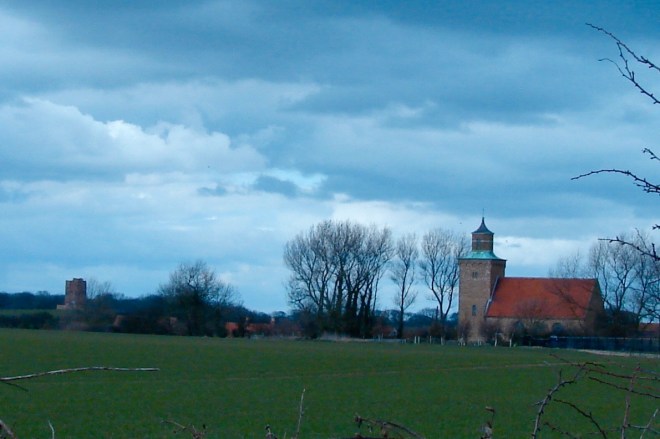
On 18th August 1941, an air raid destroyed St Margaret’s Church, Hilston, the 3rdchurch on this site, its predecessor having been replaced in 1862 by Sir Tatton Sykes. The only remnant of the first church is its Norman doorway. The current church was consecrated in 1957, built by local architect Francis Johnson, and was listed in 2017.


hilston church & tower.JPG


August 10th

On 10th August 1530, Gilbert Cornevell, fishmonger of Beverley, claimed sanctuary at the church of St John, Beverley, ‘for a felony committed at Kirkelly (Kirk Ella) and because he engaged in false coining and for other reasons’.

On 10th August 1785, Rev George Lambert of Hull saw a 2ndwhale displayed at South End, which had beached near Wintringham.

On 10th August 1889, 30 Hull workmen left Hull on a trip to the Paris Exhibition, at the expense of Hull Central MP Henry King. They included sculptor John S. Holmes, jeweller James Lord, stonemason Edwin Quibell, with painters, fitters joiners etc.

On 10th August 1915, Ralph Thomas was born in Hull. Film director, best known for directing the “Doctor” series of films and other comedies, but also directed the 1959 version of ‘The 39 Steps’, ‘Tale of  Two Cities’, ‘Campbell’s Kingdom’ etc.  His brother Gerald directed the ‘Carry On’ series. (d 17.3.2001)


Ralph thomas_

August 4th

On 4th August 1511, John Hessey, husbandman of Belby, nr Howden, claimed sanctuary at the church of St John, Beverley, for the murder of William Smyth of Didyngham (anyone know where this is?)

On 4th August 1652, Keyingham manor court fined 18 villagers for allowing their geese and pigs into the fields outside the stipulated times.

On 4th August 1795, Hull residents rioted against inflationary food prices and shortages. Much corn was being taken by the army, (Napoleonic Wars) in a year of poor weather. A few windows broken.

On 4th August 1834, John Venn, was born in Drypool, son of the vicar. Left Hull at age 8. Fellow of the Royal Society, famous mathematician, who introduced the Venn diagram. Commemorated in Hull University by the Venn Building. (d 4.4.1923) and by Drypool Bridge.

On 4th August 1851, G. Hought of Hutton Cranswick was killed by lightning, as he sheltered under a tree during a thunderstorm. He left a wife and 2 children.

On 4th August 1884, all 11 Walgate brothers of Aldbrough formed one cricket team in a match held at Rise Hall; the Walgates won the match by 3 wickets.

On 4th August 1969, HM Queen Elizabeth opened Queen Elizabeth Dock, the last major dock to be opened in Hull, accompanied by HRH Duke of Edinburgh and Princess Anne.


Drypool Bridge

August 3rd

On 3rd August 1349, John de Preston was elected Prior of North Ferriby on the death of John de Beverley, himself elected Prior just 10 days earlier on 24thJuly, when he succeeded the previous Prior Walter de Hessell on his death. This outbreak of the Black Death killed 35 out of 95 parish priests in East Yorkshire, and presumably a similar proportion of the general population.

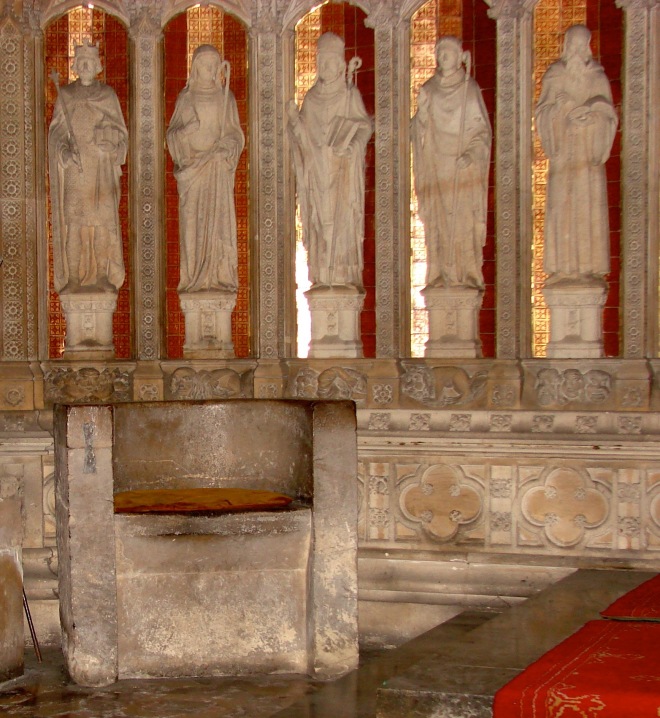
On 3rd August 1523, Thomas Senexer, yeoman, of Holme on Spalding Moor, claimed sanctuary at the church of St John, Beverley, for debt. photo shows the Frith Stool (sanctuary chair)

On 3rd August 1732, Robert Cook was killed when he fell from a wagon at one of the chalk pits in Hutton.

On 3rd August 1798, Press Gang seamen John Sykes and John Burnock or Burnick were killed when attempting to press the crew of the returning whaler Blenheim (& see 2.8). The fight was watched by crowds on the dockside. Capt Mitchinson was charged with murder (& see 31.3) The navy men were buried in Drypool Cemetery.

On 3rd August 1878, for 1d working people could attend a lecture on ‘The Yorkshire Wolds in Prehistory’ as part of Hull Literary and Philosophical Society’s new series of lectures to the working classes in the Exchange Building, aimed at keeping working people occupied during the new Saturday half holiday.

On 3rd August 1942, Mrs Frances Snowden, Lieut Stanley Lawrence and Charles Cross were killed when 4 bombs were dropped on Flemingate, Beverley, damaging Hodgson’s Tannery and destroying a house, a medical centre and a warden’s post. 15 people were injured, some of them machine-gunned by the German bomber.

minster - frith stool.JPG

August 1st

On 1st August 1506, William Ryplay, labourer, of Leconfield, claimed sanctuary at the church of St John, Beverley, for debt.

On 1st August 1639, Robert Skelton, 32, of Hull, was hanged at York Castle for forging a will belonging to Thomas Bell of Hull.

On 1st August 1648, Hull Recorder Francis Thorpe wrote to the Mayor concerning the shipment of pistols to the town, and about the case of Bacchus, a delinquent (i.e. a supporter of the Royalist cause in the Civil War).

On 1st August 1670, Mrs Mary Barnard of Barmston had been ordered to do work to the drain called Gallow Clow (on Myton Carr, near the road to Anlaby) on land which she owned, and had failed to carry it out; a jury under the Commissioner of Sewers gave notice of their intention to view the drain or creek.

On 1st August 1834, Richard Bethell MP laid the foundation stone for William Wilberforce’s statue on Monument Bridge, Hull, on the same day as the Slavery Abolition Act came into force.

On 1st August 1873, the Fisk Jubilee Singers arrived in Hull and visited the Wilberforce monument on the anniversary of the Abolition of Slavery Act. They performed several times, and were so popular they returned to Hull twice more before returning to the US August 1874. They were on a European tour, including singing for Queen Victoria, to raise money for the Fisk University for freed slaves. Several of the singers were born slaves.


Wilberforce memorial plinth