July 20th

On 20th July 700 AD, St Osanne (or Osana or Osmanna) died aged 30 (at least, this is her saint’s day). Sister of Osred I, King of Northumbria (or daughter of Aldfrith), she was a nun at Jouarre, France. Her miracles are recorded: when a concubine of the Howden rector was so impious as to sit upon Osana’s tomb, Osana stuck her to it so that she could not be removed.

On 20th July 1332, Edward Balliol gathered a fleet of 88 ships in the Humber, and joined by a number of other Scottish nobles, set off for Fife to claim the Scottish throne from the Bruce family.

On 20th July 1413, Pope John XXI wrote to residents of West Hull villages, solemnly reminding them of the judgements to come if they did not maintain the water courses providing fresh water to Hull.

On 20th July 1495, John Halyday, carrier, of Watton, claimed sanctuary at the church of St John, Beverley, for the murder at Watton of Agnes Lathe.

On 20th July 1631, Henry Lord Clifford made the first payment to Dutch painter Hendrick de Keyser the younger, following a fashion for painting set by Charles I; de Keyser was employed for 7 years, unusual for a great house in the North. No work attributed to de Keyser has survived.

On 20th July 1662, Rev Nicholas Osgodby was reinstated as vicar of St Mary’s after being removed from his post during the Commonwealth.

On 20th July 1798, press gang officer Lieutenant Loten was attacked in the street in Hull by a sailor with a Greenland knife, and escaped to his house. A riot began which took the militia 3 hours to quell.

On 20th July 1934, the crew of Hull tug Autocrat were rescued when she was pulled over and sank near Whitton, in the Humber, while helping the Goole tug Salvage to refloat the SS Ouse. The tug was raised and returned to service.

St Mary's Beverley


July 19th

On 19th July 1692, Elizabeth Howe, nee Jackson, aged 57,  was hanged for witchcraft at Salem, Massachusetts with 4 other women; at the age of 3, she was among the Puritans who emigrated from Rowley to found Rowley, Massachusetts.

On 19th July 1750, Hull soldier John Hasselbe made a sworn statement to John Wood, Deputy Mayor, that when he was on duty at Beverley Gate between 1.00 and 3.00, his musket went missing, and he suspected it had been stolen and concealed.

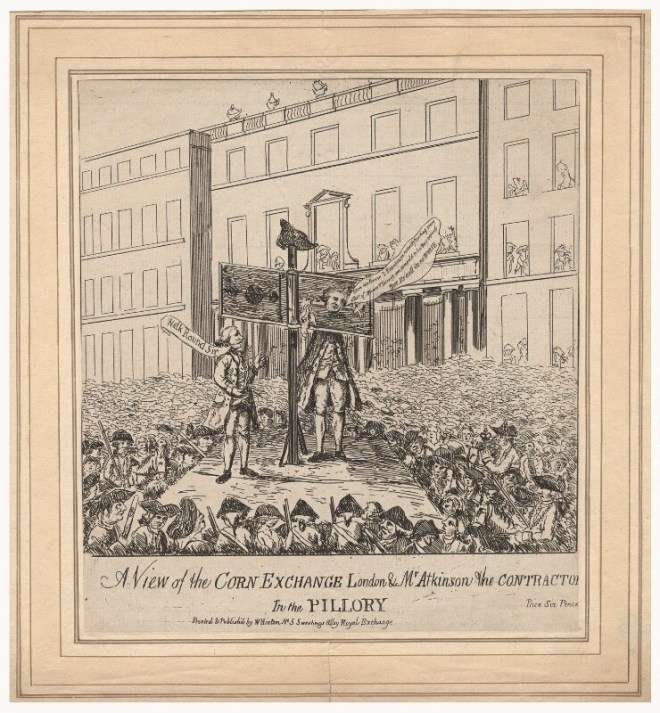
On 19th July 1783, Christopher Atkinson, MP for Hedon & corn factor, was tried in London for perjury, found guilty and committed to prison for 12 months, , first being pilloried at the Corn Exchange, London, and expelled from the House of Commons.  He resigned from his commercial post, but stood again as MP for Hedon in 1796 and 1802 and was elected. He later changed his name to Saville. picture shows Atkinson at the pillory

On 19th July 1786, Hull’s Rev George Lambert visited several sick parishioners, and commented on the contemporary habit of family and friends crowding into the room with the minister, so that the sick person was unable to speak openly.

On 19th July 1794, Edward Bogg, carpenter’s mate,  was shot and killed on board Hull fishing vessel Sarah and Elizabeth Off St Abb’s Head by the crew of a naval press gang on the frigate Aurora; 3 other crew were injured; the coroner’s court returned a verdict of wilful murder by Captain Essington; the captain was sent to the East Indies for several years and never stood trial.

On 19th July 1849, an All England Eleven cricket team played a 30-day match against a Hull amateur side at the Hull Athenaeum Club ground, Anlaby Road. Despite funding from the Hull Sheriff and both MPs, the entrance fee was 1s a day. The professionals won by an innings and 82 runs.

On 19th July 1919, 368 children living at Newland Homes, Cottingham Road, Hull, took part in official peace celebrations included games and setting fire to an effigy of the ex-Kaiser.chrisatkinson MP

July 4th

On 4th July 1399, Henry Bolingbroke (later Henry IV) landed at Ravenspurn from France with 60 men, and was joined by the Earls of Northumberland (Percy) and Westmoreland (Neville), to claim the throne from Richard II. Photo shows memorial in Easington church.

On 4th July 1524, William Richerdson, husbandman, of North Newbald claimed sanctuary at the church of St John, Beverley, for the ‘murderation’ of Anthony Godsale, husbandman of Newbald.

On 4th July 1597, William Anlaby or Andleby, a Catholic convert born in Etton, returned to UK as a priest after training in France.   He ministered to Catholic prisoners in Hull. Executed at York as a Catholic missionary priest. Beatified by the Catholic church in 1929.

On 4th July 1642, Sir John Hotham, aware that the Royalists surrounded Hull and had tried to cut off the fresh water supply, gave orders to open the sluices and cut the Humber banks in Drypool and Myton, outside the walls. He told farmers to bring their cattle and goods into the town. Hull was virtually unassailable.

On 4th July 1643, after defeat by the Royalists at Adwalton Moor, Sir Thomas Fairfax retreated to the only Parliamentary stronghold left in Yorkshire, Hull, just a few days after Hotham’s arrest.bolingbroke memorial Easington. jpg

July 3rd

On 3rd July 1267, Alice Falketon was given permission by the church authorities to build herself a house in St Nicholas Churchyard, so that she could live as an anchoress. Enquiries had been made as to whether she was a fit person, with enough funds to maintain herself, and if this would be convenient to the parish.

On 3rd July 1524, Peter Gornarr, tanner, of Bridlington, claimed sanctuary at the church of St John, Beverley, for the murder of Robert Skelton of Bridlington, a tailor.

On 3rd July 1642, King Charles I set up his court in Beverley at the house of Lady Gee, North Bar Within, and quartered his forces (about 3,000 infantry and 1,000 cavalry) in and around Anlaby, Cottingham and Newland.

On 3rd July 1797, Hull Trinity House paid £2 10s to William Brand, James Hayes, Samuel Harrison and J. Peterson, whose ship the Argo had been captured.

On 3rd July 1850, Mr T. Firbank, Chairman of Hull Dock Company,  opened Victoria Dock, the first of Hull’s docks east of the River Hull.

On 3rd July 1892, a great flood at Langtoft reached a height of 7 ½ feet.

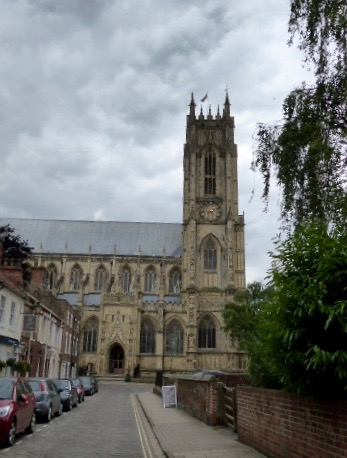
Beverley Minster

June 23rd

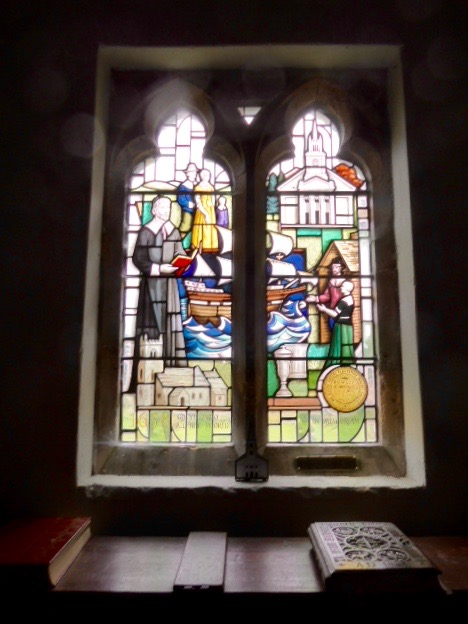
Ezekiel Rogers window

Ezekiel Rogers window, Rowley church.

On 23rd June 1660, Reverend Ezekiel Rogers died aged 70, in Rowley, Massachusetts, after 22 years as vicar of a new Puritan settlement.  The new town was named after Rowley in East Yorkshire, from where he led a group of about 100 Puritans to America in June 1638. Became Rector of Rowley in 1621, aged 31, and served there for 17 years. (b 1590 in Wethersfield, Essex)

On 23rd June 1766, Sara Jenkinson, the infant daughter of Richard Jenkinson of Hutton Cranswick, fell from a little girl’s arms and died within 30 minutes. There was a coroner’s inquest.

On 23rd June 1768, John Courtney, aged 34, gentleman, of Beverley, married Mary Jesse Smelt, aged 24, at St Mary’s, Lowgate. The bride dressed in a white ‘night gown’ and white hat, the groom in a white suit. Only family and servants attended the church and family members dined with them afterwards. The bells of both churches rang for them. They returned to their future home in Beverley in the evening. In his diary, John refers to his future wife at all times as ‘Miss Smelt’.

On 23rd June 1787, the Clerk to the Beverley to Driffield Turnpike Trust wrote to T. Baxter, the owner of Bell Mills, Sunderlandwick, threatening him with prosecution if he allowed anyone to cross his land to avoid paying tolls. 2 months later the Trust asked T. Baxter to lock the gate near his mill, and to prosecute anyone who broke it down.

On 23rd June 1812, Major-General Barnard Foord Bowes of Cowlam was wounded at Battle of Badajoz, but recovered to fight at Salamanca.

On 23rd June 1848, Uckaluk died of measles aboard the Hull ship Truelove, on their way home to Nyadlik, Greenland. She and her husband Memiadluk had visited England to highlight the poor conditions in their homeland.  They took part in talks in Manchester and York. 

On 23rd June 1853, Captain John (or Thomas) Bowlby set sail for Cumberland Sound in the Arctic with 3 ships, with the aim of forming a settlement there; they took goats and building materials. The surgeon on the trip was William Gedney, who had been on board the Truelove with Captain Parker in 1847.

On 23rd June 1898, Winifred Holtby was born at Rudston. Social reformer, novelist and journalist, she was famous and respected for her work in South Africa and elsewhere. ‘South Riding’ became her most famous novel, published after her death. She is buried in Rudston. (d 29.9.1935)

June 21st

On 21st June 1366, Sir William de la Pole died. The first Mayor of Hull, knighted by Edward III, was lord of Myton. He acquired some land just outside Hull where there was a college of 6 secular priests. They were replaced by Franciscans, then Sir William pulled down the buildings and built a hospital. Then he introduced Poor Clare nuns and poor people, but did not live to complete his plans. His son Michael introduced Carthusian monks, and the Charterhouse came into being.

On 21st June 1535, Winestead priest Christopher Michell told his congregation to recognise the Pope as head of the church, in spite of instructions to honour Henry VIII as Supreme Head of the English Church. Michell was jailed in Beverley.

On 21st June 1643, John Pym reported to Parliament on the actions of Capt John Hotham, in charge of troops near Newark, who had allowed his men to harass and steal from local people, turned a gun on Cromwell, and generally acted insolently and in an undisciplined way, and was also suspected of communicating secretly with the Queen. Later, Hotham escaped from prison.

On 21st June 1908, Hull women hired a special train to London for a “Women’s Sunday” rally organised by the WSPU, attended by 300,000 to 500,000; the Hull contingent is said to be the largest from any provincial society.

On 21st June 1915, children from Mappleton School went to Rolston Camp to see the troops depart for France; they marched to Hornsea train station.

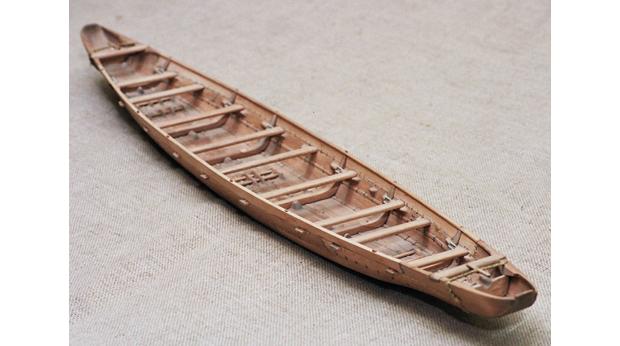
On 21st June 1918, Edward Vere Wright was born in Elloughton. Amateur archaeologist and palaeontologist, he found the first of the 4,000 year old Ferriby boats, with his brother Claude in 1937. In 1940, Ted found a 2ndboat, and with his son Roderick in 1963, a 3rdboat. (d 18.5.2010) photo shows a model of one of the boats in Hull & ER Museum.

On 21st June 1993, Hilary Catherine Brown of Tibthorpe died aged 13. (born Bolzano 12.9.1979) Hilary wrote this verse, which is written on her gravestone in Kirkburn church: The storm finished, the night diminished, the day progressed, bringing a sparkling dawn.


Ferriby boat model ERmuseum

June 19th

On 19th June 1256, the Meaux Abbey chronicler reported losing men and oxen at Orwithfleet, south of Patrington. A major flood of the Humber reached as far north as Cottingham, with many lives lost, livestock and fisheries devastated, and land washed into the river.

On 19th June 1607, Thomas Wincop, Master of Hull Charterhouse, bought, with Hull Mayor George Almond and other trustees, land in Haltemprice Wood abutting on the common fields of Willerby, to support the running costs; the Charterhouse already owned substantial property in and around Hull. photo shows Wincop’s memorial in Hull Minster.

On 19th June 1837, Hull Steam Packet Company launched the paddle steamer Victoria at Medley’s shipyard, Hull; she was considered state of the art. A boiler explosion in 1838 killed 5 crew; there was a second explosion the same year; she ran onto rocks in 1852 and was wrecked, with 8 people killed.

On the same day, Rev Joseph Coltman died in Beverley at the age of 60. He was known for his support of local charities, of the emancipation of Catholics, and of the abolition of slavery. Born in Hull, Coltman Street was named for him, as was Beverley’s Coltman Avenue. At 37 stone 8lbs, he was reputed to be the heaviest man in England, and his death may have been caused by his weight. He employed a manservant to turn him in bed, but he fell asleep and Coltman suffocated in his sleep.

On 19th June 1887, to celebrate Queen Victoria’s Jubilee, a state service was held in Holy Trinity church, Hull, the new Market Hall was opened, as was East Park, and there were festivities in all the city’s wards.

On 19th June 1920, Harry Wilkinson of  Lower Union Street, Hull, was seriously injured by 3 gunshots.  He was part of a mob of white people who attacked and damaged several boarding houses where black seamen lived. Tom Toby, a West African fireman, was charged with wounding, but no white people were arrested. Toby’s plea of self defence was accepted, and he was found not guilty. During the same rioting, Murrell Piggott, faced with a 200-strong crowd, had also fired, but his plea of self defence was not accepted, and he was sentenced to 9 months’ hard labour for unlawful wounding.

On 19th June 1940, the East Hull, docks, suburbs, and River Hull corridor experienced the first night-time raid of World War 2.


Thomas Whincopp memorial

June 16th

On 16th June 1487, John de la Pole, Earl of Lincoln, died aged 22 (or 25), in the Battle of Stoke (near Newark) fighting against Henry VII, attempting to place Lambert Simnel on the English throne.

On 16th June 1793, the 42nd Regiment of Highlanders in Hull and 200 soldiers were sent to service at Fish Street Congregational Chapel.

On 16th June 1872, Sarah Stickney Ellis died aged 73.  A Quaker turned Congregationalist, she was a prolific author, and advocate of women’s education. (Born 1799 at Ridgmont, Burstwick)

On 16th June 2012, Hull-born Joe Longthorne, a singer of Romani heritage, was awarded an MBE for services to charity. (b31.5.1955)


joe longthorne


June 12th

On 12th June 1780, William Wilberforce wrote ‘We were alarmed last night at Hull by a mob which burnt the Catholic chapel and attempted to pull down a private house’; the house belonged to Reginald Williams. One report said Mrs Williams and family had to be escorted out of town by guards.

On 12th June 1799, Capt Angus Sadler and the crew of the whaler Molly returned to port after a voyage of 87 days, with 11 whales, 300 butts of blubber and 5 tons of bone. This was the earliest recorded return to Hull of a whaler; they generally returned in July or August, but in any event not later than 11 October, for Hull Fair. photo shows the whalebone arch at Patrington.

On 12th June 1984, Sydney Herbert Smith, MP, died aged 99. Newsagent, Methodist lay preacher and Hull socialist MP; stood down after 5 years to return to local government; Alderman, Honorary Doctor of Laws, Honorary Freeman of the city and Life Member of the University Court. Endowed the Alderman Sydney Smith Lecture at Hull University, now associated with WISE.

whalebone arch Pat.JPG


June 6th

On 6th June 1597, Robert Hewitt and his 6 musicians played for the first time at Londesborough House for Sir Francis and Lady Grissell Clifford, and regularly performed there for a number of years. They played shawms (like an oboe), curtals (like a bassoon), sackbuts (an early trombone) and the virginal (an early spinet). At different times, pipers, harpers, drama companies and a jester were hired.

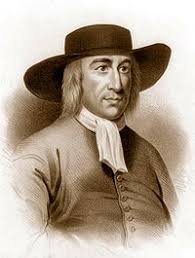
On 6th June 1651, George Fox, Quaker preacher, proclaimed his Quaker beliefs in reply to the sermon at Beverley Minster; the next day he went another church 2 miles away, then to Cranswick, staying with John Hotham (grandson of the late governor of Hull).

On 6th June 1757, the vicar of Hutton Cranswick recorded a fall of snow.

On 6th June 1812, Hull Botanic Gardens were opened; the Band of the Royal Denby Militia played at the opening ceremony (they were based at the fort, as the Napoleonic Wars were still in progress).

On 6th June 1915, Hull residents sheltered under stairs and tables when they received an hour’s warning of the first Zeppelin attack on Hull. There were 11 deaths. Hewetson’s saw mill was destroyed. (other sources says 26 dead, 60 injured)


George Fox