September 17th

On 17th September 1523, Hull widow Dame Joan Thurscross in her will left £30 for new vestments for St Mary’s church, £35 to hire a priest for seven years to sing for her soul, the souls of her three husbands, of her parents, and of her son, £4 to the building works at the White Friars’, £20 for mending the causeway between Beverley and Anlaby, thirteen white gowns for thirteen poor women, and silver for Hull Charterhouse.

On 17th September 1584, Peter Copley, clothier, was stripped of his status as burgess of Hull and disenfranchised, as a penalty for dyeing the clothes of people from outside the town and bartering the goods of ‘strangers’ as though they were his own. As he was ill at the time, he was not informed of this until he recovered.

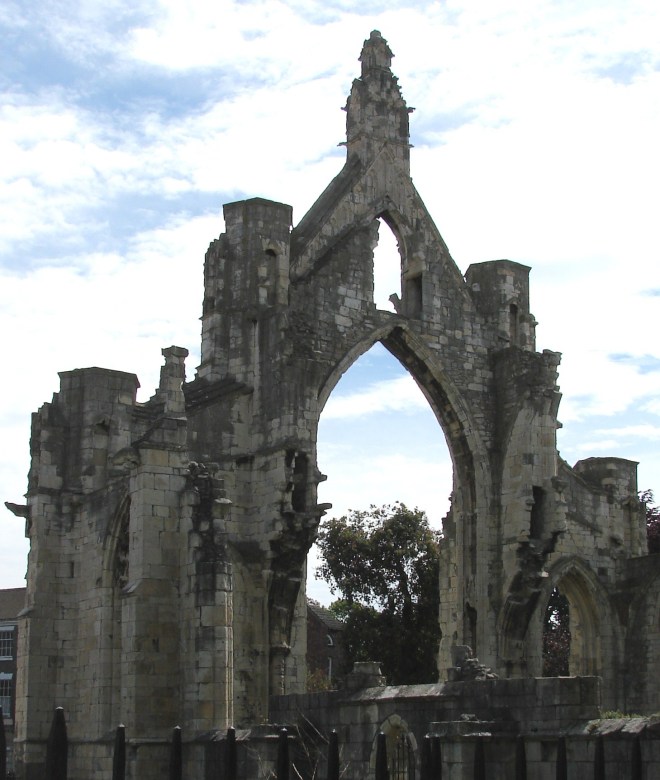
On 17th September 1679, Rev Thomas Sedgwick died, aged 58. Puritan theologian and Vicar of St Giles, Marfleet between 1639 and 1672, he is commemorated with a memorial in the church, for the unusual feat of surviving in his post through the Civil War and Reformation.  photos show memorial and translation

On 17th September 1864, 3 residents of Hessle Road, Hull aboard the Humber ferry were gored when a bull being carried across broke loose and ran amok.

September 16th

On 16th September 1643, an artilleryman with a lighted match blew up the magazine at Hull North blockhouse and killed himself and 4 others.

On 16th September 1698, Robert Prudom established, and was the first pastor of, the first Baptist chapel in East Yorkshire. The building in Applegarth Lane, Bridlington is only 12 feet square. see photo

On 16th September 1829, Dr John Alderson, MD died aged 71, physician to Hull Infirmary from 1795. A polymath, he was one of the founders of the Hull Literary and Philosophical Society, and of the London Geological Society, wrote acclaimed works on fever and paralysis, established Sculcoates Refuge, (which eventually became De la Pole Hospital), and wrote on agriculture, geology, and supernatural apparitions. The funeral of this popular doctor attracted 12-15,000 mourners. He was buried in a family vault at St Mary’s Sculcoates. His statue can be seen on Anlaby Road. (b 1758 Lowestoft)

On 16th September 1846, George Hudson, MP and ‘railway king’ stayed overnight at Sutton on Hull, went to Bridlington Quay for breakfast, back to Hull, then travelled to Northampton. Joseph Robinson Pease marvelled that such a journey within 13 hours would have been unthinkable 20 years before.

Applegarth La chapel

September 14th

On 14th September 1484, Anne de la Pole, great granddaughter of Geoffrey Chaucer, was betrothed aged 8 to the Duke of Rothesay, future King James IV of Scotland, as part of peace negotiations between the 2 countries. Her brother John, 1stEarl of Lincoln, was then Heir Presumptive to the English throne. Anne never became Queen, however, as on the death of her uncle Richard III, she was sent to a convent and became a nun at the Abbey of Syon.

On 14th September 1581, the Hull Mayor and aldermen agreed to pay 12d per week towards the keep in God’s House (i.e. the Charterhouse) of keelman Christofer Harrison, on account of his being blind and aged.

On 14th September 1643, Sir Thomas Fairfax, Hull governor, opened the sluice gates to flood all areas from Derringham Dyke to Dunswell, during the 2nd siege of Hull, to keep the royalist guns away from the town.

On 14th September 1828, Thomas Thompson MP died aged 72. A Methodist and member of the Clapham Sect, he provided land to poor families to keep them out of the workhouse. Wrote History of Church & Priory of Swine. Father of Thomas Perronet Thompson. (b 5.4.1754  Swine)

On 14th September 1853, Hugh Edward Strickland went to examine railway cuttings near Retford, and stepped out of the way of a goods train and was killed by a train coming from the opposite direction. Inventor of the power loom, ornithologist and geologist, Fellow of the Royal Society. (b2.3.1811 Reighton)

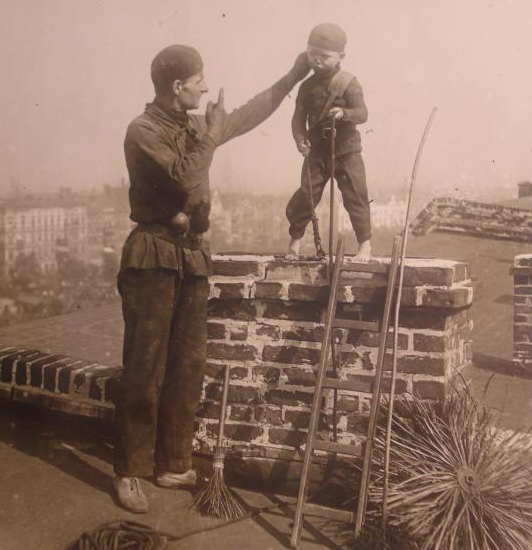
On 14th September 1861, John Kingston, chimney sweeper and soot dealer of 16 Worship St, Hull, gave his annual bill to Hull Charterhouse for £5 for sweeping chimneys, with a note that his prices would rise in the following year due to a new law forbidding sending children up chimneys to clean them.


childsweep2

September 11th

Howden


On 11th September 1666, Sir Philip Monckton replied to a petition from Howden residents to raise a company of musketeers to defend them, as the Great Fire of London had made them fear arson by a foreigner or Catholic; he suggested they double the watch and get the constables to watch the movements of every ‘Londoner’ at night.

On 11th 1795, Timothy Rymer, a sailor, was buried after drowning in the Humber, the body washing up at Blacktoft.


September 8th

On 8th September 1069, the Danish king Sweyn Estrithson and a fleet of 240 ships anchored in the Humber accompanied by Edgar of Wessex who claimed England’s throne. They marched on York.

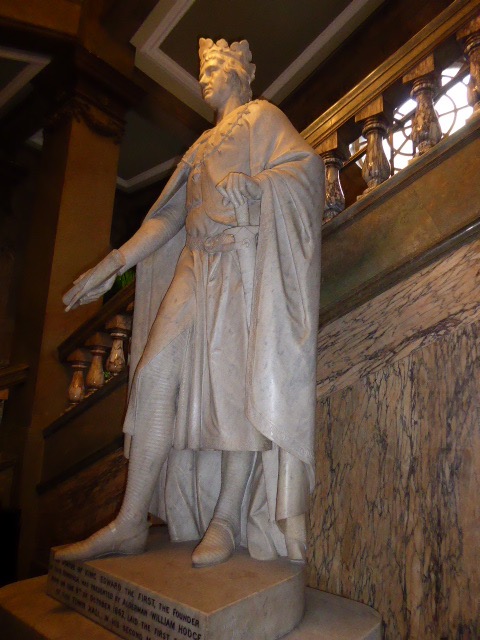
On 8th September 1292, King Edward I stayed in Beverley on his progress through East Yorkshire. photo shows his statue in Hull Guildhall

On 8th September 1402, William Asleby and other rioters from West Hull villages who had rioted as part of Hull’s ‘water wars’ had to do penance every year on the Friday nearest the Feast of the Nativity of Our Lady, by processing through Holy Trinity church naked, bare-headed and with bare feet, through the church during mass, carrying a 3lb burning candle. If they failed to comply, they would be fined £40 – though none of them had any goods of value.

On 8th September 1667, Richard Leeming, Mayor of Grantham, wrote to the Hull Mayor to notify him of the escape of a prisoner committed for murder supposed to be making for Hull.

On 8th September 1730, an accidental fire destroyed the house of John Mason and Richard Dagger, their goods, clothing and hay, making them destitute and entitled to poor relief from the parish.

Edward I
Guildhall


September 7th

On 7th September 1316, King Edward II issued orders to Beverley to arm the whole male population between ages 16 and 60 against the Scottish threat.

On 7th September 1643, Sir John Hotham was taken from the Tower of London to Parliament to be formally ejected from his seat as MP for Yorkshire.

On 7th September 1646, Sir Michael Wharton of Beverley, considered a Royalist (delinquent) for attending a meeting at Heworth Moor addressed by the King, was fined £4,000 in order to recover his goods which had been sequestered by Parliament. His fine was reduced in 1652. photo shows Warton’s Hospital, Keldgate, Beverley.Warton's Hospital.JPG

On 7th September 1854, Robert Isaac Wilberforce, vicar of Burton Agnes and Archdeacon of the East Riding, resigned his Church of England posts and joined the Catholic Church.  Robert was the second son of William Wilberforce. Of William Wilberforce’s 4 sons, 3 converted to Catholicism and Samuel Wilberforce Bishop of Oxford, then Winchester, was an extreme Anglo-Catholic.

On 7th September 1866, Bull lightship in the Humber was struck by the Prussian barque Emma Johanna and damaged, holed below the water-line. It was taken to Victoria Dock, Hull for repairs by Hull Trinity House.

September 4th

On 4th September 1303, Sir Ralph de Heengham and a jury of 12 men held an inquiry into ownership of land in Hull and Myton, west to Ferriby, and of a highway to and through Anlaby to Ferriby.

On 4th September 1650, Ann Hudson of Skipsea was tried as a witch at York Assizes, and evidence was given to the court by Dynah Hunmansby and Alice Stevenson that her victim, Susannah Keld, had been bewitched and very ill until she had scratched Ann Hudson and drawn blood, when she began to recover. The events had happened 12 years previously. The surviving records do not say whether Ann Hudson was convicted and sentenced.

On 4th September 1709, the congregation of Cottingham church gave 3s6d in a collection for the Market Rasen fire, Lincolnshire. A collection in the dissenters’ meeting place raised 4s 6d.

August 30th


Brid Priory churchOn 30th August 1510, Bridlington tanner Henry Braderig claimed sanctuary at the church of St Cuthbert, Durham, for killing Robert Lelome in the grounds of Bridlington Abbey. With 2 other tanners, Roland Hall and Robert Yong, he had struck Lelome with a dagger, and he died 2 weeks later. The attack happened 11 months earlier, in September.   photo shows Bridlington Abbey church today
On 30th August 1767, James Savage was born in Howden.  Journalist, printer and bookseller, librarian, antiquarian, and newspaper editor. Wrote ‘A History of Howden Church’ 1799 and a history of Wressle in 1805, and a number of other books. (Died  Taunton 19.3.1845). (Suggestion, unverified, that he was Howden town clerk, was accused of claiming excessive expenses, and left Howden 1801 with the parish records, refusing to return them until the town paid him monies due; the books were not recovered).

On 30th August 1854, Robert Wilberforce, rector of Burton Agnes and Archdeacon of the East Riding, resigned after leading a doctrinal controversy which raged in the Hull newspapers for many weeks. Shortly after this, he joined the Catholic church.  He died before he could be ordained. He was a son of William Wilberforce.

On 30th August 1913, Elizabeth Barr, 25, was shot at Watton by former partner and the father of her child, Henry Moore of Kelk, who then shot himself. A letter from Moore to his father indicates his action was premeditated. Barr died 2 days later, and Moore the following week. A coroner’s jury found Barr’s death was due to wilful murder.

On 30th August 1940, Abdo Nassa, age 50, fireman, died by enemy action whilst a merchant seaman in Atlantic convoy, on board SS Chelsea of Hull.

August 24th

On 24th August 1399, a schism within the church led to controversy about the post of Meaux Abbot Thomas Burton, and rather than involve the abbey in the costs of litigation, he retired and wrote “The Meaux Chronicle’, the history of the abbey.

On 24th August 1662, on Black Bartholomew’s Day, also known as the Great Ejection, Josiah Holdsworth, curate of Sutton-on-Hull, was dismissed for refusing to conform to the Book of Common Prayer, along with 2,000 other Puritan ministers across the country.  They included Anthony Stephenson at Roos, who stayed in the village as physician, and Stephen Arlush of Howden, who continued to preach in a private house as a Congregationalist, also John Ryther of North Ferriby, who spent some years in prison for illegal preaching. And Mr Robinson at Cottingham, Mr Luddington at Sculcoates, Mr Thos Micklethwaite at Cherry Burton.

On 24th August 1759, William Wilberforce was born in High Street, Hull. The Parliamentary champion of the abolition of slavery, he collaborated for 50 years with Thomas Clarkson. MP for Yorkshire 1812-1825. Buried in Westminster Abbey. (d 29.71833)

On 24th August 1789, the Preston house and shop of William Sanderson were broken into by James Hartley of Manchester. Hartley was hanged at York Castle on 17.4.1790.

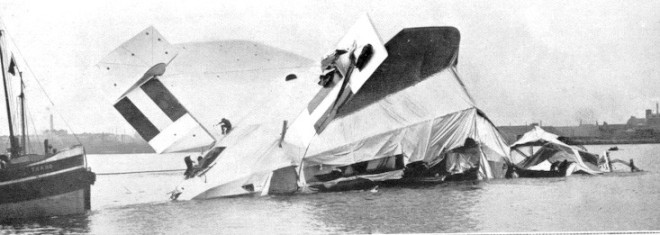
On 24th August 1921, an R38 airship exploded and crashed into the Humber on its last trial flight; 44 members of the crew died. Debris narrowly missed sightseers on Victoria Pier, Hull. photo shows wreckage

On 24th August 1943, Flight Officer Charles Keirl, 23, and 13 other airmen died when 2 Halifax bombers of 78 Squadron collided in fog; one air gunner survived. Keirl is buried in Queensgate Cemetery, Beverley. There is a memorial at Hull Bridge.


R38wreckage1

August 22nd

On 22nd August, 1138, William le Gros, Earl of Albemarle and Lord of Holderness, was made Earl of York, in recognition of his prowess in the Battle of the Standard at Cowton Moor, Northallerton. The 4 standards of St John of Beverley, St Peter of York, St Cuthbert of Durham, and St Wilfred of Ripon, were used as a rallying point for the English against the Scots. The East Riding contingent included a Percy and a de Stuteville. (and see 20.8)

On 22nd August 1572, Thomas Percy, 7thEarl of Northumberland, was executed at York for treason, as leader of the Rising of the North. He was offered mercy if he renounced Catholicism, and refused.  Beatified by the Catholic church. (b 1528, probably in  Leconfield)

On 22nd August 1711, James Rand left £160 in his will for ‘the poor and needful of Preston’. Rands Estate in the village is named for him.

On 22nd August 1917, a bomb from a German Zeppelin destroyed the Primitive Methodist chapel, Baxtergate, Hedon.

On 22nd August 1918, Alfred Buchanan Cheetham of Bean Street, Hull, was killed when the SS Prunelle was torpedoed in the North Sea by a German U-boat. He took part in 3 Polar expeditions, and spent a total of 6 years in the Antarctic, with both Scott and Shackleton. Awarded the Silver Polar Medal clasp, he claimed to have crossed the Antarctic Circle 14 times. Cape Cheetham is named for him. (b 6.5.1867 Liverpool)

On 22nd August 1925, Robin Skelton died aged 72 in victoria, Canada. Poet, literary editor, professor and author of books on wicca. Born in Easington 12.10.1925


robin skelton