November 21st

On 21st November 1798, Elizabeth Darling, of Scale Lane, Hull, on the death of her father, continued to run his business as apothecary, although as a woman she was unable to train formally.

On 21st November 1823, Joseph R. Pease reported in his diary a fire in their oil windmill; due to thick walls, adjoining warehouses were not affected. 3 fire engines attended. Pease blamed the carelessness of 2 workers.

On 21st November 1940, Sidney Hall, aged 17, mess boy, of Hull, was lost by enemy action with all 45 crew of SS Cree of London; the Merchant Navy  ship, returning to UK from Sierra Leone, was torpedoed by a German submarine.


October 19th

On 19th October 1469, John Fisher was born in Beverley, the eldest son of Robert and Agnes Fisher. Chancellor of Cambridge University, Bishop of Rochester, and chaplain to royalty.  He was executed for treason 22.6.1535 on Tower Hill, for speaking out against Henry VIII’s divorce, and refusing to acknowledge the heirs of Henry and Ann Boleyn as legitimate successors to the throne. A Catholic martyr, he was canonized as St John Fisher.

On 19th October 1781, Rev George Lambert reported in his diary on a very high tide which inundated many houses in Hull.

On 19th October 1826, a Huggate parish jury of 12 men, 2 affearers (assessors of fines) and the pinder, set penalties for anyone allowing cattle into public lanes at night at 2s6d per head, for the first offence, and 5s per head for every offence afterwards; for allowing pigs in the streets without a ring between May Day and Michaelmas 3d per head; for allowing geese in the streets between Old Mayday and Old Lammas, 1s; for allowing anyone to stay who does not have a certificate allowing them to settle, £1 19s 11d.

On 19th October 1890, John Connell, boatman, of Waxholme, in the Coastguard Service, took part in the rescue of crew from the Grimsby vessel Genesta when it ran aground. All were rescued, except the captain, who died of exposure. Connell went on to the vessel as it was breaking up to rescue a man too weak to help himself. Connell was awarded the Humane Society Silver Medal. The unmanned vessel broke free the following day and travelled to Withernsea.

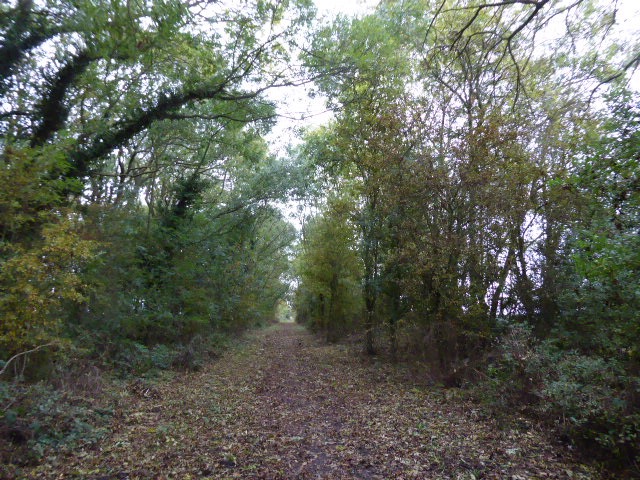
On 19th October 1964, rail passengers took their last trips on the Hull to Withernsea and Hull to Hornsea rail lines, which closed as a result of the Beeching Report. Goods services to Withernsea continued to 30.4.1965, to Hedon 3.5.1965, and to Marfleet to 1972. photo shows part of Hornsea Rail Trail today.

Hornsea Rail Trail


October 14th

On 14th October 1498, Richard Symonde of Beverley claimed sanctuary at the church of St John, Beverley, for debt, to avoid or delay his creditors pursuing him.

On 14th October 1523, Henry Draper, a draper from Snaith, claimed sanctuary at the church of St John for debt.

On 14th October 1654, Elizabeth Roberts of Beverley was charged with witchcraft at York Castle, for attacking John Greencliffe in the forms of a cat and a bee. She seems to have avoided the gallows.

On 14th October 1854, Queen Victoria visited Hull, to huge celebrations; she knighted the Mayor, Sir Henry Cooper, at the pier. In the group of worthies welcoming her were Lord Hotham and Robert Raikes, descendants of the Hull Governor and Mayor who shut the gates against King Charles I.  Joseph Robinson Pease in his diary said ‘Hull has now wiped off the disgrace of 200 years’.

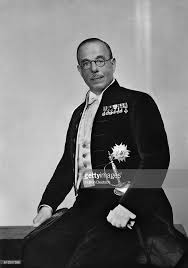
On 14th October 1869, Joseph Duveen was born in English Street, Hull. He became the greatest art dealer of his time, possibly of all time. He was knighted, eventually becoming Lord Duveen, and was made a freeman of Hull in 1929. He sold European Old Masters to the US. Donated works to the Ferens Gallery, British Museum, National Gallery and Tate Gallery. Died 1939.


lord duveen

September 16th

On 16th September 1643, an artilleryman with a lighted match blew up the magazine at Hull North blockhouse and killed himself and 4 others.

On 16th September 1698, Robert Prudom established, and was the first pastor of, the first Baptist chapel in East Yorkshire. The building in Applegarth Lane, Bridlington is only 12 feet square. see photo

On 16th September 1829, Dr John Alderson, MD died aged 71, physician to Hull Infirmary from 1795. A polymath, he was one of the founders of the Hull Literary and Philosophical Society, and of the London Geological Society, wrote acclaimed works on fever and paralysis, established Sculcoates Refuge, (which eventually became De la Pole Hospital), and wrote on agriculture, geology, and supernatural apparitions. The funeral of this popular doctor attracted 12-15,000 mourners. He was buried in a family vault at St Mary’s Sculcoates. His statue can be seen on Anlaby Road. (b 1758 Lowestoft)

On 16th September 1846, George Hudson, MP and ‘railway king’ stayed overnight at Sutton on Hull, went to Bridlington Quay for breakfast, back to Hull, then travelled to Northampton. Joseph Robinson Pease marvelled that such a journey within 13 hours would have been unthinkable 20 years before.

Applegarth La chapel

August 9th

Bishop's Palace, Howden

On 9th August 1260, Walter of Kirkham, Bishop of Durham, died at the Bishop’s Palace, Howden. His body was taken to Durham for burial but his viscera were buried in the church. photo shows what remains of Bishop’s Palace.

On 9th August 1516, Sir Ralph Ellerker of Risby confessed to Cardinal Thomas Wolsey, Archbishop of York, that he ordered his servants Henry Norham and Roberte Hunt to kidnap George Millet, keeper of Beverley Parks, and imprison him in Cottingham Park so that he could hunt on the Archbishop’s land. Pleading poverty, he was bound over in the sum of £200.

On 9th August 1769, John Burrill of Skipsea assaulted John Warcup with swords, staves, knives and clubs so that his life was threatened and ‘other wrongs’. Burrill was indicted in September, found guilty on 24.4.1770, and sentenced 2.10.1770 to a fine of £20 and to remain in gaol until the fine was paid.

On 9th August 1785, Rev George Lambert went to see a 24 foot whale killed and displayed at South End, Hull (near modern pier); described by sailors as a young bottlenecked grampus.

On 9th August 1859, Hansard records the 29.4.1859 election in Beverley void; Ralph Walters was declared ‘not a Burgess to serve in this present Parliament for the Borough of Beverley’ and Henry Edwards was declared MP in his place. Joseph Robinson Pease in his diary called Walters ‘an adventurer, arriving 3 days previously’, ‘by open bribery …. carried the day.’

On 9th August 1902, William Day Keyworth junior, sculptor, died aged 59 in Spring Bank, Hull. He produced many statues of civic dignitaries, including Andrew Marvell, Anthony Bannister and William Wilberforce (now outside Wilberforce House). Shot himself in the head at his home, but left no suicide note.

On the same day, Nafferton villagers were celebrating King Edward VII’s coronation with, among other events, a ‘comic’ cricket match, gentlemen vs ladies, which the ladies won. The score is not recorded.

On 9th August 1915, 17 Goole residents, mostly women and children, were killed by a Zeppelin raid on the town and docks.

On 9th August 1916, a Zeppelin raid on Anlaby Road, Hull,  killed John Broadley aged 3 and at least 7 other residents, and injured about 20. 2 people died of shock. Rev A.W. Carter, Assistant Priest of Newington Church, was badly hurt.
 

July 29th

On 29th July 1527, John Flower, labourer of Burstwick, claimed sanctuary at the church of St John, Beverley, for the death of Roland Stephenson.

On 29th July 1678, Andrew Marvell, MP for Hull, had what turned out to be his last meeting with Hull Corporation. He returned to London shortly after, and died suddenly, aged 58, on 16thAugust, some supposed of poison.

On 29th July 1828, Hull banker Joseph Robinson Pease visited his land in Winestead to discover ‘hundreds of acres nearly a foot under water’ in the wettest July on record, a disaster for crops of hay, corn and potatoes. He said most local landowners had reduced rents, farmers ‘having literally nothing to pay with’.


Andrew Marvell

July 12th

On 12th July 1537, Robert Aske of Aughton was hanged in chains outside Cliffords Tower, York, after being convicted of treason in Westminster, as the leader of the Pilgrimage of Grace.

On 12th July 1641, Sir Thomas Glemham resigned his post as Governor of Hull, having only been appointed the previous year.

On 12th July 1714, Elizabeth Hodgson, a single woman of Hedon, was sentenced at Hedon Quarter Sessions to be stripped to the waist and whipped with birch or willows from the Town Hall to Harrison Lane and from there to the jail and to remain in jail at hard labour until ‘sufficient security’ was found for her good behaviour. Her crime was to give birth to her 4thillegitimate child. There is no record of any punishment for the father. An Act of 1792 forbade whipping females for any reason whatsoever.

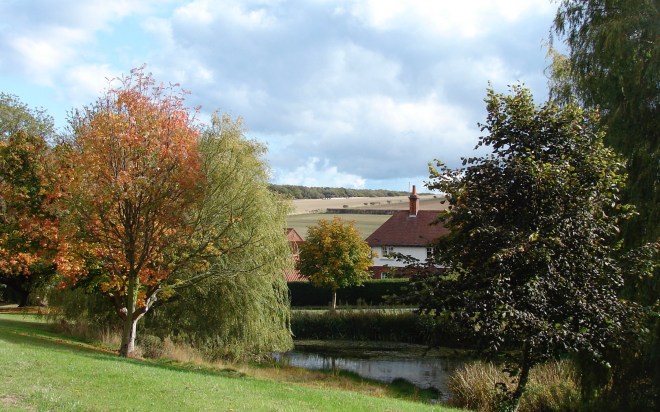
On 12th July 1826, (in one of the driest summers on record) Hessle banker Joseph Robinson Pease recorded in his diary there was no grass for the cattle, who had to be given linseed cake. Ponds and water tanks dry.  Around this time, too, the pond at Fridaythorpe dried up, and villagers went on a Sunday to nearby Fimber to take water from one of their 2 ponds, resulting in a pitched battle, referred to as ‘the Second Battle of Waterloo’. photo shows the remaining village pond at Fimber.

fimber pond.JPG

June 26th

On 26th June 1793, Captain William Hammond died aged 65 in Kirk Ella. Hull sea captain, shipowner and merchant, supporter of abolition, Chairman of Hull Dock Company, Warden of Trinity House, and diplomat. (He and David Hartley MP met Benjamin Franklin and John Adams in Paris on a possible spying mission) Buried in Welton. (b 1727 York). Photo shows a door in the Maritime Museum, former Dock Offices.

On 26th June 1854, at an event to celebrate the opening of the Hull-Withernsea railway line, 500 guests travelled from Hull on the first ever train (which was 20 minutes late, due to late arrival of guests) and part of the lunch marquee collapsed; there were no injuries. Joseph Robinson Pease in his diary recorded heavy showers and high winds threatened to tear the marquee to pieces, but that it subsided and all passed off well.

On 26th June 1920, the National Federation of Women Workers called its Hull laundry worker members out on strike, as they were paid less than in other towns. Hull Trades Council supported the strike and organised a parade on 17 July. Strike breakers were reported being smuggled in to work in laundry baskets.

Hull Dock Co

May 23rd

On 23rd May 1260, William de Forz III, count of Aumale and Lord of Holderness, died, aged about 45. He gave away his claim to the earldom of Chester in return for 2 small manors, including Driffield. Acted as ambassador for Henry III to Scotland and France, and was a member of the Council of Fifteen, advising the King on government matters. Gave land to Meaux Abbey on ‘the island called Ravenser Odd in the Humber’. His heir, Thomas, was 6 and he and the count’s lands were put into the King’s care.

On 23rd May 1510, Howden tiler Robert Colstayne claimed sanctuary at the church of St John, Beverley, for ‘the security of his body’; the register gives no detail of who was pursuing him, or why.

On 23rd May 1596, Howden churchwardens gave 6d to 2 poor men (presumably travelling through on their way to their home parish).

On 23rd May 1642, Hull Governor Sir John Hotham called a meeting of ‘knights and gentlemen’ to give a ‘learned speech’ explaining why he refused to allow King Charles into the town. This was part of the ‘paper war’ between the King and Parliament.

On 23rd May 1822, Hull merchant Joseph R. Pease attended a public meeting for the Relief of the Suffering Irish, due to famine in the West. He reported it thinly attended.

On 23rd May 1853, a Government enquiry into electoral corruption was opened at the Mansion House, Hull.  This followed a petition from the Conservative Party objecting to the election of James Clay and Viscount Goderich as MPs for Hull in the previous year. Hull was unrepresented in Parliament for almost 2 years; the Commission sat for 57 days and produced a report weighing over 11 tons and costing £5,000. (and see 16.8)

On 23rd May 1904, on Whit Monday, the Holderness Polo club held a polo match which attracted 6,000 spectators. This was held at the Polo Ground, Westbourne Avenue, Hull (modern Westbourne Ave West to Perth St West)The last matches were played in 1907.

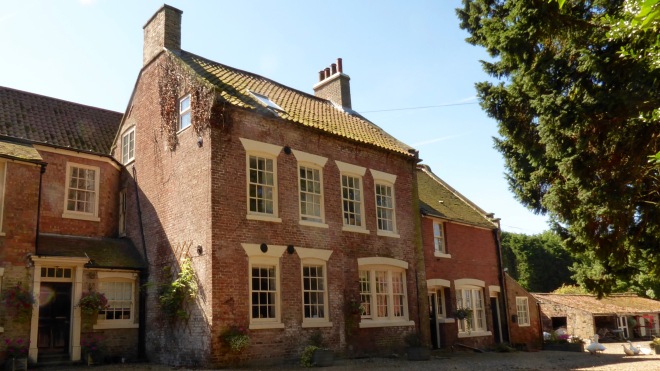
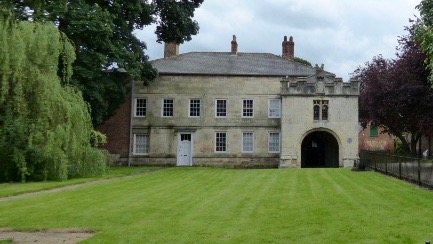
On 23rd May 1907, the Mayoress of Hull opened a new military rifle range at Rolston, for use by Militia, Volunteers and Yeomanry. The land was leased from Rolston Hall.  below – Rolston Hall.

On 23rd May 1911, a fire began in the kitchen chimney of Sledmere House, which 24 hours later had destroyed the whole house. Fire engines from Driffield and Malton attended. There were no injuries.


Rolston Hall.jpg