November 18th

On 18th November 1620, the son of Thomas Peirson of Shipton (now Shiptonthorpe) hoped for a post in the kitchen at Londesborough House, the seat of Francis Clifford, Earl of Cumberland. Either he was not suitable, or there was no post available. He was given 12d costs as compensation. Posts were usually filled by personal recommendation, often from families who had worked in the house in the past.

On 18th November 1910, Benjamin Bolton, aged 48, of 5 Suffolk Terrace, Hornsea, died after falling from a moving train near Brough.  A prominent Hornsea citizen, member of the Conservative Party and member of Hornsea Music Union, he played cricket for Hull, Hornsea & Yorkshire and bowled out W G Grace. The inquest returned a verdict of accidental death. (b23.9.1862 Cottingham)

On 18th November 1938, Sir Henry Joseph Wood, founder of the Proms, resigned as conductor of the Hull Philharmonic Society after 15 years. The committee considered Sir Malcolm Sargent as his replacement, but he was not available. Basil Cameron was engaged. photo shows the orchestra in Hull City Hall
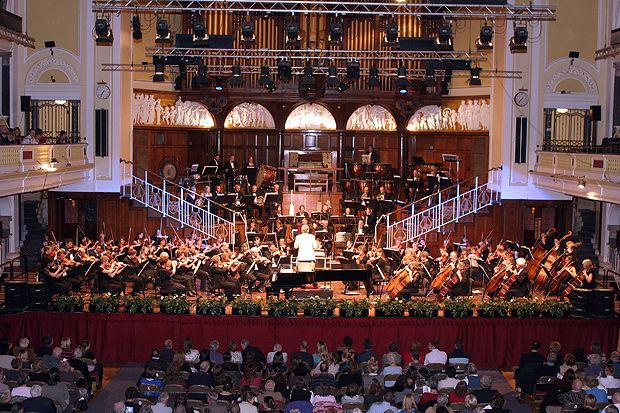
hull-philharmonic-orchestra-lst198215

November 10th

On 10th November 1274, Aveline de Forz, aged 10, was married to Edmund Crouchback, 2nd son of Henry III.  Countess of Aumale and Lord of Holderness in her own right, and Countess of Lancaster by marriage.  She died childless at age 15 and is buried in Westminster Abbey. The Lordship of Holderness passed to the Crown. Born Burstwick 20.1.1259

On 10th November 1293, Countess Isabella de Forz, widow of William de Forz III died, having outlived her husband and all her children, including Aveline above. A legend relates that she came across a poor man carrying a basket containing what he said were puppies, but which turned out to be seven of his children that he was going to drown because he could not afford to keep them. After severely upbraiding him for his lack of morality, Isabella adopted the children and ensured that they were looked after and well educated until their adulthood when she found employment for all of them.

On 10th November 1518, Sir Marmaduke Constable of Flamborough (known as Little Sir Marmaduke). Died after swallowing a frog (some say toad) while drinking a glass of water. Knighted for military service including Flodden a letter of thanks from Henry VIII is displayed, in Wassand Hall. photo shows his tomb in Flambrough church. & see 9.9

On 10th November 1609, Sir George Wharton, who was raised at Londesborough, died in a duel in Islington with his good friend Sir James Stuart, the King’s godson, who also died. The event was commemorated by Sir Walter Scott in his ‘Minstrelsy of the Scottish borders’. (b1583)

On 10th November 1678, Capt Towes (or Towers or Towle) of the Hull ship Shield landed settlers at Burlington, New Jersey. Many were Quakers, who settled at Burlington, Salem and other places. One of the passengers was Mr Barnes, a merchant from Hull.

Little Sir Maramaduke Constable's tomb

October 22nd

On 22nd October 1517, John Cook, yeoman of Sewerby, claimed sanctuary after assaulting labourer Thomas Stowpes and fled to Flambrough church.  This was not a registered place of sanctuary, but was called ‘taking church’. At a Coroner’s inquest at Sewerby on 5.11.1517, the jurors reported that Cook assaulted Stowpes on 22 Oct, giving him a wound from which he died 3 days later.

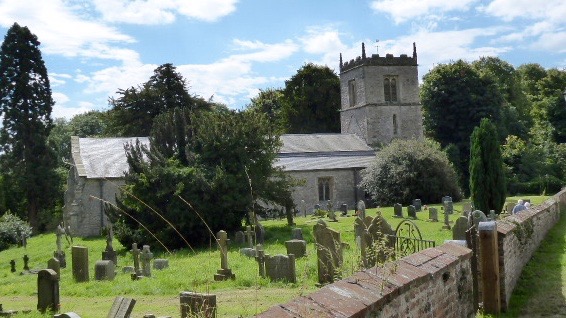
On 22nd October 1611, Lady Margaret Clifford, daughter of the Earl of Cumberland and Thomas Wentworth, future baronet, were married at All Saints, Londesborough. The Earl’s finances were not healthy, due to a protracted legal dispute with Lady Anne Clifford over his inheritance, so the celebrations were low-key, with only 40 in attendance, and a simple dinner of pasties, mince pies and turkey, a speciality of the estate. The artist Augustine Harrison was present, so that the Earl could present his 2 daughters with identical portraits of himself. photo shows Londesbrough church

On 22nd October 1882, William Butler, 16, 4thhand, was lost overboard from Hull trawler Sportsman in the North Sea.

On 22nd October 1972, the new Queen Elizabeth Dock container terminal was opened.


Londesborough


August 23rd

On 23rd August 1326, Richard Furnewes, barber to the Archbishop of York, was appointed to keep the park at Bishop Burton and the deer, at a salary of 2d per day.

On 23rd August 1601, Lord Burley, Queen’s Lieutenant and President of the Council of the North, visited Hull. His visit was marked with a firework display in the Market Place. Tragically, the cannon misfired, and at least 4 died, and several others were injured.

On 23rd August 1619, a woman bonesetter from South Dalton attended Londesborough House to treat Earl Francis’s shoulder, dislocated in a fall while out hawking. She was paid £1 5s for the treatment, which included 2 visits. (A physician might charge £2 a visit).

On 23rd August 1653, Robert Acklam was fined £5 by Hull Trinity House for taking the ship Blessing from Hull to London and from there crossing to Holland without the correct licence.

On 23rd August 1830, 60 farm workers rioted in Burton Pidsea, armed with clubs, scythes and stones, and visited every farmhouse where there were known to be Irish labourers, aiming to drive them out of the neighbourhood. 6 of them attacked Irish men working in a field belonging to Mr Baxter. The Hull Packet reported on 10.9. 1830 that the 6 ringleaders had been arrested and would be tried at the next Quarter Sessions in Beverley.

On 23rd August 1886, former Hull Trinity House pupil John Lester, aged 20, was killed by a fall from aloft on the Schooner Welsh Belle travelling from Hull to Newfoundland.

On 23rd August 1934, the Yorkshire Post reported on a cliff collapse along a 100-yard stretch at Aldbrough, which resulted in thousands of tons of material falling onto the beach, destroying the boat slipway. No-one was hurt. photo shows more recent erosion at Ulrome.


erosion Ulrome

July 24th

On 24th July 1614, Ralph Hansby founded almshouses for 3 poor persons at Bishop Burton.

On 24th July 1622, Lawrence Taylor, rector of Londesborough,  died intestate, and the York Consistory (Ecclesiastical) Court gave custody of his 6 children, and a 7thchild born in October, to his brother William, to be supported until age 21. No information on the fate of his widow.

On 24th July 1894, John William Russell was shot dead on Albert Dock, Hull, by Arthur Kendall. Russell was trying to defend Crossland from Kendall. Kendall was convicted at York Assizes, his sentence commuted to penal servitude.

On 24th July 1912, a heavy cloudburst over Westwood brought flooding to Beverley town centre. Water was a foot deep on Walkergate.

On 24th July 1942, bus inspector Ernest Goddard, aged 50, and 14 others, including 5 children, were killed in an air raid on Withernsea; as well as 2 bombs, in Queen Street and the bowling green, the German Dornier bomber had used small arms fire on local people.

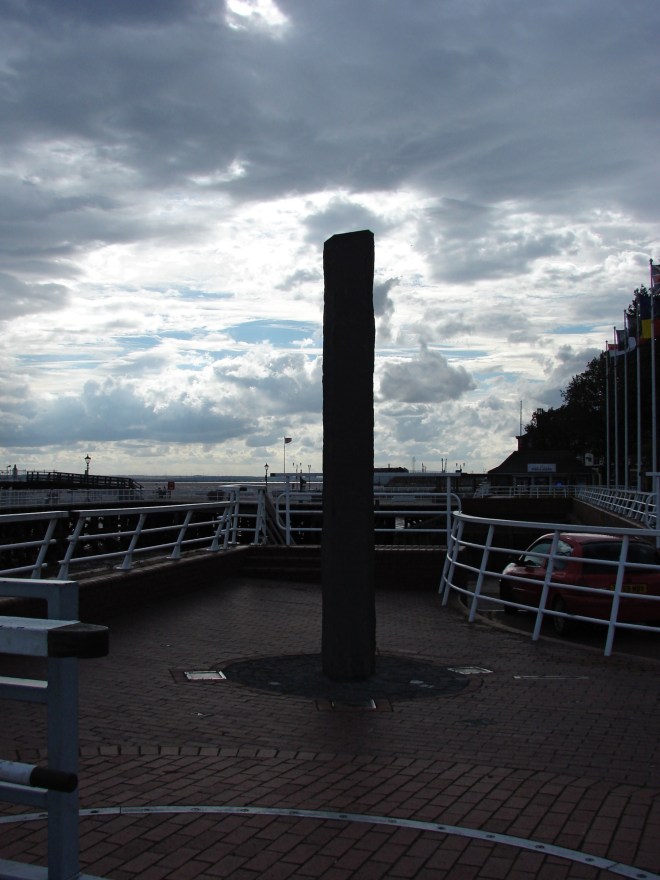
On 24th July 2011, 5 thieves stole the 300kg statue from Nelson Street, Hull; called Voyage, the statue was created by Steinunn Thorarinsdottir, as a symbol of the relationship between Hull and Iceland.  A replacement statue was unveiled 11.5.2012.

iceland statue plinth.JPGphoto shows the empty plinth.

July 20th

On 20th July 700 AD, St Osanne (or Osana or Osmanna) died aged 30 (at least, this is her saint’s day). Sister of Osred I, King of Northumbria (or daughter of Aldfrith), she was a nun at Jouarre, France. Her miracles are recorded: when a concubine of the Howden rector was so impious as to sit upon Osana’s tomb, Osana stuck her to it so that she could not be removed.

On 20th July 1332, Edward Balliol gathered a fleet of 88 ships in the Humber, and joined by a number of other Scottish nobles, set off for Fife to claim the Scottish throne from the Bruce family.

On 20th July 1413, Pope John XXI wrote to residents of West Hull villages, solemnly reminding them of the judgements to come if they did not maintain the water courses providing fresh water to Hull.

On 20th July 1495, John Halyday, carrier, of Watton, claimed sanctuary at the church of St John, Beverley, for the murder at Watton of Agnes Lathe.

On 20th July 1631, Henry Lord Clifford made the first payment to Dutch painter Hendrick de Keyser the younger, following a fashion for painting set by Charles I; de Keyser was employed for 7 years, unusual for a great house in the North. No work attributed to de Keyser has survived.

On 20th July 1662, Rev Nicholas Osgodby was reinstated as vicar of St Mary’s after being removed from his post during the Commonwealth.

On 20th July 1798, press gang officer Lieutenant Loten was attacked in the street in Hull by a sailor with a Greenland knife, and escaped to his house. A riot began which took the militia 3 hours to quell.

On 20th July 1934, the crew of Hull tug Autocrat were rescued when she was pulled over and sank near Whitton, in the Humber, while helping the Goole tug Salvage to refloat the SS Ouse. The tug was raised and returned to service.

St Mary's Beverley


June 7th

On 7th June 1614, Francis Clifford, Earl of Cumberland, of Londesborough House, paid for the apprenticeship of his scullery-maid Grace. He trained in London as a barber-surgeon for 7 years, and the Earl continued to support him when he had to transfer employers, as his first employer killed a man (perhaps in the course of treatment).

On 7th June 1672, the residents of Sister-Kirks (Owthorne and Withernsea) reported hearing the sound of the naval battle of Solebay, off the coast of Suffolk. A fleet of 75 Dutch ships surprised a fleet of 93 Anglo-French ships at anchor.

On 7th June 1796, Sir Henry Etherington laid the foundation stone of Hull Anti-Mill, to provide cheaper flour. An early co-operative, it was funded by subscription by poor residents finding the price of flour beyond their reach.

On 7th June 1837, the Union steam packet was in the Humber basin, Hull, Preparing to cross the Humber, when it exploded. 3 other ferries were next to it; 23 people died. The engineer was later charged, but not convicted.

On 7th June 1915, Vere Campey Marshall made a statement to police, stating that he witnessed a 1,000 strong crowd outside the premises of Kress and Wagner, 163/5 Spring Bank, throwing stones, and a girl using a hammer to break a window. Police and military were sent to guard the premises. Anti-German feeling was strong during WW1.

June 5th

On 5th June 1618, ‘Blind Richie’ (Richard Graham of Millhill) had walked from the Scottish borders to seek help from Francis Clifford, Earl of Cumberland, at Londesborough, and was given a pension of 10s a year. It is not known what his relationship was to the Earl, who had lands on the Scottish border.

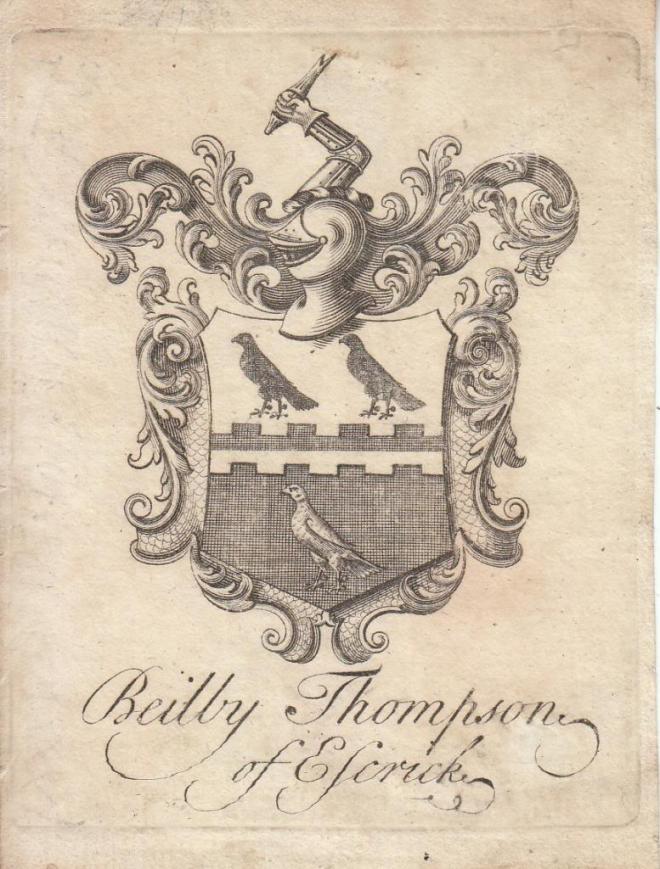
On 5th June 1778, Beilby Thompson of Escrick created a deer park, and demolished most of the village houses, rebuilding them out of sight of the Hall, and recycling the bricks; he paid 5s to Mr Scott the millwright for demolishing the horse mill.

On 5th June 1854, Dr Playfair, from the Dept of Science, reported on the teaching at Hull Trinity House School that no geometry or algebra was taught; geography was badly taught; no empirical data given on laws regulating winds, currents and weather.

On 5th June 1915, German Lieut-Capt Boemack made the first Zeppelin air raid on Yorkshire, dropping bombs on Driffield and Hedon before aborting the mission. There were no casualties, although house windows were broken in Beckside, Driffield, and crops were damaged. Crowds of people flocked to Driffield the following day to view the damage.


beilby thompson

May 15th

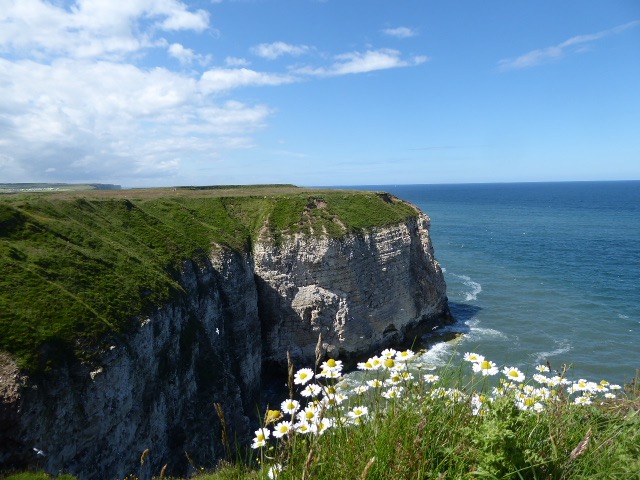
FlambroughOn 15th May 1498, Robert Barker of Wistow, near Selby claimed sanctuary at Beverley’s  church of St John, for the murder of John Towree at Wistow on 9th May.

On 15th May 1591, priest Robert Thorpe, and Thomas Watkinson were executed at York – Thorpe being hanged, drawn and quartered for treason, and Watkinson hanged as a felon for harbouring priests. Both were arrested at Menthorpe on Palm Sunday, when neighbours saw palms being taken into Watkinson’s house, by the local magistrate John Gates.

On 15th May 1613, Lady Grissell Clifford, Countess of Cumberland, died, aged 54 at Londesborough. She appears to have been generous to the local poor, and almost the entire female populations of Londesborough and Shipton attended her funeral. Memorial in Londesbrough church.

On 15th May 1618, Phillip Constable of Wassand Hall was killed in a duel at White Cross, Leven, by Edmund (or Edward) Percy. Constable buried in Goxhill. Difficult to verify any details, except that Philip Constable died in 1618, and that duels were considered a foreign introduction at the time.

On 15th May 1896, a temporary dam created during building work for the Fish Dock extension, Hull, burst, and the sudden rush of water smashed and sank the fishing smack Young Greg.

On 15th May 1951, motor mechanic Edward Slaughter, of the Flambrough lifeboat crew, was awarded an RNLI bronze medal and Mrs Porter’s Award (given annually for the bravest deed of the year by a lifeboat man). A boy was badly injured falling 150 feet from the Flambrough cliffs, and E.S. swam to him, got him on to a stretcher and guided the stretcher to the cliff top.

May 14th

On 14th May 1595, George Wharton, 12, left Londesborough to work at Gray’s Inn, London for 9 months; he then became a student at Caius College, Cambridge. His mother had died 3 years before, since when he had lived with his uncle, the Earl of Cumberland, at Londesborough. He never succeeded to the title, as he died in a duel aged 24.

On 14th May 1917, James Smith, 30, chief engineer of the Hull trawler Bel Lilly, was lost with all hands North East of Peterhead due to enemy action.

On 14th May 1941, Hull Municipal Kitchens ended a week in which they had served 350k meals, after Hull’s worst bombing, and this despite the destruction of all stocks of food delivered by the Ministry of Food, and of a number of Emergency Feeding Centres.