July 25th

On 25th July each year a traditional football match was held on St James Day, between Sutton and Wawne, starting at Foredyke bridge, boundary between the 2 villages, each village trying to get the ball home. Not known dates played or when abandoned.

On 25th July 1328, King Edward III is said to have closed down the Warter annual fair on St James Feast Day because of the number of murders that had been committed at the fair. There is a record that in 1300 certain manslaughters had been committed in the village by the canons’ men from Warter Priory. In 1328, King Edward III issued an order that it was an offence to go armed into any fair or market. Probably not aimed specifically at Warter.

On 25th July 1768, Joseph Hall was hanged at York Castle for coining at Hull. photo shows  medieval coins being made.

On 25th July 1873, William Dunwell, former Hull Trinity House School pupil, lost his life at sea by jumping overboard to save the life of a shipmate.

On 25th July 1911, Father Ottway, superintendant at the Yorkshire Catholic Reformatory at Market Weighton (actually in Holme on Spalding Moor) reported on rebellion from the boys, including threats to knife masters, which resulted in the attendance of 3 police officers and the thrashing of 6 or 7 boys.

coiner, Hanse Day


July 21st

On 21st July 1304, Henry de Percy granted permission for a 2 day annual market and fair to Nafferton with Wansford, where his family held land. It doesn’t appear to have been a success, as income was recorded in 1314, with no mention of it after this date.

On 21st July 1793, the Master of Hull Trinity House School in his weekly report ‘lamented 2 absentees who were never corrected for it. Their mothers are such notorious harpies and kick up such a shameful dust among us’.

On 21st July 1943, the Regional Air Raid Commissioner produced a report on the Trekking Situation in Hull, with concerns that people were leaving the city at night to avoid air-raids, often sleeping in ditches and verges. photo shows Londoners sleeping in the Underground – which, of course, Hull did not have. I have not been able to find images of night trekkers from Hull.

air raid shelter-aldwych

July 3rd

On 3rd July 1267, Alice Falketon was given permission by the church authorities to build herself a house in St Nicholas Churchyard, so that she could live as an anchoress. Enquiries had been made as to whether she was a fit person, with enough funds to maintain herself, and if this would be convenient to the parish.

On 3rd July 1524, Peter Gornarr, tanner, of Bridlington, claimed sanctuary at the church of St John, Beverley, for the murder of Robert Skelton of Bridlington, a tailor.

On 3rd July 1642, King Charles I set up his court in Beverley at the house of Lady Gee, North Bar Within, and quartered his forces (about 3,000 infantry and 1,000 cavalry) in and around Anlaby, Cottingham and Newland.

On 3rd July 1797, Hull Trinity House paid £2 10s to William Brand, James Hayes, Samuel Harrison and J. Peterson, whose ship the Argo had been captured.

On 3rd July 1850, Mr T. Firbank, Chairman of Hull Dock Company,  opened Victoria Dock, the first of Hull’s docks east of the River Hull.

On 3rd July 1892, a great flood at Langtoft reached a height of 7 ½ feet.

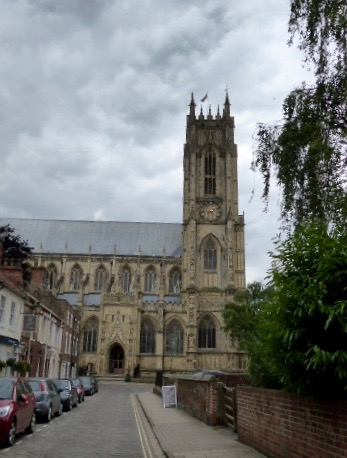
Beverley Minster

July 1st

On 1st July 1643, cannoneer John Stevenson was buried in St Mary’s Beverley, having died in the town in a ‘great scrimmage’ in the Civil War (possibly the day before).

On 1st July 1801, Hull Subscription Mill Ltd opened to provide cheap flour to the poor of Hull, 3 years or so after the opening of Hull Anti-Mill, one of the first co-operatives in the country.

On 1st July 1830, the Hull whaler Eagle had been stuck in the ice of Baffin Bay for 5 days.   With the help of 200 men from nearby ships, Captain Matthew Wright and crew, were finally able to repair the keel and heave the ship upright again.

On 1st July 1903, Amy Johnson was born in St George’s Road, Hull. She went on to become the first woman to fly solo to Australia, and to break many aviation records. (d5.1.1941)

On 1st July 1918, Hull coroner Colonel Alfred Thorney held inquests on 2 early cases in the flu epidemic: Kate Denman, aged 11, daughter of a labourer of Hodgson Street, and Elsie Barton, aged 9, daughter of a soldier, of Arthur’s Terrace Courtney Street. Both died within 24 hours of being taken ill, of influenza followed by pneumonia.

On 1st July 1940, the first-ever daylight air-raid on the British mainland attacked Saltend oil terminal.  Between 16.40 and 17.00, bombs caused a 2,500-ton tank of oil to explode, and threatened to spread to other tanks. For preventing even greater damage, the following were all awarded the George Medal: Clifford Turner, leading fireman; William Sigsworth, Manager, Anglo-American Oil Co Ltd; George Samuel Sewell, engineer, Shell-Mex & BP Ltd; Jack Owen, fireman; George Archibald Howe, Manager, Shell-Mex & BP Ltd. No loss of life.

On 1st July 1976, Withernsea Lighthouse ceased operating, after 82 years, having been superseded by modern navigational aids. It is now open to the public as a museum to Kay Kendall, to local history and the lifeboat service.Withernsea

June 26th

On 26th June 1793, Captain William Hammond died aged 65 in Kirk Ella. Hull sea captain, shipowner and merchant, supporter of abolition, Chairman of Hull Dock Company, Warden of Trinity House, and diplomat. (He and David Hartley MP met Benjamin Franklin and John Adams in Paris on a possible spying mission) Buried in Welton. (b 1727 York). Photo shows a door in the Maritime Museum, former Dock Offices.

On 26th June 1854, at an event to celebrate the opening of the Hull-Withernsea railway line, 500 guests travelled from Hull on the first ever train (which was 20 minutes late, due to late arrival of guests) and part of the lunch marquee collapsed; there were no injuries. Joseph Robinson Pease in his diary recorded heavy showers and high winds threatened to tear the marquee to pieces, but that it subsided and all passed off well.

On 26th June 1920, the National Federation of Women Workers called its Hull laundry worker members out on strike, as they were paid less than in other towns. Hull Trades Council supported the strike and organised a parade on 17 July. Strike breakers were reported being smuggled in to work in laundry baskets.

Hull Dock Co

June 20th

Hull Corpn silver


On 20th June 1533, the Hull Mayor and town council sold to Sir Edmund Perkins the ornaments of the churches in the town, for £15. They also gave to Sir Frauncis Jobson, Treasurer of His Majesty’s jewellers, ’24oz of silver plate whereof 7oz were double gilt and the rest part gilt and plain white, handed over for His Majesty’s use’. photo shows some of today’s corporate treasures.

On 20th June 1579, Edward, son of Nicholas Symson of Thorpe, because of the outbreak of plague at Howden, had to be baptised at Eastrington rather than in the parish church.

On 20th June 1583, Hull agreed to 10s compensation to Richard Frere for the loss of hay and his cote during the time when plague was in the town.

On 20th June 1642, Maurice Corney, vicar of St Mary’s Hull and Capt William Thornton, comptroller of customs were discussed by Sir William Strickland, Mr Alured, Mr Peregrine Pelham and Mr John Hotham, as a danger to Parliament’s cause. Sir John Hotham ejected Corney from the town, and he left for York, despite being considered a hero for his work during the recent plague. Thornton was also turned out, and joined the King’s service.

On 20th June 1645, John Blenkarne, master of the Hull ship Anne Dorothy, was moored in Marstrand, Sweden. He accused crewmen Peacock and Dynnis of inciting mutiny when they came aboard drunk, threatened him, and after a night in custody refused to come aboard until threatened with imprisonment. When they returned to home port, the court of Trinity House fined them and jailed them for 24 hours.

On 20th June 1761, Beverley widow Elizabeth Courtney, of Walkergate, paid the bellman to go round the town announcing a reward of 3 guineas to anyone with information about bricks thrown through her windows the previous night.

On 20th June 1810, Hull Trinity House reported raising £300 in 9 weeks towards establishing a lifeboat at Spurn.

On 20th June 1895, an auction was held in 2 fields in Bransholme Lane, Sutton, of ‘The Sweep of the Scythe’ of 25 acres of ‘rich meadow’, and also the ‘Eatage of the Fog’ up to the end of the year. This appears to have been dialect for the sale of hay cut for fodder for cattle.


June 15th

trinity house.JPG


On 15th June 1795, Hull Trinity House agreed to give £100 to the Mayor’s fund to buy corn and resell it to the poor at a discount, as war was causing food scarcities.

On 15th June 1911, due to financial difficulties, the Smith (Smijth) family put the whole of the Windham Estate at Wawne up for auction over 2 days. This included 12 farms, smallholdings, rows of cottages, the Ferry, the pub, post office, grocer’s, tailor’s, the school. Almost the whole village had to find new tenancies. The estate had been in the hands of the Ashe family and their successors since the 17thC.

June 5th

On 5th June 1618, ‘Blind Richie’ (Richard Graham of Millhill) had walked from the Scottish borders to seek help from Francis Clifford, Earl of Cumberland, at Londesborough, and was given a pension of 10s a year. It is not known what his relationship was to the Earl, who had lands on the Scottish border.

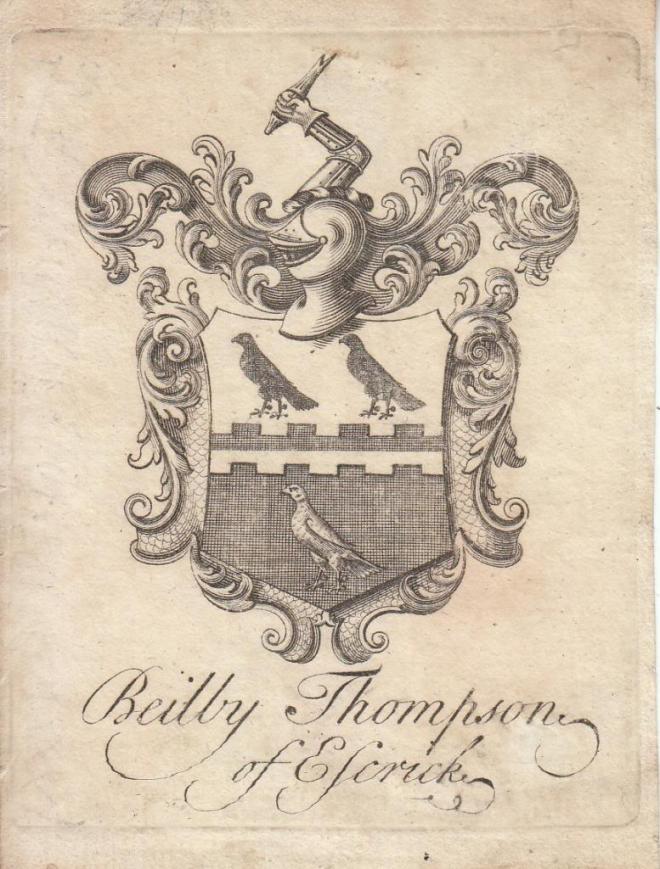
On 5th June 1778, Beilby Thompson of Escrick created a deer park, and demolished most of the village houses, rebuilding them out of sight of the Hall, and recycling the bricks; he paid 5s to Mr Scott the millwright for demolishing the horse mill.

On 5th June 1854, Dr Playfair, from the Dept of Science, reported on the teaching at Hull Trinity House School that no geometry or algebra was taught; geography was badly taught; no empirical data given on laws regulating winds, currents and weather.

On 5th June 1915, German Lieut-Capt Boemack made the first Zeppelin air raid on Yorkshire, dropping bombs on Driffield and Hedon before aborting the mission. There were no casualties, although house windows were broken in Beckside, Driffield, and crops were damaged. Crowds of people flocked to Driffield the following day to view the damage.


beilby thompson

June 4th

On 4th June 1369, 49 men and women of Hull formed themselves into a guild in honour of the Holy Trinity, and bound themselves to help each other in poverty and sickness. This guild developed into Hull Trinity House.

On 4th June 1646, Christopher Hildyard of Routh was fined £130 as a member of the Royalist army (a delinquent) in order to recover his goods which had been sequestered by Pariament.

On 4th June 1753, the first stone of the new building for Hull Trinity House was laid; the building had been on the same site since 1461, but was enlarged and rebuilt.

On 4th June 1944, John Raddings, Humber pilot, Was censured at an enquiry for failing to properly control the SS Clearpool, resulting in her stranding on Middle Sand in the Humber, and total loss; there were no casualties, but the wreck had to be dispersed (i.e. blown up) by the Admiralty.


Trinity House

June 3rd

On 3rd June 1642, a few weeks after being refused entry into Hull, King Charles I called a meeting of the Yorkshire gentry at Heworth Moor, near York, and 70,000 attended. 200 young men volunteered to form a bodyguard for the King. The 2 Hilyard brothers of Winestead, Henry and Robert, attended, and volunteered. Many other ER people must also have attended.

On 3rd June 1717, Thomas Watson died aged 80. Born in Hull, he was created Bishop of St David’s, and in 1707 built almshouses in North Church Side. Supported James II in 1688. He lost his ecclesiastical offices in 1699 for selling church property or offices, and reputedly died a rich man. (b 1.3.1637) The picture shows the almshouses.

On 3rd June 1801, when their husbands were killed by the Danes in a military engagement off Copenhagen, the widows of Matthew Cobb and James Davis, Humber pilots, were given financial support by Hull Trinity House at 10s 6d per week, 6 weeks and 4 weeks respectively.


Bishop Watson's Hospital