August 25th

On 25th August 1929, 4 boys were on the dockside on a Sunday evening when fire broke out. They helped to save equipment and rescued a cat from one of the trawlers. The fire destroyed the recently refurbished No 2 Market, 100 offices, 105 railway wagons, and set alight 7 trawlers, 3 of which were totally burnt out. Damage was variously valued at £250,000 and £750,000. The cause was probably an electrical fault.

On 25th August 1940, 6 residents of Rustenburg Street, Hull, in their Anderson shelter, were the first fatalities due to Hull air raids. photo shows an Anderson shelter in construction.

On 25th August, 1956, A train of empty coaches hit the buffers at speed and went up onto the platform at Filey Holiday Camp Rail Station.  An enquiry found that the brakes were not properly coupled. Driver Goforth,  Fireman Bentley and Guard Wharam were slightly injured.

On 25th August 1972, the crew of the Flamborough lifeboat Friendly Forester rescued 2 people cut off by the tide at Flamborough.
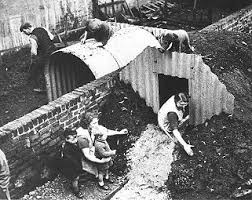
 

Anderson shelter

August 23rd

On 23rd August 1326, Richard Furnewes, barber to the Archbishop of York, was appointed to keep the park at Bishop Burton and the deer, at a salary of 2d per day.

On 23rd August 1601, Lord Burley, Queen’s Lieutenant and President of the Council of the North, visited Hull. His visit was marked with a firework display in the Market Place. Tragically, the cannon misfired, and at least 4 died, and several others were injured.

On 23rd August 1619, a woman bonesetter from South Dalton attended Londesborough House to treat Earl Francis’s shoulder, dislocated in a fall while out hawking. She was paid £1 5s for the treatment, which included 2 visits. (A physician might charge £2 a visit).

On 23rd August 1653, Robert Acklam was fined £5 by Hull Trinity House for taking the ship Blessing from Hull to London and from there crossing to Holland without the correct licence.

On 23rd August 1830, 60 farm workers rioted in Burton Pidsea, armed with clubs, scythes and stones, and visited every farmhouse where there were known to be Irish labourers, aiming to drive them out of the neighbourhood. 6 of them attacked Irish men working in a field belonging to Mr Baxter. The Hull Packet reported on 10.9. 1830 that the 6 ringleaders had been arrested and would be tried at the next Quarter Sessions in Beverley.

On 23rd August 1886, former Hull Trinity House pupil John Lester, aged 20, was killed by a fall from aloft on the Schooner Welsh Belle travelling from Hull to Newfoundland.

On 23rd August 1934, the Yorkshire Post reported on a cliff collapse along a 100-yard stretch at Aldbrough, which resulted in thousands of tons of material falling onto the beach, destroying the boat slipway. No-one was hurt. photo shows more recent erosion at Ulrome.


erosion Ulrome

August 22nd

On 22nd August, 1138, William le Gros, Earl of Albemarle and Lord of Holderness, was made Earl of York, in recognition of his prowess in the Battle of the Standard at Cowton Moor, Northallerton. The 4 standards of St John of Beverley, St Peter of York, St Cuthbert of Durham, and St Wilfred of Ripon, were used as a rallying point for the English against the Scots. The East Riding contingent included a Percy and a de Stuteville. (and see 20.8)

On 22nd August 1572, Thomas Percy, 7thEarl of Northumberland, was executed at York for treason, as leader of the Rising of the North. He was offered mercy if he renounced Catholicism, and refused.  Beatified by the Catholic church. (b 1528, probably in  Leconfield)

On 22nd August 1711, James Rand left £160 in his will for ‘the poor and needful of Preston’. Rands Estate in the village is named for him.

On 22nd August 1917, a bomb from a German Zeppelin destroyed the Primitive Methodist chapel, Baxtergate, Hedon.

On 22nd August 1918, Alfred Buchanan Cheetham of Bean Street, Hull, was killed when the SS Prunelle was torpedoed in the North Sea by a German U-boat. He took part in 3 Polar expeditions, and spent a total of 6 years in the Antarctic, with both Scott and Shackleton. Awarded the Silver Polar Medal clasp, he claimed to have crossed the Antarctic Circle 14 times. Cape Cheetham is named for him. (b 6.5.1867 Liverpool)

On 22nd August 1925, Robin Skelton died aged 72 in victoria, Canada. Poet, literary editor, professor and author of books on wicca. Born in Easington 12.10.1925


robin skelton

August 21st

On 21st August 1821, Zachariah Charles Pearson was born in Hull.  Ship’s captain, later ship owner.  Sheriff of Hull 1858, Mayor 1859 – 1862. In 1860, he gave 27 acres to the town for a public park, now Pearson Park. During the American Civil War, he sold arms and equipment to the Confederates, it is said to ensure a supply of cotton to the Hull cotton mills.   He lost several ships to action by the US Federal Navy and was made bankrupt in 1863. He resigned all public posts, and was disgraced, never regaining his former position. Died 29.10.1891

On 21st August 1833, the flying buttresses at the northeast of the tower of St Patrick’s church, Patrington, were blown down and damaged the roof during a violent storm.

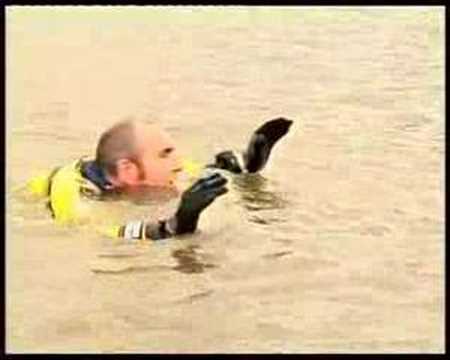
On 21st August 2005, Hull businessman Graham Boanas waded across the Humber, from Brough to Whitton, one of the most dangerous waterways in the UK, to raise money for charity.  The only recorded instance of this feat.

graham boanas

August 17th

On 17th August 1377, King Richard II issued a charter allowing the town of Hull to ensure the town walls and moats were kept in good repair, and to compel every householder to contribute to the cost of repair.

On 17th August 1427, Thomas Brygman, vicar of Foston, asked the Pope to relax the penances paid by those who did not visit church on holy days or give alms, because the church buildings were ruinous, and lacking a bell tower to call parishioners to prayer, and because the parishioners were too poor to repair the church. Their poverty was caused by ‘divers burdens’ imposed by King Henry to fight wars, and also because of the high mortality level in the area.

On 17th August 1863, Dr T.T. Pierson of Bridlington Quay apologised for signing a certificate at The Retreat asylum, Kilham, to declare a woman insane (whom he had known since they were at school) at the request of her husband; she turned out to be suffering only from the effects of alcohol.

On 17th August 1905, Hull merchant Frederick Harker was fined £2 plus costs for speeding at Harpham – travelling at 28 miles per hour in a 20mph zone. It was reported that the method used, of 3 police officers timing him over a measured distance, had not been used before.

On 17th August 1920, Sir Luke White, MP, died at Driffield, aged 75. Liberal MP for Buckrose since 1900, he died a pauper and under investigation for bankruptcy, having covered his political expenses by using money entrusted to him by the clients of his business as a solicitor.

On 17th August 1954, workers at King George Dock, Hull, began a strike against unsafe working conditions called the ‘Filling Strike’; within hours, 4,000 dockers were on strike and 60 ships lay idle. The strike ended after 11 days.


1954 dock strike

August 15th

On 15th August 1690, Robert Lumley, ship’s master, was fined 10s by Hull Trinity House for sailing out of the port without supplying the House with a list of men and their wages.

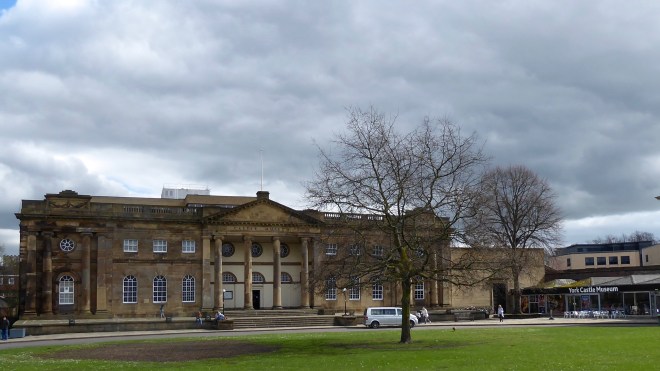
On 15th August 1764, Abraham Clayton, 35, of Howden, was hanged at York Castle for murdering his wife Elizabeth; his body was given to surgeons ‘to be anatomized’.

On 15th August 1808, Robert Pattinson,  grazier and agriculturist, died aged 82, and left 4 acres of land in Skeffling, the rent to be used to educate poor children in Easington.

On 15th August 1924, Harry Blanshard Wood, VC, died aged 42 in Devon, after a traffic accident. Born in Newton-on-Derwent, he was a corporal in the 2ndBattalion, Scots Guards when on 13.10.1918 in St Python, France, he took command when his platoon sergeant was killed, and showed gallant conduct and initiative, for which he was awarded the Victoria Cross.

On the same day, BBC radio station 6KH began broadcasting local items from bishop Lane, Hull, including sport, talks, children’s shows, and music featuring local musicians, e.g. Powolny’s Restaurant Bijou Orchestra. In 1928, the station closed, and there was no local station until Radio Humberside opened in 1971.

On 15th August 1940, 13 military personnel and 1 civilian died, and 16 injured in this daytime air raid on Driffield airfield and Southburn, including Aircraftwoman M. Hudson, the first WRAF fatality.

August 6th

On 6th August 1778, the question of who owned Spurn Point was resolved in favour of the William Constable of Burton Constable; the legal dispute began in 1609.

On 6th August 1785, John Beck of Lelley was hanged at York Castle for setting fire to a house and corn mill belonging to William Jackson of Danthorpe, with Robert Crosby and John Edwards, also of Lelley; Edwards and Crosby escaped.

On 6th August 1859, John Riley, 36, of Hull, was hanged at York Castle for the murder of his wife, Alice.

On 6th August 1888, former Trinity House School pupil George Smith, age 15, drowned after a collision between the Barque Cambrian and a French Barque during a great storm in Valparaiso harbour.

On the same day, a Bank Holiday Monday, a popular trip out from Hull Corporation Pier was to Paull by boat to watch the Army’s Submarine Miners in training and holding boat races and athletic competitions. Several boats left the Pier during the day.

York Castle


July 26th

On 26th July 1826, the Aire & Calder Navigation Company officially opened the new canal at Goole, locks for ships and barges, dock, and canal basin linking Goole to the west. A new town was built around the small hamlet of Goole (population in 1822: 450).

On 26th July 1845, Capt Dannatt and crew of Hull whaler Prince of Wales came across Sir John Franklin and his expedition to find the North West Passage, in Lancaster Sound, in the Arctic, and invited him and his officers on board. This was the last known sighting of the expedition.

On 26th July 1850, Hull Advertiser printed a report of the deaths by drowning during a riot of 4 Irish navvies (Patrick Langthon, John Dowling, Barney M’Jay and Thomas Twomey) working on the embankment of Sunk Island.

On 26th July 1986, 8 rail passengers and 1 person travelling in a van died when the van was struck by the 9.33 Bridlington to Hull train at Lockington level crossing, and the train was derailed. 51 people were injured, 10 of them seriously. There is a memorial to those who died in Driffield Memorial Garden.


lockington crash memorial

July 25th

On 25th July each year a traditional football match was held on St James Day, between Sutton and Wawne, starting at Foredyke bridge, boundary between the 2 villages, each village trying to get the ball home. Not known dates played or when abandoned.

On 25th July 1328, King Edward III is said to have closed down the Warter annual fair on St James Feast Day because of the number of murders that had been committed at the fair. There is a record that in 1300 certain manslaughters had been committed in the village by the canons’ men from Warter Priory. In 1328, King Edward III issued an order that it was an offence to go armed into any fair or market. Probably not aimed specifically at Warter.

On 25th July 1768, Joseph Hall was hanged at York Castle for coining at Hull. photo shows  medieval coins being made.

On 25th July 1873, William Dunwell, former Hull Trinity House School pupil, lost his life at sea by jumping overboard to save the life of a shipmate.

On 25th July 1911, Father Ottway, superintendant at the Yorkshire Catholic Reformatory at Market Weighton (actually in Holme on Spalding Moor) reported on rebellion from the boys, including threats to knife masters, which resulted in the attendance of 3 police officers and the thrashing of 6 or 7 boys.

coiner, Hanse Day


July 23rd

On 23rd July 1525, carpenter John Algood of Wheldrake claimed sanctuary at the church of St John, Beverley, for debt.

On 23rd July 1856, Capt Bryan Stapleton became the first governor of the Yorkshire Catholic Reformatory School for Boys, at Holme on Spalding Moor.  The reformatory movement campaigned to keep children out of prisons, but the first Yorkshire school was Church of England only.

On 23rd July 1941, an air raid on Alexandra Dock, Hull, sank 3 lighters, killing 2 people and injuring 5, and damaged No 11 quay, 2 steamers and a diving boat.

On 23rd July 2012, the Royal Engineers carried out 15 controlled explosions on the beach at Mappleton, after a landslide (on Sat 21.7) revealed at least 1,000 rockets, grenades and bombs from WW2.

mappleton bomb