March 10th

Holy Trinity

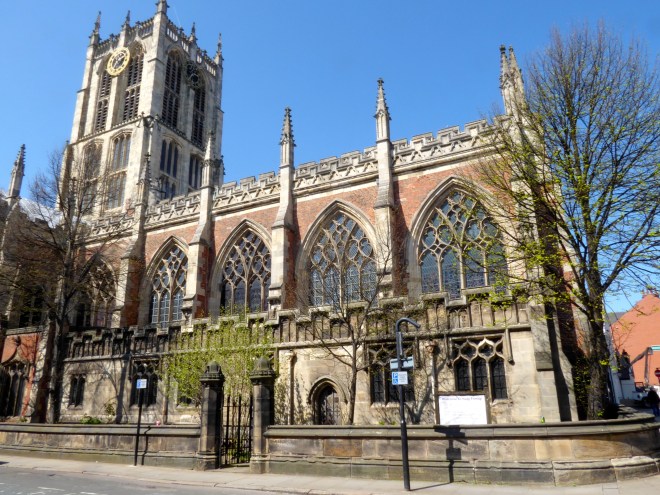
On 10th March 1425, Hull Holy Trinity Church, was consecrated; building began in 1291 and was interrupted by the Black Death.

On 10th March 1447, Henry VI issued a charter enlarging the county of Hull to include Hessle, North Ferriby, Swanland, West Ella, Kirk Ella, Tranby, Willerby, Wolfreton, Anlaby, the site of Haltemprice Priory and Derringham Dike.

On 10th March 1623, George Tummond, butcher, of Patrington, was found dying at sunrise in Winestead, after starting to walk home from the alehouse in Ottringham. Holderness was notorious for its floods.

On 10th March 1800, George Hudson, the “Railway King’, was born in Howsham.  He  made a great business and political career from sharp practice and bribery (was MP for Sunderland, and Lord Mayor of York). He became hugely rich, but was disgraced, and imprisoned for debt, though released when his debts were paid by public subscription. In 1845, he bought the Londesborough Estate for £470,000. D14.12.1871

On 10th March 1823, John Bacchus Dykes was born in Hull. By the age of 10, was assistant organist at St John’s Church, Myton. Became a vicar, and composed over 300 hymn tunes, including ‘Eternal Father, Strong to Save’ and ‘We plough the fields and scatter’. (d 22.1.1876)

On 10th March 1921, Mr J.H. Tate proposed a motion at Hornsea Golf Club that ’Old Jack be shot’! It is assumed Old Jack was the horse used to pull mowers and rollers on the course.

On 10th March 1954, Alex May, master of the tug Fenman, died in hospital after the tug was overrun by the ship she was towing, the Rudolf, and sank, on the way into Hull’s Alexandra Dock. 2 of the crew were swept away. There was 1 survivor.
February 26th

On 26th February 1381, Archbishop of York Alexander Neville announced his intention to visit Beverley, provoking a mass walk-out of Beverley clergy, most going to Lincoln or London. Neville replaced them with vicars choral from York but failed in his power struggle.

On 26th February 1552, Sir Michael Stanhope was executed on Tower Hill, London, for instigating rebellion, and conspiring to murder John Dudley, Duke of Northumberland. Stanhope was a Nottinghamshire knight, twice Governor of Hull, where the townspeople complained to the Privy Council of his high-handedness. He also acquired a great deal of land after the Dissolution, including in Sutton-on-Hull.

On 26th February 1671, Robert Constable, Viscount Dunbar of Burton Constable, was indicted at Middlesex Sessions Court with the murder of Peter Varnall and confessed. Hi accomplices were Peter Savage and John Fennick. It seems that Varnall was the innocent victim of young aristos on a drunken spree.

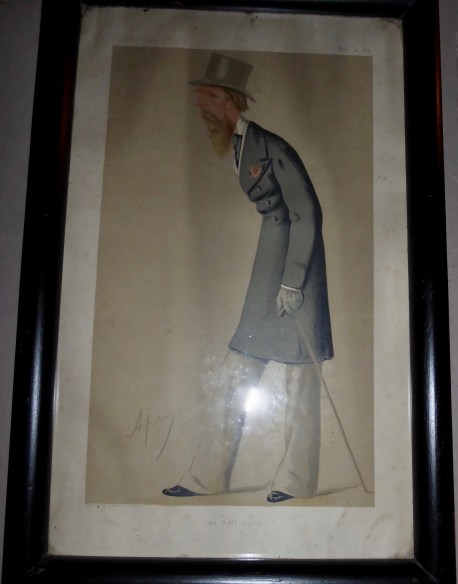
On 26th February 1869, Christopher Sykes, MP for the East Riding of Yorkshire, moved the Bill which later in the year became the Sea Birds Preservation Act, supported by Rev HF Barnes-Lawrence of Bridlington. Up to 232,000 seabirds and eggs were killed, often shot for sport, each breeding season. This earned Sykes the nickname ‘The Gulls’ Friend’. See cartoon below.  Link is to film of ‘climmers’. https://www.youtube.com/watch?v=B5ynIfnmVK0

On 26th February 1903, Martin Samuelson, marine engineer, died at Hessle, aged 78. Owner of Martin Samuelson & Co, of Neptune Street, Hull, and later Sammy’s Point, who built hydraulic presses, steel boilers and early steel vessels, and the North Bridge. Hull councillor from 1853, Sheriff 1857, Mayor 1858, first colonel of Royal East Yorkshire Volunteer Artillery and JP. (born 2.1.1825 in Liverpool).

On 26th February 1914, the Coverdale family of Hollym played a football match against another family with 11 sons, the Charlesworths of Scunthorpe. The Coverdales won 3: 0.

On 26th February 1935, Thomas Edward Lawrence, known as T.E.Shaw, (‘Lawrence of Arabia’) left Bridlington when discharged from the RAF; he had been supervising armour-plating power launches for target practice. Whilst in Bridlington, he had lived at the Ozone Hotel, Bridlington (now Royal Yorkshire Yacht Club). There is a sundial dedicated to him in South Cliff Gardens.

On 26th February 1942, Pilot F/Sgt Reginald Francis Robb and 5 crew of Wellington bomber Z8536 took off from RAF Pocklington and crash landed at Yapham due to an engine fire. They jettisoned their bombs, but were caught in the blast and all the crew were lost. 4 are buried in Barmby Moor.

Christopher Sykes MP

December 20th

On 20th December 1584, Rev John Lothropp was born and baptised in Etton. He became a Congregationalist minister, was imprisoned and released on condition he did not preach or hold meetings. He took some of his congregation with him to America and is considered one of the first American spiritual leaders.

On 20th December 1661, an Act of Parliament was passed to separate the church and parish of Holy Trinity, Hull from Hessle, setting out the responsibility of the town for assessing and collecting a rate from which they should pay the vicar £100 a year.

On 20th December 1830, the Mayor of Hull started a collection for Greenland whalers and their families, after a disastrous season of ship losses and low catches.


Holy Trinity

December 19th

Dame Ann Percy (Percehay)

On 19th December 1511, Ann Percy died in Hessle, the wife of Sir Henry Percy (or Percehay) and mother of 17 children. Although she is not of the Northumberland Percies, the Duke of Northumberland in 1862 arranged for a transcription of the original brass in Hessle Church, presumably under the assumption that she was of his line.

On 19th December 1656, the second of 2 boy twins of Philip Ellerker died at Ellerker, 2 days after the death of the first, at the age of 3 days.

On 19th December 1939, it was reported that of the 1,774 children evacuated from Hull  in September and October, 900 had returned home, during the ‘phoney war’.


November 16th

On 16th November 1503, Elizabeth of York, Duchess of Suffolk, died, aged 58. She was married to John de la Pole, 2ndDuke of Suffolk. The lands she held in Hull and Myton reverted to the Crown, and in 1514 Henry VIII gave them to William Sidney, buying them back in 1539 to build his fortifications in the town. She held 1,000 acres of land, including meadow, pasture, 100 dwelling houses, a mansion and gardens and the patronage of the Charterhouse.

On 16th November 1857, ‘A Dissenter’ issued a campaign leaflet encouraging religious dissenters to oppose plans by the Church of England to close down the school run by the Leonard Chamberlain Charity, the trustees of which were all dissenters. The writer estimated that 1/3 of Hessle people were not CofE members. The school remained open for a further 45 years.

On 16th November 1918, PC244 Harry Burgess filed a statement at Hull Central Police Station, reporting on 3 US sailors and 1 American soldier being followed by a large crowd. The Americans used obscene language, threatened to fight, and refused to go to their billets. Police escorted them to the Grosvenor Hotel, guarded the gate and dispersed the crowd, who accused the Americans of attacking British and Canadian soldiers.  The US commander later ordered his men, based at Killingholme US Naval Air Station, not to visit Hull without orders.

On 16th November 2017, Queen Elizabeth II visited Hull and met some of the City of Culture volunteers, had lunch with the Bee Lady among others, visited Siemens, and the new Allam Medical Centre at Hull University.


royal visit 2017

October 26th

On 26th October 1515, Hull shoemaker William Baker claimed sanctuary at the church of St John, Beverley, for a felony (no details given)

On 26th October 1587, the wife of Dr Vavasour of Hesslewood & her 2 daughters died after being taken prisoner, (presumably in Hull Castle) with her 2 daughters, in 1581. She was questioned in 1576 about her failing to attend church. In 1578 her husband’s goods were seized to pay her fines.

On 26th October 1662, 7 poor residents of North Ferriby parish received money from the Poor Rate of between 1s and 2s every 4 weeks (presumably dependent on the number of children they had); of the 7, three were widows, one a single woman, and three men. Those 83 ratepayers who could afford to contribute paid between 2d and 15s a year.

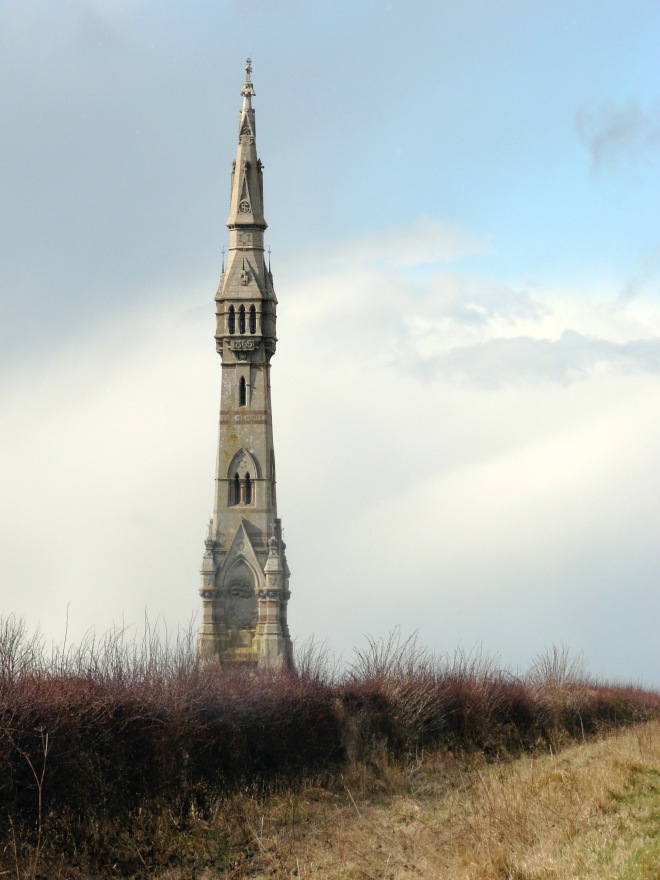
On 26th October 1866, Lord Hotham officially opened the Sykes Monument, as a memorial to Sir Tatton Sykes (d 1863), the money being raised by subscription by local people. The monument is a local landmark, on Garton Hill, near Sledmere, and can be seen from many miles away.

On 26th October 1950, Garden Village (Hull) Ltd was dissolved after the death of Sir Philip Reckitt; rents had been held at 1914 levels.


Sledmere


October 19th

On 19th October 1469, John Fisher was born in Beverley, the eldest son of Robert and Agnes Fisher. Chancellor of Cambridge University, Bishop of Rochester, and chaplain to royalty.  He was executed for treason 22.6.1535 on Tower Hill, for speaking out against Henry VIII’s divorce, and refusing to acknowledge the heirs of Henry and Ann Boleyn as legitimate successors to the throne. A Catholic martyr, he was canonized as St John Fisher.

On 19th October 1781, Rev George Lambert reported in his diary on a very high tide which inundated many houses in Hull.

On 19th October 1826, a Huggate parish jury of 12 men, 2 affearers (assessors of fines) and the pinder, set penalties for anyone allowing cattle into public lanes at night at 2s6d per head, for the first offence, and 5s per head for every offence afterwards; for allowing pigs in the streets without a ring between May Day and Michaelmas 3d per head; for allowing geese in the streets between Old Mayday and Old Lammas, 1s; for allowing anyone to stay who does not have a certificate allowing them to settle, £1 19s 11d.

On 19th October 1890, John Connell, boatman, of Waxholme, in the Coastguard Service, took part in the rescue of crew from the Grimsby vessel Genesta when it ran aground. All were rescued, except the captain, who died of exposure. Connell went on to the vessel as it was breaking up to rescue a man too weak to help himself. Connell was awarded the Humane Society Silver Medal. The unmanned vessel broke free the following day and travelled to Withernsea.

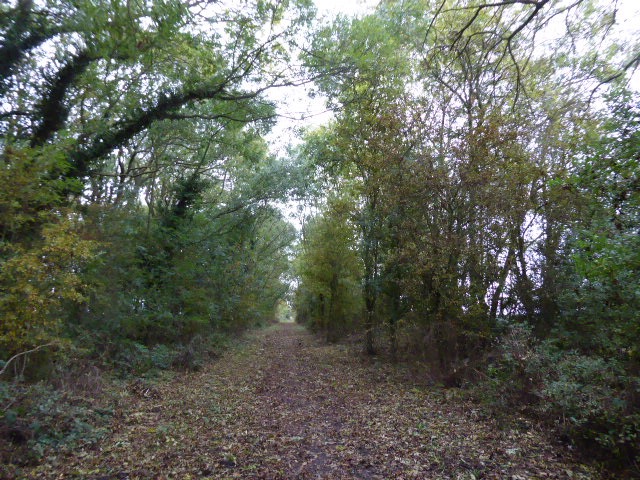
On 19th October 1964, rail passengers took their last trips on the Hull to Withernsea and Hull to Hornsea rail lines, which closed as a result of the Beeching Report. Goods services to Withernsea continued to 30.4.1965, to Hedon 3.5.1965, and to Marfleet to 1972. photo shows part of Hornsea Rail Trail today.

Hornsea Rail Trail


October 8th

On 8th October 1536, Beverley men mustered on Westwood Low Green in response to the Lincolnshire rebellion against the Act of Dissolution. Elizabeth Stapleton encouraged them, despite the reluctance of her husband, and her brother-in–law William Stapleton became the rebels’ captain.

On 8th October 1643, Capt Strickland led a failed Royalist attack on Hull’s Hessle Gate, and was shot dead. Many of the attackers were killed.

On 8th October 1708, William Robinson died in Hull. Former Sheriff of Hull, donor of a hospital to Trinity House, left bread for 12 widows to be given each year on Christmas Day. They were required to go to his grave in Holy Trinity churchyard to receive their dole.

On 8th October 1805, Beverley corporation ordered that all rogues and vagabonds found wandering in the town must be apprehended and conveyed to a magistrate. A board  showing this order can be seen in St Mary’s church loft.

On 8th October 1862, Hornsea businessman Joseph Armytage Wade turned the first sod with a silver trowel at a ceremony to mark the start of building the Hull to Hornsea Railway.

On 8th October 1874, George Wombwell visited Beverley on his way to Hull Fair; in Saturday Market he exhibited elephants, giraffes, a rhino, and big cats; other shows also stopped over in the town before going to Hull.

On 8th October 1929, Wm Jackson & Son Ltd opened their landmark store in Paragon Street, Hull, designed by Hull architects Gelder and Kitchen, with a cafeteria and restaurant on the first floor. After the war, when the fire-damaged property was repaired, a 3rd floor was added as a ballroom. This was to become one of the city’s most popular night-spots for many years.

On 8th October 1985, Clive Sullivan MBE died aged 42. 1st black captain of any British national sporting team. He played rugby league with both Hull and Hull Kingston Rovers during his career. Holds records for most tries in a career (250) and most tries in a match (7). Commemorated in Clive Sullivan Way and the Clive Sullivan Memorial Trophy.(b 9.4.1943 Cardiff)


Clive Sullivan

October 1st

On 1st October 1646, Sir Henry Griffith of Burton Agnes was fined £7,547 as a Colonel in the Royalist army (a delinquent) in order to recover his goods which had been sequestered by Parliament. His fine was reduced in 1650 to £5,122.

On 1st October 1782, William Spence was born in Bishop Burton. He became famous for writings on entomology, a Fellow of the Royal Society, the first editor of the Hull newspaper the Rockingham, and involved with the Hull firm of Blundell Spence. Died 6.1.1860  see photo

On 1st October 1857, Thomas Bentley Locke, retired banker, JP of Hessle Mount committed suicide by shooting himself in the head with a pistol, apparently believing he might be implicated in the failure of the Harrison Watson & Locke bank, from which he had retired over 20 years before.

William_Spence_

September 22nd

On 22nd September 1690, Beverley Corporation gave permission to create a racecourse between the Newbald and Walkington roads. Horse racing had probably taken place on Westwood for 300 years, but this was the first time a course was formally laid out.

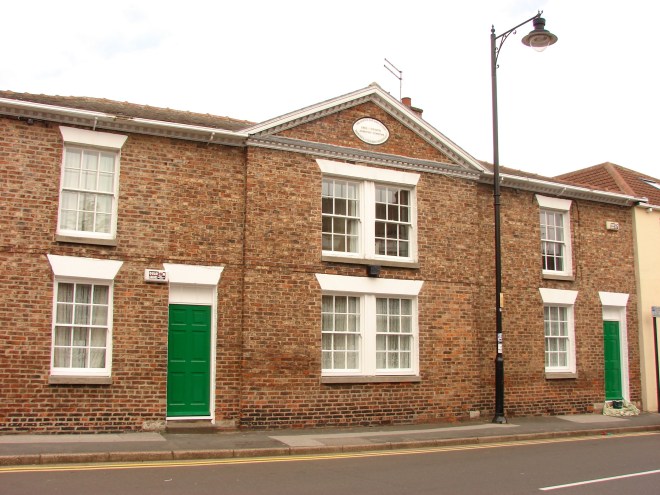
On 22nd September 1716, Leonard Chamberlain, draper, died at Hesslewood House, Hessle, and left property and estates in Sutton, Stoneferry, Selby, Dunswell and Hessle and his charitable bequests continue to this day. A Presbyterian, he supported those who had been discriminated against on religious grounds, gave money for educating the poor ‘of whatever persuasion or denomination soever’.  Commemorated in Chamberlain Road and Chamberlain Street, Sutton. photo shows one of the Sutton properties

On 22nd September 1761, to mark the coronation of King George III and Queen Charlotte, Col Duncombe’s Battalion of militia drilled in Beverley Market Place, and fired volleys, while the Corporation held a dinner for the officers, the bells rang, and in the evening there were illuminations.

On 22nd September 1778 was the official opening of The Dock, Hull. (It became known as Queen’s Dock after Victoria visited the city in 1854). The first ship in was the whaler Manchester, decorated all over with flags of the nations, followed by the Favourite, the largest ship in the port at 1,000 tons (burthen). 20,000 spectators were entertained by cannon fire and a musket salute from the garrison, and the great and the good were fed and sumptuously entertained.

On 22nd September 1856, Count de Werdinsky died in Hull aged 53, in abject poverty, after variously representing himself as a Polish count, inventor and doctor. He was a bankrupt, a fraudster, and had several counts of assault and indecent assault against women. His memorial is in the Western Cemetery

On 22nd September 1914, the crews of HMS Aboukir, Cressy and Hogue, 3 Navy cruisers, were sunk by a German u-boat, with the loss of 1,450 lives. This not only led to a public outcry, but also the need to provide for a large number of orphaned children. Some of the children were admitted by Hull’s Sailors’ Children’s Society and put up in its holiday home in Hornsea, as well as in the Newland Homes. By 1915, 108 children of seamen lost in action were admitted, from across the country.

leonard chamberlain sutton.JPG