August 6th

On 6th August 1778, the question of who owned Spurn Point was resolved in favour of the William Constable of Burton Constable; the legal dispute began in 1609.

On 6th August 1785, John Beck of Lelley was hanged at York Castle for setting fire to a house and corn mill belonging to William Jackson of Danthorpe, with Robert Crosby and John Edwards, also of Lelley; Edwards and Crosby escaped.

On 6th August 1859, John Riley, 36, of Hull, was hanged at York Castle for the murder of his wife, Alice.

On 6th August 1888, former Trinity House School pupil George Smith, age 15, drowned after a collision between the Barque Cambrian and a French Barque during a great storm in Valparaiso harbour.

On the same day, a Bank Holiday Monday, a popular trip out from Hull Corporation Pier was to Paull by boat to watch the Army’s Submarine Miners in training and holding boat races and athletic competitions. Several boats left the Pier during the day.
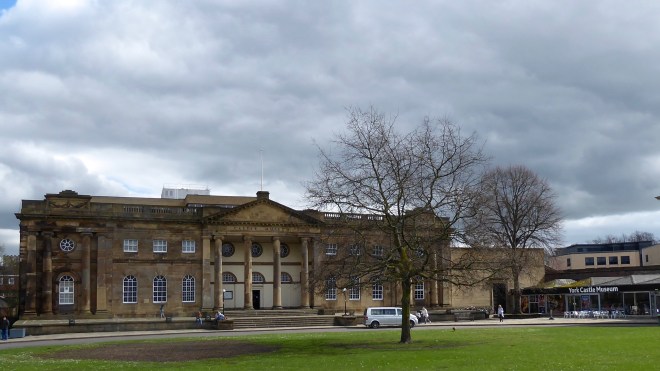
York Castle


August 5th

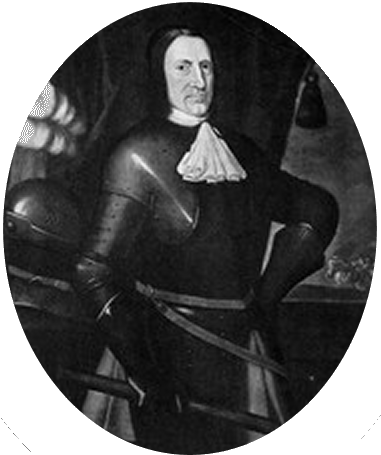
On 5th August 1661, Marmaduke Langdale, 1stBaron Langdale of Holme, died, aged 63, at Holme on Spalding Moor. High Sheriff of Yorkshire 1639. Joined the Royalist side in the Civil War, and had a distinguished military career, being imprisoned and escaping twice. He was ennobled by Charles II in exile and returned from exile at the Restoration, becoming Lieutenant of the West Riding.

On 5th August 1664, Peter Rawson of Hull was indicted as a common disturber of the peace.

On 5th August 1918, the last Zeppelin raid on Hull took place.  Visibility was good, and it was driven away by searchlights. No casualties.Marmaduke_Langdale2

August 4th

On 4th August 1511, John Hessey, husbandman of Belby, nr Howden, claimed sanctuary at the church of St John, Beverley, for the murder of William Smyth of Didyngham (anyone know where this is?)

On 4th August 1652, Keyingham manor court fined 18 villagers for allowing their geese and pigs into the fields outside the stipulated times.

On 4th August 1795, Hull residents rioted against inflationary food prices and shortages. Much corn was being taken by the army, (Napoleonic Wars) in a year of poor weather. A few windows broken.

On 4th August 1834, John Venn, was born in Drypool, son of the vicar. Left Hull at age 8. Fellow of the Royal Society, famous mathematician, who introduced the Venn diagram. Commemorated in Hull University by the Venn Building. (d 4.4.1923) and by Drypool Bridge.

On 4th August 1851, G. Hought of Hutton Cranswick was killed by lightning, as he sheltered under a tree during a thunderstorm. He left a wife and 2 children.

On 4th August 1884, all 11 Walgate brothers of Aldbrough formed one cricket team in a match held at Rise Hall; the Walgates won the match by 3 wickets.

On 4th August 1969, HM Queen Elizabeth opened Queen Elizabeth Dock, the last major dock to be opened in Hull, accompanied by HRH Duke of Edinburgh and Princess Anne.


Drypool Bridge

August 3rd

On 3rd August 1349, John de Preston was elected Prior of North Ferriby on the death of John de Beverley, himself elected Prior just 10 days earlier on 24thJuly, when he succeeded the previous Prior Walter de Hessell on his death. This outbreak of the Black Death killed 35 out of 95 parish priests in East Yorkshire, and presumably a similar proportion of the general population.

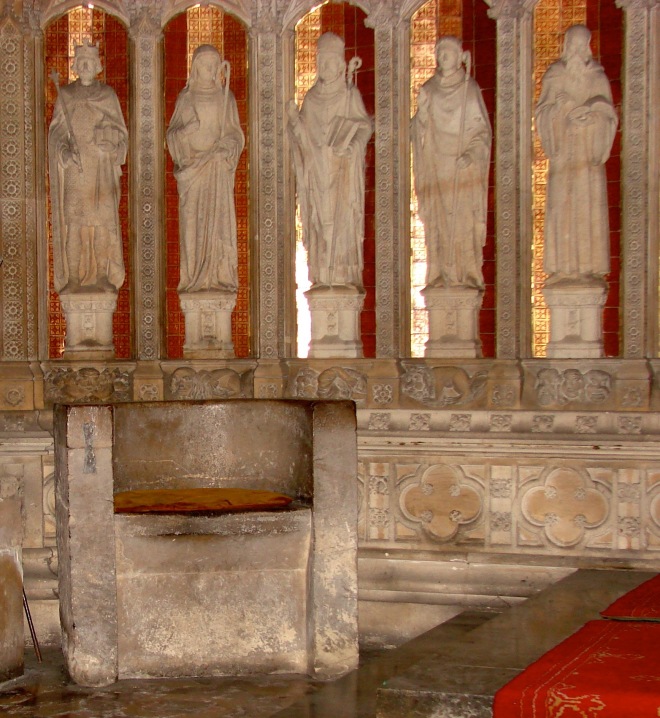
On 3rd August 1523, Thomas Senexer, yeoman, of Holme on Spalding Moor, claimed sanctuary at the church of St John, Beverley, for debt. photo shows the Frith Stool (sanctuary chair)

On 3rd August 1732, Robert Cook was killed when he fell from a wagon at one of the chalk pits in Hutton.

On 3rd August 1798, Press Gang seamen John Sykes and John Burnock or Burnick were killed when attempting to press the crew of the returning whaler Blenheim (& see 2.8). The fight was watched by crowds on the dockside. Capt Mitchinson was charged with murder (& see 31.3) The navy men were buried in Drypool Cemetery.

On 3rd August 1878, for 1d working people could attend a lecture on ‘The Yorkshire Wolds in Prehistory’ as part of Hull Literary and Philosophical Society’s new series of lectures to the working classes in the Exchange Building, aimed at keeping working people occupied during the new Saturday half holiday.

On 3rd August 1942, Mrs Frances Snowden, Lieut Stanley Lawrence and Charles Cross were killed when 4 bombs were dropped on Flemingate, Beverley, damaging Hodgson’s Tannery and destroying a house, a medical centre and a warden’s post. 15 people were injured, some of them machine-gunned by the German bomber.

minster - frith stool.JPG

August 1st

On 1st August 1506, William Ryplay, labourer, of Leconfield, claimed sanctuary at the church of St John, Beverley, for debt.

On 1st August 1639, Robert Skelton, 32, of Hull, was hanged at York Castle for forging a will belonging to Thomas Bell of Hull.

On 1st August 1648, Hull Recorder Francis Thorpe wrote to the Mayor concerning the shipment of pistols to the town, and about the case of Bacchus, a delinquent (i.e. a supporter of the Royalist cause in the Civil War).

On 1st August 1670, Mrs Mary Barnard of Barmston had been ordered to do work to the drain called Gallow Clow (on Myton Carr, near the road to Anlaby) on land which she owned, and had failed to carry it out; a jury under the Commissioner of Sewers gave notice of their intention to view the drain or creek.

On 1st August 1834, Richard Bethell MP laid the foundation stone for William Wilberforce’s statue on Monument Bridge, Hull, on the same day as the Slavery Abolition Act came into force.

On 1st August 1873, the Fisk Jubilee Singers arrived in Hull and visited the Wilberforce monument on the anniversary of the Abolition of Slavery Act. They performed several times, and were so popular they returned to Hull twice more before returning to the US August 1874. They were on a European tour, including singing for Queen Victoria, to raise money for the Fisk University for freed slaves. Several of the singers were born slaves.


Wilberforce memorial plinth


July 30th

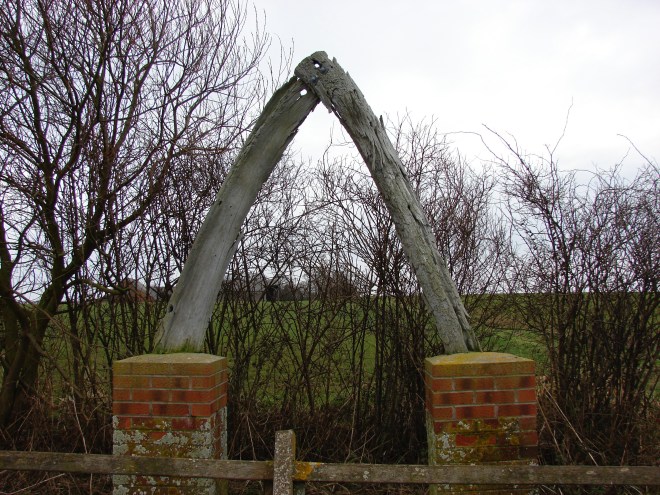
whalebone arch Pat.JPG

On 30th July  1526, Preston butcher John Erdy claimed sanctuary at the church of St John, Beverley, for felony and debt.

On 30th July 1643, the parish clerk of St Mary’s, Beverley, reported in the parish register that they buried 13 men killed on the King’s side in the Civil War.

On 30th July 1782, the crew of Hull whaler Benjamin landed 135 butts of blubber and over 2 tons of whalebone, the product of 3 whales caught in the Davis Strait. (Rev George Lambert had shares in the ship). photo shows whalebone arch outside Patrington

On 30th July 1861, John Ellerthorpe, aged 55, rescued John Eaby, who had fallen into the Humber Dock Basin, Hull. This was Ellerthorpe’s 39thand last rescue. Named ‘The Hero of the Humber’, he was awarded with the Royal Humane Society’s Silver Medal.

On 30th July 1891, Mary Jane Langley, 18 years, of Westfield Farm, Long Lane (now Neat Marsh Road) Preston, was last seen alive when she walked to Marfleet and took the train to Hull to have her photo taken. Her body was found in a ditch near her home. Her throat had been cut. John Rennard was arrested and tried, but not convicted.


July 29th

On 29th July 1527, John Flower, labourer of Burstwick, claimed sanctuary at the church of St John, Beverley, for the death of Roland Stephenson.

On 29th July 1678, Andrew Marvell, MP for Hull, had what turned out to be his last meeting with Hull Corporation. He returned to London shortly after, and died suddenly, aged 58, on 16thAugust, some supposed of poison.

On 29th July 1828, Hull banker Joseph Robinson Pease visited his land in Winestead to discover ‘hundreds of acres nearly a foot under water’ in the wettest July on record, a disaster for crops of hay, corn and potatoes. He said most local landowners had reduced rents, farmers ‘having literally nothing to pay with’.


Andrew Marvell

July 27th

On 27th July 1643, Hull widow Ann Stevenson, whose husband died at Beverley in Parliament’s service as a cannoneer, petitioned the town of Hull to pay her the 35 shillings wages due to him; the committee agreed, in view of her poverty, to let her have 20s.

On 27th July 1782, Rev George Lambert of Fish Street, Hull reported in his diary on a violent thunderstorm in the evening, and lightning killed a cow very near their house, and scorched the hedges.

On 27th July 1796, jockey George Heron was thrown by his horse at Hull racecourse, Newington, and killed.

On 27th July 1855, James McLoughlin, aged 13, asked Hull Magistrates Court for the protection of the court on account of his mother having beaten him severely with a stick and a fire poker because he would not go out stealing for her.

On 27th July 1996, HMS Rose visited Hull’s Albert Dock; this was an exact replica of a frigate built in Hull by the Blaydes yard in 1757 and sunk in Savannah, Georgia in 1779. The only difference from the original ship was that the sails were made from recycled plastic bottles.

HMS Rose replica

July 26th

On 26th July 1826, the Aire & Calder Navigation Company officially opened the new canal at Goole, locks for ships and barges, dock, and canal basin linking Goole to the west. A new town was built around the small hamlet of Goole (population in 1822: 450).

On 26th July 1845, Capt Dannatt and crew of Hull whaler Prince of Wales came across Sir John Franklin and his expedition to find the North West Passage, in Lancaster Sound, in the Arctic, and invited him and his officers on board. This was the last known sighting of the expedition.

On 26th July 1850, Hull Advertiser printed a report of the deaths by drowning during a riot of 4 Irish navvies (Patrick Langthon, John Dowling, Barney M’Jay and Thomas Twomey) working on the embankment of Sunk Island.

On 26th July 1986, 8 rail passengers and 1 person travelling in a van died when the van was struck by the 9.33 Bridlington to Hull train at Lockington level crossing, and the train was derailed. 51 people were injured, 10 of them seriously. There is a memorial to those who died in Driffield Memorial Garden.


lockington crash memorial

July 25th

On 25th July each year a traditional football match was held on St James Day, between Sutton and Wawne, starting at Foredyke bridge, boundary between the 2 villages, each village trying to get the ball home. Not known dates played or when abandoned.

On 25th July 1328, King Edward III is said to have closed down the Warter annual fair on St James Feast Day because of the number of murders that had been committed at the fair. There is a record that in 1300 certain manslaughters had been committed in the village by the canons’ men from Warter Priory. In 1328, King Edward III issued an order that it was an offence to go armed into any fair or market. Probably not aimed specifically at Warter.

On 25th July 1768, Joseph Hall was hanged at York Castle for coining at Hull. photo shows  medieval coins being made.

On 25th July 1873, William Dunwell, former Hull Trinity House School pupil, lost his life at sea by jumping overboard to save the life of a shipmate.

On 25th July 1911, Father Ottway, superintendant at the Yorkshire Catholic Reformatory at Market Weighton (actually in Holme on Spalding Moor) reported on rebellion from the boys, including threats to knife masters, which resulted in the attendance of 3 police officers and the thrashing of 6 or 7 boys.

coiner, Hanse Day