November 13th

On 13th November 1002, English King Ethelred ordered the massacre of all the Danish in England on St Brice’s Day. East Yorkshire being in the Danelaw, where Danish and English were well integrated, the order appears to have been ignored here.

On 13th November 1684, John Largeman of Patrington married for the 3rdtime; he married his second wife Elizabeth Dunn on 31stJuly, and she died in September; his first wife had died in April of the same year. It is not known what killed his 3 wives, although plague is recorded in parts of Yorkshire in that year.

On 13th November 1916, was a private in the Hull Sportsmen’s Pals Battalion, East Yorkshire Regiment, at the Battle of the Ancre, WW1. His heroism in seizing German positions alone was rewarded with a Victoria Cross (for valour). (b 28.6.1897 died 21.2.1941) photo shows members of the 13th Battalion (Hull Sportsmen)
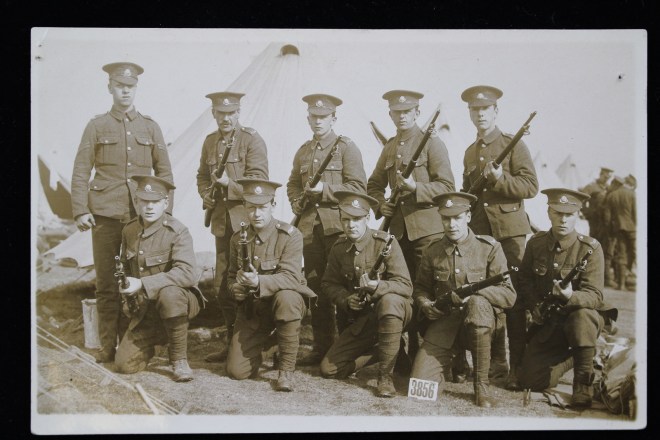
Hull PALS 13Btn sportsmen

November 10th

On 10th November 1274, Aveline de Forz, aged 10, was married to Edmund Crouchback, 2nd son of Henry III.  Countess of Aumale and Lord of Holderness in her own right, and Countess of Lancaster by marriage.  She died childless at age 15 and is buried in Westminster Abbey. The Lordship of Holderness passed to the Crown. Born Burstwick 20.1.1259

On 10th November 1293, Countess Isabella de Forz, widow of William de Forz III died, having outlived her husband and all her children, including Aveline above. A legend relates that she came across a poor man carrying a basket containing what he said were puppies, but which turned out to be seven of his children that he was going to drown because he could not afford to keep them. After severely upbraiding him for his lack of morality, Isabella adopted the children and ensured that they were looked after and well educated until their adulthood when she found employment for all of them.

On 10th November 1518, Sir Marmaduke Constable of Flamborough (known as Little Sir Marmaduke). Died after swallowing a frog (some say toad) while drinking a glass of water. Knighted for military service including Flodden a letter of thanks from Henry VIII is displayed, in Wassand Hall. photo shows his tomb in Flambrough church. & see 9.9

On 10th November 1609, Sir George Wharton, who was raised at Londesborough, died in a duel in Islington with his good friend Sir James Stuart, the King’s godson, who also died. The event was commemorated by Sir Walter Scott in his ‘Minstrelsy of the Scottish borders’. (b1583)

On 10th November 1678, Capt Towes (or Towers or Towle) of the Hull ship Shield landed settlers at Burlington, New Jersey. Many were Quakers, who settled at Burlington, Salem and other places. One of the passengers was Mr Barnes, a merchant from Hull.

Little Sir Maramaduke Constable's tomb

November 9th

On 9th November 1309, King Edward II visited his Royal park in Burstwick, his main residence in the north.  Piers Gaveston was Lord of Holderness.

On 9th November 1487, John de la Pole senior, Duke of Suffolk, was stripped of most of his property and estates as a result of his son’s rebellion (the Earl of Lincoln) in support of Lambert Simnel.

On 9th November 1488, John Fernell, yeoman, of Asselby, killed Thomas Rodley with a staff, and then made his way to Beverley, where on 17.11 he claimed the sanctuary of the church of St John, and admitted the homicide.

On 9th November 1906, Capt Stensen and 5 crew of a Norwegian schooner carrying timber stranded at Withernsea in a gale. There were no casualties.

On 9th November 1916, Private Herbert Neal, 24, former Reckitt’s employee in the lead mill was killed in action with the East Yorkshire Regiment and is buried in Bazentin-le-petit, Somme, France. 2 of his brothers also served in the war, and only 1 survived to return home to Church St, Hull.

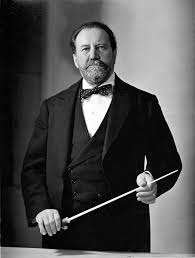
On 9th November 1923, Sir Henry Wood, originator of the Proms, made his first appearance as conductor of the Hull Philharmonic Orchestra, originally for one concert only. He stayed for 15 years, travelling from London to work with amateur musicians for a considerably reduced fee. An earlier contact with Hull was 1906 when Ethel Leginska performed for him in London.

Sir Henry Wood

November 8th


Gunpowder Plot memorial
Welwick

On 8th November 1481, Thomas Nevyll, yeoman of Skirlaugh, sought sanctuary in Durham Cathedral for killing John Hewlins of Rise on 1stNovember.

On 8th November 1500, William Thorpp of Welwick, John Dorand and a man named Nicholas were in Winestead when their dog entered the park; they asked the parkers to return the dog, but they refused, and were abusive. Nicholas shot one of the parkers named March, in the neck with an arrow; he died about 10 days later. Thorpp travelled to Durham, where on 10.12 he claimed sanctuary, fearing he would be indicted as an accessory to murder.

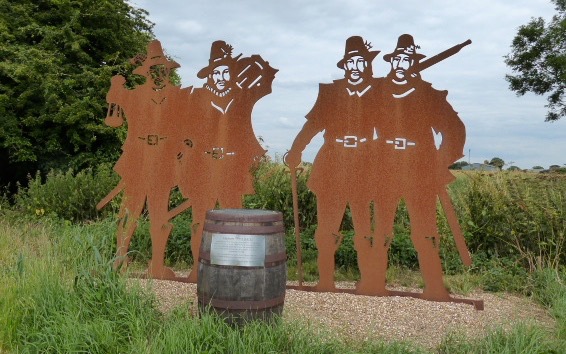
On 8th November 1605, Jack and Kit Wright of Welwick, and brother-in-law Thomas Percy were fatally wounded at Holbeche House, Staffordshire, by the posse of 200 men led by the Sheriff of Warwick, Sir Richard Walsh. 9 of the 13 Gunpowder Plotters were at Holbeche, and they all died there; the other 4 were all executed.

On 8th November 1637, the Mayor of Hull petitioned the Privy Council that 1) the town was so poor as a result of the recent plague that it be let off the requirement to provide 2 warships for the Navy; 2) that the county’s funds help to support Hull’s poor and; 3) that Hull’s merchants be allowed to sell their goods elsewhere in the country again, now that the town was free of the plague. It was estimated that 2,000 people died in Hull, and perhaps as many left town.

November 7th

Gunpowder Plot memorial
Welwick

On 7th November 1605, Sir John Ferne, secretary to the Council in the North, sent confidential news to the Hull Mayor of the Gunpowder Plot, and orders to arrest Thomas Percy of Leconfield. An arrest warrant was issued the following day to the Bailiff, Chief Constable and constables of the county of Hull. However, Percy and the other conspirators were heading for Staffordshire.

On 7th November 1646, Sir Francis Cobbe of Ottringham was fined £72 as a Lieutenant-Colonel in the Royalist army (a delinquent) in order to recover his goods which had been sequestered by Parliament. He had been a member of King Charles’ Bodyguard.

On 7th November 1887, the crew of sailing ship Earl of Beaconsfield were rescued after the ship ran aground on sands off Aldbrough; the figurehead, representing Benjamin Disraeli, the Earl of Beaconsfield, can be seen in Hull Maritime Museum.

November 5th

On 5th November  1605, Sir Thomas Knyvet of Escrick, as Gentleman of the Bedchamber to King James I, he went to the House of Lords cellar to investigate a rumour and discovered Guy Fawkes and some gunpowder …

On 5th November 1740, Elizabeth Johnson’s charity distributed money to the 4 poorest families in Cherry Burton every year on this date.  Daughter of Dr Hodgson Johnson, she left £40 to be invested, adding to the 40s left by her father 16 years before.

On 5th November 1804, 7 of the 8 crew of the Cecilia Margaretha of the Duchy of Holstein died when the ship was driven ashore at Mappleton and wrecked on a trip from Liepaja, Russia, to Lisbon. photo shows Mappleton today

On 5th November 1854, James Elliott, private in the Coldstream Guards, died aged 22 at the Battle of Inkerman, Crimea; his memorial in Hedon church was ‘erected … to commemorate the event and to show that Hedon contributed its unit in defence of the liberties of Europe’.

mappleton.JPG

November 4th

On 4th November 1217, Eustace de Fauconberg of Rise was appointed Lord High Treasurer of England, and held the post until he died; in 1221 he was elected Bishop of London (d October 1228)

On 4th November 1605, Robin Catesby with Welwick’s Jack Wright left London to prepare for an armed uprising after Parliament was destroyed, which they expected to be carried out the next day. photo shows statue outside Welwick

Gunpowder Plot memorial


November 2nd

On 2nd November 1304, Lord Walter de Fauconberg, first Baron Fauconberg, of Rise, died aged about 80 at Rise (or Withernwick) and was buried at Nunkeeling. He had a long military career, and supported Simon de Montfort in his rebellion against King Henry III, for which he lost his lands for several years to Robert Bruce, but redeemed them in 1268.  Married Agnes de Brus.

On 2nd November 1595, John Thorgey left 5s per year for ever, to be distributed by Patrington church wardens to the poor. photo shows Patrington church

On 2nd November 1988, one of the worst industrial fires in Hull killed employee Jennifer Powley, 17, and left Janine Gilfillan with serious burns when a fire led to explosions and evacuation of nearby houses.

Pat church

October 26th

On 26th October 1515, Hull shoemaker William Baker claimed sanctuary at the church of St John, Beverley, for a felony (no details given)

On 26th October 1587, the wife of Dr Vavasour of Hesslewood & her 2 daughters died after being taken prisoner, (presumably in Hull Castle) with her 2 daughters, in 1581. She was questioned in 1576 about her failing to attend church. In 1578 her husband’s goods were seized to pay her fines.

On 26th October 1662, 7 poor residents of North Ferriby parish received money from the Poor Rate of between 1s and 2s every 4 weeks (presumably dependent on the number of children they had); of the 7, three were widows, one a single woman, and three men. Those 83 ratepayers who could afford to contribute paid between 2d and 15s a year.

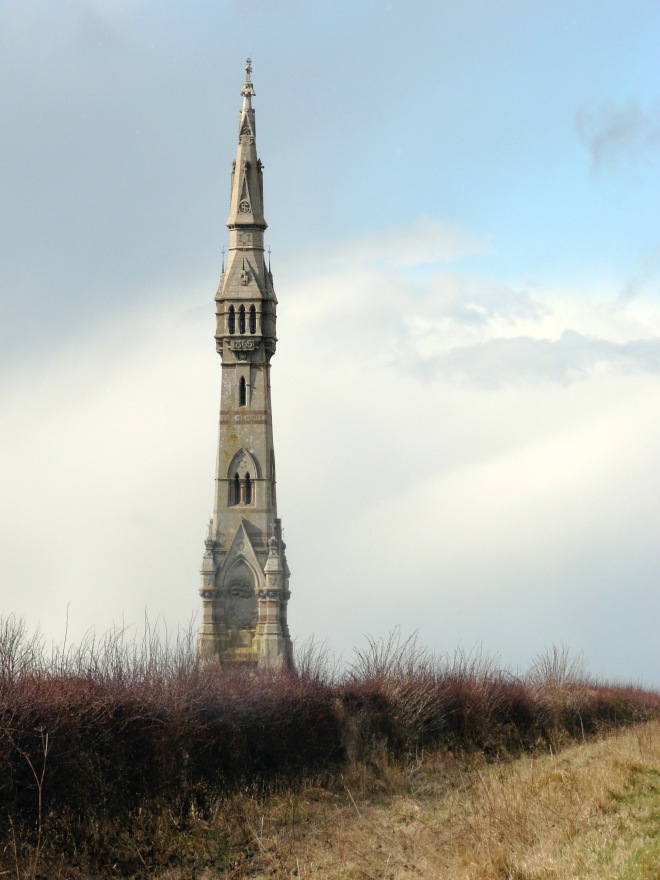
On 26th October 1866, Lord Hotham officially opened the Sykes Monument, as a memorial to Sir Tatton Sykes (d 1863), the money being raised by subscription by local people. The monument is a local landmark, on Garton Hill, near Sledmere, and can be seen from many miles away.

On 26th October 1950, Garden Village (Hull) Ltd was dissolved after the death of Sir Philip Reckitt; rents had been held at 1914 levels.


Sledmere


October 20th

On 20th October 1536, Sir Robert Constable of Flamborough took command of Hull after a siege lasting 5 days, by the East Riding rebels of the Pilgrimage of Grace. The only condition the inhabitants made was that no-one would be forced to take the pilgrims’ oath.

On 20th October 1580, Rowlande Burton was called before the Hull mayor and aldermen to answer a charge of dealing in hops without paying a customs charge. They agreed that he would pay the charges due.

On 20th October 1586, Luke Fox (or Foxe) was born in Hull. He explored much of the Hudson Bay in search of the Northwest Passage. Later became a brother of Hull Trinity House and in 1635 published ‘North-west Fox, or Fox from the Northwest Passage’. Died approx 15.7.1635.

On 20th October 1749, a ’sudden and dreadful’ fire broke out at night when the Stamford Bridge Mills machinery overheated.

On 20th October 1890, Withernsea pier was damaged for a third time since its opening 12 years before, when an unmanned Grimsby fishing smack, the Genesta, smashed into it, and destroyed half of the remaining pier (see 19.10). Another boat, the Henry Parr, smashed into it in 1893, leaving only 50 feet, which remnant was removed in 1903 during work on the sea wall.

On 20th October 1958, the Malton to Driffield Railway closed to freight traffic, passenger traffic having ceased in 1950.


W'sea pier