September 14th

On 14th September 1484, Anne de la Pole, great granddaughter of Geoffrey Chaucer, was betrothed aged 8 to the Duke of Rothesay, future King James IV of Scotland, as part of peace negotiations between the 2 countries. Her brother John, 1stEarl of Lincoln, was then Heir Presumptive to the English throne. Anne never became Queen, however, as on the death of her uncle Richard III, she was sent to a convent and became a nun at the Abbey of Syon.

On 14th September 1581, the Hull Mayor and aldermen agreed to pay 12d per week towards the keep in God’s House (i.e. the Charterhouse) of keelman Christofer Harrison, on account of his being blind and aged.

On 14th September 1643, Sir Thomas Fairfax, Hull governor, opened the sluice gates to flood all areas from Derringham Dyke to Dunswell, during the 2nd siege of Hull, to keep the royalist guns away from the town.

On 14th September 1828, Thomas Thompson MP died aged 72. A Methodist and member of the Clapham Sect, he provided land to poor families to keep them out of the workhouse. Wrote History of Church & Priory of Swine. Father of Thomas Perronet Thompson. (b 5.4.1754  Swine)

On 14th September 1853, Hugh Edward Strickland went to examine railway cuttings near Retford, and stepped out of the way of a goods train and was killed by a train coming from the opposite direction. Inventor of the power loom, ornithologist and geologist, Fellow of the Royal Society. (b2.3.1811 Reighton)

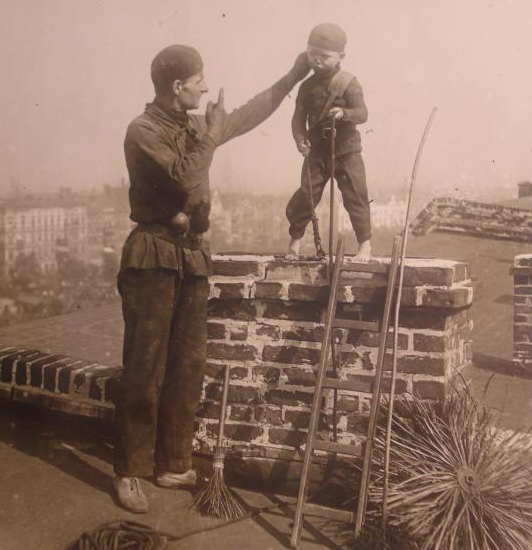
On 14th September 1861, John Kingston, chimney sweeper and soot dealer of 16 Worship St, Hull, gave his annual bill to Hull Charterhouse for £5 for sweeping chimneys, with a note that his prices would rise in the following year due to a new law forbidding sending children up chimneys to clean them.
 

childsweep2

September 11th

Howden


On 11th September 1666, Sir Philip Monckton replied to a petition from Howden residents to raise a company of musketeers to defend them, as the Great Fire of London had made them fear arson by a foreigner or Catholic; he suggested they double the watch and get the constables to watch the movements of every ‘Londoner’ at night.

On 11th 1795, Timothy Rymer, a sailor, was buried after drowning in the Humber, the body washing up at Blacktoft.


September 2nd

On 2nd September 1643, the Royalists under the Earl of Newcastle began the second siege of Hull. The Governor, Lord Ferdinand Fairfax, sold silver to the value of £400 4s to Hull Trinity House, in order to pay his soldiers. Trinity House sold the silver the following year at a slight profit.

On 2nd September 1861, the lease on Fishwicks’ Mill, butt Lane, Beverley, had expired, and the mill was demolished. The Council tried to repossess the land, but local people considered it to be common land, and 25-30 rioters destroyed the house and burnt it to the ground.

On 2nd September 1871, William (Billy) Ringrose was born in Ganton, where he became a carpenter, but was coached by a cricket professional employed by the Legard family at the Hall, and became a renowned professional cricketer, playing for 57 games for Yorkshire.

On 2nd September 1922, Hull Kingston Rovers played its first game at its new ground, Craven Park, losing 3-0 to Wakefield. The new grounds also had 14 tennis courts, and meeting rooms. The official opening did not take place until November. This was the club’s 4thground, the first 2 being in West Hull.

On 2nd September 1950, MV Dundalk Bay arrived in Hull from Mombasa, bringing 1,014 people displaced by WW2. After processing, they were dispersed to various camps throughout the UK. Many Poles, Latvians, Lithuanians and others unable to return to their homes came to find work and settle in England; some emigrated again to Canada.

On 2nd September 1967, the Flamborough lifeboat Friendly Forester rescued 6 people cut off by the tide.

Old Craven Park EAW207783

August 23rd

On 23rd August 1326, Richard Furnewes, barber to the Archbishop of York, was appointed to keep the park at Bishop Burton and the deer, at a salary of 2d per day.

On 23rd August 1601, Lord Burley, Queen’s Lieutenant and President of the Council of the North, visited Hull. His visit was marked with a firework display in the Market Place. Tragically, the cannon misfired, and at least 4 died, and several others were injured.

On 23rd August 1619, a woman bonesetter from South Dalton attended Londesborough House to treat Earl Francis’s shoulder, dislocated in a fall while out hawking. She was paid £1 5s for the treatment, which included 2 visits. (A physician might charge £2 a visit).

On 23rd August 1653, Robert Acklam was fined £5 by Hull Trinity House for taking the ship Blessing from Hull to London and from there crossing to Holland without the correct licence.

On 23rd August 1830, 60 farm workers rioted in Burton Pidsea, armed with clubs, scythes and stones, and visited every farmhouse where there were known to be Irish labourers, aiming to drive them out of the neighbourhood. 6 of them attacked Irish men working in a field belonging to Mr Baxter. The Hull Packet reported on 10.9. 1830 that the 6 ringleaders had been arrested and would be tried at the next Quarter Sessions in Beverley.

On 23rd August 1886, former Hull Trinity House pupil John Lester, aged 20, was killed by a fall from aloft on the Schooner Welsh Belle travelling from Hull to Newfoundland.

On 23rd August 1934, the Yorkshire Post reported on a cliff collapse along a 100-yard stretch at Aldbrough, which resulted in thousands of tons of material falling onto the beach, destroying the boat slipway. No-one was hurt. photo shows more recent erosion at Ulrome.


erosion Ulrome

August 18th

On 18th August 1522, Thomas Webster, a weaver from Lowthorpe, claimed sanctuary in St John’s Church, Beverley, for the death of Thomas Ayke of Littlebeck. On the same day, a 2nd man entered the sanctuary – John Thorp, a husbandman of Eastrington, for a felony.

On 18th August 1552, Church commissioners seized items of value from St Giles Church, Marfleet, no longer needed in plainer protestant services, including a silver chalice, brass candlesticks, bells and a brass holy water vat. Witnesses from the parish were Marmaduke Loickwos, Herry Birkett, Richard Walker, and Thomas Almonde.

On 18th August 1782, Rev George Lambert reported seeing a meteor or fireball pass over the town in the morning, which alarmed many people.

On 18th August 1808, Margaret Kissling, nee Moxon, was born in Sculcoates.  She married a Lutheran missionary, worked in Sierra Leone and settled in New Zealand as teacher and nurse. (d 20.9.1891)

On 18th August 1832, Charles Winn, Tory candidate, issued a poster to refute allegations that he supported slavery, during his General Election campaign.

On 18th August 1941, an air raid destroyed St Margaret’s Church, Hilston, the 3rdchurch on this site, its predecessor having been replaced in 1862 by Sir Tatton Sykes. The only remnant of the first church is its Norman doorway. The current church was consecrated in 1957, built by local architect Francis Johnson, and was listed in 2017.


hilston church & tower.JPG


August 17th

On 17th August 1377, King Richard II issued a charter allowing the town of Hull to ensure the town walls and moats were kept in good repair, and to compel every householder to contribute to the cost of repair.

On 17th August 1427, Thomas Brygman, vicar of Foston, asked the Pope to relax the penances paid by those who did not visit church on holy days or give alms, because the church buildings were ruinous, and lacking a bell tower to call parishioners to prayer, and because the parishioners were too poor to repair the church. Their poverty was caused by ‘divers burdens’ imposed by King Henry to fight wars, and also because of the high mortality level in the area.

On 17th August 1863, Dr T.T. Pierson of Bridlington Quay apologised for signing a certificate at The Retreat asylum, Kilham, to declare a woman insane (whom he had known since they were at school) at the request of her husband; she turned out to be suffering only from the effects of alcohol.

On 17th August 1905, Hull merchant Frederick Harker was fined £2 plus costs for speeding at Harpham – travelling at 28 miles per hour in a 20mph zone. It was reported that the method used, of 3 police officers timing him over a measured distance, had not been used before.

On 17th August 1920, Sir Luke White, MP, died at Driffield, aged 75. Liberal MP for Buckrose since 1900, he died a pauper and under investigation for bankruptcy, having covered his political expenses by using money entrusted to him by the clients of his business as a solicitor.

On 17th August 1954, workers at King George Dock, Hull, began a strike against unsafe working conditions called the ‘Filling Strike’; within hours, 4,000 dockers were on strike and 60 ships lay idle. The strike ended after 11 days.


1954 dock strike

August 15th

On 15th August 1690, Robert Lumley, ship’s master, was fined 10s by Hull Trinity House for sailing out of the port without supplying the House with a list of men and their wages.

On 15th August 1764, Abraham Clayton, 35, of Howden, was hanged at York Castle for murdering his wife Elizabeth; his body was given to surgeons ‘to be anatomized’.

On 15th August 1808, Robert Pattinson,  grazier and agriculturist, died aged 82, and left 4 acres of land in Skeffling, the rent to be used to educate poor children in Easington.

On 15th August 1924, Harry Blanshard Wood, VC, died aged 42 in Devon, after a traffic accident. Born in Newton-on-Derwent, he was a corporal in the 2ndBattalion, Scots Guards when on 13.10.1918 in St Python, France, he took command when his platoon sergeant was killed, and showed gallant conduct and initiative, for which he was awarded the Victoria Cross.

On the same day, BBC radio station 6KH began broadcasting local items from bishop Lane, Hull, including sport, talks, children’s shows, and music featuring local musicians, e.g. Powolny’s Restaurant Bijou Orchestra. In 1928, the station closed, and there was no local station until Radio Humberside opened in 1971.

On 15th August 1940, 13 military personnel and 1 civilian died, and 16 injured in this daytime air raid on Driffield airfield and Southburn, including Aircraftwoman M. Hudson, the first WRAF fatality.

August 8th

On 8th August 1576, Sarah Houslay, aged 27, from Shipton(thorpe) was hanged with Edward de Satre at York Tyburn, outside Micklegate Bar, and their bodies buried near the River Foss. They were convicted of passing forged promissory notes at an inn in Leeds.

On 8th August 1586, John  Finglow or Fingley, aged 32, was executed by hanging, drawing and quartering at York for being a Catholic priest and reconciling English subjects to the Catholic church. Studied at Caius College, Cambridge, and was ordained at Reims in 1581. He was beatified in 1987 as a Catholic martyr. (baptised Barmby in the Marsh 1553)

On 8th August 1871,  William Colbeck was born in Myton Place, Hull. He took part in the first expedition to overwinter in the Antarctic, 1898-1900. Awarded Royal Geographic Society’s Back Award. Took part in the expedition to locate Captain Scott’s Discovery.  Cape Colbeck in the Ross Sea is named for him, and he is commemorated by a cream plaque in Hull. (Died 1930.)

On 8th August 1991, former Hull University student John McCarthy was released after 5 years as a hostage in  Beirut.


William_Colbeck_-_Southern_Cross_Expedition_1899.

August 1st

On 1st August 1506, William Ryplay, labourer, of Leconfield, claimed sanctuary at the church of St John, Beverley, for debt.

On 1st August 1639, Robert Skelton, 32, of Hull, was hanged at York Castle for forging a will belonging to Thomas Bell of Hull.

On 1st August 1648, Hull Recorder Francis Thorpe wrote to the Mayor concerning the shipment of pistols to the town, and about the case of Bacchus, a delinquent (i.e. a supporter of the Royalist cause in the Civil War).

On 1st August 1670, Mrs Mary Barnard of Barmston had been ordered to do work to the drain called Gallow Clow (on Myton Carr, near the road to Anlaby) on land which she owned, and had failed to carry it out; a jury under the Commissioner of Sewers gave notice of their intention to view the drain or creek.

On 1st August 1834, Richard Bethell MP laid the foundation stone for William Wilberforce’s statue on Monument Bridge, Hull, on the same day as the Slavery Abolition Act came into force.

On 1st August 1873, the Fisk Jubilee Singers arrived in Hull and visited the Wilberforce monument on the anniversary of the Abolition of Slavery Act. They performed several times, and were so popular they returned to Hull twice more before returning to the US August 1874. They were on a European tour, including singing for Queen Victoria, to raise money for the Fisk University for freed slaves. Several of the singers were born slaves.


Wilberforce memorial plinth


July 26th

On 26th July 1826, the Aire & Calder Navigation Company officially opened the new canal at Goole, locks for ships and barges, dock, and canal basin linking Goole to the west. A new town was built around the small hamlet of Goole (population in 1822: 450).

On 26th July 1845, Capt Dannatt and crew of Hull whaler Prince of Wales came across Sir John Franklin and his expedition to find the North West Passage, in Lancaster Sound, in the Arctic, and invited him and his officers on board. This was the last known sighting of the expedition.

On 26th July 1850, Hull Advertiser printed a report of the deaths by drowning during a riot of 4 Irish navvies (Patrick Langthon, John Dowling, Barney M’Jay and Thomas Twomey) working on the embankment of Sunk Island.

On 26th July 1986, 8 rail passengers and 1 person travelling in a van died when the van was struck by the 9.33 Bridlington to Hull train at Lockington level crossing, and the train was derailed. 51 people were injured, 10 of them seriously. There is a memorial to those who died in Driffield Memorial Garden.


lockington crash memorial