Coming up this week

July 11th

On 11th July 1843, Archdeacon Wilberforce preached the last ever sermon in St Faith’s church, Leven, before it was demolished, leaving only the chancel, which was itself demolished in 1882.

On 11th July 1941, Special Constable George Brignall Marshall, aged 54, was killed in Hull by enemy action whilst on duty with East Riding of Yorkshire Constabulary during an air raid. Damage north of Paragon station and a major fire at Blundell Spence factory. 20 other people died, and 46 were seriously injured.

St Faith Leven

July 10th

On 10th July 1157, Eustace FitzJohn, Lord of Alnwick, died this day.  He acquired substantial lands in the north, and married into the ER family of de Vescy. Fought on the Scottish side in the Battle of the Standard in 1138. Founded priories in Bridlington, Watton and North Ferriby.

On 10th July 1508, John Tod of Swine claimed sanctuary at the church of St Cuthbert, Durham, for the theft of a horse and 5 marks from chaplain N. Dale, the steward of the Lord of Hastings, and also for debt. As he claimed the theft happened 10 years earlier, presumably the debt concerned him more.

On 10th July 1642, Sir John Meldrum arrived in Hull by boat with 500 Parliamentary troops, and money, to support the town being besieged in the 1st siege of Hull. A further 1,500 troops were sent later.

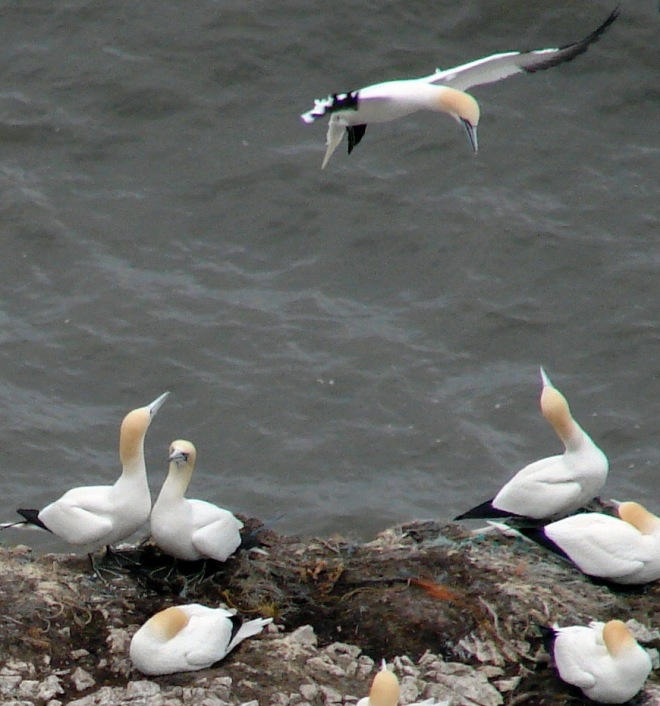
On 10th July 1869, Mr Tasker of Sheffield was found guilty at Bridlington of shooting 28 protected seabirds, and fined 2s6d for each bird killed, plus 9s costs.

On 10th July 1931, Paul Robeson, singer, actor and political activist,  performed at Bridlington Spa Royal Hall on his first trip to Yorkshire,  receiving several encores; when the Royal Hall re-opened after refurbishment in 1933, he returned to Bridlington.

gannets

July 9th

On 9th July 1905, Robert Skilling, Hull chauffeur,  caused possibly Hornsea’s first motoring offence, when under the influence of drink, he drove at 20mph from Market Place into Newbegin without sounding his horn. About 200 people who had just come out of the parish church, had to scatter.  At Leven Petty Sessions Skilling was fined £3.

On 9th July 1915, Albert Baxter, private, and former Reckitt’s employee, died in action with the East Yorkshire Regiment and is buried in RE Farm Cemetery, Heuvelland.

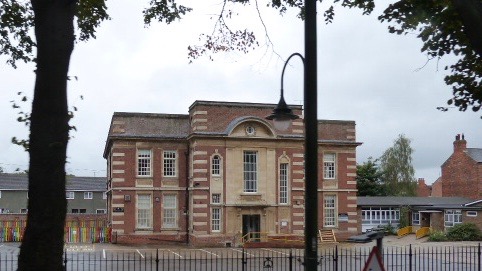
On 9th July 1952, Henry Saunderson, aged 13, the son of the skipper of the Cape Duner,  was a cadet at the Boulevard Nautical School who joined his father for a pleasure trip during the summer break, and was lost overboard. His father presented a cup in his memory at the school’s prizegiving day.


Nautical School Boulevard

July 8th

On 8th July 1497, Thomas Thompson, labourer of Stamford Bridge, claimed sanctuary at the church of St John ‘for the security of his body’. The register does not state why he was in fear for his life.

On 8th July 1642, King Charles I sent a troop of infantry and cavalry to set fire to windmills outside Hull, aiming to starve the besieged town; they were repulsed. John Shawe, Holy Trinity lecturer said this incident incensed many previously uncommitted Hull people and turned them against the Royalists. Charles also issued a proclamation from ‘our court at Beverley’, part of the continuing ‘paper war’.

On 8th July 1840, the 3rd day of a horse racing meet at the George Inn, Aldbrough, offered prizes up to £4, and included a men’s foot race for a hat valued at 10s, and a wrestling match to win a pair of gloves. In later years, the prizes for the horse race included a purse of gold, saddles and bridles.  However, the field where the sports were held may have been lost to the sea.

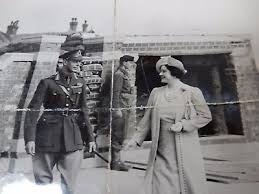
On 8th July 1940, Mrs Evelyn Cardwell of East Carlton Farm, Aldbrough, arrested and disarmed a German airman who had parachuted from a crashed bomber. She was presented on 1.8 with the British Empire Medal by King George VI at Marine Hotel, Hornsea.


royal visit Hornsea

July 7th

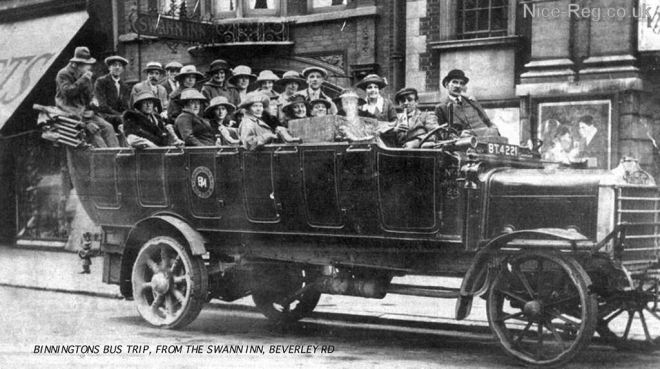
charabanc

On 7th July 1626, the Council in the North ordered Hull Corporation to fortify the town against threat from the Spanish.

On 7th July 1643, the Mayor and Aldermen of Hull  wrote to William Lenthall, Speaker of the House of Commons, to say that after suffering the tyrannical government of the town by Sir John Hotham,  (arrested the week before) they wished to have Lord Ferdinando Fairfax remain in the town as governor.

On 7th July 1788, George Wether(h)ill, butcher, of Hull, aged 80, died aged 80, killed by a bull’s leg. He is buried in Preston.

On 7th July 1928, the staff of Woolworths Ltd (Hull branch) went on their staff outing to Aldbrough by Binnington’s saloon buses. I hope someone had cut steps to the beach. (see yesterday’s item).


July 6th

On 6th July 1381, William Haldene of Beverley had his brains literally knocked out by John Erghom and others, with a pole-axe, 2 battle-axes, 6 swords, 2 forks and other weapons, before his body was thrown into the beck in Walker Lane.

On 6th July 1382, Sir Michael de la Pole leased to John de Hedersee and John of Dimlington land in Myton which included arable land, pasture and at least 30 acres of meadow, with houses, sheepfolds, 600 sheep and 160 lambs. Myton was clearly very rural then.

On 6th July 1537, the body of Sir Robert Constable of Flamborough was displayed on Beverley Gate, Hull, after he was hanged for his part in the Pilgrimage of Grace, despite having been pardoned the previous year.

On 6th July 1538, Hull agreed to give a place in the Charterhouse to the wife of a blind man named Ralph, as his carer during his lifetime, taking up a place normally reserved for a man.

On 6th July 1642, Robert & Christopher Hildyard of Winestead, Francis Cobbe of Ottringham, and 300 other Holderness people met King Charles I at Keyingham and handed him a petition against Sir John Hotham’s actions in flooding farmland and taking livestock into Hull. The King was visiting The Providence, which had landed arms from Holland. The King sympathised, but said he could do nothing except raise troops, as he had no power to control Hotham.

On 6th July 1644, the Hull Committee of Sequestrations formally adjudged alderman James Watkinson a delinquent, 2 years after he left Hull to join the Royalist army, and they ordered that his post as alderman be filled by election.

On 6th July 1901, G.E. Conrad Naewiger complained in a letter to the Hull Daily Mail of the lack of steps to Aldbrough beach, a popular destination for works outings from Hull. photo shows Aldbrough cliff.

On 6th July 1910, Arthur Geoffrey Dickens was born in Hull. Professor of History at the University of Hull, he was elected Fellow of the British Academy. Considered the leading historian of the Reformation of his time. Awarded the Order of Merit by the German Government. (died 31.7.2001)

On 6th July 1921, Tilworth Grange was opened to ‘Female mental defectives’ (people with learning disabilities), the first provision in Hull for people who previously were sent to institutions in Bristol, Chesterfield and Ormskirk. Winestead Hall was bought in 1931 for men.
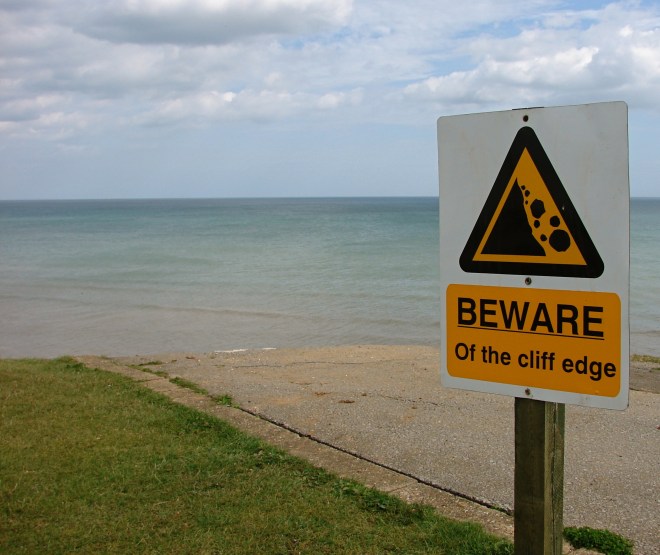
 

erosion aldboro.JPG

July 5th

On 5th July 1532, Henry VIII’s charter was read out in Hull Market Place, and prohibited anyone but Hull burgesses from conducting business in the port; the corporation paid £31 19s4d to obtain the charter, part of which was paid in the form of a sturgeon for Thomas Cromwell.

On 5th July 1657, a major fire in Hedon starting at 1 a.m. resulted in the loss of 42 houses, and others damaged. In August, the Mayor petitioned Parliament for permission to hold a collection to raise money; £4,000 was raised.

On 5th July 1776, John Wesley paid a visit to Howden and preached to a large congregation during a thunderstorm near Station Road, Howden. Wesley’s picture below

On 5th July 1811, Bridlington Collector of Customs Benjamin Milne discovered a tidal spring near the quay, now commemorated by a stone inscription.

On 5th July 1899, Hull Alderman Larard took the controls of the city’s first municipal electric tram (Siemens Bros & Co provided the electrical equipment). A spectator hoping for a good view, climbed on the roof of the public lavatories and fell through.

On 5th July 1930, the annual King’s Cup Air Race took place on this date, and planes had to follow a route of around 800 miles. Hull Aerodrome was a main control station on the route. Tickets were sold for 1s and 2s6d. The winner was Miss Winifred Brown in an Avro Avian III. (N.B. Hull Aerodrome is actually in Preston South.)


john wesley

July 4th

On 4th July 1399, Henry Bolingbroke (later Henry IV) landed at Ravenspurn from France with 60 men, and was joined by the Earls of Northumberland (Percy) and Westmoreland (Neville), to claim the throne from Richard II. Photo shows memorial in Easington church.

On 4th July 1524, William Richerdson, husbandman, of North Newbald claimed sanctuary at the church of St John, Beverley, for the ‘murderation’ of Anthony Godsale, husbandman of Newbald.

On 4th July 1597, William Anlaby or Andleby, a Catholic convert born in Etton, returned to UK as a priest after training in France.   He ministered to Catholic prisoners in Hull. Executed at York as a Catholic missionary priest. Beatified by the Catholic church in 1929.

On 4th July 1642, Sir John Hotham, aware that the Royalists surrounded Hull and had tried to cut off the fresh water supply, gave orders to open the sluices and cut the Humber banks in Drypool and Myton, outside the walls. He told farmers to bring their cattle and goods into the town. Hull was virtually unassailable.

On 4th July 1643, after defeat by the Royalists at Adwalton Moor, Sir Thomas Fairfax retreated to the only Parliamentary stronghold left in Yorkshire, Hull, just a few days after Hotham’s arrest.bolingbroke memorial Easington. jpg

July 3rd

On 3rd July 1267, Alice Falketon was given permission by the church authorities to build herself a house in St Nicholas Churchyard, so that she could live as an anchoress. Enquiries had been made as to whether she was a fit person, with enough funds to maintain herself, and if this would be convenient to the parish.

On 3rd July 1524, Peter Gornarr, tanner, of Bridlington, claimed sanctuary at the church of St John, Beverley, for the murder of Robert Skelton of Bridlington, a tailor.

On 3rd July 1642, King Charles I set up his court in Beverley at the house of Lady Gee, North Bar Within, and quartered his forces (about 3,000 infantry and 1,000 cavalry) in and around Anlaby, Cottingham and Newland.

On 3rd July 1797, Hull Trinity House paid £2 10s to William Brand, James Hayes, Samuel Harrison and J. Peterson, whose ship the Argo had been captured.

On 3rd July 1850, Mr T. Firbank, Chairman of Hull Dock Company,  opened Victoria Dock, the first of Hull’s docks east of the River Hull.

On 3rd July 1892, a great flood at Langtoft reached a height of 7 ½ feet.

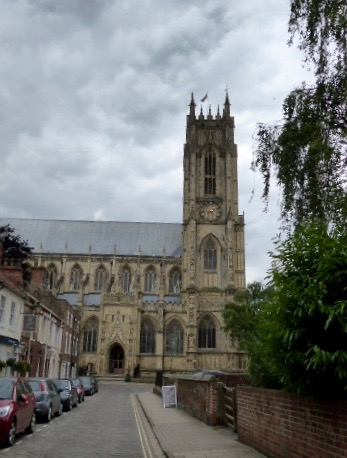
Beverley Minster

July 2nd

On 2nd July 1642, the Royalist ship Providence, commissioned by Queen Henrietta Maria, evaded Parliamentary ships by entering Keyingham Creek, which was too narrow for the larger ships, and landed a consignment of arms from Holland for the Royalist army. With help from local people, they unloaded ammunition which was taken to the king at York.

On the same day, the Royalist army secured Hull Bridge, Tickton, on the Beverley side, to prevent attacks from Hull and stop provisions reaching Hull, and evicted constable William Cuthbert and his family at midnight.

On 2nd July 1644, Sir Thomas Metham of Metham near Howden,  died at the Battle of Marston Moor fighting on the Royalist side, captain of the Yorkshire gentlemen volunteers.

On 2nd July 1830, Hull whaler Progress was wrecked in a storm when iced in near the Davis Strait; 19 whalers were wrecked or lost that season, 4 of them from Hull.

On 2nd July 1837, Hull whaler Swan was sighted off Spurn Point as a memorial service was being held in Hull for the crew. They had been away for over a year and had been trapped in ice. 25 of the 48 crew had died.

On 2nd July 1954, Harold Macmillan, Minister of Housing and Local Government, approved the amended Hull Development Plan, regenerating the city after the bomb damage of the war. Hull Georgian Society lamented the loss of buildings such as many on High Street, the whole of Nile Street and houses in Lowgate. Not all of the proposals came about – there was to have been a ‘town park’ open area from Holy Trinity to Princes Dock.