June 11th

On 11th June 1312, a miracle was recorded when some boys whose sight was failing had their eyes smeared with oil which flowed from the tomb of St John of Beverley. Their sight then began to improve.

On 11th June 1909, the Hornsea Golf Club officially opened; a large gathering of golfers from Hull, Leeds, Doncaster, Scarborough, Beverley and Bridlington took part in various competitions.

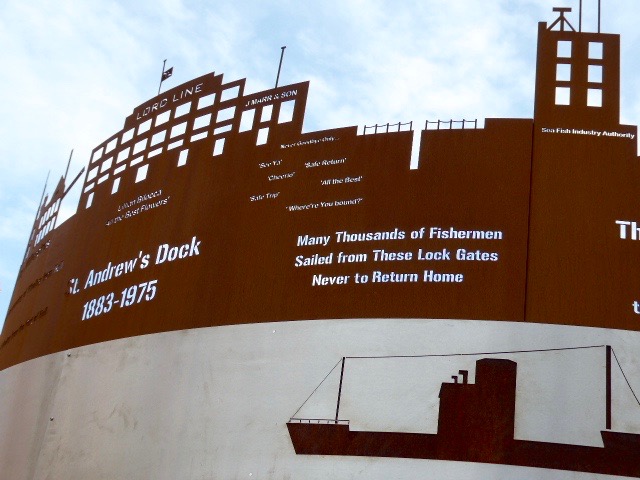
On 11th June  1925, John Ball, 17, deckhand of Michael St, Hull, was lost overboard from Hull trawler Wheatstone 182 miles ExN of Spurn.

St Andrews Dock memorial


June 10th

On 10th June 1402, John Tutbury, Mayor of Hull, was granted a licence, with William Tyrry (Terry) and their companions, to profit from the seizure of goods aboard a Prussian ship heading for Scotland which they took ‘in the king’s service’. These days, we would call it piracy. When it became clear the ship they took had actually been transporting provisions to Henry’s troops in Berwick, Tutbury and Terry were ordered to pay compensation to the owners.

On 10th June 1708, Adam Alvin, manservant, murdered his employer, the Owthorne  vicar, Enoch Sinclare, with a spade, and later married Sinclare’s niece Mary; they later moved to Lincolnshire to run a public house. The body was not found for 4 years, when Mary’s sister revealed the concealed body. Alvin was tried, found guilty and hanged at York. Sinclare’s body, in a lead coffin, was one of those which fell into the sea, and was reinterred in the churchyard, which itself later fell into the sea.

On 10th June 1913, the Assembly Rooms, Seaside Road, Withernsea, were destroyed in a fire; the area became a skating rink, and later a fun fair and amusements.


W'sea pier

June 9th

On 9th June 1786, a servant of Rev George Lambert of Hull gave notice that she was leaving after living with the family for 15 years, to live with a sailor who had recently sold his wife to another man. Most people considered this equivalent to divorce, although it had no status in law.

On 9th June 1888, a water spout in Langtoft sucked up mud and stones, and removed the soil from gardens, leaving bare chalk, as it moved across the local valleys. When it was halted by a steep hill, it deposited debris to the depth of 7 feet.

On 9th June 1965, Leslie Anthony Wegg was born in Hedon Road Maternity Hospital, Hull, with a full caul. A fisherman’s son, it was kept as a precious possession, despite a £100 offer to buy it. (from Eric Gill’s book “Superstitions’)


June 8th

On 8th June 1300, a year after Hull’s establishment, King Edward I gave a charter to allow the mayor and aldermen to pave the major streets, with a central gutter for ease of drainage. The work began in 1301.

On 8th June 1661, King Charles II wrote a letter to the Hull Mayor, prohibiting John Shaw from preaching in Holy Trinity, as he was too radical a Puritan. He retained his post as Master of the Charterhouse, and his sermons there continued to draw large crowds, but he resigned the following year.

On 8th June 1806, in a kitchen accident, in Hull, Mrs Lambert reported being struck on the back by a large hanging lump of sugar she had dislodged; she expected that if it had hit her on the head, she would have died.

On 8th June 1815, the Commissioner of Customs acquired the former Neptune Inn, Whitefriargate, as a Custom House. The Inn had opened in 1797, but had never made the expected profit of a first-class coaching inn. The building now houses Boots Chemists.

On 8th June 1821, the troopship Thomas of London was driven on to the Binks sands, in the Humber; the 26 troops, crew, 2 women and a child were rescued, and 1 woman drowned, despite brave attempts by the captain, Lieutenant Pritchard, to save her. The operation by Robert Richardson, master of the Spurn lifeboat, and crew, took 11 hours.

On 8th June 1829, Ira Aldridge, celebrated American actor of African heritage, performed in Hull for the first time, at the Theatre Royal, Humber Street; over a long and distinguished career he visited Hull several times, and performed at the Nag’s Head, Driffield in 1841.

 

Ira-Aldridge-Covent-Garden-1833-public-domain1

June 7th

On 7th June 1614, Francis Clifford, Earl of Cumberland, of Londesborough House, paid for the apprenticeship of his scullery-maid Grace. He trained in London as a barber-surgeon for 7 years, and the Earl continued to support him when he had to transfer employers, as his first employer killed a man (perhaps in the course of treatment).

On 7th June 1672, the residents of Sister-Kirks (Owthorne and Withernsea) reported hearing the sound of the naval battle of Solebay, off the coast of Suffolk. A fleet of 75 Dutch ships surprised a fleet of 93 Anglo-French ships at anchor.

On 7th June 1796, Sir Henry Etherington laid the foundation stone of Hull Anti-Mill, to provide cheaper flour. An early co-operative, it was funded by subscription by poor residents finding the price of flour beyond their reach.

On 7th June 1837, the Union steam packet was in the Humber basin, Hull, Preparing to cross the Humber, when it exploded. 3 other ferries were next to it; 23 people died. The engineer was later charged, but not convicted.

On 7th June 1915, Vere Campey Marshall made a statement to police, stating that he witnessed a 1,000 strong crowd outside the premises of Kress and Wagner, 163/5 Spring Bank, throwing stones, and a girl using a hammer to break a window. Police and military were sent to guard the premises. Anti-German feeling was strong during WW1.

June 6th

On 6th June 1597, Robert Hewitt and his 6 musicians played for the first time at Londesborough House for Sir Francis and Lady Grissell Clifford, and regularly performed there for a number of years. They played shawms (like an oboe), curtals (like a bassoon), sackbuts (an early trombone) and the virginal (an early spinet). At different times, pipers, harpers, drama companies and a jester were hired.

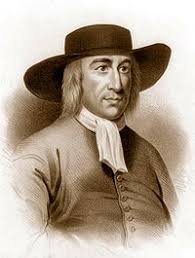
On 6th June 1651, George Fox, Quaker preacher, proclaimed his Quaker beliefs in reply to the sermon at Beverley Minster; the next day he went another church 2 miles away, then to Cranswick, staying with John Hotham (grandson of the late governor of Hull).

On 6th June 1757, the vicar of Hutton Cranswick recorded a fall of snow.

On 6th June 1812, Hull Botanic Gardens were opened; the Band of the Royal Denby Militia played at the opening ceremony (they were based at the fort, as the Napoleonic Wars were still in progress).

On 6th June 1915, Hull residents sheltered under stairs and tables when they received an hour’s warning of the first Zeppelin attack on Hull. There were 11 deaths. Hewetson’s saw mill was destroyed. (other sources says 26 dead, 60 injured)


George Fox

June 5th

On 5th June 1618, ‘Blind Richie’ (Richard Graham of Millhill) had walked from the Scottish borders to seek help from Francis Clifford, Earl of Cumberland, at Londesborough, and was given a pension of 10s a year. It is not known what his relationship was to the Earl, who had lands on the Scottish border.

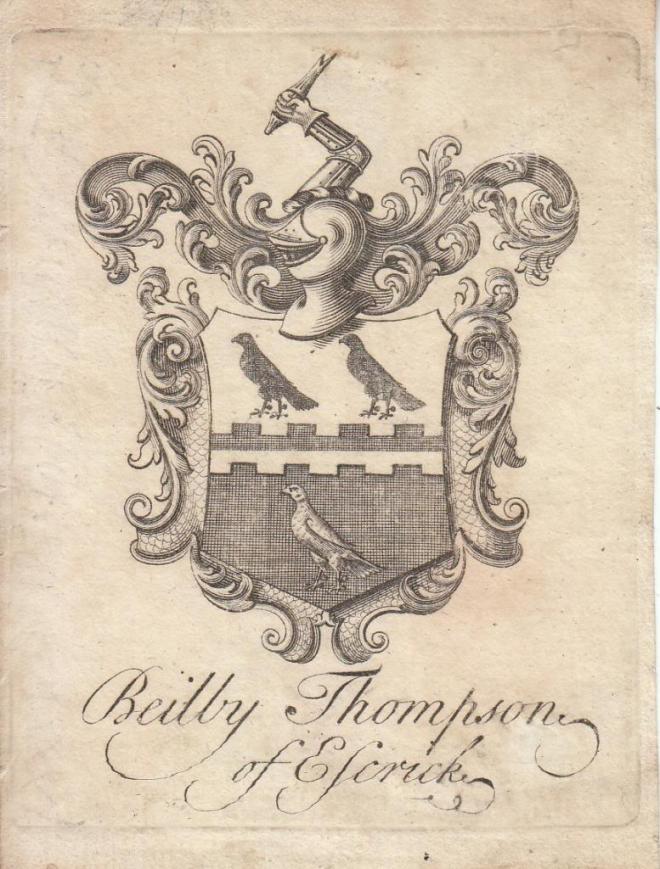
On 5th June 1778, Beilby Thompson of Escrick created a deer park, and demolished most of the village houses, rebuilding them out of sight of the Hall, and recycling the bricks; he paid 5s to Mr Scott the millwright for demolishing the horse mill.

On 5th June 1854, Dr Playfair, from the Dept of Science, reported on the teaching at Hull Trinity House School that no geometry or algebra was taught; geography was badly taught; no empirical data given on laws regulating winds, currents and weather.

On 5th June 1915, German Lieut-Capt Boemack made the first Zeppelin air raid on Yorkshire, dropping bombs on Driffield and Hedon before aborting the mission. There were no casualties, although house windows were broken in Beckside, Driffield, and crops were damaged. Crowds of people flocked to Driffield the following day to view the damage.


beilby thompson

June 4th

On 4th June 1369, 49 men and women of Hull formed themselves into a guild in honour of the Holy Trinity, and bound themselves to help each other in poverty and sickness. This guild developed into Hull Trinity House.

On 4th June 1646, Christopher Hildyard of Routh was fined £130 as a member of the Royalist army (a delinquent) in order to recover his goods which had been sequestered by Pariament.

On 4th June 1753, the first stone of the new building for Hull Trinity House was laid; the building had been on the same site since 1461, but was enlarged and rebuilt.

On 4th June 1944, John Raddings, Humber pilot, Was censured at an enquiry for failing to properly control the SS Clearpool, resulting in her stranding on Middle Sand in the Humber, and total loss; there were no casualties, but the wreck had to be dispersed (i.e. blown up) by the Admiralty.


Trinity House

June 3rd

On 3rd June 1642, a few weeks after being refused entry into Hull, King Charles I called a meeting of the Yorkshire gentry at Heworth Moor, near York, and 70,000 attended. 200 young men volunteered to form a bodyguard for the King. The 2 Hilyard brothers of Winestead, Henry and Robert, attended, and volunteered. Many other ER people must also have attended.

On 3rd June 1717, Thomas Watson died aged 80. Born in Hull, he was created Bishop of St David’s, and in 1707 built almshouses in North Church Side. Supported James II in 1688. He lost his ecclesiastical offices in 1699 for selling church property or offices, and reputedly died a rich man. (b 1.3.1637) The picture shows the almshouses.

On 3rd June 1801, when their husbands were killed by the Danes in a military engagement off Copenhagen, the widows of Matthew Cobb and James Davis, Humber pilots, were given financial support by Hull Trinity House at 10s 6d per week, 6 weeks and 4 weeks respectively.


Bishop Watson's Hospital

June 2nd

On 2nd June 1537, William Wood, prior of Bridlington, Sir Thomas Percy of Leconfield, George Lumley of Thwing and Sir Francis Bigod of Settrington were found guilty of treason and hanged at London’s Tyburn for their parts in the Pilgrimage of Grace.

On 2nd June 1838, Snowden Dunhill, 72 years, died in prison in Port Arthur, Tasmania. He was convicted of receiving stolen goods,   having been sentenced to 7 years transportation to Australia in 1823 for theft. He and his family had become notorious at home in Spaldington, near Howden, and after the publication of his life story in 1834 he became famous in England as a latter day Dick Turpin.


Pilgr Grace