October 8th

On 8th October 1536, Beverley men mustered on Westwood Low Green in response to the Lincolnshire rebellion against the Act of Dissolution. Elizabeth Stapleton encouraged them, despite the reluctance of her husband, and her brother-in–law William Stapleton became the rebels’ captain.

On 8th October 1643, Capt Strickland led a failed Royalist attack on Hull’s Hessle Gate, and was shot dead. Many of the attackers were killed.

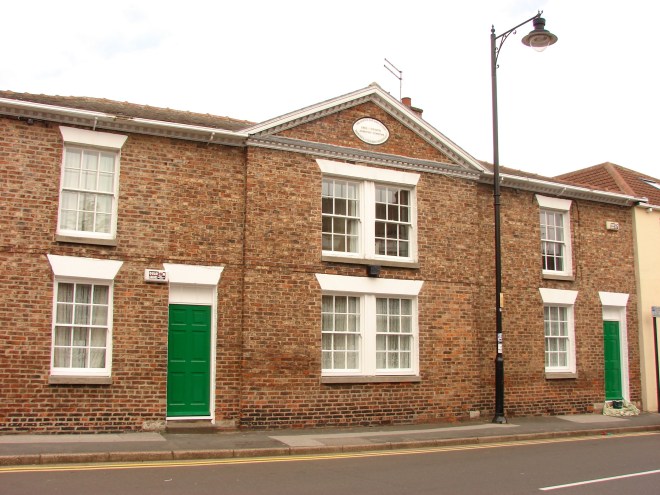
On 8th October 1708, William Robinson died in Hull. Former Sheriff of Hull, donor of a hospital to Trinity House, left bread for 12 widows to be given each year on Christmas Day. They were required to go to his grave in Holy Trinity churchyard to receive their dole.

On 8th October 1805, Beverley corporation ordered that all rogues and vagabonds found wandering in the town must be apprehended and conveyed to a magistrate. A board  showing this order can be seen in St Mary’s church loft.

On 8th October 1862, Hornsea businessman Joseph Armytage Wade turned the first sod with a silver trowel at a ceremony to mark the start of building the Hull to Hornsea Railway.

On 8th October 1874, George Wombwell visited Beverley on his way to Hull Fair; in Saturday Market he exhibited elephants, giraffes, a rhino, and big cats; other shows also stopped over in the town before going to Hull.

On 8th October 1929, Wm Jackson & Son Ltd opened their landmark store in Paragon Street, Hull, designed by Hull architects Gelder and Kitchen, with a cafeteria and restaurant on the first floor. After the war, when the fire-damaged property was repaired, a 3rd floor was added as a ballroom. This was to become one of the city’s most popular night-spots for many years.

On 8th October 1985, Clive Sullivan MBE died aged 42. 1st black captain of any British national sporting team. He played rugby league with both Hull and Hull Kingston Rovers during his career. Holds records for most tries in a career (250) and most tries in a match (7). Commemorated in Clive Sullivan Way and the Clive Sullivan Memorial Trophy.(b 9.4.1943 Cardiff)


Clive Sullivan

September 28th

On 28th September 1643, the royalists’ ammunition store at Cottingham blew up, killing Royalist Army’s Firemaster General and 6 others instantly, and destroying nearby houses.

On 28th September 1849, John Ward of Hull, the leading marine artist of his time, died of cholera; one of his paintings, valued at £10k, was stolen from Hull Maritime Museum in 2009 and recovered 3 months later. In 1981 an exhibition of his works was held at the Ferens Art Gallery to coincide with the opening of the Humber Bridge. (b 28.1.1798) photo shows the whalers Swan and Isabella.

John Ward Swan & Isabella

September 22nd

On 22nd September 1690, Beverley Corporation gave permission to create a racecourse between the Newbald and Walkington roads. Horse racing had probably taken place on Westwood for 300 years, but this was the first time a course was formally laid out.

On 22nd September 1716, Leonard Chamberlain, draper, died at Hesslewood House, Hessle, and left property and estates in Sutton, Stoneferry, Selby, Dunswell and Hessle and his charitable bequests continue to this day. A Presbyterian, he supported those who had been discriminated against on religious grounds, gave money for educating the poor ‘of whatever persuasion or denomination soever’.  Commemorated in Chamberlain Road and Chamberlain Street, Sutton. photo shows one of the Sutton properties

On 22nd September 1761, to mark the coronation of King George III and Queen Charlotte, Col Duncombe’s Battalion of militia drilled in Beverley Market Place, and fired volleys, while the Corporation held a dinner for the officers, the bells rang, and in the evening there were illuminations.

On 22nd September 1778 was the official opening of The Dock, Hull. (It became known as Queen’s Dock after Victoria visited the city in 1854). The first ship in was the whaler Manchester, decorated all over with flags of the nations, followed by the Favourite, the largest ship in the port at 1,000 tons (burthen). 20,000 spectators were entertained by cannon fire and a musket salute from the garrison, and the great and the good were fed and sumptuously entertained.

On 22nd September 1856, Count de Werdinsky died in Hull aged 53, in abject poverty, after variously representing himself as a Polish count, inventor and doctor. He was a bankrupt, a fraudster, and had several counts of assault and indecent assault against women. His memorial is in the Western Cemetery

On 22nd September 1914, the crews of HMS Aboukir, Cressy and Hogue, 3 Navy cruisers, were sunk by a German u-boat, with the loss of 1,450 lives. This not only led to a public outcry, but also the need to provide for a large number of orphaned children. Some of the children were admitted by Hull’s Sailors’ Children’s Society and put up in its holiday home in Hornsea, as well as in the Newland Homes. By 1915, 108 children of seamen lost in action were admitted, from across the country.

leonard chamberlain sutton.JPG


September 15th

On 15th September 1415, Henry V issued a General Pardon to the Mayor and town of Hull.  It is not clear for what they were being pardoned, though it may have been a general relaxation of taxes in gratitude for providing soldiers – or ships – after his success at Agincourt.

On 15th September 1561, William Calverde rented from Hull Corporation land called Hurne Close in Myton, with the right to pasture 20 sheep in the Common Carr of Myton.

On 15th September 1636, Hull Corporation was warned to prevent seamen arriving from ports infected with plague from coming ashore. Hull was in the midst of a serious 3-year outbreak which began in 1635.

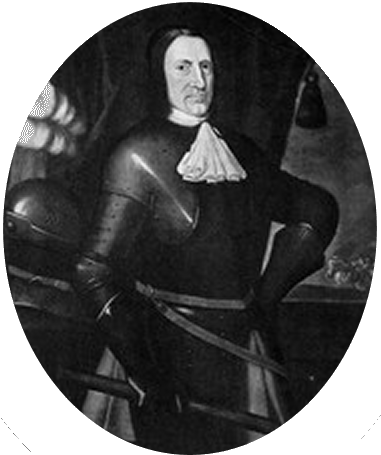
On 15th September 1636, James II turned out of office 11 of the 13 elected Hull aldermen, the Mayor, High Steward, Recorder and Town Clerk, and replaced them with his own choice. This put Marmaduke Lord Langdale, in the powerful position of Governor of the garrison and Recorder, backed by 1199 soldiers, billeted on the residents. In December that year, Langdale was himself ejected.

Marmaduke_Langdale2

On 15th September 1864, Crown Prince Umberto of Italy stayed overnight at the Beverley Arms, after attending the St Leger at Doncaster, and left to visit James Hall’s stud at Scorborough.

On 15th September 1948, Mr J.H. Wilson, 33, labourer-driver, employed by East Riding  Agricultural Committee, was badly injured when he drove a lorry across a temporary rail crossing at Garton on the Wolds. The lorry was wrecked by a train, killing 3 Polish and Hungarian workers, and injuring another 4. The workers were people displaced by WW2, who were travelling to a Garton farm to help with the harvest. An enquiry recommended steps to improve the crossing.

September 2nd

On 2nd September 1643, the Royalists under the Earl of Newcastle began the second siege of Hull. The Governor, Lord Ferdinand Fairfax, sold silver to the value of £400 4s to Hull Trinity House, in order to pay his soldiers. Trinity House sold the silver the following year at a slight profit.

On 2nd September 1861, the lease on Fishwicks’ Mill, butt Lane, Beverley, had expired, and the mill was demolished. The Council tried to repossess the land, but local people considered it to be common land, and 25-30 rioters destroyed the house and burnt it to the ground.

On 2nd September 1871, William (Billy) Ringrose was born in Ganton, where he became a carpenter, but was coached by a cricket professional employed by the Legard family at the Hall, and became a renowned professional cricketer, playing for 57 games for Yorkshire.

On 2nd September 1922, Hull Kingston Rovers played its first game at its new ground, Craven Park, losing 3-0 to Wakefield. The new grounds also had 14 tennis courts, and meeting rooms. The official opening did not take place until November. This was the club’s 4thground, the first 2 being in West Hull.

On 2nd September 1950, MV Dundalk Bay arrived in Hull from Mombasa, bringing 1,014 people displaced by WW2. After processing, they were dispersed to various camps throughout the UK. Many Poles, Latvians, Lithuanians and others unable to return to their homes came to find work and settle in England; some emigrated again to Canada.

On 2nd September 1967, the Flamborough lifeboat Friendly Forester rescued 6 people cut off by the tide.

Old Craven Park EAW207783

August 31st

On 31st August 1292, King Edward I stayed at Kilham, on his return from Scotland, where he judged on the claims of Robert the Bruce and John Balliol for the crown, he also made several other stops in East Yorkshire.

On 31st August 1516,  Robert Chorkyls, husbandman, of Wyton, claimed sanctuary at the church of St John, Beverley, for the murder of John Rotheram.

On 31st August 1579, Howden records state that 158 people died in the previous 5 months, at least 110 above the average, due to plague. The city of York forbade anyone from Howden or Snaith from entering the city.

On 31st August 1941, Minnie Leveson, nurse, aged 20, was killed by an air-raid on her home in Willerby; she is buried in De la Pole Hospital cemetery.

On 31st August 1943, 15 Wellington bombers took off from RAF Leconfield and 2 of them collided over Goole, killing both crews and 2 residents of North Street.

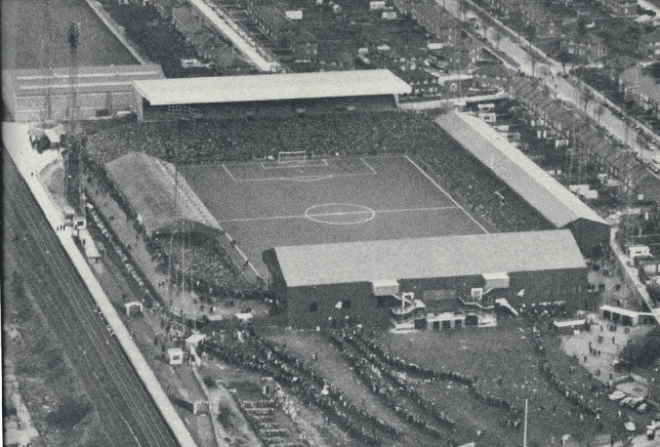
On 31st August 1946, Hull Lord Mayor Herbert Harrison officially opened Hull City AFC’s new stadium, Boothferry Park. The crowd of 25,586 were entertained by the band of the 2ndBattalion East Yorkshire Regiment. The match was against Lincoln City, the result 0-0.

boothferrypk

August 23rd

On 23rd August 1326, Richard Furnewes, barber to the Archbishop of York, was appointed to keep the park at Bishop Burton and the deer, at a salary of 2d per day.

On 23rd August 1601, Lord Burley, Queen’s Lieutenant and President of the Council of the North, visited Hull. His visit was marked with a firework display in the Market Place. Tragically, the cannon misfired, and at least 4 died, and several others were injured.

On 23rd August 1619, a woman bonesetter from South Dalton attended Londesborough House to treat Earl Francis’s shoulder, dislocated in a fall while out hawking. She was paid £1 5s for the treatment, which included 2 visits. (A physician might charge £2 a visit).

On 23rd August 1653, Robert Acklam was fined £5 by Hull Trinity House for taking the ship Blessing from Hull to London and from there crossing to Holland without the correct licence.

On 23rd August 1830, 60 farm workers rioted in Burton Pidsea, armed with clubs, scythes and stones, and visited every farmhouse where there were known to be Irish labourers, aiming to drive them out of the neighbourhood. 6 of them attacked Irish men working in a field belonging to Mr Baxter. The Hull Packet reported on 10.9. 1830 that the 6 ringleaders had been arrested and would be tried at the next Quarter Sessions in Beverley.

On 23rd August 1886, former Hull Trinity House pupil John Lester, aged 20, was killed by a fall from aloft on the Schooner Welsh Belle travelling from Hull to Newfoundland.

On 23rd August 1934, the Yorkshire Post reported on a cliff collapse along a 100-yard stretch at Aldbrough, which resulted in thousands of tons of material falling onto the beach, destroying the boat slipway. No-one was hurt. photo shows more recent erosion at Ulrome.


erosion Ulrome

August 16th

Ebenezer Cobb Morley


On 16th August 1831, Ebenezer Cobb Morley was born in Princess Street, Hull, became a solicitor, an oarsman (he founded the Barnes and Mortlake Regatta), a footballer (he played in the first ever Football Association match), proposed the meeting which led to the creation of the FA, and drafted the first FA Laws of the Game in 1863. (d 20.11.1924)

On 16th August 1853, after 57 days, the Government Commission of Enquiry into Electoral Corruption held at the Mansion House, Hull, ended, and concluded that immense amounts of political corruption had been practised, but that other boroughs were equally corrupt. As a result, a Bribery Act was passed in 1854. In 1857, James Clay and Viscount Goderich (later Lord Ashley), the cause of the original complaint, were both re-elected with increased majorities. (and see 23.5)

On 16th August 1931, Charles Hudson, 53,  of Hessle was lost at sea during the Fastnet Ocean Yacht Race. (b 20.1.1878)

August 14th

On 14th August 1715, John Burdas, bricklayer, aged 26, placed a “ffaine” (possibly a weather vane?) on top of the newly-repaired top of the steeple of St Patrick’s church. This required him to stand for some hours with one foot on the top stone and the other foot on the top of a ladder ‘to everyone’s wonder and admiration’.

On 14th August 1831,  William Stephenson of Beverley had his will registered at York Assizes, the main beneficiary being Dr Alexander Turnbull of Hull. The doctor sued witnesses to the will who alleged it had been improperly drawn up. He lost his case, and left Hull soon afterwards.

On 14th June 1934, coxswain George Leng of Flamborough lifeboat Forester rescued 4 men from the cliffs at Thornwick Bay; they were in danger of drowning and unable to climb higher, in great danger as the tide had not reached its height. He threw them a line and got them into the lifeboat.

On 14th August 1937, Hull Baseball Club won the National Baseball Assn Open Challenge Cup 5-1 against Romford Wasps. Baseball was played at Craven Park until the outbreak of WW2.

On 14th August 1943, a company of 200 ‘British Pioneers’ was drafted to Hull for work on the docks, due to an increase in the number of ships carrying cargoes of war materials.


Pat church

August 13th

On 13th August 1778, the first recorded cricket match in East Yorkshire took place in Wallingfen, near North Cave, on a Thursday, between a Beverley team and Howden. Howden won (74-138?) The prize was 50 guineas.

On 13th August 1782, James Norrington was killed in a chalk pit at Hutton. He worked for Miles Smith of the Sunderlandwick Estate, who owned the chalk pit in Balk Lane.

On 13th August 1881, Ye White Hart Companie, while renovating and altering the old building, made a number of finds: human bones and Elizabethan period tobacco pipes under the floor, and old swords and a ship’s chart under the roof. They were put in the possession of antiquarian Alderman Symons. The company also seems to be responsible for creating the myth that the Plotting Parlour was the place where it was agreed to exclude King Charles.

Old White Harte