September 20th

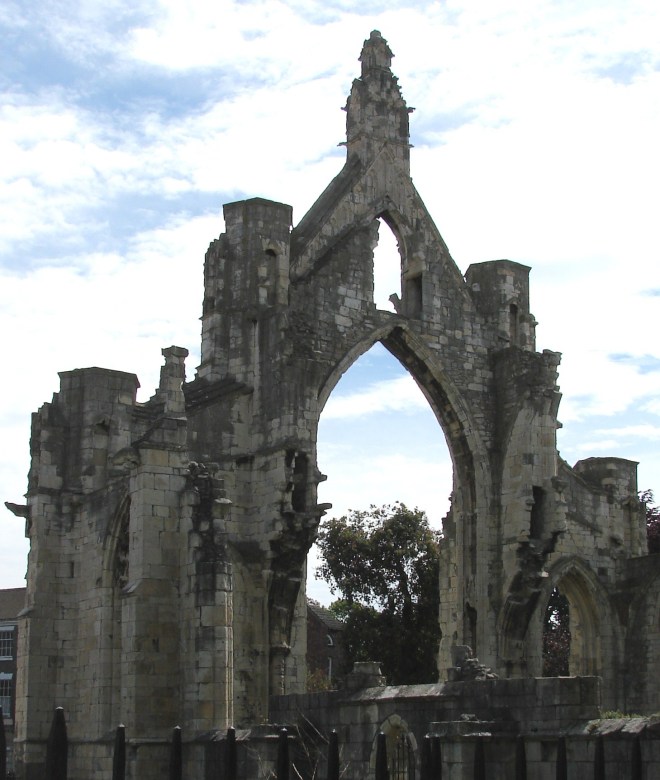
On 20th September 1188, St John’s church at Beverley and most of the town were damaged by fire. St John’s remains were not found until 1197.

On 20th September 1535, John Colynson and Thomas Savage, yeomen of Holme on Spalding Moor were declared outlaws after spending more than a year in sanctuary in Ripon. They sought sanctuary in 1534, confessing to stealing a horse. Savage confessed to the murder of Amery Burdett, but Colynson did not confess, though a coroner’s jury found them both responsible, and indicted others as accessories.

On 20th September 1769, Felice de Giardini, famous violinist, played at the start of a 3-day festival to celebrate the installation of the new organ at Beverley Minster, the first festival of its type in the north of England. New music by Handel was performed, including the recently completed Messiah; tickets were 2s6d and 5s.

On 20th September 1779, Mr Foster, Bridlington quay master, reported that John Paul Jones’ American squadron of ships had attacked a large fleet of colliers and ran them into the harbour.

On 20th September 1813, Thomas Nutbrown was born in Eastrington.  Probably the same person who, aged 14 in 1828, applied to the Howden poor relief officers for some new clothes, and was granted a second hand coat. He died aged 72 in Leeds Township, Quebec, Canada, on 25 Sept 1885.

On 20th September 1883, Rev Edward Cragg Haynes died aged 62 in Swinefleet, after serving there for 32 years. Born in Barbados, classed as ’free coloured’, had links to the Clapham Sect. Set up a Grammar School in Swinefleet attended among others by Joseph Rank. (christened 3.6.1821)

On 20th September 1902, Stevie Smith was born Florence Margaret Smith in Hull. Poet and novelist, most famous for ‘Not waving but drowning’. D 7.3.1971 see photo

On 20th September 1903, Annie Marshall, 16, domestic servant, from Lissett, was raped, shot twice, suffocated with grass and thrown in the river at Scampston by Charles William Ashton, 19, of Cottingham, farmhand.  Ashton knew her well. He was found guilty of murder and hanged at Hull Prison on 11thDecember the same year.

On 20th September 1954, the Selby to Driffield rail line was closed for regular passenger traffic, a service of one regular non stop train each way plus occasional summer excursions ran until June 1965. The line was abandoned after the last freight train ran later that year.

On 20th September 1955, Robert Greenwood Tarran, of the Wolds, Beverley High Road, Hull, died aged 63. Civil engineering contractor, and founder of Tarran Industries Ltd, former Sheriff of Hull, and chief Air Raid Warden during WW2. He moved the Wilberforce monument, at his own expense, and was responsible for building 20,000 prefabs after the war. He was also suspected of complicity in profiting from deals over council land in Endike Lane, in a law case during which his colleague Digby Willoughby committed suicide.
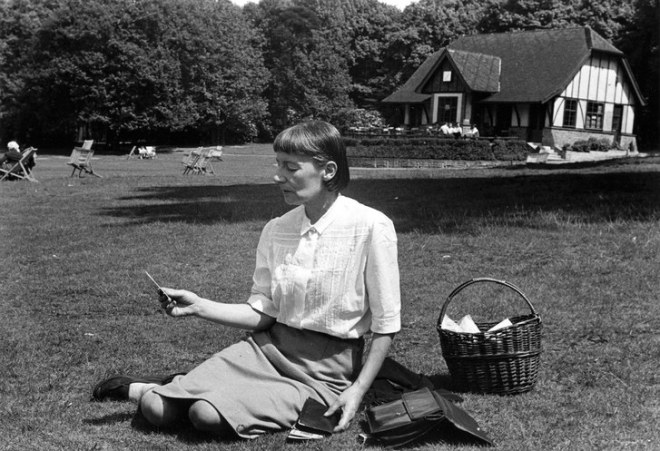
StevieSmith

September 11th

Howden


On 11th September 1666, Sir Philip Monckton replied to a petition from Howden residents to raise a company of musketeers to defend them, as the Great Fire of London had made them fear arson by a foreigner or Catholic; he suggested they double the watch and get the constables to watch the movements of every ‘Londoner’ at night.

On 11th 1795, Timothy Rymer, a sailor, was buried after drowning in the Humber, the body washing up at Blacktoft.


September 9th

On 9th September 1513, Marmaduke Constable, of Flamborough was knighted for his role in the Battleof Flodden Field, and a letter of thanks from Henry VIII is displayed in Wassand Hall. Ralph Ellerker, senior of Risby and his son Ralph were also both knighted. This causes some confusion in the historical record, as there were 2 Sir Ralph Ellerkers alive at the same time.

On 9th September 1643, Rev James Sibree reported that on Sunday he had preached twice, visited the cemetery 3 times, and interred 43 bodies of his fellow citizens. During the cholera outbreak, many church services were held outdoors in the Market Place, by ministers of different denominations, and attended by more than 3,000 people. photo shows Cholera Memorial in Western Geneeral Cemetery.

On 9th September 1878, George Carr, aged 45 and Joseph Carr, aged 26, accidentally drowned in Hornsea.

On 9th September 1956, Captain Erik Ohsman, and Chief Steward V. Stenros, of SS Lona, were rescued by firemen when they were found unconscious after fire was discoveredon their Swedish ship, loaded with over 3k tons of pit props. Both recovered. The fire, which started in the engine room, spread to the cargo, and after several hours the ship had to be scuttled in the dock to prevent greater damage. She was raised on 11 October and repaired. Cholera memorial

September 8th

On 8th September 1069, the Danish king Sweyn Estrithson and a fleet of 240 ships anchored in the Humber accompanied by Edgar of Wessex who claimed England’s throne. They marched on York.

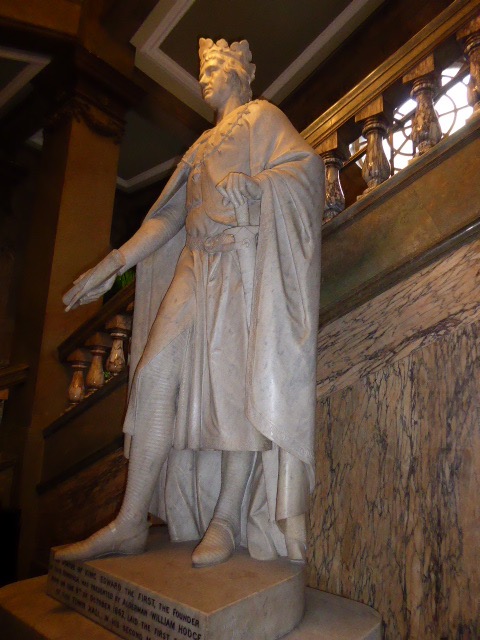
On 8th September 1292, King Edward I stayed in Beverley on his progress through East Yorkshire. photo shows his statue in Hull Guildhall

On 8th September 1402, William Asleby and other rioters from West Hull villages who had rioted as part of Hull’s ‘water wars’ had to do penance every year on the Friday nearest the Feast of the Nativity of Our Lady, by processing through Holy Trinity church naked, bare-headed and with bare feet, through the church during mass, carrying a 3lb burning candle. If they failed to comply, they would be fined £40 – though none of them had any goods of value.

On 8th September 1667, Richard Leeming, Mayor of Grantham, wrote to the Hull Mayor to notify him of the escape of a prisoner committed for murder supposed to be making for Hull.

On 8th September 1730, an accidental fire destroyed the house of John Mason and Richard Dagger, their goods, clothing and hay, making them destitute and entitled to poor relief from the parish.

Edward I
Guildhall


September 7th

On 7th September 1316, King Edward II issued orders to Beverley to arm the whole male population between ages 16 and 60 against the Scottish threat.

On 7th September 1643, Sir John Hotham was taken from the Tower of London to Parliament to be formally ejected from his seat as MP for Yorkshire.

On 7th September 1646, Sir Michael Wharton of Beverley, considered a Royalist (delinquent) for attending a meeting at Heworth Moor addressed by the King, was fined £4,000 in order to recover his goods which had been sequestered by Parliament. His fine was reduced in 1652. photo shows Warton’s Hospital, Keldgate, Beverley.Warton's Hospital.JPG

On 7th September 1854, Robert Isaac Wilberforce, vicar of Burton Agnes and Archdeacon of the East Riding, resigned his Church of England posts and joined the Catholic Church.  Robert was the second son of William Wilberforce. Of William Wilberforce’s 4 sons, 3 converted to Catholicism and Samuel Wilberforce Bishop of Oxford, then Winchester, was an extreme Anglo-Catholic.

On 7th September 1866, Bull lightship in the Humber was struck by the Prussian barque Emma Johanna and damaged, holed below the water-line. It was taken to Victoria Dock, Hull for repairs by Hull Trinity House.

September 6th


greenlandmap

On 6th September 1611, Thomas Marmaduke, Master of the Hull ship Heartsease, and junior brother of Hull Trinity House, returned from the Arctic with a cargo of whale and walrus hides and blubber, the first cargo of the whaling trade on behalf of the Muscovy Company. He was credited with a number of discoveries, none of them substantiated, and a bay in Greenland was named for him Marmaduke’s Cove, which the Dutch called Dusko, and was later known as Disko.

On 6th September 1640, Sir Thomas Glemham was appointed Governor of Hull by King Charles I; the Mayor and Aldermen objected to Lord Strafford about the creation of this new post, in addition to the Mayor’s role, but was advised to go along with it, to prevent the King’s anger.

On 6th September 1650, John Ramsden was removed from his office as Hull alderman for refusing to take an oath recognising the authority of the government without King or House of Lords.  In 1659 he became MP for Hull.


September 2nd

On 2nd September 1643, the Royalists under the Earl of Newcastle began the second siege of Hull. The Governor, Lord Ferdinand Fairfax, sold silver to the value of £400 4s to Hull Trinity House, in order to pay his soldiers. Trinity House sold the silver the following year at a slight profit.

On 2nd September 1861, the lease on Fishwicks’ Mill, butt Lane, Beverley, had expired, and the mill was demolished. The Council tried to repossess the land, but local people considered it to be common land, and 25-30 rioters destroyed the house and burnt it to the ground.

On 2nd September 1871, William (Billy) Ringrose was born in Ganton, where he became a carpenter, but was coached by a cricket professional employed by the Legard family at the Hall, and became a renowned professional cricketer, playing for 57 games for Yorkshire.

On 2nd September 1922, Hull Kingston Rovers played its first game at its new ground, Craven Park, losing 3-0 to Wakefield. The new grounds also had 14 tennis courts, and meeting rooms. The official opening did not take place until November. This was the club’s 4thground, the first 2 being in West Hull.

On 2nd September 1950, MV Dundalk Bay arrived in Hull from Mombasa, bringing 1,014 people displaced by WW2. After processing, they were dispersed to various camps throughout the UK. Many Poles, Latvians, Lithuanians and others unable to return to their homes came to find work and settle in England; some emigrated again to Canada.

On 2nd September 1967, the Flamborough lifeboat Friendly Forester rescued 6 people cut off by the tide.

Old Craven Park EAW207783

August 30th


Brid Priory churchOn 30th August 1510, Bridlington tanner Henry Braderig claimed sanctuary at the church of St Cuthbert, Durham, for killing Robert Lelome in the grounds of Bridlington Abbey. With 2 other tanners, Roland Hall and Robert Yong, he had struck Lelome with a dagger, and he died 2 weeks later. The attack happened 11 months earlier, in September.   photo shows Bridlington Abbey church today
On 30th August 1767, James Savage was born in Howden.  Journalist, printer and bookseller, librarian, antiquarian, and newspaper editor. Wrote ‘A History of Howden Church’ 1799 and a history of Wressle in 1805, and a number of other books. (Died  Taunton 19.3.1845). (Suggestion, unverified, that he was Howden town clerk, was accused of claiming excessive expenses, and left Howden 1801 with the parish records, refusing to return them until the town paid him monies due; the books were not recovered).

On 30th August 1854, Robert Wilberforce, rector of Burton Agnes and Archdeacon of the East Riding, resigned after leading a doctrinal controversy which raged in the Hull newspapers for many weeks. Shortly after this, he joined the Catholic church.  He died before he could be ordained. He was a son of William Wilberforce.

On 30th August 1913, Elizabeth Barr, 25, was shot at Watton by former partner and the father of her child, Henry Moore of Kelk, who then shot himself. A letter from Moore to his father indicates his action was premeditated. Barr died 2 days later, and Moore the following week. A coroner’s jury found Barr’s death was due to wilful murder.

On 30th August 1940, Abdo Nassa, age 50, fireman, died by enemy action whilst a merchant seaman in Atlantic convoy, on board SS Chelsea of Hull.

August 29th

minster - frith stool.JPG


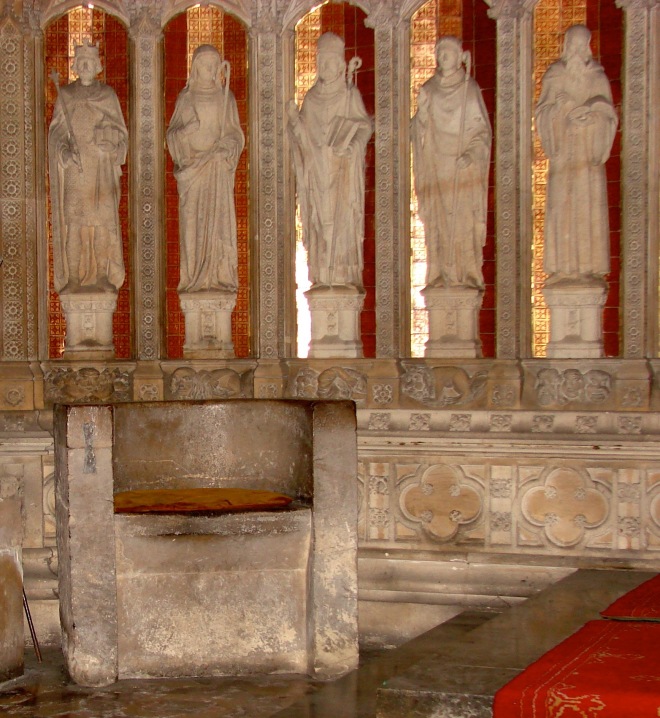
On 29th August 1524, John Rotherford, labourer, of Kirby upon Wold (K. Underdale or K. Grindalythe?) claimed sanctuary at the church of St John, Beverley, for murder and felony. A 2ndman entered the sanctuary that day – Nicholas Pryas, husbandman, of Reedness, claimed sanctuary for the death of  a man called Wademan of Cross House.

On 29th August 1584, Sir Francis Walsingham, Queen Elizabeth’s Principal Secretary, was  appointed Hull’s first High Steward, to act as mediator between the town and the Queen. Walsingham was Elizabeth’s ‘spymaster’. The post was much later given to Lord Mandelson.

On 29th August 1867, a Humber pilot was fined £32 to repair the damage he did to the Bull Lightship while handling a vessel in the river.

August 27th

On 27th August 1473, John Warter’s ship Nicholas left Hedon with exports belonging to 14 different merchants, mostly wool and sheepskins. The tax record does not indicate where the ship travelled to. photo shows the Hedon ship design, found in St Augustine’s church.

On 27th August 1586, Daniell Morton was arrested for attempting to travel overseas against government order, and was retained in custody in Hull until further order.

On 27th August 1643, Lord Ferdinando Fairfax, Governor of Hull, ordered that Royalist sympathisers (termed malignants) have their property seized to support Parliament’s cause.

On 27th August 1902, Trooper H.B. Adamson, and Sergeant T. Burn were soldiers returning home to Hornsea from the Boer War. They were greeted by large crowds, the Town Band and a detachment of the Artillery Volunteers, and paraded round the town in a carriage. Sadly, Trooper E. Dabb arrived 4 days later unexpectedly and without ceremony.

On 27th August 1940, Mrs Spetch’s cottage at Mappleton was severely damaged by an enemy bomb, which also destroyed several windows in the church. The cottage site is now occupied by the Maple Garage.

Hedon ship, St Augustine's