August 7th

On 7th August 1385, Joan of Kent (the Fair Maid of Kent), mother of King Richard II, died, it is said, of a broken heart.  She was unable to persuade her son King Richard to pardon another son, Sir John Holland, for the murder of Ralph, son of the Earl of Stafford. Holland was in sanctuary in Beverley Minster, and the murder took place nearby, when Richard’s troops were outside Beverley, on their way to the Scottish wars. Holland was pardoned within the year.

On 7th August 1427, Pope Martin V, in reply to a petition (from the parishioners of both Aughton and Bubwith churches and Peter de la Hay), granted permission that, when they were hindered in winter by floods, snow and hail from reaching their parish churches, they could use the chapel of St James in Spaldington for mass and other offices ‘while the hindrances last’.

On 7th August 1663, Robert Hardy of Hessle was enjoined by the Archbishop of York to do penance in Hessle church for his adultery. photo shows All Saints Church, Hessle

On 7th August 1840, a Serious rail accident took place in Howden, in which 4 passengers were killed, and 9 injured. The Hull and Selby Railway had only opened in full on 1st July. The accident was the subject of the first ever report by the Board of Trade into a railway accident.All Saints, Hessle

August 6th

On 6th August 1778, the question of who owned Spurn Point was resolved in favour of the William Constable of Burton Constable; the legal dispute began in 1609.

On 6th August 1785, John Beck of Lelley was hanged at York Castle for setting fire to a house and corn mill belonging to William Jackson of Danthorpe, with Robert Crosby and John Edwards, also of Lelley; Edwards and Crosby escaped.

On 6th August 1859, John Riley, 36, of Hull, was hanged at York Castle for the murder of his wife, Alice.

On 6th August 1888, former Trinity House School pupil George Smith, age 15, drowned after a collision between the Barque Cambrian and a French Barque during a great storm in Valparaiso harbour.

On the same day, a Bank Holiday Monday, a popular trip out from Hull Corporation Pier was to Paull by boat to watch the Army’s Submarine Miners in training and holding boat races and athletic competitions. Several boats left the Pier during the day.

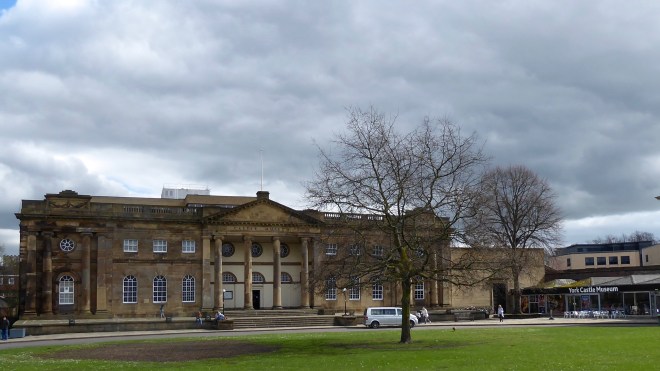
York Castle


August 5th

On 5th August 1661, Marmaduke Langdale, 1stBaron Langdale of Holme, died, aged 63, at Holme on Spalding Moor. High Sheriff of Yorkshire 1639. Joined the Royalist side in the Civil War, and had a distinguished military career, being imprisoned and escaping twice. He was ennobled by Charles II in exile and returned from exile at the Restoration, becoming Lieutenant of the West Riding.

On 5th August 1664, Peter Rawson of Hull was indicted as a common disturber of the peace.

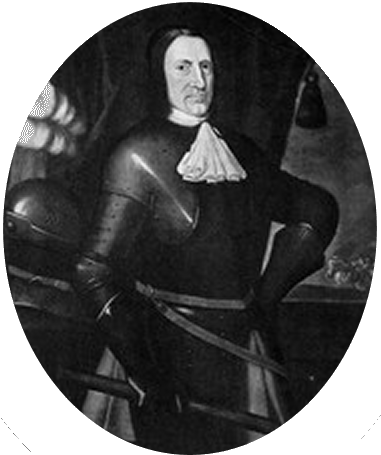
On 5th August 1918, the last Zeppelin raid on Hull took place.  Visibility was good, and it was driven away by searchlights. No casualties.Marmaduke_Langdale2

August 4th

On 4th August 1511, John Hessey, husbandman of Belby, nr Howden, claimed sanctuary at the church of St John, Beverley, for the murder of William Smyth of Didyngham (anyone know where this is?)

On 4th August 1652, Keyingham manor court fined 18 villagers for allowing their geese and pigs into the fields outside the stipulated times.

On 4th August 1795, Hull residents rioted against inflationary food prices and shortages. Much corn was being taken by the army, (Napoleonic Wars) in a year of poor weather. A few windows broken.

On 4th August 1834, John Venn, was born in Drypool, son of the vicar. Left Hull at age 8. Fellow of the Royal Society, famous mathematician, who introduced the Venn diagram. Commemorated in Hull University by the Venn Building. (d 4.4.1923) and by Drypool Bridge.

On 4th August 1851, G. Hought of Hutton Cranswick was killed by lightning, as he sheltered under a tree during a thunderstorm. He left a wife and 2 children.

On 4th August 1884, all 11 Walgate brothers of Aldbrough formed one cricket team in a match held at Rise Hall; the Walgates won the match by 3 wickets.

On 4th August 1969, HM Queen Elizabeth opened Queen Elizabeth Dock, the last major dock to be opened in Hull, accompanied by HRH Duke of Edinburgh and Princess Anne.


Drypool Bridge

July 27th

On 27th July 1643, Hull widow Ann Stevenson, whose husband died at Beverley in Parliament’s service as a cannoneer, petitioned the town of Hull to pay her the 35 shillings wages due to him; the committee agreed, in view of her poverty, to let her have 20s.

On 27th July 1782, Rev George Lambert of Fish Street, Hull reported in his diary on a violent thunderstorm in the evening, and lightning killed a cow very near their house, and scorched the hedges.

On 27th July 1796, jockey George Heron was thrown by his horse at Hull racecourse, Newington, and killed.

On 27th July 1855, James McLoughlin, aged 13, asked Hull Magistrates Court for the protection of the court on account of his mother having beaten him severely with a stick and a fire poker because he would not go out stealing for her.

On 27th July 1996, HMS Rose visited Hull’s Albert Dock; this was an exact replica of a frigate built in Hull by the Blaydes yard in 1757 and sunk in Savannah, Georgia in 1779. The only difference from the original ship was that the sails were made from recycled plastic bottles.

HMS Rose replica

July 23rd

On 23rd July 1525, carpenter John Algood of Wheldrake claimed sanctuary at the church of St John, Beverley, for debt.

On 23rd July 1856, Capt Bryan Stapleton became the first governor of the Yorkshire Catholic Reformatory School for Boys, at Holme on Spalding Moor.  The reformatory movement campaigned to keep children out of prisons, but the first Yorkshire school was Church of England only.

On 23rd July 1941, an air raid on Alexandra Dock, Hull, sank 3 lighters, killing 2 people and injuring 5, and damaged No 11 quay, 2 steamers and a diving boat.

On 23rd July 2012, the Royal Engineers carried out 15 controlled explosions on the beach at Mappleton, after a landslide (on Sat 21.7) revealed at least 1,000 rockets, grenades and bombs from WW2.

mappleton bomb

July 20th

On 20th July 700 AD, St Osanne (or Osana or Osmanna) died aged 30 (at least, this is her saint’s day). Sister of Osred I, King of Northumbria (or daughter of Aldfrith), she was a nun at Jouarre, France. Her miracles are recorded: when a concubine of the Howden rector was so impious as to sit upon Osana’s tomb, Osana stuck her to it so that she could not be removed.

On 20th July 1332, Edward Balliol gathered a fleet of 88 ships in the Humber, and joined by a number of other Scottish nobles, set off for Fife to claim the Scottish throne from the Bruce family.

On 20th July 1413, Pope John XXI wrote to residents of West Hull villages, solemnly reminding them of the judgements to come if they did not maintain the water courses providing fresh water to Hull.

On 20th July 1495, John Halyday, carrier, of Watton, claimed sanctuary at the church of St John, Beverley, for the murder at Watton of Agnes Lathe.

On 20th July 1631, Henry Lord Clifford made the first payment to Dutch painter Hendrick de Keyser the younger, following a fashion for painting set by Charles I; de Keyser was employed for 7 years, unusual for a great house in the North. No work attributed to de Keyser has survived.

On 20th July 1662, Rev Nicholas Osgodby was reinstated as vicar of St Mary’s after being removed from his post during the Commonwealth.

On 20th July 1798, press gang officer Lieutenant Loten was attacked in the street in Hull by a sailor with a Greenland knife, and escaped to his house. A riot began which took the militia 3 hours to quell.

On 20th July 1934, the crew of Hull tug Autocrat were rescued when she was pulled over and sank near Whitton, in the Humber, while helping the Goole tug Salvage to refloat the SS Ouse. The tug was raised and returned to service.

St Mary's Beverley


July 19th

On 19th July 1692, Elizabeth Howe, nee Jackson, aged 57,  was hanged for witchcraft at Salem, Massachusetts with 4 other women; at the age of 3, she was among the Puritans who emigrated from Rowley to found Rowley, Massachusetts.

On 19th July 1750, Hull soldier John Hasselbe made a sworn statement to John Wood, Deputy Mayor, that when he was on duty at Beverley Gate between 1.00 and 3.00, his musket went missing, and he suspected it had been stolen and concealed.

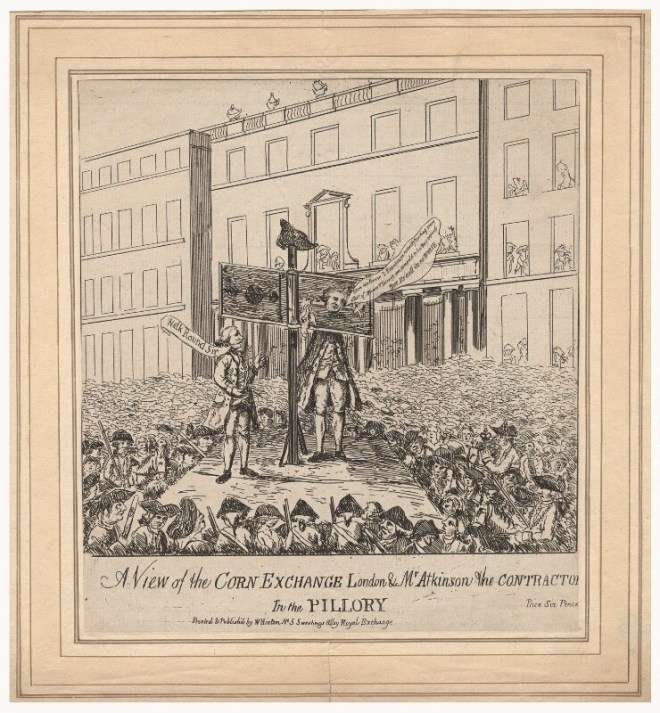
On 19th July 1783, Christopher Atkinson, MP for Hedon & corn factor, was tried in London for perjury, found guilty and committed to prison for 12 months, , first being pilloried at the Corn Exchange, London, and expelled from the House of Commons.  He resigned from his commercial post, but stood again as MP for Hedon in 1796 and 1802 and was elected. He later changed his name to Saville. picture shows Atkinson at the pillory

On 19th July 1786, Hull’s Rev George Lambert visited several sick parishioners, and commented on the contemporary habit of family and friends crowding into the room with the minister, so that the sick person was unable to speak openly.

On 19th July 1794, Edward Bogg, carpenter’s mate,  was shot and killed on board Hull fishing vessel Sarah and Elizabeth Off St Abb’s Head by the crew of a naval press gang on the frigate Aurora; 3 other crew were injured; the coroner’s court returned a verdict of wilful murder by Captain Essington; the captain was sent to the East Indies for several years and never stood trial.

On 19th July 1849, an All England Eleven cricket team played a 30-day match against a Hull amateur side at the Hull Athenaeum Club ground, Anlaby Road. Despite funding from the Hull Sheriff and both MPs, the entrance fee was 1s a day. The professionals won by an innings and 82 runs.

On 19th July 1919, 368 children living at Newland Homes, Cottingham Road, Hull, took part in official peace celebrations included games and setting fire to an effigy of the ex-Kaiser.chrisatkinson MP

July 10th

On 10th July 1157, Eustace FitzJohn, Lord of Alnwick, died this day.  He acquired substantial lands in the north, and married into the ER family of de Vescy. Fought on the Scottish side in the Battle of the Standard in 1138. Founded priories in Bridlington, Watton and North Ferriby.

On 10th July 1508, John Tod of Swine claimed sanctuary at the church of St Cuthbert, Durham, for the theft of a horse and 5 marks from chaplain N. Dale, the steward of the Lord of Hastings, and also for debt. As he claimed the theft happened 10 years earlier, presumably the debt concerned him more.

On 10th July 1642, Sir John Meldrum arrived in Hull by boat with 500 Parliamentary troops, and money, to support the town being besieged in the 1st siege of Hull. A further 1,500 troops were sent later.

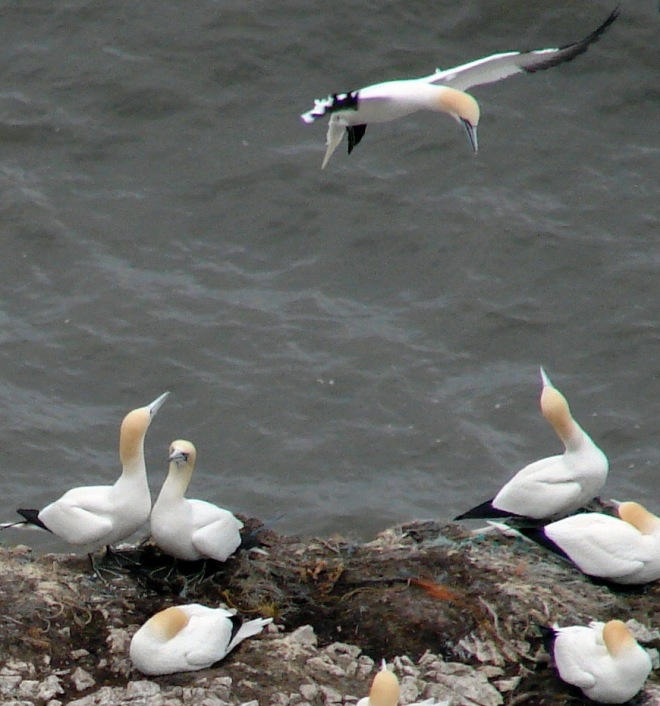
On 10th July 1869, Mr Tasker of Sheffield was found guilty at Bridlington of shooting 28 protected seabirds, and fined 2s6d for each bird killed, plus 9s costs.

On 10th July 1931, Paul Robeson, singer, actor and political activist,  performed at Bridlington Spa Royal Hall on his first trip to Yorkshire,  receiving several encores; when the Royal Hall re-opened after refurbishment in 1933, he returned to Bridlington.

gannets

July 9th

On 9th July 1905, Robert Skilling, Hull chauffeur,  caused possibly Hornsea’s first motoring offence, when under the influence of drink, he drove at 20mph from Market Place into Newbegin without sounding his horn. About 200 people who had just come out of the parish church, had to scatter.  At Leven Petty Sessions Skilling was fined £3.

On 9th July 1915, Albert Baxter, private, and former Reckitt’s employee, died in action with the East Yorkshire Regiment and is buried in RE Farm Cemetery, Heuvelland.

On 9th July 1952, Henry Saunderson, aged 13, the son of the skipper of the Cape Duner,  was a cadet at the Boulevard Nautical School who joined his father for a pleasure trip during the summer break, and was lost overboard. His father presented a cup in his memory at the school’s prizegiving day.


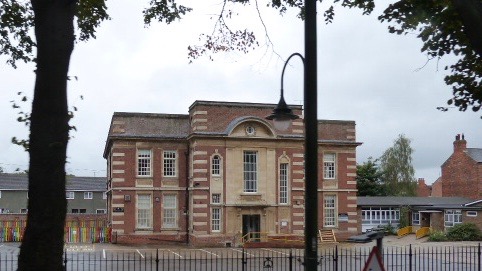
Nautical School Boulevard