July 4th

On 4th July 1399, Henry Bolingbroke (later Henry IV) landed at Ravenspurn from France with 60 men, and was joined by the Earls of Northumberland (Percy) and Westmoreland (Neville), to claim the throne from Richard II. Photo shows memorial in Easington church.

On 4th July 1524, William Richerdson, husbandman, of North Newbald claimed sanctuary at the church of St John, Beverley, for the ‘murderation’ of Anthony Godsale, husbandman of Newbald.

On 4th July 1597, William Anlaby or Andleby, a Catholic convert born in Etton, returned to UK as a priest after training in France.   He ministered to Catholic prisoners in Hull. Executed at York as a Catholic missionary priest. Beatified by the Catholic church in 1929.

On 4th July 1642, Sir John Hotham, aware that the Royalists surrounded Hull and had tried to cut off the fresh water supply, gave orders to open the sluices and cut the Humber banks in Drypool and Myton, outside the walls. He told farmers to bring their cattle and goods into the town. Hull was virtually unassailable.

On 4th July 1643, after defeat by the Royalists at Adwalton Moor, Sir Thomas Fairfax retreated to the only Parliamentary stronghold left in Yorkshire, Hull, just a few days after Hotham’s arrest.bolingbroke memorial Easington. jpg

June 30th

On 30th June 1493, William Hall of Hull claimed sanctuary in the church of St John, Beverley, for the death of Thomas Harwed, a glover, also of Hull.

On 30th June 1643, Nicholas Pearson, Parish clerk, a Puritan, reported on a ‘great scrimmage’ in the town, the day before. ‘God gave us the victory’ meaning that Parliament won. 13 Royalists were buried the same day.

On the same day in Hull, the Committee of Defence ordered that 8 men guard Captain  Hotham to prevent his escape. His father, Sir John, was kept in the Hercules in the Humber before both were taken to the Tower of London.

On 30th June 1945, Hull Aldermen Hewitt and Stark acted as driver and conductor on the last ever Hull tram, illuminated with 800 fairy lights, and watched by up to 50,000 people. Trams had operated since 1899.

On 30th June 1999, Hull’s Lord Mayor Brian Petch presided at a ceremony to note the renovation and restoration of the gates of the former RAF station in Sutton, installed at the Gillshill Road entrance to East Park.

eastparkgates1

June 29th

On 29th June 1643, Captain Hotham was arrested in Hull, but Sir John escaped and tried to cross the river to make his way to his fortified house at Scorborough. Not being able to cross at Stoneferry or Wawne, he rode to Beverley, where he found a troop of Parliamentary soldiers. He put himself at their head and ordered them to follow him.  Their commander, Matthew Boynton, countermanded the order and Hotham tried to escape through the streets, but was knocked off his horse and arrested. The Mayor, aldermen and other burgesses met to appoint a temporary Governor and committee, until Parliament could give directions.

On 29th June 1840, John Tasker was convicted of larceny at Beverley Sessions Court, and sentenced to 7 years’ transportation. At the same sessions, Joshua Needham was sentenced to 14 year’s transportation for receiving stolen goods.

On 29th June 1870, Frederick William Elwell was born in Beverley.  Painter and member of the Royal Academy, he painted portraits of King George V and TR Ferens, amongst others. His wife Mary was also an accomplished artist. (d 3.1.1958)

On 29th June 1939, the body of Thomas Smith, 27, spare hand, washed up at Paull, and was identified as one of the crew of the Lady Jeanette, which sank on 8.3.1939.

elwell

June 26th

On 26th June 1793, Captain William Hammond died aged 65 in Kirk Ella. Hull sea captain, shipowner and merchant, supporter of abolition, Chairman of Hull Dock Company, Warden of Trinity House, and diplomat. (He and David Hartley MP met Benjamin Franklin and John Adams in Paris on a possible spying mission) Buried in Welton. (b 1727 York). Photo shows a door in the Maritime Museum, former Dock Offices.

On 26th June 1854, at an event to celebrate the opening of the Hull-Withernsea railway line, 500 guests travelled from Hull on the first ever train (which was 20 minutes late, due to late arrival of guests) and part of the lunch marquee collapsed; there were no injuries. Joseph Robinson Pease in his diary recorded heavy showers and high winds threatened to tear the marquee to pieces, but that it subsided and all passed off well.

On 26th June 1920, the National Federation of Women Workers called its Hull laundry worker members out on strike, as they were paid less than in other towns. Hull Trades Council supported the strike and organised a parade on 17 July. Strike breakers were reported being smuggled in to work in laundry baskets.

Hull Dock Co

June 25th

On 25th June 1488, brewers Cornelius Jonson and William Rowyll, both of Hull, claimed sanctuary at the church of St John, Beverley, for a murder they both admitted; unfortunately, the register does not record who they killed, or why.

On 25th June 2007, Michael Barnett died of hypothermia in Hessle during catastrophic flooding when he became trapped trying to unblock a drain; 10,500 homes were evacuated in Hull and East Riding; many people were unable to return home for several months. photo shows Wold Road area of Hull.

On 25th June 2010, Alan Plater, playwright and prolific TV dramatist, died on this day. Lived in Hull from age 3, and a life-long Hull City supporter. In 1970, co-founded the Humberside Arts Centre, in Spring Street (later Humberside, then Spring St Theatre). Wrote ‘Don’t build a bridge, drain the river’ about Hull, and ‘Sweet Sorrow’ for Hull Truck about Philip Larkin. Awarded several BAFTAs and a Lifetime Achievement Award from the Writers’ Guild of Great Britain. (b 15.4.1935 Jarrow)

Hull Floods 2007

June 24th

On 24th June 1381, King Edward III issued a writ ordering rebel supporters of the Peasants’ Revolt to be arrested and punished.

On 24th June 1392, lightning struck Keyingham church and caught fire, and residents took ladders to douse the fire on the roof; a ladder holding 13 men broke, but no-one was injured, which was put down to a miracle of St Philip Ingleberd.

On 24th June 1643, Capt John Hotham,  having escaped from arrest, fled to Lincoln, planning to seize it for the King, and wrote to Parliament to say he could answer all charges against him. From Lincoln, he returned to his father in Hull.

On 24th June 1867, Charles Edward Smith, ship’s surgeon, aged 30, was presented with an illuminated testimonial, and a case of surgical instruments, in recognition of his gallant conduct on the whaler Diana of Hull, which had been trapped for months in ice and whose crew had suffered privations leading to scurvy.

On 24th June 1943, Mr T.R. Gale, of Estcourt Street, Hull, performed an act of gallantry during an air raid, for which he was later awarded the British Empire Medal. On the same night, Civil Defence volunteer Albert Henry Prissick of 15 Mersey Street, lost his wife and baby son, but carried on with the rescue of his neighbours. Hull Municipal Museum, Albion Street, was destroyed by fire.

On 24th June 1981, the Humber Bridge was opened to traffic; for 17 years it was the world’s longest single-span suspension bridge. On the same day, the Humber ferry service ended.

On 24th June 2011, marine artist Colin Verity died aged 87 in Market Weighton. Educated at Malet Lambert School, Hull and School of Architecture, Hull University. Flew Spitfires during WW2. Became principal architect, Hull City Council. Member RIBA, Royal Socy of Marine Artists, President Hornsea Art Society.  (b Darwen Lancs 7.3.1924)


Humber Bridge


June 23rd

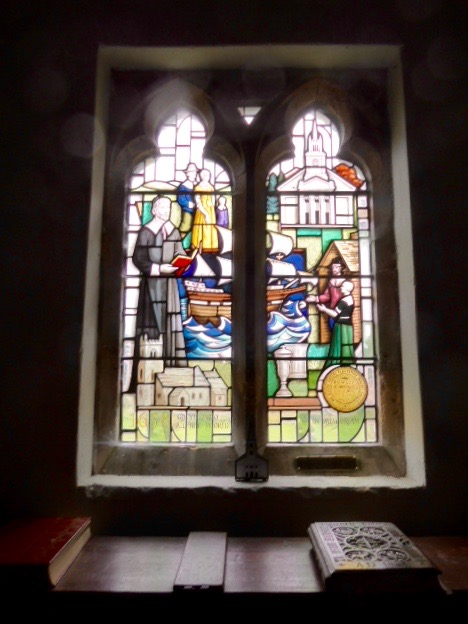
Ezekiel Rogers window

Ezekiel Rogers window, Rowley church.

On 23rd June 1660, Reverend Ezekiel Rogers died aged 70, in Rowley, Massachusetts, after 22 years as vicar of a new Puritan settlement.  The new town was named after Rowley in East Yorkshire, from where he led a group of about 100 Puritans to America in June 1638. Became Rector of Rowley in 1621, aged 31, and served there for 17 years. (b 1590 in Wethersfield, Essex)

On 23rd June 1766, Sara Jenkinson, the infant daughter of Richard Jenkinson of Hutton Cranswick, fell from a little girl’s arms and died within 30 minutes. There was a coroner’s inquest.

On 23rd June 1768, John Courtney, aged 34, gentleman, of Beverley, married Mary Jesse Smelt, aged 24, at St Mary’s, Lowgate. The bride dressed in a white ‘night gown’ and white hat, the groom in a white suit. Only family and servants attended the church and family members dined with them afterwards. The bells of both churches rang for them. They returned to their future home in Beverley in the evening. In his diary, John refers to his future wife at all times as ‘Miss Smelt’.

On 23rd June 1787, the Clerk to the Beverley to Driffield Turnpike Trust wrote to T. Baxter, the owner of Bell Mills, Sunderlandwick, threatening him with prosecution if he allowed anyone to cross his land to avoid paying tolls. 2 months later the Trust asked T. Baxter to lock the gate near his mill, and to prosecute anyone who broke it down.

On 23rd June 1812, Major-General Barnard Foord Bowes of Cowlam was wounded at Battle of Badajoz, but recovered to fight at Salamanca.

On 23rd June 1848, Uckaluk died of measles aboard the Hull ship Truelove, on their way home to Nyadlik, Greenland. She and her husband Memiadluk had visited England to highlight the poor conditions in their homeland.  They took part in talks in Manchester and York. 

On 23rd June 1853, Captain John (or Thomas) Bowlby set sail for Cumberland Sound in the Arctic with 3 ships, with the aim of forming a settlement there; they took goats and building materials. The surgeon on the trip was William Gedney, who had been on board the Truelove with Captain Parker in 1847.

On 23rd June 1898, Winifred Holtby was born at Rudston. Social reformer, novelist and journalist, she was famous and respected for her work in South Africa and elsewhere. ‘South Riding’ became her most famous novel, published after her death. She is buried in Rudston. (d 29.9.1935)

June 22nd

On 22nd June 1587, John Truslove, Mayor of Beverley, asked Hull Mayor, Luke Thruscross, to release a prisoner from Hull gaol who was held for wounding a young Beverley man.  The record does not indicate why he was released.

On 22nd June 1669,  William Lister MP wrote to the Hull mayor concerning the question of fining an alderman living out of town and absenting himself from office.

On 22nd June 1897, Mappleton villagers celebrated Queen Victoria’s Diamond Jubilee with sports for children and adult races, and sweets were thrown on the grass for the children to scramble for.

On 22nd June 1900, Herbert Hebb of Leven, private in Volunteer Service Company, 2nd East Yorkshire Regiment, died aged 22 at Winburg, South Africa, in the Boer War.

On 22nd June 1940, Miss F. Livingstone, owner of Mappleton windmill, was doing war work in Sheffield when the mill was requisitioned, as furnished, by the War Dept for use by the Army. 2 soldiers from the 2ndDorsetshire Regiment were billeted there. By October, they had left, and the house was badly damaged, all furniture having been used for firewood. In 1943 the War Dept offered her £10. The outcome of the claim is not known.


EY regiment 1908

June 21st

On 21st June 1366, Sir William de la Pole died. The first Mayor of Hull, knighted by Edward III, was lord of Myton. He acquired some land just outside Hull where there was a college of 6 secular priests. They were replaced by Franciscans, then Sir William pulled down the buildings and built a hospital. Then he introduced Poor Clare nuns and poor people, but did not live to complete his plans. His son Michael introduced Carthusian monks, and the Charterhouse came into being.

On 21st June 1535, Winestead priest Christopher Michell told his congregation to recognise the Pope as head of the church, in spite of instructions to honour Henry VIII as Supreme Head of the English Church. Michell was jailed in Beverley.

On 21st June 1643, John Pym reported to Parliament on the actions of Capt John Hotham, in charge of troops near Newark, who had allowed his men to harass and steal from local people, turned a gun on Cromwell, and generally acted insolently and in an undisciplined way, and was also suspected of communicating secretly with the Queen. Later, Hotham escaped from prison.

On 21st June 1908, Hull women hired a special train to London for a “Women’s Sunday” rally organised by the WSPU, attended by 300,000 to 500,000; the Hull contingent is said to be the largest from any provincial society.

On 21st June 1915, children from Mappleton School went to Rolston Camp to see the troops depart for France; they marched to Hornsea train station.

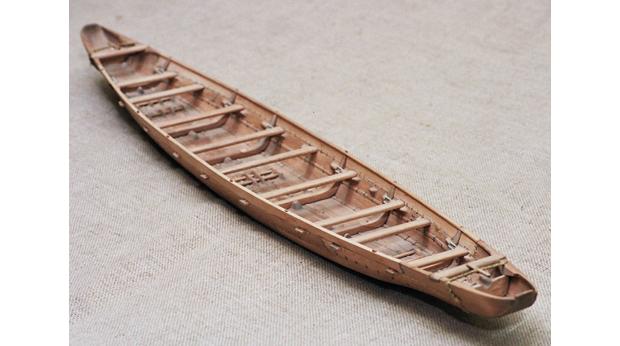
On 21st June 1918, Edward Vere Wright was born in Elloughton. Amateur archaeologist and palaeontologist, he found the first of the 4,000 year old Ferriby boats, with his brother Claude in 1937. In 1940, Ted found a 2ndboat, and with his son Roderick in 1963, a 3rdboat. (d 18.5.2010) photo shows a model of one of the boats in Hull & ER Museum.

On 21st June 1993, Hilary Catherine Brown of Tibthorpe died aged 13. (born Bolzano 12.9.1979) Hilary wrote this verse, which is written on her gravestone in Kirkburn church: The storm finished, the night diminished, the day progressed, bringing a sparkling dawn.


Ferriby boat model ERmuseum

June 20th

Hull Corpn silver


On 20th June 1533, the Hull Mayor and town council sold to Sir Edmund Perkins the ornaments of the churches in the town, for £15. They also gave to Sir Frauncis Jobson, Treasurer of His Majesty’s jewellers, ’24oz of silver plate whereof 7oz were double gilt and the rest part gilt and plain white, handed over for His Majesty’s use’. photo shows some of today’s corporate treasures.

On 20th June 1579, Edward, son of Nicholas Symson of Thorpe, because of the outbreak of plague at Howden, had to be baptised at Eastrington rather than in the parish church.

On 20th June 1583, Hull agreed to 10s compensation to Richard Frere for the loss of hay and his cote during the time when plague was in the town.

On 20th June 1642, Maurice Corney, vicar of St Mary’s Hull and Capt William Thornton, comptroller of customs were discussed by Sir William Strickland, Mr Alured, Mr Peregrine Pelham and Mr John Hotham, as a danger to Parliament’s cause. Sir John Hotham ejected Corney from the town, and he left for York, despite being considered a hero for his work during the recent plague. Thornton was also turned out, and joined the King’s service.

On 20th June 1645, John Blenkarne, master of the Hull ship Anne Dorothy, was moored in Marstrand, Sweden. He accused crewmen Peacock and Dynnis of inciting mutiny when they came aboard drunk, threatened him, and after a night in custody refused to come aboard until threatened with imprisonment. When they returned to home port, the court of Trinity House fined them and jailed them for 24 hours.

On 20th June 1761, Beverley widow Elizabeth Courtney, of Walkergate, paid the bellman to go round the town announcing a reward of 3 guineas to anyone with information about bricks thrown through her windows the previous night.

On 20th June 1810, Hull Trinity House reported raising £300 in 9 weeks towards establishing a lifeboat at Spurn.

On 20th June 1895, an auction was held in 2 fields in Bransholme Lane, Sutton, of ‘The Sweep of the Scythe’ of 25 acres of ‘rich meadow’, and also the ‘Eatage of the Fog’ up to the end of the year. This appears to have been dialect for the sale of hay cut for fodder for cattle.