October 18th

On 18th October it was the tradition, on St Luke’s Day, to appoint an official dog-whipper to keep dogs out of church, and to whip any dogs found in the streets; the tradition is said to have begun when a dog ate a consecrated wafer in York Minster.

On 18th October 1654, The Petition of the Three Colonels or The Humble Petition of Several Colonels of the Army was published, authored by Alured, John Okey and Thos Saunders. Colonel Matthew Alured, brother of Hedon MP John Alured, lost his commission, and was imprisoned for a year for stirring up dissatisfaction with Parliament among English troops in Ireland.

On 18th October 1833, Capt John Ross was granted the Freedom of the Town of Hull. Having returned to Hull on expedition to find the lost Isabella, was then himself thought lost.  (He was also granted the freedoms of London, Liverpool, Bristol and Wicklow)

On 18th October 1850, the Hull Advertiser reported that the ring leaders of a riot which resulted in the deaths of 4 Irish labourers on Sunk Island in July were found guilty of riot and sentenced to 4 months each with hard labour.They were: Robert Smith, John Londsbro, George Bellamy, John Dent, George Bielby and Fewson Towse.
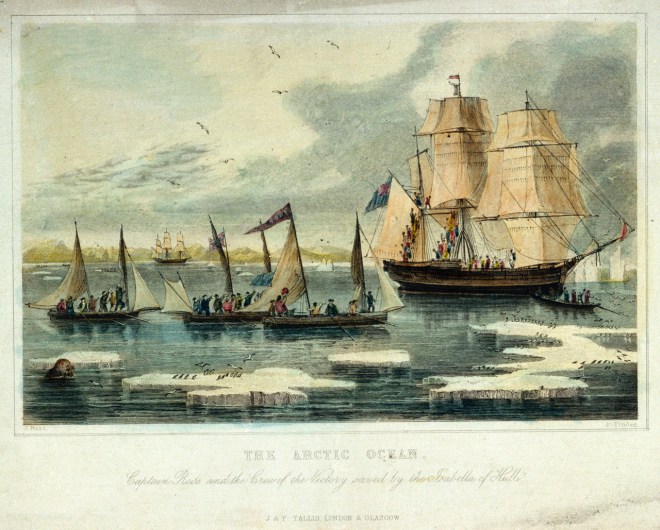
 

John_Ross_rescued_by_Isabella,_1833

October 17th

On 17th October 1285, Richard son of Walter le Pessoner, clerk, while sick and delirious in the hospital in Beverley, killed Brother Walter, his ‘dear master’; the jury declared death by misadventure, and imprisoned Richard indefinitely.

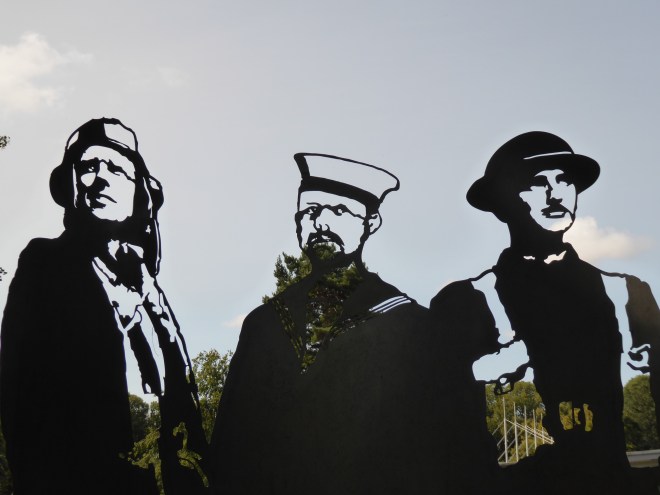
On 17th October 1917, former Reckitt’s employee Private Frederick Bartholomew Coupland, 29, was killed in service with the Royal Army Medical Corps, whilst bandaging a comrade’s wounds. Buried at Langemark, Belgium. photo shows Services Memorial, East Park.

Services memorial, E Pk

October 16th

john de sutton


On 16th October 1312, John de Sutton of Sutton-on-Hull was listed with other followers of the Earl of Lancaster as pardoned for his part in the death of Piers Gaveston, King Edward II’s favourite and Lord of Holderness. photo of Sutton church

On 16th Ocotber 1617, John Gildas confessed to the Patrington Manor Court that he had 3 times stolen barley and beans from Mr Hall’s (the rector) tithe barn.

On 16th October 1763, Ann Chameron was buried in Hutton with no ceremony, as she was a Catholic. Burial by a Catholic priest would have incurred a £20 fine.

On 16th October 1939, New Theatre (Hull) Limited, Kingston Square, opened with a production of “Me and my Girl’ by Noel Gay.


October 14th

On 14th October 1498, Richard Symonde of Beverley claimed sanctuary at the church of St John, Beverley, for debt, to avoid or delay his creditors pursuing him.

On 14th October 1523, Henry Draper, a draper from Snaith, claimed sanctuary at the church of St John for debt.

On 14th October 1654, Elizabeth Roberts of Beverley was charged with witchcraft at York Castle, for attacking John Greencliffe in the forms of a cat and a bee. She seems to have avoided the gallows.

On 14th October 1854, Queen Victoria visited Hull, to huge celebrations; she knighted the Mayor, Sir Henry Cooper, at the pier. In the group of worthies welcoming her were Lord Hotham and Robert Raikes, descendants of the Hull Governor and Mayor who shut the gates against King Charles I.  Joseph Robinson Pease in his diary said ‘Hull has now wiped off the disgrace of 200 years’.

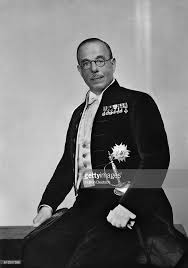
On 14th October 1869, Joseph Duveen was born in English Street, Hull. He became the greatest art dealer of his time, possibly of all time. He was knighted, eventually becoming Lord Duveen, and was made a freeman of Hull in 1929. He sold European Old Masters to the US. Donated works to the Ferens Gallery, British Museum, National Gallery and Tate Gallery. Died 1939.


lord duveen

October 13th

Wm Bradley


On 13th October 1593, Oswold Ridinge, Robert Greene, William Giltencrosse, Steven Gedney, and William Deane were all before Patrington Manor Court for making affray, upon each other, and upon Thomas Blenckarne, and drawing blood of Oswold Ridinge; fined 3 shillings and 4 pence.

On 13th October 1743, William Wilberfoss Smith III died aged 75 Wrightstown, Bucks County, Province of Pennsylvania, USA. Emigrated from Weighton, Yorkshire in 1684 as an indentured servant to William Penn, and in 1686 built a cabin which is considered to be the oldest continuously occupied home in the United States.

On 13th October 1799, Rev George Lambert was called to pray with a Hull woman who had been in labour for several days, and treated by 4 surgeons who could not deliver the baby. She died.

On 13th October 1815, William Bradley, the Yorkshire Giant,  printed handbills inviting visitors to see him at 15 Queen Street, Hull during Hull Fair for a shilling.

On 13th October 1857, John Johnson, chimney sweep, was fined £5 or 7 days in prison at Beverley Magistrates Court, for employing a boy of 13 to go up a chimney in the house of Wilberforce Herdsman. Employing under 21s as sweeps was not finally outlawed nationally until 1875. Legislation in 1840 set the minimum age at 16, but was rarely enforced.

On 13th October 1859, the Theatre Royal, Humber Street, Hull, burnt down just 10 days after re-opening following a fire in September.

On 13th October 1926, in a 2-day visit to Hull, HRH Prince of Wales laid the foundation stone of the Ferens Art Gallery, visited HERIB and other factories and institutions, and took a trip on the Humber in SS Brocklesby. At Craven Park, 10,000 schoolchildren sang for him. Crowds were estimated at 200,000. this interesting clip begins with a reference to the West Riding, but stick with it, Hull is definitely there. https://www.youtube.com/watch?v=YQhZrcaMUuo

October 9th

On 9th October 1487, John Kape, husbandman of Kilham, confessed to killing Thomas Holme, labourer, with a dagger, and claimed sanctuary in the church of St John, Beverley.

On 9th October 1830, the whaler Abram was the first of the Hull fleet to return to port after a disastrous season in which 6 Hull ships were lost, and 15 from other ports.  Capt Edward Dannatt of the Progress reported the loss of his ship and the others. Most of those which returned in October and November had very poor catches.

On 9th October 1929, fire officers were called out to a fire at Howden Minster, thought to be arson. They had no access to a water supply, and had to use the moat in the Ashes Park. All 8 bells fell from the tower and had to be recast.

On 9th October 1953, Fred Elwell was made an honorary freeman of Beverley for his contribution to art. Several of his works are in Beverley Treasure House.

Fred Elwell

October 8th

On 8th October 1536, Beverley men mustered on Westwood Low Green in response to the Lincolnshire rebellion against the Act of Dissolution. Elizabeth Stapleton encouraged them, despite the reluctance of her husband, and her brother-in–law William Stapleton became the rebels’ captain.

On 8th October 1643, Capt Strickland led a failed Royalist attack on Hull’s Hessle Gate, and was shot dead. Many of the attackers were killed.

On 8th October 1708, William Robinson died in Hull. Former Sheriff of Hull, donor of a hospital to Trinity House, left bread for 12 widows to be given each year on Christmas Day. They were required to go to his grave in Holy Trinity churchyard to receive their dole.

On 8th October 1805, Beverley corporation ordered that all rogues and vagabonds found wandering in the town must be apprehended and conveyed to a magistrate. A board  showing this order can be seen in St Mary’s church loft.

On 8th October 1862, Hornsea businessman Joseph Armytage Wade turned the first sod with a silver trowel at a ceremony to mark the start of building the Hull to Hornsea Railway.

On 8th October 1874, George Wombwell visited Beverley on his way to Hull Fair; in Saturday Market he exhibited elephants, giraffes, a rhino, and big cats; other shows also stopped over in the town before going to Hull.

On 8th October 1929, Wm Jackson & Son Ltd opened their landmark store in Paragon Street, Hull, designed by Hull architects Gelder and Kitchen, with a cafeteria and restaurant on the first floor. After the war, when the fire-damaged property was repaired, a 3rd floor was added as a ballroom. This was to become one of the city’s most popular night-spots for many years.

On 8th October 1985, Clive Sullivan MBE died aged 42. 1st black captain of any British national sporting team. He played rugby league with both Hull and Hull Kingston Rovers during his career. Holds records for most tries in a career (250) and most tries in a match (7). Commemorated in Clive Sullivan Way and the Clive Sullivan Memorial Trophy.(b 9.4.1943 Cardiff)


Clive Sullivan

October 7th

On 7th October 1659, William Stallen of Patrington was fined for slander, accusing Jeames and Mary Adams of stealing John Reynard’s corn.

On 7th October 1846, the York & North Midland Railway opened the line from Hull to Beverley; on 1.5.1865 the line from York was extended south from Market Weighton.

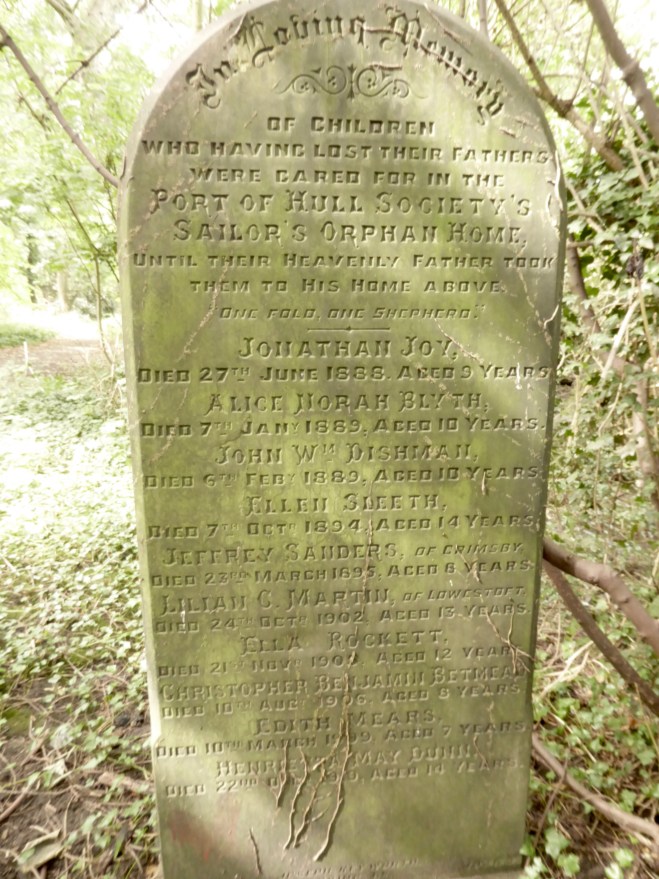
On 7th October 1894, Ellen Sleeth, aged 14, died in the care of the Port of Hull Society’s Sailor’s Orphan Home. There is a memorial in Western General Cemetery

On 7th October 1920, the sale of the Rolston Estate took place after the sudden death of Major Haworth-Booth, with 1577 acres sold, including 9 farms, Rolston Hall, cottages, waterworks and a rifle range.

Orphan deaths, Sailor's Orphan Home

October 6th

site of Haltemprice Priory

On 6th October 1515, the Sheriff of Hull, Mr Mattison and 200 citizens fought the monks of Haltemprice Priory and threatened to pull down the monastery, over a dispute concerning jurisdiction over Wolfreton and Willerby, and fresh water supplies. Peace was restored by the Mayor of Hull, George Mattison and the issue was eventually resolved in the Star Chamber. One of many incidents in Hull’s ‘water wars’. photo shows site of the monastery.

On 6th October 1613, an enquiry determined that a chantry dedicated to St Mary, and a chaplain to celebrate daily services there, had been paid for by 6 1/4 acres of land, 10 messuages and 3 tofts, given to the town of Hedon by John de Burton and Henry Maupas. Chantries were abolished by Edward VI, along with other signs of Catholicism.

On 6th October 1670, Ann Barone was fined in the Patrington manor court for not making bread according to the assize – i.e. not the regulation size, weight etc.

On 6th October 1748, Mary Jackson, tenant farmer of Everingham, lost 36 of her 45 cattle to rinderpest, the cattle plague then affecting much of the East Riding.

On 6th October 1850, Hedon solicitor James Iveson, died after a long career controlling the political life of Hedon, a Rotten Borough described as ‘Lawyer-ridden’. He was also Town clerk, Mayor, land agent, and steward on behalf of the Constables of the Holderness Seigniory. The Iveson dynasty was involved in land enclosures, surveying and other profitable work. James was renowned for rudeness. Part of an ultra conservative council which for years resisted public health improvements. Collector of architectural remains from demolished churches. Engaged for some 20 years of protracted negotiation with Trinity House over Spurn Point.  portrait in Hedon Town Hall

On 6th October 1890, Chas Collier, aged 17 years, former pupil of Hull Trinity House School, died of typhoid fever in the Barque Miltiades off the west coast of Africa.

James Iveson, Hedon Town Clerk

October 2nd

On 2nd October 1200, King John gave permission for an annual fair at Howden lasting a week; by the 19th Century it had become the biggest horse fair in England, but by 2007 Howden Fair had reduced to a 1-day event.

On 2nd October 1504, Thomas Henrison, husbandman of Skipsea, claimed sanctuary at the church of St John, Beverley, for debt.

On 2nd October 1518, Thomas Weston, a ‘singingman’, from Snaith, claimed sanctuary at the church of St John, Beverley, for debt.

On 2nd October 1541, the Privy Council of England sat in Hull.

On 2nd October 1658, Capt Robert Hildyard of Patrington left £10, half the interest of which was to be used to repair the bell frames, and the other half distributed to the poor for ever. photo shows his memorial in St Mary’s Lowgate, Hull.

On 2nd October 1738, Dick Turpin, alias John Palmer, was arrested for breach of the peace, shooting a gamecock in Brough and threatening to shoot a man. He was held in Beverley, where the JPs committed him to trial at York. It was believed that while living in East Yorkshire posing as a horse dealer, he took frequent trips to Lincolnshire to steal horses. He was hanged in York 7.4.1739. photo – Welton

On 2nd October 1883, Arthur Mallaby Illingworth, aged 7 months, died of scarlet fever. An epidemic had affected Hull since the previous year, killing over 600 people, mostly children under 5.  A brother born the following year, and named Arthur Mallaby Rawnsley Illingworth, died at 18 months, probably of the same cause.