October 19th

On 19th October 1469, John Fisher was born in Beverley, the eldest son of Robert and Agnes Fisher. Chancellor of Cambridge University, Bishop of Rochester, and chaplain to royalty.  He was executed for treason 22.6.1535 on Tower Hill, for speaking out against Henry VIII’s divorce, and refusing to acknowledge the heirs of Henry and Ann Boleyn as legitimate successors to the throne. A Catholic martyr, he was canonized as St John Fisher.

On 19th October 1781, Rev George Lambert reported in his diary on a very high tide which inundated many houses in Hull.

On 19th October 1826, a Huggate parish jury of 12 men, 2 affearers (assessors of fines) and the pinder, set penalties for anyone allowing cattle into public lanes at night at 2s6d per head, for the first offence, and 5s per head for every offence afterwards; for allowing pigs in the streets without a ring between May Day and Michaelmas 3d per head; for allowing geese in the streets between Old Mayday and Old Lammas, 1s; for allowing anyone to stay who does not have a certificate allowing them to settle, £1 19s 11d.

On 19th October 1890, John Connell, boatman, of Waxholme, in the Coastguard Service, took part in the rescue of crew from the Grimsby vessel Genesta when it ran aground. All were rescued, except the captain, who died of exposure. Connell went on to the vessel as it was breaking up to rescue a man too weak to help himself. Connell was awarded the Humane Society Silver Medal. The unmanned vessel broke free the following day and travelled to Withernsea.

On 19th October 1964, rail passengers took their last trips on the Hull to Withernsea and Hull to Hornsea rail lines, which closed as a result of the Beeching Report. Goods services to Withernsea continued to 30.4.1965, to Hedon 3.5.1965, and to Marfleet to 1972. photo shows part of Hornsea Rail Trail today.
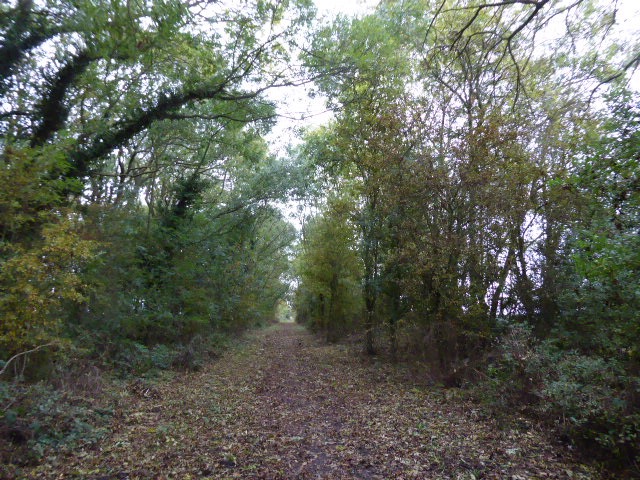
Hornsea Rail Trail


October 18th

On 18th October it was the tradition, on St Luke’s Day, to appoint an official dog-whipper to keep dogs out of church, and to whip any dogs found in the streets; the tradition is said to have begun when a dog ate a consecrated wafer in York Minster.

On 18th October 1654, The Petition of the Three Colonels or The Humble Petition of Several Colonels of the Army was published, authored by Alured, John Okey and Thos Saunders. Colonel Matthew Alured, brother of Hedon MP John Alured, lost his commission, and was imprisoned for a year for stirring up dissatisfaction with Parliament among English troops in Ireland.

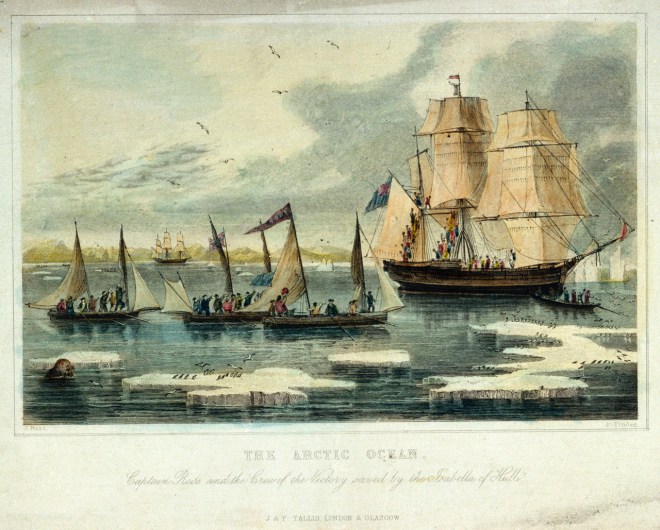
On 18th October 1833, Capt John Ross was granted the Freedom of the Town of Hull. Having returned to Hull on expedition to find the lost Isabella, was then himself thought lost.  (He was also granted the freedoms of London, Liverpool, Bristol and Wicklow)

On 18th October 1850, the Hull Advertiser reported that the ring leaders of a riot which resulted in the deaths of 4 Irish labourers on Sunk Island in July were found guilty of riot and sentenced to 4 months each with hard labour.They were: Robert Smith, John Londsbro, George Bellamy, John Dent, George Bielby and Fewson Towse.


John_Ross_rescued_by_Isabella,_1833

October 15th

On 15th October 1536, Hull besieged by troops of local men, from of Holderness, Cottingham, Beverley and Hullshire supporting the Pilgrimage of Grace.  William Stapleton reported he had trouble restraining the Beverley men under his command from setting fire to shipping in Hull haven. He sentenced 2 ‘unmanageable’ followers to death, but reprieved both after inflicting one with the punishment of being towed behind a boat by a rope attached to his waist.

Pilgr Grace

October 12th

On 12th October 1536, 9,000 armed men from across East Yorkshire mustered on Market Weighton Hill as part of the Pilgrimage of Grace. Robert Aske led one group to York via Pocklington, and William Stapleton led a march on Hull, besieged it and captured it for the rebels. Holderness gentry Sir John Constable, Sir Wm Constable and Sir Ralph Ellerker had taken refuge in the town from the revolt.

On 12th October 1643, the Earl of Newcastle abandoned the 2ndsiege of Hull after 5 weeks and withdrew Royalist forces to York. To prevent pursuit, the Royalists destroyed bridges and roads and cut the banks of waterways as they retreated. The date was observed as a day of public thanksgiving in Hull until the Restoration.

On 12th October 1697, Robert Pattinson, Humber pilot, was fined 30shillings for damaging the ‘dolphin’ at the entrance to the River Hull while handling a vessel entering the Haven.

On 12th October 1767, Beverley gentleman John Courtney reported in his diary seeing a firework display for the first time, in the Market Place, paid for by subscription.

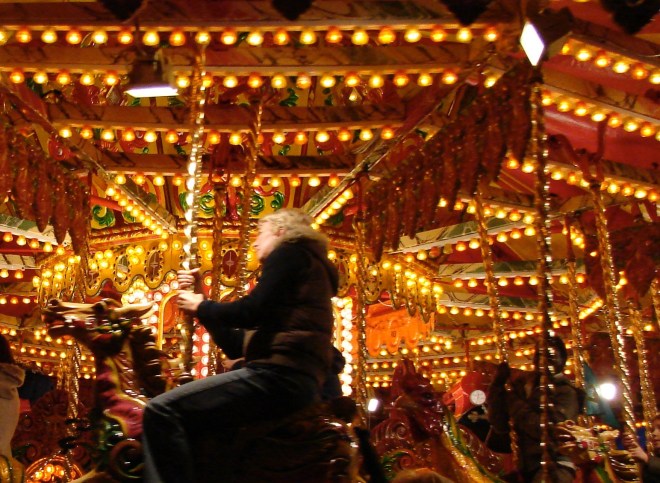
On 12th October 1896, at Hull Fair, one of the attrractions was the first showing in Hull of moving pictures, only 8 months after Louis Lumiere’s first performance, included scenes of Whitefriargate, the W’force Monument, the Corporation Pier, the Humber Ferry.

On 12th October 1933, Louis Armstrong performed at Beverley Road Baths, Hull, during his European Tour.


louis armstrong

October 11th

ON 11th October 1536, Marmaduke Thomson, vicar of Preston, rang the church bell and called parishioners to meet at Nuthill, where he swore in local men to join the Pilgrimage of Grace. Around 300 Holderness men left to assemble at Sutton Ings. (& see 10.10)

On 11th October 1643, 1500 Parliamentary troops left the besieged town of Hull and after 2 attempts and many hours’ fighting, drove the Royalists out of all their positions around the town.

On 11th October 1782, Rev George Lambert described Hull Fair as ‘A season for the amusement of children and the gratification of gluttony’.

On 11th October 1929, Mrs Edith Robson officially opened Hedon Road Maternity Hospital, the successor to the free maternity home for poor mothers, which she gave as a gift, fully equipped, to Hull Corporation in 1915.


fair 07

October 10th

On 10th October 1536, a large crowd of armed men from Holderness supporting the Pilgrimage of Grace met on Beverley Westwood and Sutton Ings and chose captains.

On 10th October 1596, the Howden churchwardens gave 8d to Oswald Metcalfe, a poor man, licensed by My Lord Grace and the Council (i.e. given licence to beg while on his way to his home parish).

On 10th October 1918, former Reckitt’s employee gunner George Henry Saul, 26, died of wounds while serving with the Royal Garrison Artillery. Buried Etaples, France.

Pilgr Grace

October 8th

On 8th October 1536, Beverley men mustered on Westwood Low Green in response to the Lincolnshire rebellion against the Act of Dissolution. Elizabeth Stapleton encouraged them, despite the reluctance of her husband, and her brother-in–law William Stapleton became the rebels’ captain.

On 8th October 1643, Capt Strickland led a failed Royalist attack on Hull’s Hessle Gate, and was shot dead. Many of the attackers were killed.

On 8th October 1708, William Robinson died in Hull. Former Sheriff of Hull, donor of a hospital to Trinity House, left bread for 12 widows to be given each year on Christmas Day. They were required to go to his grave in Holy Trinity churchyard to receive their dole.

On 8th October 1805, Beverley corporation ordered that all rogues and vagabonds found wandering in the town must be apprehended and conveyed to a magistrate. A board  showing this order can be seen in St Mary’s church loft.

On 8th October 1862, Hornsea businessman Joseph Armytage Wade turned the first sod with a silver trowel at a ceremony to mark the start of building the Hull to Hornsea Railway.

On 8th October 1874, George Wombwell visited Beverley on his way to Hull Fair; in Saturday Market he exhibited elephants, giraffes, a rhino, and big cats; other shows also stopped over in the town before going to Hull.

On 8th October 1929, Wm Jackson & Son Ltd opened their landmark store in Paragon Street, Hull, designed by Hull architects Gelder and Kitchen, with a cafeteria and restaurant on the first floor. After the war, when the fire-damaged property was repaired, a 3rd floor was added as a ballroom. This was to become one of the city’s most popular night-spots for many years.

On 8th October 1985, Clive Sullivan MBE died aged 42. 1st black captain of any British national sporting team. He played rugby league with both Hull and Hull Kingston Rovers during his career. Holds records for most tries in a career (250) and most tries in a match (7). Commemorated in Clive Sullivan Way and the Clive Sullivan Memorial Trophy.(b 9.4.1943 Cardiff)


Clive Sullivan

October 6th

site of Haltemprice Priory

On 6th October 1515, the Sheriff of Hull, Mr Mattison and 200 citizens fought the monks of Haltemprice Priory and threatened to pull down the monastery, over a dispute concerning jurisdiction over Wolfreton and Willerby, and fresh water supplies. Peace was restored by the Mayor of Hull, George Mattison and the issue was eventually resolved in the Star Chamber. One of many incidents in Hull’s ‘water wars’. photo shows site of the monastery.

On 6th October 1613, an enquiry determined that a chantry dedicated to St Mary, and a chaplain to celebrate daily services there, had been paid for by 6 1/4 acres of land, 10 messuages and 3 tofts, given to the town of Hedon by John de Burton and Henry Maupas. Chantries were abolished by Edward VI, along with other signs of Catholicism.

On 6th October 1670, Ann Barone was fined in the Patrington manor court for not making bread according to the assize – i.e. not the regulation size, weight etc.

On 6th October 1748, Mary Jackson, tenant farmer of Everingham, lost 36 of her 45 cattle to rinderpest, the cattle plague then affecting much of the East Riding.

On 6th October 1850, Hedon solicitor James Iveson, died after a long career controlling the political life of Hedon, a Rotten Borough described as ‘Lawyer-ridden’. He was also Town clerk, Mayor, land agent, and steward on behalf of the Constables of the Holderness Seigniory. The Iveson dynasty was involved in land enclosures, surveying and other profitable work. James was renowned for rudeness. Part of an ultra conservative council which for years resisted public health improvements. Collector of architectural remains from demolished churches. Engaged for some 20 years of protracted negotiation with Trinity House over Spurn Point.  portrait in Hedon Town Hall

On 6th October 1890, Chas Collier, aged 17 years, former pupil of Hull Trinity House School, died of typhoid fever in the Barque Miltiades off the west coast of Africa.

James Iveson, Hedon Town Clerk

September 19th

On 19th September 1069, Northumbrians (incl Morcar and Edwin) with help of Danes besieged York and took Sir Wm Mallet hostage; in retaliation, William razed York to the ground and began the Harrying of the North. In effect, this was ethnic cleansing; some villages in the East Riding were still worth a fraction of their value 20 years later, or simply described as ‘waste’.

On 19th September 1532, William Orrell, a gentleman from Hull, was recorded as having been in the sanctuary of Westminster Abbey for about a year.  He had confessed to murdering Hull merchant John Lownde and was involved in complex legal questions as to whether he was an outlaw or not. He lobbied the King for restoration of his properties and positions, and by the 1540s was described as a gentleman of the King’s household.

On 19th September 1576, orders were given by Mayor and aldermen in York that the  house and shop of Gregory Burgess, physician & apothecary, should be shut up, probably because he had moved to Hull the previous year to treat people suffering from plague; and that he should be banned from entering York until further orders.

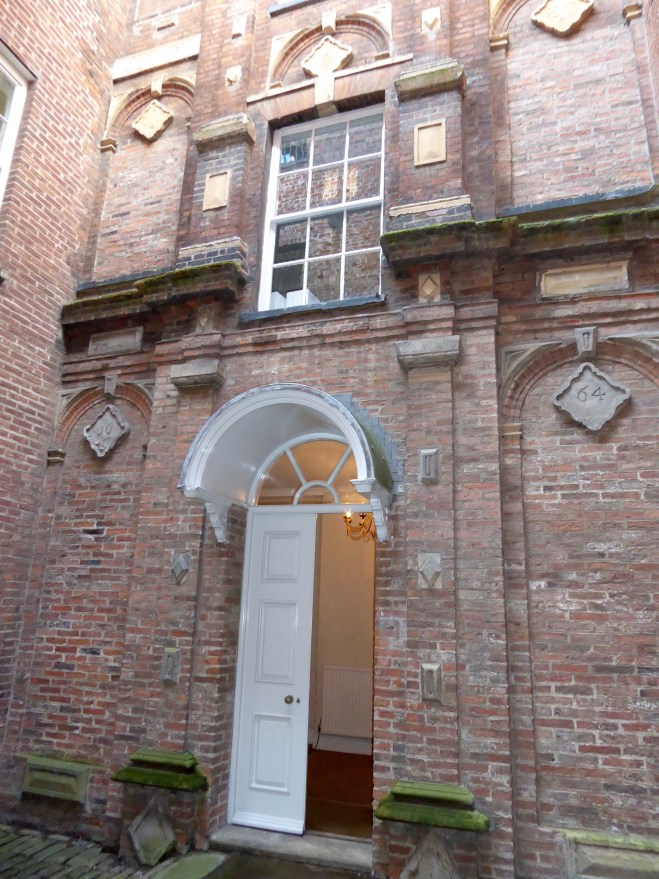
On 19th September 1674, bricklayer/builder William Catlyn, was elected Sheriff of Hull, but petitioned the town, pleading that his work took him to Lincolnshire, and he was unable to carry out the post. His petition seems to have succeeded, but he eventually became sheriff in 1683. Catlyn was responsible for building Wilberforce House, Crowle House, the Charterhouse and Master’s House (1628-1709). Brother of John Catlyn, Master of Hull Grammar School. photo shows Crowle House

On 19th September 1935, Herbert Morrison MP, and later High Steward of Hull, officially opened Queens Gardens, formed after the Queen’s Dock was closed in 1930. On the same day, the Wilberforce Monument, which had been moved from Monument Bridge, was rededicated by Wilberforce’s great granddaughter, Mrs Arnold Reckitt (nee Ann Barbara Wilberforce). Another relative of Morrison’s, Lord Peter Mandelson, later became High Steward of Hull.Crowle House

September 15th

On 15th September 1415, Henry V issued a General Pardon to the Mayor and town of Hull.  It is not clear for what they were being pardoned, though it may have been a general relaxation of taxes in gratitude for providing soldiers – or ships – after his success at Agincourt.

On 15th September 1561, William Calverde rented from Hull Corporation land called Hurne Close in Myton, with the right to pasture 20 sheep in the Common Carr of Myton.

On 15th September 1636, Hull Corporation was warned to prevent seamen arriving from ports infected with plague from coming ashore. Hull was in the midst of a serious 3-year outbreak which began in 1635.

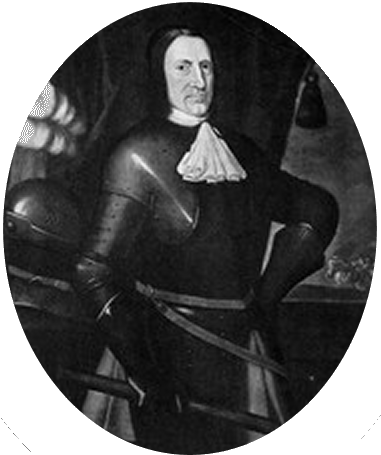
On 15th September 1636, James II turned out of office 11 of the 13 elected Hull aldermen, the Mayor, High Steward, Recorder and Town Clerk, and replaced them with his own choice. This put Marmaduke Lord Langdale, in the powerful position of Governor of the garrison and Recorder, backed by 1199 soldiers, billeted on the residents. In December that year, Langdale was himself ejected.

Marmaduke_Langdale2

On 15th September 1864, Crown Prince Umberto of Italy stayed overnight at the Beverley Arms, after attending the St Leger at Doncaster, and left to visit James Hall’s stud at Scorborough.

On 15th September 1948, Mr J.H. Wilson, 33, labourer-driver, employed by East Riding  Agricultural Committee, was badly injured when he drove a lorry across a temporary rail crossing at Garton on the Wolds. The lorry was wrecked by a train, killing 3 Polish and Hungarian workers, and injuring another 4. The workers were people displaced by WW2, who were travelling to a Garton farm to help with the harvest. An enquiry recommended steps to improve the crossing.