October 1st

On 1st October 1646, Sir Henry Griffith of Burton Agnes was fined £7,547 as a Colonel in the Royalist army (a delinquent) in order to recover his goods which had been sequestered by Parliament. His fine was reduced in 1650 to £5,122.

On 1st October 1782, William Spence was born in Bishop Burton. He became famous for writings on entomology, a Fellow of the Royal Society, the first editor of the Hull newspaper the Rockingham, and involved with the Hull firm of Blundell Spence. Died 6.1.1860  see photo

On 1st October 1857, Thomas Bentley Locke, retired banker, JP of Hessle Mount committed suicide by shooting himself in the head with a pistol, apparently believing he might be implicated in the failure of the Harrison Watson & Locke bank, from which he had retired over 20 years before.

William_Spence_

September 29th

On 29th September 1541, King Henry VIII stayed overnight with the Earl of Northumberland at Leconfield.

On 29th September 1638, the Council in the North wrote to the East Riding Commissioner for Sewers at Hedon complaining of the ruinous condition of the banks of the Humber in Drypool.

On 29th September 1829, some postboys were watering the Archbishop of York’s horses at Bar Dyke, Beverley (next to North Bar) after a trip to Rise; one fell in and was saved from drowning by 2 young men. One of the horses dropped dead, whether from exertion or from drinking the dirty water, the Hull Advertiser did not say.

On 29th September 1947, interpreter Sergeant Wadey, and Sgt Cramer were both killed, together with 7 German prisoners of war, when the Army truck they were driving crashed through the railway crossing gates, and stopped on the track in the path of a train heading for Bridlington. 19 other POWs were injured. They were being transported from POW camp 250 at Thorpe Hall, Rudston.

b.agnes level crossing

September 24th

On 24th September 1298, an inquisition was held by the Court of Chancery into Sir Osbert de Spaldington’s goods and lands, which were taken by the king. As recently as 1296, Edward had made him Governor of Berwick, when he received Robert the Bruce and imprisoned Sir William Douglas. It is not known what the allegations against him were, and he recovered most of his land by 1300, after living on the generosity of others in the meantime.

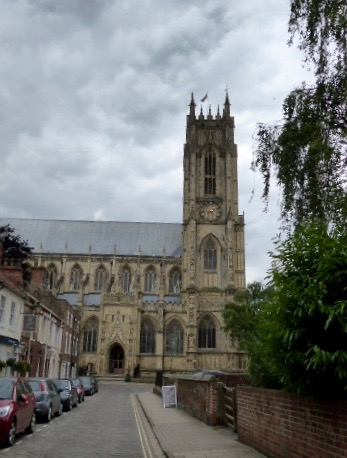
On 24th September 1401, Pope Boniface IX declared John of Bridlington a saint. John was born in Thwing, had been the Prior of Bridlington and died of the plague in 1379, aged 59. 15 miracles are recorded during his life, and 12 after his death, including saving the lives of 5 Hartlepool fishermen caught in a storm. photo shows Brid Priory church

On 24th September 1678, the wife of Thomas Richardson of Wyton died and was buried in the Quaker cemetery in Sutton.

On 24th September 1779, Lord Rockingham, High Steward of Hull, chaired a public meeting in Hull Town Hall at which it was decided that 20 18-lb guns and military equipment due to be sent to Woolwich should be used instead to defend Hull from the threat of American attack. A few days later, the threat reduced when the Americans sailed for Holland.

On 24th September 1830, Hull gunsmith Thomas Rosindale was convicted of vagrancy, having been found in the kitchen of the dwelling house of Charles Frost of Albion St. He was sent to Sculcoates House of Correction for 1 month’s hard labour.

On 24th September 1832, Mr J. Dunn caught a 17lb trout near Driffield.


Brid Priory church

September 19th

On 19th September 1069, Northumbrians (incl Morcar and Edwin) with help of Danes besieged York and took Sir Wm Mallet hostage; in retaliation, William razed York to the ground and began the Harrying of the North. In effect, this was ethnic cleansing; some villages in the East Riding were still worth a fraction of their value 20 years later, or simply described as ‘waste’.

On 19th September 1532, William Orrell, a gentleman from Hull, was recorded as having been in the sanctuary of Westminster Abbey for about a year.  He had confessed to murdering Hull merchant John Lownde and was involved in complex legal questions as to whether he was an outlaw or not. He lobbied the King for restoration of his properties and positions, and by the 1540s was described as a gentleman of the King’s household.

On 19th September 1576, orders were given by Mayor and aldermen in York that the  house and shop of Gregory Burgess, physician & apothecary, should be shut up, probably because he had moved to Hull the previous year to treat people suffering from plague; and that he should be banned from entering York until further orders.

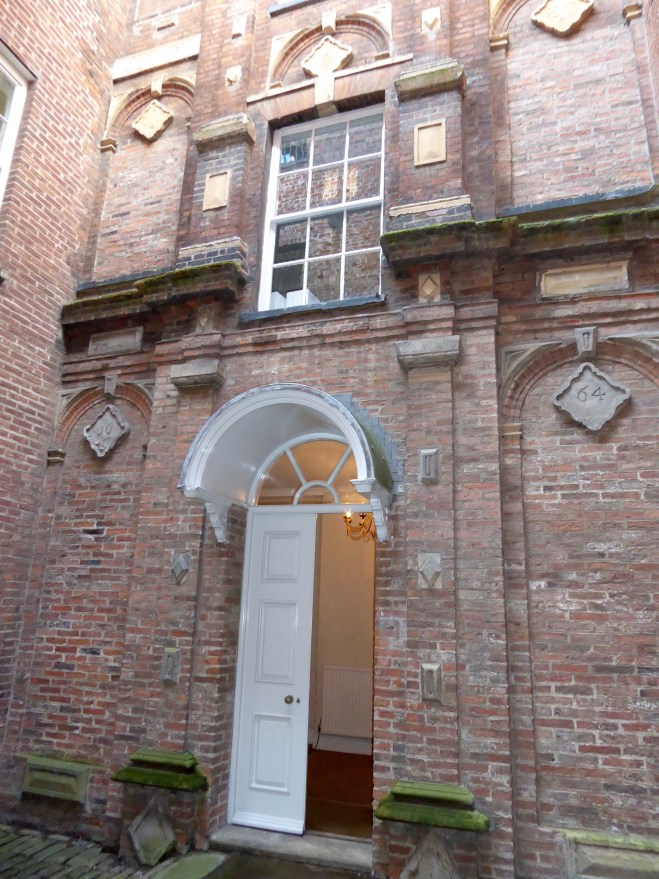
On 19th September 1674, bricklayer/builder William Catlyn, was elected Sheriff of Hull, but petitioned the town, pleading that his work took him to Lincolnshire, and he was unable to carry out the post. His petition seems to have succeeded, but he eventually became sheriff in 1683. Catlyn was responsible for building Wilberforce House, Crowle House, the Charterhouse and Master’s House (1628-1709). Brother of John Catlyn, Master of Hull Grammar School. photo shows Crowle House

On 19th September 1935, Herbert Morrison MP, and later High Steward of Hull, officially opened Queens Gardens, formed after the Queen’s Dock was closed in 1930. On the same day, the Wilberforce Monument, which had been moved from Monument Bridge, was rededicated by Wilberforce’s great granddaughter, Mrs Arnold Reckitt (nee Ann Barbara Wilberforce). Another relative of Morrison’s, Lord Peter Mandelson, later became High Steward of Hull.Crowle House
September 18th


delapolearmscharterhouse.JPG
Hull’s first blue plaque? On the wall of the Charterhouse.

On 18th September 1415, Michael de la Pole, 2nd Earl of Suffolk, died of disease at Harfleur during Henry V’s military campaign. (Dysentery was a frequent cause of death on military campaigns) He was succeeded by his son Michael, who died in battle at Agincourt.

On 18th September 1470, John de Ferriby in his will left 2 silver salt cellars to the parsons and vicars of Beverley, on condition that they pray every day for his soul.

On 18th September 1664, Theophilus Garlike was found by a Hull jury in the inquest into the death of Gervase Dighton to have killed him in a duel; both men were soldiers in Colonel Gilby’s Company (Dighton a corporal, Garlike a sergeant).

On 18th September 1789, George Thompson, BA, was ordained 27 years after serving as curate in Hollym, Withernsea, Sutton and Wawne, he finally became vicar of St Peter’s, Wawne. He brought in many changes to the music in the church, including the use of fiddles and a singing master to teach new hymns, possibly because of the advances the Methodists were making at this time.

September 13th

On 13th September 1420, Sir Gerard Usflete III and his wife Elizabeth, Duchess of Norfolk, had no surviving children. His will said that all his lands and tenements in Swanland and Ousefleet should be sold and the proceeds distributed to the poor. In return, the poor were to pray for his soul every year. He fought at Agincourt, was an associate of the De la Poles, and was Sheriff of Yorkshire. Buried at North Ferriby.

On 13th September 1512, Christopher Person, mercer of Routh, claimed sanctuary at the church of St John, Beverley,  for debt.


Beverley Minster

September 14th

On 14th September 1484, Anne de la Pole, great granddaughter of Geoffrey Chaucer, was betrothed aged 8 to the Duke of Rothesay, future King James IV of Scotland, as part of peace negotiations between the 2 countries. Her brother John, 1stEarl of Lincoln, was then Heir Presumptive to the English throne. Anne never became Queen, however, as on the death of her uncle Richard III, she was sent to a convent and became a nun at the Abbey of Syon.

On 14th September 1581, the Hull Mayor and aldermen agreed to pay 12d per week towards the keep in God’s House (i.e. the Charterhouse) of keelman Christofer Harrison, on account of his being blind and aged.

On 14th September 1643, Sir Thomas Fairfax, Hull governor, opened the sluice gates to flood all areas from Derringham Dyke to Dunswell, during the 2nd siege of Hull, to keep the royalist guns away from the town.

On 14th September 1828, Thomas Thompson MP died aged 72. A Methodist and member of the Clapham Sect, he provided land to poor families to keep them out of the workhouse. Wrote History of Church & Priory of Swine. Father of Thomas Perronet Thompson. (b 5.4.1754  Swine)

On 14th September 1853, Hugh Edward Strickland went to examine railway cuttings near Retford, and stepped out of the way of a goods train and was killed by a train coming from the opposite direction. Inventor of the power loom, ornithologist and geologist, Fellow of the Royal Society. (b2.3.1811 Reighton)

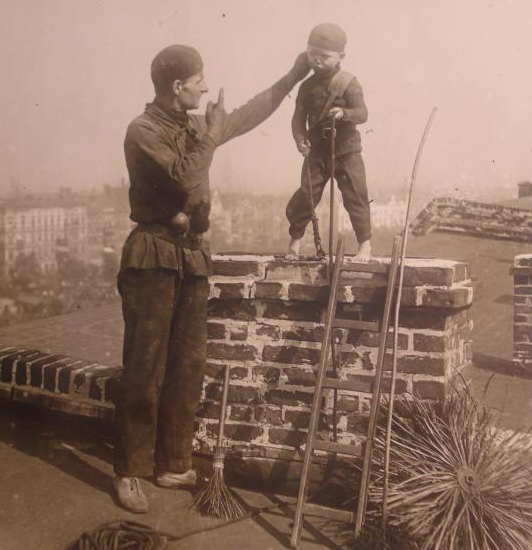
On 14th September 1861, John Kingston, chimney sweeper and soot dealer of 16 Worship St, Hull, gave his annual bill to Hull Charterhouse for £5 for sweeping chimneys, with a note that his prices would rise in the following year due to a new law forbidding sending children up chimneys to clean them.


childsweep2

September 10th

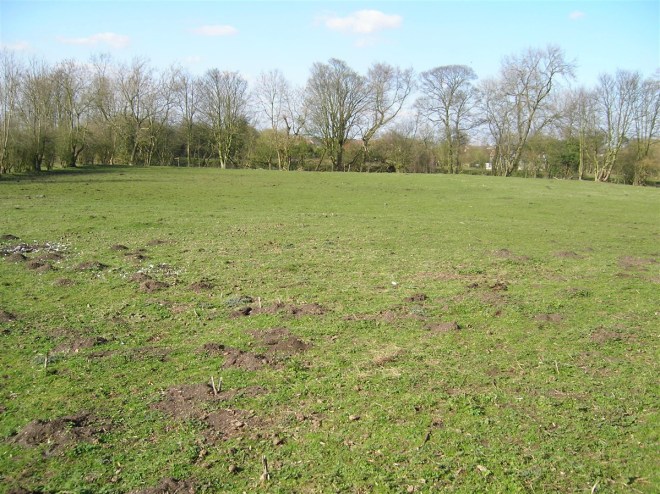
Leconfield Castle moat-7 28102017 200134

On 10th September 1292, King Edward I stayed at Market Weighton on his way to York, after returning from Scotland.

On 10th September 1541, Henry VIII and  his court set out from Leconfield (home of Henry Algernon Percy, 5thEarl of Northumberland) for Hull. photo shows site of Leconfield Castle.

On 10th September 1623, Hull and York corporations proposed a conference be held to resolve the difference which had arisen between the 2 towns.

September 9th

On 9th September 1513, Marmaduke Constable, of Flamborough was knighted for his role in the Battleof Flodden Field, and a letter of thanks from Henry VIII is displayed in Wassand Hall. Ralph Ellerker, senior of Risby and his son Ralph were also both knighted. This causes some confusion in the historical record, as there were 2 Sir Ralph Ellerkers alive at the same time.

On 9th September 1643, Rev James Sibree reported that on Sunday he had preached twice, visited the cemetery 3 times, and interred 43 bodies of his fellow citizens. During the cholera outbreak, many church services were held outdoors in the Market Place, by ministers of different denominations, and attended by more than 3,000 people. photo shows Cholera Memorial in Western Geneeral Cemetery.

On 9th September 1878, George Carr, aged 45 and Joseph Carr, aged 26, accidentally drowned in Hornsea.

On 9th September 1956, Captain Erik Ohsman, and Chief Steward V. Stenros, of SS Lona, were rescued by firemen when they were found unconscious after fire was discoveredon their Swedish ship, loaded with over 3k tons of pit props. Both recovered. The fire, which started in the engine room, spread to the cargo, and after several hours the ship had to be scuttled in the dock to prevent greater damage. She was raised on 11 October and repaired. Cholera memorial

September 5th


delapolearmscharterhouse.JPG
Hull’s first blue plaque? On the wall of the Charterhouse.

On 5th September 1389, Sir Michael de la Pole died aged 59. 1stBaron de la Pole, later 1stEarl of Suffolk. Appointed English Lord Chancellor in 1383. He founded the Carthusian Monastery which became Hull Charterhouse. Disgraced, he fled to Paris in 1388.

On 5th September 1811, Benjamin Byron (or Byrom) MD died in Hull; as physician he had chambers at Mr Frith’s, plumber, Silver Street, where ‘consultations were free to the poor on Tuesdays and Fridays 10a.m. to 3p.m.’