November 11th

Lister's Hospital, S Church Side


On 11th November 1642, the building work at the new William Lister’s Hospital in South Church Side, Hull, was inspected. They were surprised to find Mr Gough, Reader at Holy Trinity church, living there, in rooms allocated to the Assistant Preacher, which post was vacant at the time. Eventually, agreement was reached with the Mayor and Aldermen whereby Gough was allowed to remain, and given the post on a temporary basis.  He appears to have still been in post 20 years later. A dispute arose in 1749 over the same rooms, and post, when the trustees decided that the Mayor and aldermen had no power to ‘intermeddle’ this time. photo shows the Hospital

On 11th November 1899, the Evan Fraser Hospital opened at West Carr, Sutton-on-Hull as an isolation hospital for smallpox patients, named after a surgeon and Hull alderman (d.8.4.1906). The hospital replaced the Garrison Hospital on Sammy’s Point. Police were posted outside to prevent access, and the city banned religious services and the loan of library books.

On 11th November 1920, Mr Arthur B. Reckitt unveiled memorial tablets at Reckitt’s Institute, Dansom Lane, Hull, to staff who had died in World War 1. 159 Reckitts employees died.

On 11th November 1942, Abdul Rahman, aged 22, seaman, was lost to enemy action whilst in Merchant Navy on board SS City of Ripon of Hull, in Atlantic convoy.

 

November 10th

On 10th November 1274, Aveline de Forz, aged 10, was married to Edmund Crouchback, 2nd son of Henry III.  Countess of Aumale and Lord of Holderness in her own right, and Countess of Lancaster by marriage.  She died childless at age 15 and is buried in Westminster Abbey. The Lordship of Holderness passed to the Crown. Born Burstwick 20.1.1259

On 10th November 1293, Countess Isabella de Forz, widow of William de Forz III died, having outlived her husband and all her children, including Aveline above. A legend relates that she came across a poor man carrying a basket containing what he said were puppies, but which turned out to be seven of his children that he was going to drown because he could not afford to keep them. After severely upbraiding him for his lack of morality, Isabella adopted the children and ensured that they were looked after and well educated until their adulthood when she found employment for all of them.

On 10th November 1518, Sir Marmaduke Constable of Flamborough (known as Little Sir Marmaduke). Died after swallowing a frog (some say toad) while drinking a glass of water. Knighted for military service including Flodden a letter of thanks from Henry VIII is displayed, in Wassand Hall. photo shows his tomb in Flambrough church. & see 9.9

On 10th November 1609, Sir George Wharton, who was raised at Londesborough, died in a duel in Islington with his good friend Sir James Stuart, the King’s godson, who also died. The event was commemorated by Sir Walter Scott in his ‘Minstrelsy of the Scottish borders’. (b1583)

On 10th November 1678, Capt Towes (or Towers or Towle) of the Hull ship Shield landed settlers at Burlington, New Jersey. Many were Quakers, who settled at Burlington, Salem and other places. One of the passengers was Mr Barnes, a merchant from Hull.

Little Sir Maramaduke Constable's tomb

November 9th

On 9th November 1309, King Edward II visited his Royal park in Burstwick, his main residence in the north.  Piers Gaveston was Lord of Holderness.

On 9th November 1487, John de la Pole senior, Duke of Suffolk, was stripped of most of his property and estates as a result of his son’s rebellion (the Earl of Lincoln) in support of Lambert Simnel.

On 9th November 1488, John Fernell, yeoman, of Asselby, killed Thomas Rodley with a staff, and then made his way to Beverley, where on 17.11 he claimed the sanctuary of the church of St John, and admitted the homicide.

On 9th November 1906, Capt Stensen and 5 crew of a Norwegian schooner carrying timber stranded at Withernsea in a gale. There were no casualties.

On 9th November 1916, Private Herbert Neal, 24, former Reckitt’s employee in the lead mill was killed in action with the East Yorkshire Regiment and is buried in Bazentin-le-petit, Somme, France. 2 of his brothers also served in the war, and only 1 survived to return home to Church St, Hull.

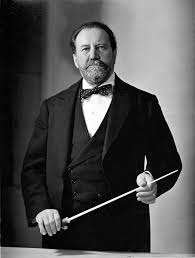
On 9th November 1923, Sir Henry Wood, originator of the Proms, made his first appearance as conductor of the Hull Philharmonic Orchestra, originally for one concert only. He stayed for 15 years, travelling from London to work with amateur musicians for a considerably reduced fee. An earlier contact with Hull was 1906 when Ethel Leginska performed for him in London.

Sir Henry Wood

November 8th


Gunpowder Plot memorial
Welwick

On 8th November 1481, Thomas Nevyll, yeoman of Skirlaugh, sought sanctuary in Durham Cathedral for killing John Hewlins of Rise on 1stNovember.

On 8th November 1500, William Thorpp of Welwick, John Dorand and a man named Nicholas were in Winestead when their dog entered the park; they asked the parkers to return the dog, but they refused, and were abusive. Nicholas shot one of the parkers named March, in the neck with an arrow; he died about 10 days later. Thorpp travelled to Durham, where on 10.12 he claimed sanctuary, fearing he would be indicted as an accessory to murder.

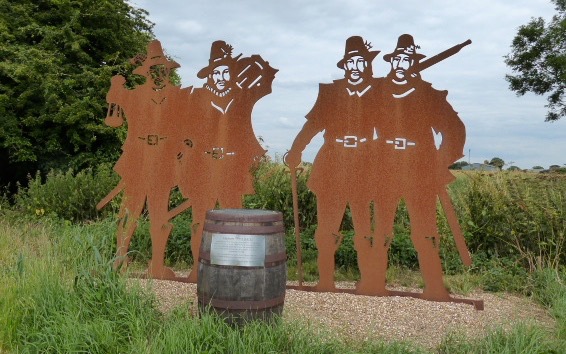
On 8th November 1605, Jack and Kit Wright of Welwick, and brother-in-law Thomas Percy were fatally wounded at Holbeche House, Staffordshire, by the posse of 200 men led by the Sheriff of Warwick, Sir Richard Walsh. 9 of the 13 Gunpowder Plotters were at Holbeche, and they all died there; the other 4 were all executed.

On 8th November 1637, the Mayor of Hull petitioned the Privy Council that 1) the town was so poor as a result of the recent plague that it be let off the requirement to provide 2 warships for the Navy; 2) that the county’s funds help to support Hull’s poor and; 3) that Hull’s merchants be allowed to sell their goods elsewhere in the country again, now that the town was free of the plague. It was estimated that 2,000 people died in Hull, and perhaps as many left town.

November 7th

Gunpowder Plot memorial
Welwick

On 7th November 1605, Sir John Ferne, secretary to the Council in the North, sent confidential news to the Hull Mayor of the Gunpowder Plot, and orders to arrest Thomas Percy of Leconfield. An arrest warrant was issued the following day to the Bailiff, Chief Constable and constables of the county of Hull. However, Percy and the other conspirators were heading for Staffordshire.

On 7th November 1646, Sir Francis Cobbe of Ottringham was fined £72 as a Lieutenant-Colonel in the Royalist army (a delinquent) in order to recover his goods which had been sequestered by Parliament. He had been a member of King Charles’ Bodyguard.

On 7th November 1887, the crew of sailing ship Earl of Beaconsfield were rescued after the ship ran aground on sands off Aldbrough; the figurehead, representing Benjamin Disraeli, the Earl of Beaconsfield, can be seen in Hull Maritime Museum.

November 6th

whalebone arch Pat.JPG

On 6th November 1584, Rowlande Wilkingson was awarded a pension of 10shillings a year by Hull town on account of his age and poverty, and the good service he had done the town.

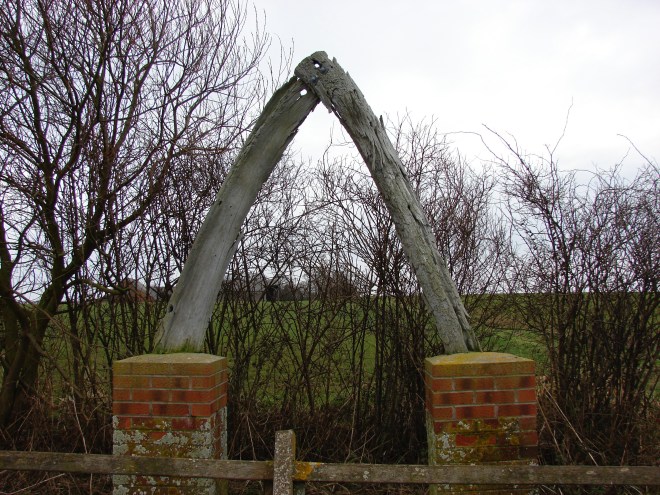
On 6th November 1822, Hull Literary and Philosophical Society was formed to promote self education; one of its first actions was to create a museum in the Assembly Rooms, Kingston Square.  This is mentioned in Herman Melville’s ‘Moby Dick’, as it contained whale skeletons, as well as an Eskimo kayak and natural history materials. Photo shows whale jawbones at Patrington

On 6th November 1829, Robert Sharp of South Cave reported in his diary on the usual celebration of 5thNovember, with bonfires, bellringing and hare feasts in the pubs.

On 6th November 1850, Samuel Davis was saved from drowning in Hull Harbour by John Ellerthorpe, named ‘The Hero of the Humber’ for his many rescues, and awarded the Royal Humane Society’s Silver Medal.

On 6th November 1914, Herbert St Quintin presided over the last meeting of the Court Leet and Court Baron, as lord of the manor of Nafferton. Changes in the law left them with no effective jurisdiction, and later meetings were attended mainly for the Rent Dinners provided for his tenants.

November 5th

On 5th November  1605, Sir Thomas Knyvet of Escrick, as Gentleman of the Bedchamber to King James I, he went to the House of Lords cellar to investigate a rumour and discovered Guy Fawkes and some gunpowder …

On 5th November 1740, Elizabeth Johnson’s charity distributed money to the 4 poorest families in Cherry Burton every year on this date.  Daughter of Dr Hodgson Johnson, she left £40 to be invested, adding to the 40s left by her father 16 years before.

On 5th November 1804, 7 of the 8 crew of the Cecilia Margaretha of the Duchy of Holstein died when the ship was driven ashore at Mappleton and wrecked on a trip from Liepaja, Russia, to Lisbon. photo shows Mappleton today

On 5th November 1854, James Elliott, private in the Coldstream Guards, died aged 22 at the Battle of Inkerman, Crimea; his memorial in Hedon church was ‘erected … to commemorate the event and to show that Hedon contributed its unit in defence of the liberties of Europe’.

mappleton.JPG

November 4th

On 4th November 1217, Eustace de Fauconberg of Rise was appointed Lord High Treasurer of England, and held the post until he died; in 1221 he was elected Bishop of London (d October 1228)

On 4th November 1605, Robin Catesby with Welwick’s Jack Wright left London to prepare for an armed uprising after Parliament was destroyed, which they expected to be carried out the next day. photo shows statue outside Welwick

Gunpowder Plot memorial


November 3rd

On 3rd November 1451, Richard Anson was enrolled in post as Hull Collector of Customs, joining existing staff Richard Bille (Collector) and Richard Alanson (Controller).

On 3rd November 1947, George Cornelius (Con) O’Kelly died aged 61. He achieved gold for Great Britain in the 1908 Olympics in men’s freestyle wrestling. 12,000 people turned out to meet him when he returned to Hull.  His son, Con jnr, competed in the 1924 Olympic heavyweight boxing.

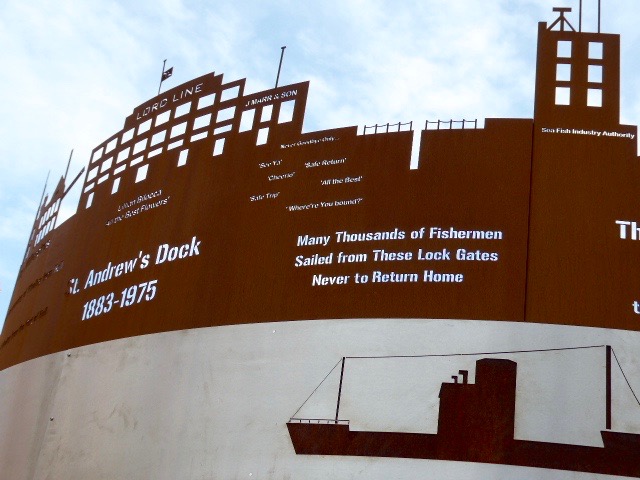
On 3rd November 1975, trawler owners ceased to use St Andrew’s Dock, Hull, which was closed to shipping after the collapse of Hull’s fishing industry.

St Andrews Dock memorial
Zebedee’s Yard

November 2nd

On 2nd November 1304, Lord Walter de Fauconberg, first Baron Fauconberg, of Rise, died aged about 80 at Rise (or Withernwick) and was buried at Nunkeeling. He had a long military career, and supported Simon de Montfort in his rebellion against King Henry III, for which he lost his lands for several years to Robert Bruce, but redeemed them in 1268.  Married Agnes de Brus.

On 2nd November 1595, John Thorgey left 5s per year for ever, to be distributed by Patrington church wardens to the poor. photo shows Patrington church

On 2nd November 1988, one of the worst industrial fires in Hull killed employee Jennifer Powley, 17, and left Janine Gilfillan with serious burns when a fire led to explosions and evacuation of nearby houses.

Pat church