August 11th

On 11th August 1916, former Reckitt’s employee Private James Blain, 41, died of his wounds while serving with the East Yorkshire Regiment (3rdHull Pals) at the Somme; he had also served in Egypt. Buried at St Vaast Post Military Cemetery, France.

On 11th August 1930, Amy Johnson landed Jason at Hedon Aerodrome to a civic reception, then went to Hull in a motorcade for a reception and banquet at the City Hall. http://www.yorkshirefilmarchive.com/film/amy-johnson-hedon

On 11th August 2012, Hull’s Luke Campbell, 24, boxer, won Olympic gold bantamweight boxing medal.


August 9th

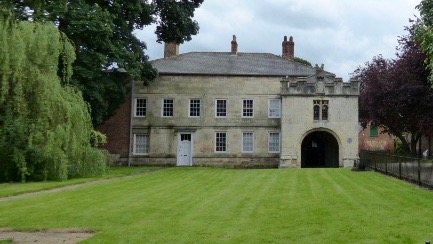
Bishop's Palace, Howden

On 9th August 1260, Walter of Kirkham, Bishop of Durham, died at the Bishop’s Palace, Howden. His body was taken to Durham for burial but his viscera were buried in the church. photo shows what remains of Bishop’s Palace.

On 9th August 1516, Sir Ralph Ellerker of Risby confessed to Cardinal Thomas Wolsey, Archbishop of York, that he ordered his servants Henry Norham and Roberte Hunt to kidnap George Millet, keeper of Beverley Parks, and imprison him in Cottingham Park so that he could hunt on the Archbishop’s land. Pleading poverty, he was bound over in the sum of £200.

On 9th August 1769, John Burrill of Skipsea assaulted John Warcup with swords, staves, knives and clubs so that his life was threatened and ‘other wrongs’. Burrill was indicted in September, found guilty on 24.4.1770, and sentenced 2.10.1770 to a fine of £20 and to remain in gaol until the fine was paid.

On 9th August 1785, Rev George Lambert went to see a 24 foot whale killed and displayed at South End, Hull (near modern pier); described by sailors as a young bottlenecked grampus.

On 9th August 1859, Hansard records the 29.4.1859 election in Beverley void; Ralph Walters was declared ‘not a Burgess to serve in this present Parliament for the Borough of Beverley’ and Henry Edwards was declared MP in his place. Joseph Robinson Pease in his diary called Walters ‘an adventurer, arriving 3 days previously’, ‘by open bribery …. carried the day.’

On 9th August 1902, William Day Keyworth junior, sculptor, died aged 59 in Spring Bank, Hull. He produced many statues of civic dignitaries, including Andrew Marvell, Anthony Bannister and William Wilberforce (now outside Wilberforce House). Shot himself in the head at his home, but left no suicide note.

On the same day, Nafferton villagers were celebrating King Edward VII’s coronation with, among other events, a ‘comic’ cricket match, gentlemen vs ladies, which the ladies won. The score is not recorded.

On 9th August 1915, 17 Goole residents, mostly women and children, were killed by a Zeppelin raid on the town and docks.

On 9th August 1916, a Zeppelin raid on Anlaby Road, Hull,  killed John Broadley aged 3 and at least 7 other residents, and injured about 20. 2 people died of shock. Rev A.W. Carter, Assistant Priest of Newington Church, was badly hurt.

 

August 6th

On 6th August 1778, the question of who owned Spurn Point was resolved in favour of the William Constable of Burton Constable; the legal dispute began in 1609.

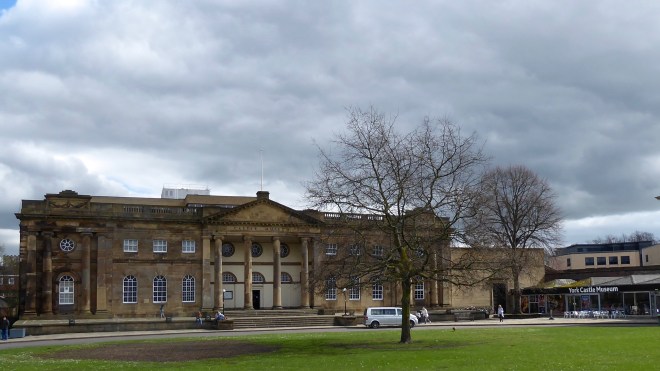
On 6th August 1785, John Beck of Lelley was hanged at York Castle for setting fire to a house and corn mill belonging to William Jackson of Danthorpe, with Robert Crosby and John Edwards, also of Lelley; Edwards and Crosby escaped.

On 6th August 1859, John Riley, 36, of Hull, was hanged at York Castle for the murder of his wife, Alice.

On 6th August 1888, former Trinity House School pupil George Smith, age 15, drowned after a collision between the Barque Cambrian and a French Barque during a great storm in Valparaiso harbour.

On the same day, a Bank Holiday Monday, a popular trip out from Hull Corporation Pier was to Paull by boat to watch the Army’s Submarine Miners in training and holding boat races and athletic competitions. Several boats left the Pier during the day.

York Castle


August 4th

On 4th August 1511, John Hessey, husbandman of Belby, nr Howden, claimed sanctuary at the church of St John, Beverley, for the murder of William Smyth of Didyngham (anyone know where this is?)

On 4th August 1652, Keyingham manor court fined 18 villagers for allowing their geese and pigs into the fields outside the stipulated times.

On 4th August 1795, Hull residents rioted against inflationary food prices and shortages. Much corn was being taken by the army, (Napoleonic Wars) in a year of poor weather. A few windows broken.

On 4th August 1834, John Venn, was born in Drypool, son of the vicar. Left Hull at age 8. Fellow of the Royal Society, famous mathematician, who introduced the Venn diagram. Commemorated in Hull University by the Venn Building. (d 4.4.1923) and by Drypool Bridge.

On 4th August 1851, G. Hought of Hutton Cranswick was killed by lightning, as he sheltered under a tree during a thunderstorm. He left a wife and 2 children.

On 4th August 1884, all 11 Walgate brothers of Aldbrough formed one cricket team in a match held at Rise Hall; the Walgates won the match by 3 wickets.

On 4th August 1969, HM Queen Elizabeth opened Queen Elizabeth Dock, the last major dock to be opened in Hull, accompanied by HRH Duke of Edinburgh and Princess Anne.


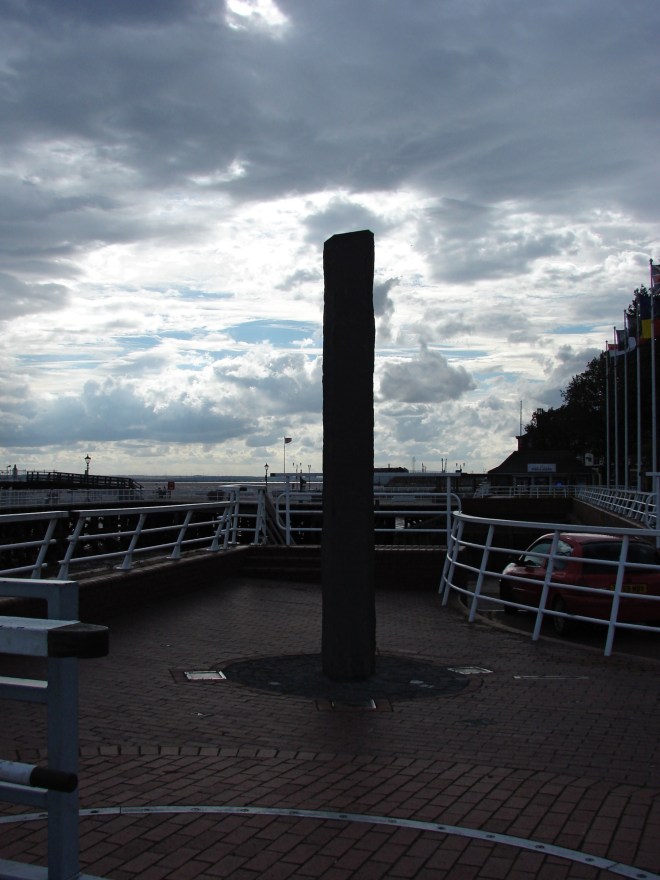
Drypool Bridge

August 2nd

On 2nd August 1806, Capt Welburn, James Simon, ship’s surgeon, and crew of Hull whaler Blenheim were returning from the Davis Straits when the ship was taken by 2 French frigates, L’Syrene and Le Revenge. The Blenheim was burnt, its crew landed at Pampoule near St Malo, and conveyed to Arras where they were imprisoned. They were later moved to other prisons, and only released in 1814, after years of privation and misery, when the allies entered Paris. Dr Simon was subsequently in practice in Aldborough, Holderness where he died in 1845.

On 2nd August 1860, Hedon Magdalen Fair was finally abolished; in the latter years the owner of the field had to persuade, or bribe, those who wished to attend the fair not to meet there. The event had included a market, music, games, sports, juggling, fire-eaters, and badger baiting.

On 2nd August 1913, Charles William Loten and Terence Charles Carroll, 18, died at Hornsea whilst trying to save a child from drowning. A memorial brass in Hornsea church was paid for by public subscription.

On 2nd August 1916, Joseph Bennett, 17,  died in Hull from bubonic plague. photo shows his memorial in the columbarium, Hedon Road.

plague victim.JPG

July 27th

On 27th July 1643, Hull widow Ann Stevenson, whose husband died at Beverley in Parliament’s service as a cannoneer, petitioned the town of Hull to pay her the 35 shillings wages due to him; the committee agreed, in view of her poverty, to let her have 20s.

On 27th July 1782, Rev George Lambert of Fish Street, Hull reported in his diary on a violent thunderstorm in the evening, and lightning killed a cow very near their house, and scorched the hedges.

On 27th July 1796, jockey George Heron was thrown by his horse at Hull racecourse, Newington, and killed.

On 27th July 1855, James McLoughlin, aged 13, asked Hull Magistrates Court for the protection of the court on account of his mother having beaten him severely with a stick and a fire poker because he would not go out stealing for her.

On 27th July 1996, HMS Rose visited Hull’s Albert Dock; this was an exact replica of a frigate built in Hull by the Blaydes yard in 1757 and sunk in Savannah, Georgia in 1779. The only difference from the original ship was that the sails were made from recycled plastic bottles.

HMS Rose replica

July 25th

On 25th July each year a traditional football match was held on St James Day, between Sutton and Wawne, starting at Foredyke bridge, boundary between the 2 villages, each village trying to get the ball home. Not known dates played or when abandoned.

On 25th July 1328, King Edward III is said to have closed down the Warter annual fair on St James Feast Day because of the number of murders that had been committed at the fair. There is a record that in 1300 certain manslaughters had been committed in the village by the canons’ men from Warter Priory. In 1328, King Edward III issued an order that it was an offence to go armed into any fair or market. Probably not aimed specifically at Warter.

On 25th July 1768, Joseph Hall was hanged at York Castle for coining at Hull. photo shows  medieval coins being made.

On 25th July 1873, William Dunwell, former Hull Trinity House School pupil, lost his life at sea by jumping overboard to save the life of a shipmate.

On 25th July 1911, Father Ottway, superintendant at the Yorkshire Catholic Reformatory at Market Weighton (actually in Holme on Spalding Moor) reported on rebellion from the boys, including threats to knife masters, which resulted in the attendance of 3 police officers and the thrashing of 6 or 7 boys.

coiner, Hanse Day


July 24th

On 24th July 1614, Ralph Hansby founded almshouses for 3 poor persons at Bishop Burton.

On 24th July 1622, Lawrence Taylor, rector of Londesborough,  died intestate, and the York Consistory (Ecclesiastical) Court gave custody of his 6 children, and a 7thchild born in October, to his brother William, to be supported until age 21. No information on the fate of his widow.

On 24th July 1894, John William Russell was shot dead on Albert Dock, Hull, by Arthur Kendall. Russell was trying to defend Crossland from Kendall. Kendall was convicted at York Assizes, his sentence commuted to penal servitude.

On 24th July 1912, a heavy cloudburst over Westwood brought flooding to Beverley town centre. Water was a foot deep on Walkergate.

On 24th July 1942, bus inspector Ernest Goddard, aged 50, and 14 others, including 5 children, were killed in an air raid on Withernsea; as well as 2 bombs, in Queen Street and the bowling green, the German Dornier bomber had used small arms fire on local people.

On 24th July 2011, 5 thieves stole the 300kg statue from Nelson Street, Hull; called Voyage, the statue was created by Steinunn Thorarinsdottir, as a symbol of the relationship between Hull and Iceland.  A replacement statue was unveiled 11.5.2012.

iceland statue plinth.JPGphoto shows the empty plinth.

July 22nd

On 22nd July  1612 ( or possibly on 12.7) Hull-born navigator and explorer James Hall was employed by the Danish government to survey for minerals, and came upon a group of Greenland Inuit who recognised him from a previous voyage. He had been involved in kidnapping 4 people, who had never returned home. Hall was attacked and died that day of a spear wound in the side. William Baffin was master of the sister ship Patience on the same expedition. Hall was succeeded as master of the Heartsease by Andrew Barker, also of Hull.

On 22nd July 1643, Lord Ferdinando Fairfax was invited by the people of Hull to take up the post of Governor.

On 22nd July 1869, Albert Edward, Prince of Wales, later Edward VII, officially opened the new Albert Dock, Hull.

On 22nd July 1909, Sydney Buxton, Postmaster General, officially opened the new Post Office building in Lowgate, Hull. Despite precautions against action by suffragettes, Charlotte Marsh got close enough to speak to him, and was arrested. She was Yorkshire organiser for the Women’s Social & Political Union and had earlier been arrested at Riverside Quay.

On 22nd July 2004, Florence ‘Flo’ Bilton died aged 82. Goalkeeper, set up a women’s football team at Reckitt’s in 1963, and from  was influential in setting up the Women’s Football Association in 1969. Set up, trained and supported new women’s teams. Acted as membership secretary and chaperone for the national women’s team. Flo Bilton Trophy is contested by girls’ football teams in ER. (b c1921) photo shows 2017 cream plaque presentation in Hull Guildhall by (left) Karen Walker, 86 England caps.

flo bilton

July 19th

On 19th July 1692, Elizabeth Howe, nee Jackson, aged 57,  was hanged for witchcraft at Salem, Massachusetts with 4 other women; at the age of 3, she was among the Puritans who emigrated from Rowley to found Rowley, Massachusetts.

On 19th July 1750, Hull soldier John Hasselbe made a sworn statement to John Wood, Deputy Mayor, that when he was on duty at Beverley Gate between 1.00 and 3.00, his musket went missing, and he suspected it had been stolen and concealed.

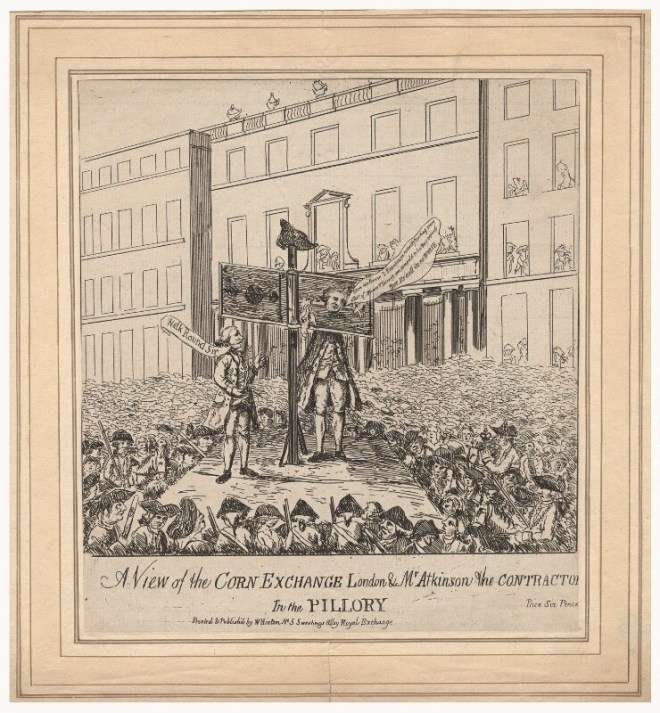
On 19th July 1783, Christopher Atkinson, MP for Hedon & corn factor, was tried in London for perjury, found guilty and committed to prison for 12 months, , first being pilloried at the Corn Exchange, London, and expelled from the House of Commons.  He resigned from his commercial post, but stood again as MP for Hedon in 1796 and 1802 and was elected. He later changed his name to Saville. picture shows Atkinson at the pillory

On 19th July 1786, Hull’s Rev George Lambert visited several sick parishioners, and commented on the contemporary habit of family and friends crowding into the room with the minister, so that the sick person was unable to speak openly.

On 19th July 1794, Edward Bogg, carpenter’s mate,  was shot and killed on board Hull fishing vessel Sarah and Elizabeth Off St Abb’s Head by the crew of a naval press gang on the frigate Aurora; 3 other crew were injured; the coroner’s court returned a verdict of wilful murder by Captain Essington; the captain was sent to the East Indies for several years and never stood trial.

On 19th July 1849, an All England Eleven cricket team played a 30-day match against a Hull amateur side at the Hull Athenaeum Club ground, Anlaby Road. Despite funding from the Hull Sheriff and both MPs, the entrance fee was 1s a day. The professionals won by an innings and 82 runs.

On 19th July 1919, 368 children living at Newland Homes, Cottingham Road, Hull, took part in official peace celebrations included games and setting fire to an effigy of the ex-Kaiser.chrisatkinson MP