January 3rd

On 3rd January 1293, a jury set up by order of King Edward I found that the Abbot of Meaux owned most of the town of Wyke on Hull, with Lords Furnivall and Vescy owning smaller parts. They found 74 tenants, and that the Abbot held court there, and that there was space used for fairs and a market.

On 3rd January 1319, King Edward II issued orders at Beverley for defence against the Scots.

On 3rd January 1629, Francis Clifford, Earl of Cumberland, during a typical festive period for the Londesborough household, 84 staff were feasted, with 315 extra dinners and 251 extra suppers being served to tenants and guests during Christmas Week. The York Waits provided musical entertainment, in addition to the house musicians. photo shows the site of the house

On 3rd January 1933, Harry Anderson, age 19, deckie learner, of Edith Grove, Brighton St, Hull, died with 9 other crew of the trawler Endon (H161), after vessel found abandoned after a collision. Trawler Stronsay picked up his body, but superstition about having a corpse on board led them to return his body to the sea.

Londesborough Park

December 18th

On 18th December 1594, Katherine Johns, chambermaid to the Clifford family, on behalf of Lady Grissell, paid 2s to the Beverley waits, presumably for performing at Londesborough House.

On 18th December 1612, Sir Francis Clifford bought 30 young elm trees to enhance the woodland of the house; it took 3 men with a cart and 5 horses to transport them.

On 18th December 1745, Thomas Owst of Halsham, a ‘popish recusant’, was given licence to travel to Drax to see his wife, who was ill. Catholics were forbidden to travel more than 5 miles from home without permission.

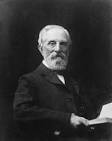
On 18th December 1824, Sir John Hall was born in Hull. Emigrated aged 27 to New Zealand, where he became the 12thPrime Minister, and moved the Parliamentary Bill that gave women the vote in 1893. (d 25.6.1907, Christchurch NZ) see photo

On 18th December 1919, the Clerk to the Hull Local Profiteering Committee, wrote to the Board of Trade, suggesting that an inquiry be held into possible profiteering by Hammonds Ltd. They had sold to Mr E.R. Kidby of Plane Street, 4 knitting needles for 1s 01/2d, on which Hammonds said they made 1 1/2d profit. The complaint was not upheld, as the needles were bought before the Profiteering Act 1919 came into force, but the BoT suggested making another purchase, and they could then investigate.

Sir John Hall


November 18th

On 18th November 1620, the son of Thomas Peirson of Shipton (now Shiptonthorpe) hoped for a post in the kitchen at Londesborough House, the seat of Francis Clifford, Earl of Cumberland. Either he was not suitable, or there was no post available. He was given 12d costs as compensation. Posts were usually filled by personal recommendation, often from families who had worked in the house in the past.

On 18th November 1910, Benjamin Bolton, aged 48, of 5 Suffolk Terrace, Hornsea, died after falling from a moving train near Brough.  A prominent Hornsea citizen, member of the Conservative Party and member of Hornsea Music Union, he played cricket for Hull, Hornsea & Yorkshire and bowled out W G Grace. The inquest returned a verdict of accidental death. (b23.9.1862 Cottingham)

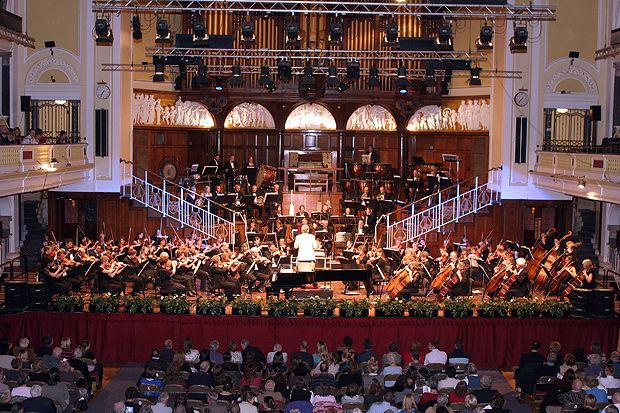
On 18th November 1938, Sir Henry Joseph Wood, founder of the Proms, resigned as conductor of the Hull Philharmonic Society after 15 years. The committee considered Sir Malcolm Sargent as his replacement, but he was not available. Basil Cameron was engaged. photo shows the orchestra in Hull City Hall

hull-philharmonic-orchestra-lst198215

November 9th

On 9th November 1309, King Edward II visited his Royal park in Burstwick, his main residence in the north.  Piers Gaveston was Lord of Holderness.

On 9th November 1487, John de la Pole senior, Duke of Suffolk, was stripped of most of his property and estates as a result of his son’s rebellion (the Earl of Lincoln) in support of Lambert Simnel.

On 9th November 1488, John Fernell, yeoman, of Asselby, killed Thomas Rodley with a staff, and then made his way to Beverley, where on 17.11 he claimed the sanctuary of the church of St John, and admitted the homicide.

On 9th November 1906, Capt Stensen and 5 crew of a Norwegian schooner carrying timber stranded at Withernsea in a gale. There were no casualties.

On 9th November 1916, Private Herbert Neal, 24, former Reckitt’s employee in the lead mill was killed in action with the East Yorkshire Regiment and is buried in Bazentin-le-petit, Somme, France. 2 of his brothers also served in the war, and only 1 survived to return home to Church St, Hull.

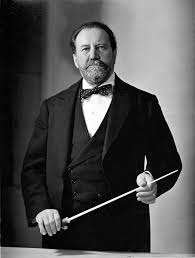
On 9th November 1923, Sir Henry Wood, originator of the Proms, made his first appearance as conductor of the Hull Philharmonic Orchestra, originally for one concert only. He stayed for 15 years, travelling from London to work with amateur musicians for a considerably reduced fee. An earlier contact with Hull was 1906 when Ethel Leginska performed for him in London.

Sir Henry Wood

October 4th

On 4th October 1253, heavy flooding in Holderness resulted from a dry year and heavy rain. The River Hull changed its course.

On 4th October 1541, the Privy Council of England again sat in Hull.

On 4th October 1642, Capt John Hotham, after the Yorkshire Treaty of Neutrality was signed, began to return from Doncaster to Hull. The treaty was rejected by Parliament, and he detoured and captured Cawood Castle for Parliament, the Archbishop having fled.

On 4th October 1643, 400 Parliamentary soldiers went out of the besieged town of Hull and destroyed the Royalist forts in Sculcoates and Derringham Bank.

On 4th October 1785, Thomas Jackson of Blackfriargate, Hull, complained to the Mayor and corporation about nuisance caused by one of the town waites (official musicians) holding dancing lessons in Hales Entry.

On 4th October 1909, Hornsea Urban District Council conducted a poll of ratepayers, who voted to allow the council to enclose the Promenade Gardens and charge for admission.

On 4th October 1952, ship’s cook Cyril Brown, 44, and 19 shipmates were lost when Hull trawler Norman was wrecked. The sole survivor was Norman Spencer, 19. see Pathe news https://www.britishpathe.com/video/one-survivor-aka-trawler-disaster


September 20th

On 20th September 1188, St John’s church at Beverley and most of the town were damaged by fire. St John’s remains were not found until 1197.

On 20th September 1535, John Colynson and Thomas Savage, yeomen of Holme on Spalding Moor were declared outlaws after spending more than a year in sanctuary in Ripon. They sought sanctuary in 1534, confessing to stealing a horse. Savage confessed to the murder of Amery Burdett, but Colynson did not confess, though a coroner’s jury found them both responsible, and indicted others as accessories.

On 20th September 1769, Felice de Giardini, famous violinist, played at the start of a 3-day festival to celebrate the installation of the new organ at Beverley Minster, the first festival of its type in the north of England. New music by Handel was performed, including the recently completed Messiah; tickets were 2s6d and 5s.

On 20th September 1779, Mr Foster, Bridlington quay master, reported that John Paul Jones’ American squadron of ships had attacked a large fleet of colliers and ran them into the harbour.

On 20th September 1813, Thomas Nutbrown was born in Eastrington.  Probably the same person who, aged 14 in 1828, applied to the Howden poor relief officers for some new clothes, and was granted a second hand coat. He died aged 72 in Leeds Township, Quebec, Canada, on 25 Sept 1885.

On 20th September 1883, Rev Edward Cragg Haynes died aged 62 in Swinefleet, after serving there for 32 years. Born in Barbados, classed as ’free coloured’, had links to the Clapham Sect. Set up a Grammar School in Swinefleet attended among others by Joseph Rank. (christened 3.6.1821)

On 20th September 1902, Stevie Smith was born Florence Margaret Smith in Hull. Poet and novelist, most famous for ‘Not waving but drowning’. D 7.3.1971 see photo

On 20th September 1903, Annie Marshall, 16, domestic servant, from Lissett, was raped, shot twice, suffocated with grass and thrown in the river at Scampston by Charles William Ashton, 19, of Cottingham, farmhand.  Ashton knew her well. He was found guilty of murder and hanged at Hull Prison on 11thDecember the same year.

On 20th September 1954, the Selby to Driffield rail line was closed for regular passenger traffic, a service of one regular non stop train each way plus occasional summer excursions ran until June 1965. The line was abandoned after the last freight train ran later that year.

On 20th September 1955, Robert Greenwood Tarran, of the Wolds, Beverley High Road, Hull, died aged 63. Civil engineering contractor, and founder of Tarran Industries Ltd, former Sheriff of Hull, and chief Air Raid Warden during WW2. He moved the Wilberforce monument, at his own expense, and was responsible for building 20,000 prefabs after the war. He was also suspected of complicity in profiting from deals over council land in Endike Lane, in a law case during which his colleague Digby Willoughby committed suicide.
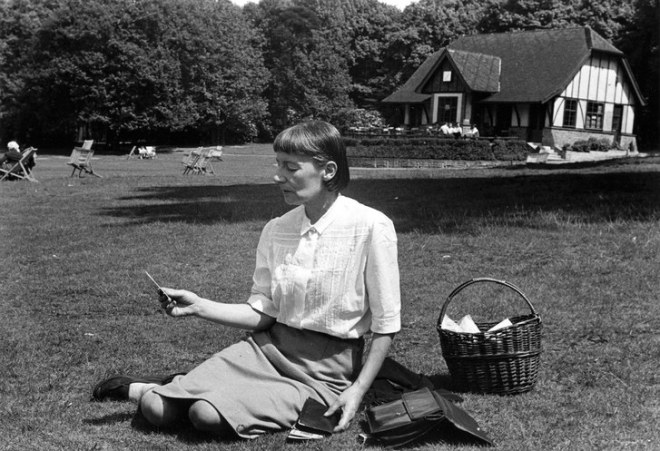
StevieSmith

September 18th


delapolearmscharterhouse.JPG
Hull’s first blue plaque? On the wall of the Charterhouse.

On 18th September 1415, Michael de la Pole, 2nd Earl of Suffolk, died of disease at Harfleur during Henry V’s military campaign. (Dysentery was a frequent cause of death on military campaigns) He was succeeded by his son Michael, who died in battle at Agincourt.

On 18th September 1470, John de Ferriby in his will left 2 silver salt cellars to the parsons and vicars of Beverley, on condition that they pray every day for his soul.

On 18th September 1664, Theophilus Garlike was found by a Hull jury in the inquest into the death of Gervase Dighton to have killed him in a duel; both men were soldiers in Colonel Gilby’s Company (Dighton a corporal, Garlike a sergeant).

On 18th September 1789, George Thompson, BA, was ordained 27 years after serving as curate in Hollym, Withernsea, Sutton and Wawne, he finally became vicar of St Peter’s, Wawne. He brought in many changes to the music in the church, including the use of fiddles and a singing master to teach new hymns, possibly because of the advances the Methodists were making at this time.

August 31st

On 31st August 1292, King Edward I stayed at Kilham, on his return from Scotland, where he judged on the claims of Robert the Bruce and John Balliol for the crown, he also made several other stops in East Yorkshire.

On 31st August 1516,  Robert Chorkyls, husbandman, of Wyton, claimed sanctuary at the church of St John, Beverley, for the murder of John Rotheram.

On 31st August 1579, Howden records state that 158 people died in the previous 5 months, at least 110 above the average, due to plague. The city of York forbade anyone from Howden or Snaith from entering the city.

On 31st August 1941, Minnie Leveson, nurse, aged 20, was killed by an air-raid on her home in Willerby; she is buried in De la Pole Hospital cemetery.

On 31st August 1943, 15 Wellington bombers took off from RAF Leconfield and 2 of them collided over Goole, killing both crews and 2 residents of North Street.

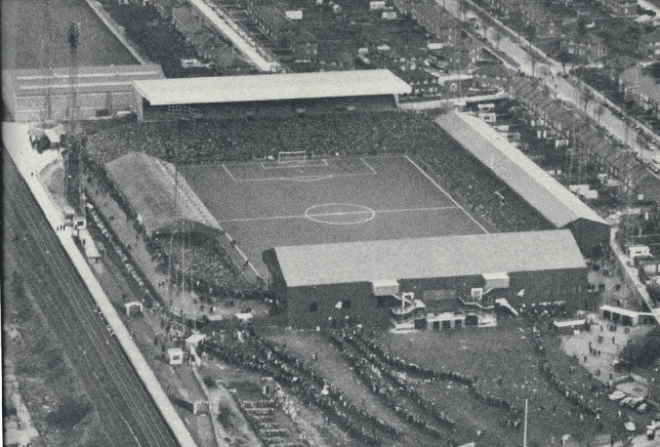
On 31st August 1946, Hull Lord Mayor Herbert Harrison officially opened Hull City AFC’s new stadium, Boothferry Park. The crowd of 25,586 were entertained by the band of the 2ndBattalion East Yorkshire Regiment. The match was against Lincoln City, the result 0-0.

boothferrypk

August 15th

On 15th August 1690, Robert Lumley, ship’s master, was fined 10s by Hull Trinity House for sailing out of the port without supplying the House with a list of men and their wages.

On 15th August 1764, Abraham Clayton, 35, of Howden, was hanged at York Castle for murdering his wife Elizabeth; his body was given to surgeons ‘to be anatomized’.

On 15th August 1808, Robert Pattinson,  grazier and agriculturist, died aged 82, and left 4 acres of land in Skeffling, the rent to be used to educate poor children in Easington.

On 15th August 1924, Harry Blanshard Wood, VC, died aged 42 in Devon, after a traffic accident. Born in Newton-on-Derwent, he was a corporal in the 2ndBattalion, Scots Guards when on 13.10.1918 in St Python, France, he took command when his platoon sergeant was killed, and showed gallant conduct and initiative, for which he was awarded the Victoria Cross.

On the same day, BBC radio station 6KH began broadcasting local items from bishop Lane, Hull, including sport, talks, children’s shows, and music featuring local musicians, e.g. Powolny’s Restaurant Bijou Orchestra. In 1928, the station closed, and there was no local station until Radio Humberside opened in 1971.

On 15th August 1940, 13 military personnel and 1 civilian died, and 16 injured in this daytime air raid on Driffield airfield and Southburn, including Aircraftwoman M. Hudson, the first WRAF fatality.

August 2nd

On 2nd August 1806, Capt Welburn, James Simon, ship’s surgeon, and crew of Hull whaler Blenheim were returning from the Davis Straits when the ship was taken by 2 French frigates, L’Syrene and Le Revenge. The Blenheim was burnt, its crew landed at Pampoule near St Malo, and conveyed to Arras where they were imprisoned. They were later moved to other prisons, and only released in 1814, after years of privation and misery, when the allies entered Paris. Dr Simon was subsequently in practice in Aldborough, Holderness where he died in 1845.

On 2nd August 1860, Hedon Magdalen Fair was finally abolished; in the latter years the owner of the field had to persuade, or bribe, those who wished to attend the fair not to meet there. The event had included a market, music, games, sports, juggling, fire-eaters, and badger baiting.

On 2nd August 1913, Charles William Loten and Terence Charles Carroll, 18, died at Hornsea whilst trying to save a child from drowning. A memorial brass in Hornsea church was paid for by public subscription.

On 2nd August 1916, Joseph Bennett, 17,  died in Hull from bubonic plague. photo shows his memorial in the columbarium, Hedon Road.

plague victim.JPG