November 9th

On 9th November 1309, King Edward II visited his Royal park in Burstwick, his main residence in the north.  Piers Gaveston was Lord of Holderness.

On 9th November 1487, John de la Pole senior, Duke of Suffolk, was stripped of most of his property and estates as a result of his son’s rebellion (the Earl of Lincoln) in support of Lambert Simnel.

On 9th November 1488, John Fernell, yeoman, of Asselby, killed Thomas Rodley with a staff, and then made his way to Beverley, where on 17.11 he claimed the sanctuary of the church of St John, and admitted the homicide.

On 9th November 1906, Capt Stensen and 5 crew of a Norwegian schooner carrying timber stranded at Withernsea in a gale. There were no casualties.

On 9th November 1916, Private Herbert Neal, 24, former Reckitt’s employee in the lead mill was killed in action with the East Yorkshire Regiment and is buried in Bazentin-le-petit, Somme, France. 2 of his brothers also served in the war, and only 1 survived to return home to Church St, Hull.

On 9th November 1923, Sir Henry Wood, originator of the Proms, made his first appearance as conductor of the Hull Philharmonic Orchestra, originally for one concert only. He stayed for 15 years, travelling from London to work with amateur musicians for a considerably reduced fee. An earlier contact with Hull was 1906 when Ethel Leginska performed for him in London.
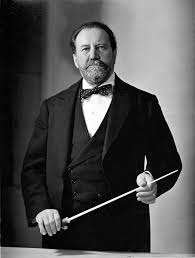
Sir Henry Wood

October 20th

On 20th October 1536, Sir Robert Constable of Flamborough took command of Hull after a siege lasting 5 days, by the East Riding rebels of the Pilgrimage of Grace. The only condition the inhabitants made was that no-one would be forced to take the pilgrims’ oath.

On 20th October 1580, Rowlande Burton was called before the Hull mayor and aldermen to answer a charge of dealing in hops without paying a customs charge. They agreed that he would pay the charges due.

On 20th October 1586, Luke Fox (or Foxe) was born in Hull. He explored much of the Hudson Bay in search of the Northwest Passage. Later became a brother of Hull Trinity House and in 1635 published ‘North-west Fox, or Fox from the Northwest Passage’. Died approx 15.7.1635.

On 20th October 1749, a ’sudden and dreadful’ fire broke out at night when the Stamford Bridge Mills machinery overheated.

On 20th October 1890, Withernsea pier was damaged for a third time since its opening 12 years before, when an unmanned Grimsby fishing smack, the Genesta, smashed into it, and destroyed half of the remaining pier (see 19.10). Another boat, the Henry Parr, smashed into it in 1893, leaving only 50 feet, which remnant was removed in 1903 during work on the sea wall.

On 20th October 1958, the Malton to Driffield Railway closed to freight traffic, passenger traffic having ceased in 1950.


W'sea pier

September 2nd

On 2nd September 1643, the Royalists under the Earl of Newcastle began the second siege of Hull. The Governor, Lord Ferdinand Fairfax, sold silver to the value of £400 4s to Hull Trinity House, in order to pay his soldiers. Trinity House sold the silver the following year at a slight profit.

On 2nd September 1861, the lease on Fishwicks’ Mill, butt Lane, Beverley, had expired, and the mill was demolished. The Council tried to repossess the land, but local people considered it to be common land, and 25-30 rioters destroyed the house and burnt it to the ground.

On 2nd September 1871, William (Billy) Ringrose was born in Ganton, where he became a carpenter, but was coached by a cricket professional employed by the Legard family at the Hall, and became a renowned professional cricketer, playing for 57 games for Yorkshire.

On 2nd September 1922, Hull Kingston Rovers played its first game at its new ground, Craven Park, losing 3-0 to Wakefield. The new grounds also had 14 tennis courts, and meeting rooms. The official opening did not take place until November. This was the club’s 4thground, the first 2 being in West Hull.

On 2nd September 1950, MV Dundalk Bay arrived in Hull from Mombasa, bringing 1,014 people displaced by WW2. After processing, they were dispersed to various camps throughout the UK. Many Poles, Latvians, Lithuanians and others unable to return to their homes came to find work and settle in England; some emigrated again to Canada.

On 2nd September 1967, the Flamborough lifeboat Friendly Forester rescued 6 people cut off by the tide.

Old Craven Park EAW207783

August 6th

On 6th August 1778, the question of who owned Spurn Point was resolved in favour of the William Constable of Burton Constable; the legal dispute began in 1609.

On 6th August 1785, John Beck of Lelley was hanged at York Castle for setting fire to a house and corn mill belonging to William Jackson of Danthorpe, with Robert Crosby and John Edwards, also of Lelley; Edwards and Crosby escaped.

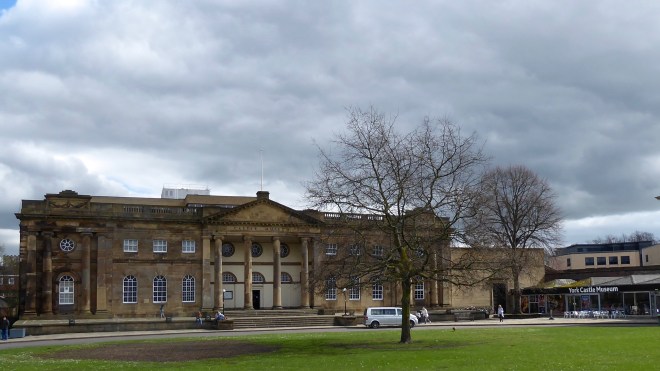
On 6th August 1859, John Riley, 36, of Hull, was hanged at York Castle for the murder of his wife, Alice.

On 6th August 1888, former Trinity House School pupil George Smith, age 15, drowned after a collision between the Barque Cambrian and a French Barque during a great storm in Valparaiso harbour.

On the same day, a Bank Holiday Monday, a popular trip out from Hull Corporation Pier was to Paull by boat to watch the Army’s Submarine Miners in training and holding boat races and athletic competitions. Several boats left the Pier during the day.

York Castle


July 1st

On 1st July 1643, cannoneer John Stevenson was buried in St Mary’s Beverley, having died in the town in a ‘great scrimmage’ in the Civil War (possibly the day before).

On 1st July 1801, Hull Subscription Mill Ltd opened to provide cheap flour to the poor of Hull, 3 years or so after the opening of Hull Anti-Mill, one of the first co-operatives in the country.

On 1st July 1830, the Hull whaler Eagle had been stuck in the ice of Baffin Bay for 5 days.   With the help of 200 men from nearby ships, Captain Matthew Wright and crew, were finally able to repair the keel and heave the ship upright again.

On 1st July 1903, Amy Johnson was born in St George’s Road, Hull. She went on to become the first woman to fly solo to Australia, and to break many aviation records. (d5.1.1941)

On 1st July 1918, Hull coroner Colonel Alfred Thorney held inquests on 2 early cases in the flu epidemic: Kate Denman, aged 11, daughter of a labourer of Hodgson Street, and Elsie Barton, aged 9, daughter of a soldier, of Arthur’s Terrace Courtney Street. Both died within 24 hours of being taken ill, of influenza followed by pneumonia.

On 1st July 1940, the first-ever daylight air-raid on the British mainland attacked Saltend oil terminal.  Between 16.40 and 17.00, bombs caused a 2,500-ton tank of oil to explode, and threatened to spread to other tanks. For preventing even greater damage, the following were all awarded the George Medal: Clifford Turner, leading fireman; William Sigsworth, Manager, Anglo-American Oil Co Ltd; George Samuel Sewell, engineer, Shell-Mex & BP Ltd; Jack Owen, fireman; George Archibald Howe, Manager, Shell-Mex & BP Ltd. No loss of life.

On 1st July 1976, Withernsea Lighthouse ceased operating, after 82 years, having been superseded by modern navigational aids. It is now open to the public as a museum to Kay Kendall, to local history and the lifeboat service.Withernsea

June 23rd

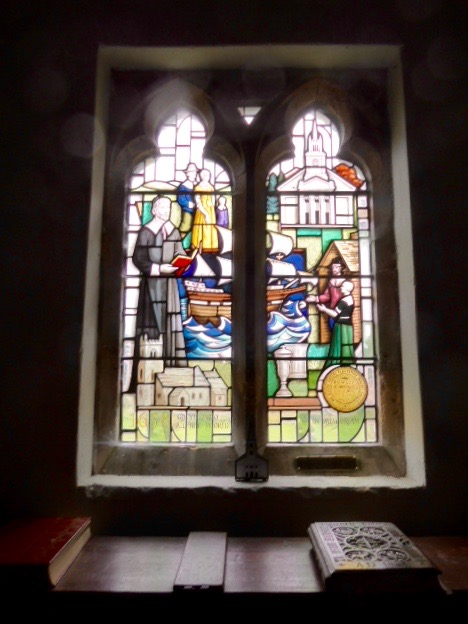
Ezekiel Rogers window

Ezekiel Rogers window, Rowley church.

On 23rd June 1660, Reverend Ezekiel Rogers died aged 70, in Rowley, Massachusetts, after 22 years as vicar of a new Puritan settlement.  The new town was named after Rowley in East Yorkshire, from where he led a group of about 100 Puritans to America in June 1638. Became Rector of Rowley in 1621, aged 31, and served there for 17 years. (b 1590 in Wethersfield, Essex)

On 23rd June 1766, Sara Jenkinson, the infant daughter of Richard Jenkinson of Hutton Cranswick, fell from a little girl’s arms and died within 30 minutes. There was a coroner’s inquest.

On 23rd June 1768, John Courtney, aged 34, gentleman, of Beverley, married Mary Jesse Smelt, aged 24, at St Mary’s, Lowgate. The bride dressed in a white ‘night gown’ and white hat, the groom in a white suit. Only family and servants attended the church and family members dined with them afterwards. The bells of both churches rang for them. They returned to their future home in Beverley in the evening. In his diary, John refers to his future wife at all times as ‘Miss Smelt’.

On 23rd June 1787, the Clerk to the Beverley to Driffield Turnpike Trust wrote to T. Baxter, the owner of Bell Mills, Sunderlandwick, threatening him with prosecution if he allowed anyone to cross his land to avoid paying tolls. 2 months later the Trust asked T. Baxter to lock the gate near his mill, and to prosecute anyone who broke it down.

On 23rd June 1812, Major-General Barnard Foord Bowes of Cowlam was wounded at Battle of Badajoz, but recovered to fight at Salamanca.

On 23rd June 1848, Uckaluk died of measles aboard the Hull ship Truelove, on their way home to Nyadlik, Greenland. She and her husband Memiadluk had visited England to highlight the poor conditions in their homeland.  They took part in talks in Manchester and York. 

On 23rd June 1853, Captain John (or Thomas) Bowlby set sail for Cumberland Sound in the Arctic with 3 ships, with the aim of forming a settlement there; they took goats and building materials. The surgeon on the trip was William Gedney, who had been on board the Truelove with Captain Parker in 1847.

On 23rd June 1898, Winifred Holtby was born at Rudston. Social reformer, novelist and journalist, she was famous and respected for her work in South Africa and elsewhere. ‘South Riding’ became her most famous novel, published after her death. She is buried in Rudston. (d 29.9.1935)

June 7th

On 7th June 1614, Francis Clifford, Earl of Cumberland, of Londesborough House, paid for the apprenticeship of his scullery-maid Grace. He trained in London as a barber-surgeon for 7 years, and the Earl continued to support him when he had to transfer employers, as his first employer killed a man (perhaps in the course of treatment).

On 7th June 1672, the residents of Sister-Kirks (Owthorne and Withernsea) reported hearing the sound of the naval battle of Solebay, off the coast of Suffolk. A fleet of 75 Dutch ships surprised a fleet of 93 Anglo-French ships at anchor.

On 7th June 1796, Sir Henry Etherington laid the foundation stone of Hull Anti-Mill, to provide cheaper flour. An early co-operative, it was funded by subscription by poor residents finding the price of flour beyond their reach.

On 7th June 1837, the Union steam packet was in the Humber basin, Hull, Preparing to cross the Humber, when it exploded. 3 other ferries were next to it; 23 people died. The engineer was later charged, but not convicted.

On 7th June 1915, Vere Campey Marshall made a statement to police, stating that he witnessed a 1,000 strong crowd outside the premises of Kress and Wagner, 163/5 Spring Bank, throwing stones, and a girl using a hammer to break a window. Police and military were sent to guard the premises. Anti-German feeling was strong during WW1.

June 5th

On 5th June 1618, ‘Blind Richie’ (Richard Graham of Millhill) had walked from the Scottish borders to seek help from Francis Clifford, Earl of Cumberland, at Londesborough, and was given a pension of 10s a year. It is not known what his relationship was to the Earl, who had lands on the Scottish border.

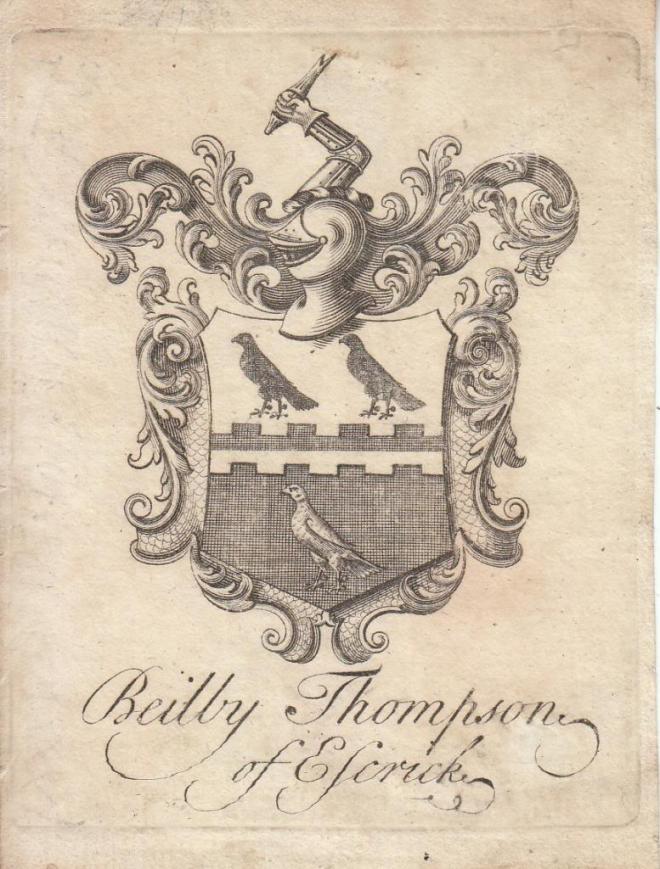
On 5th June 1778, Beilby Thompson of Escrick created a deer park, and demolished most of the village houses, rebuilding them out of sight of the Hall, and recycling the bricks; he paid 5s to Mr Scott the millwright for demolishing the horse mill.

On 5th June 1854, Dr Playfair, from the Dept of Science, reported on the teaching at Hull Trinity House School that no geometry or algebra was taught; geography was badly taught; no empirical data given on laws regulating winds, currents and weather.

On 5th June 1915, German Lieut-Capt Boemack made the first Zeppelin air raid on Yorkshire, dropping bombs on Driffield and Hedon before aborting the mission. There were no casualties, although house windows were broken in Beckside, Driffield, and crops were damaged. Crowds of people flocked to Driffield the following day to view the damage.


beilby thompson

June 1st

On 1st June 1787, William Wilberforce asked the King to make a Royal Proclamation for the Encouragement of Piety and Virtue. Concerned at the large number of death sentences being carried out, he reasoned that those punished for small crimes, such as swearing, would be less likely to commit serious crimes, such as murder. The Society for the Reformation of Manners was established in Hull as a result.

On 1st June 1798, William Wickham, Superintendent of Aliens, wrote advising on the tightening of the Aliens Act, with particular relation to Italian pedlars landing at Hull.

On 1st June 1820, Rev Arthur Strickland and 6 other gentlemen adopted the rules of the Bridlington Cricket Club; cricket was clearly a game for the gentry, as subscriptions were 10s6d. Visitors and occasional residents could be invited to play for the summer. the pitch was in the field between Bessingby and the mill.

On 1st June 1829, Hull’s Junction Dock opened, completing the line of docks connecting the Hull and the Humber, along the line of the old wall . Later renamed Princes Dock after HRH the Prince Consort.

On 1st June 1853, Malton & Driffield Junction Railway opened its 19 miles of track to public traffic.

On 1st June 1875, Alice Elizabeth Rawson was the first person to be baptised in the newly created parish of Newington, in Newington parish Mission Room, Edinburgh St, before the church was built in 1878.

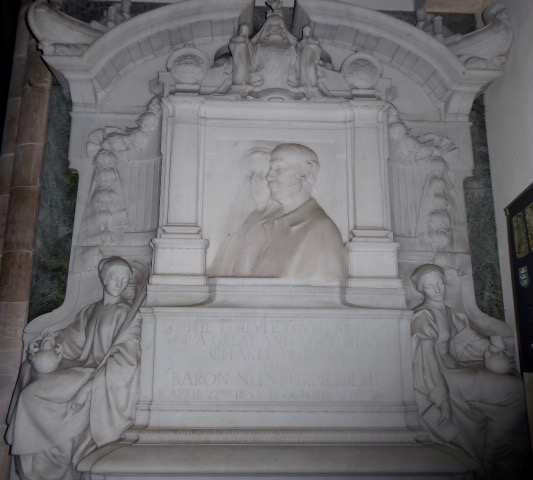
On 1st June 1891, the Royal Baccarat Scandal trial was the first time the heir to the throne was called as a witness in court. It began at a house party at Tranby Croft, Anlaby, (now Hull Collegiate School) home of Charles Wilson,  when Sir William Gordon-Cumming was accused of cheating at cards. Gordon-Cumming lost the slander case, and was dismissed from his army post the day after the trial ended. photo shows Charles Wilson’s memorial in Warter church.

Chas Wilson Nunburnholme