July 8th

On 8th July 1497, Thomas Thompson, labourer of Stamford Bridge, claimed sanctuary at the church of St John ‘for the security of his body’. The register does not state why he was in fear for his life.

On 8th July 1642, King Charles I sent a troop of infantry and cavalry to set fire to windmills outside Hull, aiming to starve the besieged town; they were repulsed. John Shawe, Holy Trinity lecturer said this incident incensed many previously uncommitted Hull people and turned them against the Royalists. Charles also issued a proclamation from ‘our court at Beverley’, part of the continuing ‘paper war’.

On 8th July 1840, the 3rd day of a horse racing meet at the George Inn, Aldbrough, offered prizes up to £4, and included a men’s foot race for a hat valued at 10s, and a wrestling match to win a pair of gloves. In later years, the prizes for the horse race included a purse of gold, saddles and bridles.  However, the field where the sports were held may have been lost to the sea.

On 8th July 1940, Mrs Evelyn Cardwell of East Carlton Farm, Aldbrough, arrested and disarmed a German airman who had parachuted from a crashed bomber. She was presented on 1.8 with the British Empire Medal by King George VI at Marine Hotel, Hornsea.
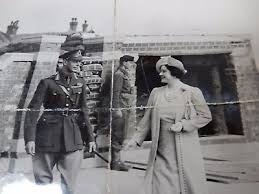
 

royal visit Hornsea

July 2nd

On 2nd July 1642, the Royalist ship Providence, commissioned by Queen Henrietta Maria, evaded Parliamentary ships by entering Keyingham Creek, which was too narrow for the larger ships, and landed a consignment of arms from Holland for the Royalist army. With help from local people, they unloaded ammunition which was taken to the king at York.

On the same day, the Royalist army secured Hull Bridge, Tickton, on the Beverley side, to prevent attacks from Hull and stop provisions reaching Hull, and evicted constable William Cuthbert and his family at midnight.

On 2nd July 1644, Sir Thomas Metham of Metham near Howden,  died at the Battle of Marston Moor fighting on the Royalist side, captain of the Yorkshire gentlemen volunteers.

On 2nd July 1830, Hull whaler Progress was wrecked in a storm when iced in near the Davis Strait; 19 whalers were wrecked or lost that season, 4 of them from Hull.

On 2nd July 1837, Hull whaler Swan was sighted off Spurn Point as a memorial service was being held in Hull for the crew. They had been away for over a year and had been trapped in ice. 25 of the 48 crew had died.

On 2nd July 1954, Harold Macmillan, Minister of Housing and Local Government, approved the amended Hull Development Plan, regenerating the city after the bomb damage of the war. Hull Georgian Society lamented the loss of buildings such as many on High Street, the whole of Nile Street and houses in Lowgate. Not all of the proposals came about – there was to have been a ‘town park’ open area from Holy Trinity to Princes Dock.


July 1st

On 1st July 1643, cannoneer John Stevenson was buried in St Mary’s Beverley, having died in the town in a ‘great scrimmage’ in the Civil War (possibly the day before).

On 1st July 1801, Hull Subscription Mill Ltd opened to provide cheap flour to the poor of Hull, 3 years or so after the opening of Hull Anti-Mill, one of the first co-operatives in the country.

On 1st July 1830, the Hull whaler Eagle had been stuck in the ice of Baffin Bay for 5 days.   With the help of 200 men from nearby ships, Captain Matthew Wright and crew, were finally able to repair the keel and heave the ship upright again.

On 1st July 1903, Amy Johnson was born in St George’s Road, Hull. She went on to become the first woman to fly solo to Australia, and to break many aviation records. (d5.1.1941)

On 1st July 1918, Hull coroner Colonel Alfred Thorney held inquests on 2 early cases in the flu epidemic: Kate Denman, aged 11, daughter of a labourer of Hodgson Street, and Elsie Barton, aged 9, daughter of a soldier, of Arthur’s Terrace Courtney Street. Both died within 24 hours of being taken ill, of influenza followed by pneumonia.

On 1st July 1940, the first-ever daylight air-raid on the British mainland attacked Saltend oil terminal.  Between 16.40 and 17.00, bombs caused a 2,500-ton tank of oil to explode, and threatened to spread to other tanks. For preventing even greater damage, the following were all awarded the George Medal: Clifford Turner, leading fireman; William Sigsworth, Manager, Anglo-American Oil Co Ltd; George Samuel Sewell, engineer, Shell-Mex & BP Ltd; Jack Owen, fireman; George Archibald Howe, Manager, Shell-Mex & BP Ltd. No loss of life.

On 1st July 1976, Withernsea Lighthouse ceased operating, after 82 years, having been superseded by modern navigational aids. It is now open to the public as a museum to Kay Kendall, to local history and the lifeboat service.Withernsea

June 30th

On 30th June 1493, William Hall of Hull claimed sanctuary in the church of St John, Beverley, for the death of Thomas Harwed, a glover, also of Hull.

On 30th June 1643, Nicholas Pearson, Parish clerk, a Puritan, reported on a ‘great scrimmage’ in the town, the day before. ‘God gave us the victory’ meaning that Parliament won. 13 Royalists were buried the same day.

On the same day in Hull, the Committee of Defence ordered that 8 men guard Captain  Hotham to prevent his escape. His father, Sir John, was kept in the Hercules in the Humber before both were taken to the Tower of London.

On 30th June 1945, Hull Aldermen Hewitt and Stark acted as driver and conductor on the last ever Hull tram, illuminated with 800 fairy lights, and watched by up to 50,000 people. Trams had operated since 1899.

On 30th June 1999, Hull’s Lord Mayor Brian Petch presided at a ceremony to note the renovation and restoration of the gates of the former RAF station in Sutton, installed at the Gillshill Road entrance to East Park.

eastparkgates1

June 29th

On 29th June 1643, Captain Hotham was arrested in Hull, but Sir John escaped and tried to cross the river to make his way to his fortified house at Scorborough. Not being able to cross at Stoneferry or Wawne, he rode to Beverley, where he found a troop of Parliamentary soldiers. He put himself at their head and ordered them to follow him.  Their commander, Matthew Boynton, countermanded the order and Hotham tried to escape through the streets, but was knocked off his horse and arrested. The Mayor, aldermen and other burgesses met to appoint a temporary Governor and committee, until Parliament could give directions.

On 29th June 1840, John Tasker was convicted of larceny at Beverley Sessions Court, and sentenced to 7 years’ transportation. At the same sessions, Joshua Needham was sentenced to 14 year’s transportation for receiving stolen goods.

On 29th June 1870, Frederick William Elwell was born in Beverley.  Painter and member of the Royal Academy, he painted portraits of King George V and TR Ferens, amongst others. His wife Mary was also an accomplished artist. (d 3.1.1958)

On 29th June 1939, the body of Thomas Smith, 27, spare hand, washed up at Paull, and was identified as one of the crew of the Lady Jeanette, which sank on 8.3.1939.

elwell

June 28th

On 28th June 1578, the Mayors and Aldermen of York and Hull  reached an amicable solution to disputes about trade with an agreement regulating all commercial rights and privileges.

On 28th June 1643, Capt Moyer, commander of the Hercules, defending Hull, informed the Hull Mayor of the Hothams’ plot to take the town, and by 3a.m. had briefed 1500 men on a plan to secure the town and arrest the Sir John Hotham and his son Captain John H.

On 28th June 1904, Hull City AFC was founded; early matches were played at the Boulevard.

On 28th June 1996, RAF Driffield at Eastburn closed as an RAF station, having opened in 1936, and being used by several bomber squadrons in WW2.

Hull_City_Crest_2014.svg

June 24th

On 24th June 1381, King Edward III issued a writ ordering rebel supporters of the Peasants’ Revolt to be arrested and punished.

On 24th June 1392, lightning struck Keyingham church and caught fire, and residents took ladders to douse the fire on the roof; a ladder holding 13 men broke, but no-one was injured, which was put down to a miracle of St Philip Ingleberd.

On 24th June 1643, Capt John Hotham,  having escaped from arrest, fled to Lincoln, planning to seize it for the King, and wrote to Parliament to say he could answer all charges against him. From Lincoln, he returned to his father in Hull.

On 24th June 1867, Charles Edward Smith, ship’s surgeon, aged 30, was presented with an illuminated testimonial, and a case of surgical instruments, in recognition of his gallant conduct on the whaler Diana of Hull, which had been trapped for months in ice and whose crew had suffered privations leading to scurvy.

On 24th June 1943, Mr T.R. Gale, of Estcourt Street, Hull, performed an act of gallantry during an air raid, for which he was later awarded the British Empire Medal. On the same night, Civil Defence volunteer Albert Henry Prissick of 15 Mersey Street, lost his wife and baby son, but carried on with the rescue of his neighbours. Hull Municipal Museum, Albion Street, was destroyed by fire.

On 24th June 1981, the Humber Bridge was opened to traffic; for 17 years it was the world’s longest single-span suspension bridge. On the same day, the Humber ferry service ended.

On 24th June 2011, marine artist Colin Verity died aged 87 in Market Weighton. Educated at Malet Lambert School, Hull and School of Architecture, Hull University. Flew Spitfires during WW2. Became principal architect, Hull City Council. Member RIBA, Royal Socy of Marine Artists, President Hornsea Art Society.  (b Darwen Lancs 7.3.1924)


Humber Bridge


June 21st

On 21st June 1366, Sir William de la Pole died. The first Mayor of Hull, knighted by Edward III, was lord of Myton. He acquired some land just outside Hull where there was a college of 6 secular priests. They were replaced by Franciscans, then Sir William pulled down the buildings and built a hospital. Then he introduced Poor Clare nuns and poor people, but did not live to complete his plans. His son Michael introduced Carthusian monks, and the Charterhouse came into being.

On 21st June 1535, Winestead priest Christopher Michell told his congregation to recognise the Pope as head of the church, in spite of instructions to honour Henry VIII as Supreme Head of the English Church. Michell was jailed in Beverley.

On 21st June 1643, John Pym reported to Parliament on the actions of Capt John Hotham, in charge of troops near Newark, who had allowed his men to harass and steal from local people, turned a gun on Cromwell, and generally acted insolently and in an undisciplined way, and was also suspected of communicating secretly with the Queen. Later, Hotham escaped from prison.

On 21st June 1908, Hull women hired a special train to London for a “Women’s Sunday” rally organised by the WSPU, attended by 300,000 to 500,000; the Hull contingent is said to be the largest from any provincial society.

On 21st June 1915, children from Mappleton School went to Rolston Camp to see the troops depart for France; they marched to Hornsea train station.

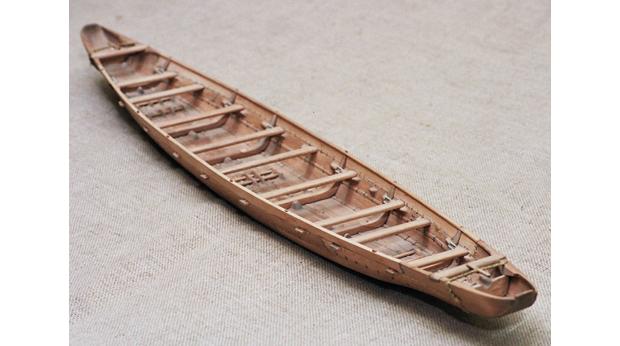
On 21st June 1918, Edward Vere Wright was born in Elloughton. Amateur archaeologist and palaeontologist, he found the first of the 4,000 year old Ferriby boats, with his brother Claude in 1937. In 1940, Ted found a 2ndboat, and with his son Roderick in 1963, a 3rdboat. (d 18.5.2010) photo shows a model of one of the boats in Hull & ER Museum.

On 21st June 1993, Hilary Catherine Brown of Tibthorpe died aged 13. (born Bolzano 12.9.1979) Hilary wrote this verse, which is written on her gravestone in Kirkburn church: The storm finished, the night diminished, the day progressed, bringing a sparkling dawn.


Ferriby boat model ERmuseum

June 18th

On 18th June 1584, James Halsey was imprisoned in Hull, (presumably for what we call today contempt of court) until he confess his fault, after he spoke with contempt to the mayor and aldermen and said that the fines imposed on him (see 24.3) were unjust.

On 18th June 1599, Hull Corporation ordered a general muster of all people aged 16 to 60, and specifying the type of arms they should be issued with. (Did this include women?)

On 18th June 1874, at his annual visit to Sunk Island village school, HM Inspector of Schools spoke highly of the master, Mr Thomas Osgerby.

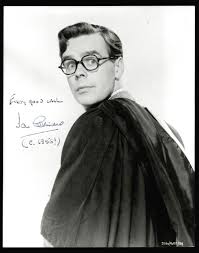
On 18th June 1920, Ian Gillett Carmichael was born in Hull. A film and TV actor, particularly in comedy. Awarded an OBE in 2003. Died 5.2.2010. photo shows a clip from the film “Lucky Jim’.

‘.Ian Carmichael

June 16th

On 16th June 1487, John de la Pole, Earl of Lincoln, died aged 22 (or 25), in the Battle of Stoke (near Newark) fighting against Henry VII, attempting to place Lambert Simnel on the English throne.

On 16th June 1793, the 42nd Regiment of Highlanders in Hull and 200 soldiers were sent to service at Fish Street Congregational Chapel.

On 16th June 1872, Sarah Stickney Ellis died aged 73.  A Quaker turned Congregationalist, she was a prolific author, and advocate of women’s education. (Born 1799 at Ridgmont, Burstwick)

On 16th June 2012, Hull-born Joe Longthorne, a singer of Romani heritage, was awarded an MBE for services to charity. (b31.5.1955)


joe longthorne