June 8th

On 8th June 1300, a year after Hull’s establishment, King Edward I gave a charter to allow the mayor and aldermen to pave the major streets, with a central gutter for ease of drainage. The work began in 1301.

On 8th June 1661, King Charles II wrote a letter to the Hull Mayor, prohibiting John Shaw from preaching in Holy Trinity, as he was too radical a Puritan. He retained his post as Master of the Charterhouse, and his sermons there continued to draw large crowds, but he resigned the following year.

On 8th June 1806, in a kitchen accident, in Hull, Mrs Lambert reported being struck on the back by a large hanging lump of sugar she had dislodged; she expected that if it had hit her on the head, she would have died.

On 8th June 1815, the Commissioner of Customs acquired the former Neptune Inn, Whitefriargate, as a Custom House. The Inn had opened in 1797, but had never made the expected profit of a first-class coaching inn. The building now houses Boots Chemists.

On 8th June 1821, the troopship Thomas of London was driven on to the Binks sands, in the Humber; the 26 troops, crew, 2 women and a child were rescued, and 1 woman drowned, despite brave attempts by the captain, Lieutenant Pritchard, to save her. The operation by Robert Richardson, master of the Spurn lifeboat, and crew, took 11 hours.

On 8th June 1829, Ira Aldridge, celebrated American actor of African heritage, performed in Hull for the first time, at the Theatre Royal, Humber Street; over a long and distinguished career he visited Hull several times, and performed at the Nag’s Head, Driffield in 1841.


Ira-Aldridge-Covent-Garden-1833-public-domain1

June 7th

On 7th June 1614, Francis Clifford, Earl of Cumberland, of Londesborough House, paid for the apprenticeship of his scullery-maid Grace. He trained in London as a barber-surgeon for 7 years, and the Earl continued to support him when he had to transfer employers, as his first employer killed a man (perhaps in the course of treatment).

On 7th June 1672, the residents of Sister-Kirks (Owthorne and Withernsea) reported hearing the sound of the naval battle of Solebay, off the coast of Suffolk. A fleet of 75 Dutch ships surprised a fleet of 93 Anglo-French ships at anchor.

On 7th June 1796, Sir Henry Etherington laid the foundation stone of Hull Anti-Mill, to provide cheaper flour. An early co-operative, it was funded by subscription by poor residents finding the price of flour beyond their reach.

On 7th June 1837, the Union steam packet was in the Humber basin, Hull, Preparing to cross the Humber, when it exploded. 3 other ferries were next to it; 23 people died. The engineer was later charged, but not convicted.

On 7th June 1915, Vere Campey Marshall made a statement to police, stating that he witnessed a 1,000 strong crowd outside the premises of Kress and Wagner, 163/5 Spring Bank, throwing stones, and a girl using a hammer to break a window. Police and military were sent to guard the premises. Anti-German feeling was strong during WW1.

June 6th

On 6th June 1597, Robert Hewitt and his 6 musicians played for the first time at Londesborough House for Sir Francis and Lady Grissell Clifford, and regularly performed there for a number of years. They played shawms (like an oboe), curtals (like a bassoon), sackbuts (an early trombone) and the virginal (an early spinet). At different times, pipers, harpers, drama companies and a jester were hired.

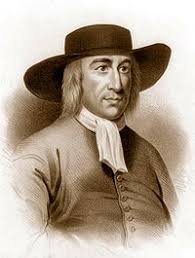
On 6th June 1651, George Fox, Quaker preacher, proclaimed his Quaker beliefs in reply to the sermon at Beverley Minster; the next day he went another church 2 miles away, then to Cranswick, staying with John Hotham (grandson of the late governor of Hull).

On 6th June 1757, the vicar of Hutton Cranswick recorded a fall of snow.

On 6th June 1812, Hull Botanic Gardens were opened; the Band of the Royal Denby Militia played at the opening ceremony (they were based at the fort, as the Napoleonic Wars were still in progress).

On 6th June 1915, Hull residents sheltered under stairs and tables when they received an hour’s warning of the first Zeppelin attack on Hull. There were 11 deaths. Hewetson’s saw mill was destroyed. (other sources says 26 dead, 60 injured)


George Fox

June 4th

On 4th June 1369, 49 men and women of Hull formed themselves into a guild in honour of the Holy Trinity, and bound themselves to help each other in poverty and sickness. This guild developed into Hull Trinity House.

On 4th June 1646, Christopher Hildyard of Routh was fined £130 as a member of the Royalist army (a delinquent) in order to recover his goods which had been sequestered by Pariament.

On 4th June 1753, the first stone of the new building for Hull Trinity House was laid; the building had been on the same site since 1461, but was enlarged and rebuilt.

On 4th June 1944, John Raddings, Humber pilot, Was censured at an enquiry for failing to properly control the SS Clearpool, resulting in her stranding on Middle Sand in the Humber, and total loss; there were no casualties, but the wreck had to be dispersed (i.e. blown up) by the Admiralty.


Trinity House

May 26th

On 26th May 1492, William Gypson, labourer, of Holme on Spalding Moor, claimed sanctuary at the church of St John, Beverley, to avoid (or delay) being pursued for debt.

On 26th May 1711, Leven carpenter Thomas Newton claimed the right to raise funds from his neighbours when his shop was destroyed by a fire which started in Matthew Borman’s blacksmith shop next door.

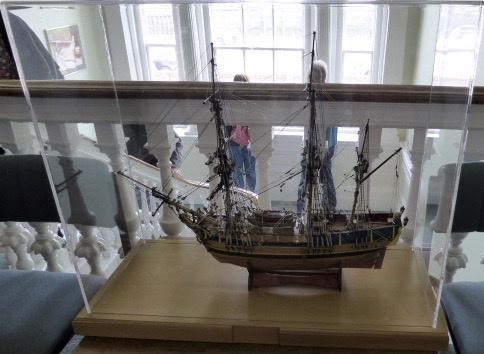
On 26th May 1787, the Royal Navy purchased the collier Bethia, built 3 years earlier at the Blaydes shipyard in High Street, Hull. Renamed the Bounty, it was refitted and equipped for a trip to Tahiti under Captain William Bligh. photo shows a model of the ship in Blaydes House.

On 26th May 1872, David Walker, aged 19,  burgled the house of Henry Robinson in Carnaby and was sentenced to 5 years penal servitude, i.e. imprisonment with hard labour.

On 26th May 1929, Lilian Bilocca was born in Hull. She campaigned for safety improvements to trawlers after the Triple Trawler Disaster. (died 1988)

On 26th May 1946, Mick Ronson was born in Hull. Musician, songwriter, arranger, producer, member of Bowie’s Spiders from Mars. (died 29.4.1993)


Bounty


May 24th

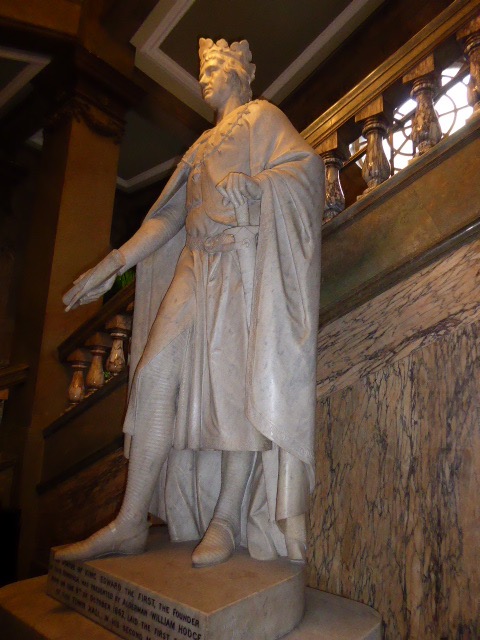
Edward I

Edward I statue, Hull Guildhall


On 24th May 1300, King Edward I landed in Hessle  from the Barton ferry, his retinue taking up 11 vessels and taking 2 days to make the crossings. Galfrid de Selby was paid 13shillings for the crossing. The King went to Hull and then on to Beverley.

On 24th May 1772, Parliament passed an Act to create the Market Weighton Canal, not just to transport goods, but also to prevent regular flooding of 20,000 acres of land.

On 24th May 1930, Amy Johnson landed in Darwin after flying 11,000 miles; the first woman to fly from the UK to Australia; she received the CBE and great public acclaim.

On 24th May 1943, the crew of Lancaster bomber W4303 crashed at Humbleton on a training flight, killing the 8 crew, aged from 21 to 30. The Australian pilot Bryde and flight engineer Nelson are buried in Brandesburton.

On 24th May 1962, Tom Knight and Saif Messin, engineers, and Bryan Webb, deck boy, 15, were trapped and died when the tug Tollman capsized in Hull’s Alexandra Dock while towing the Finnish ship Inio. The skipper and mate were saved. United Towing made changes to towing systems as a result.

May 23rd

On 23rd May 1260, William de Forz III, count of Aumale and Lord of Holderness, died, aged about 45. He gave away his claim to the earldom of Chester in return for 2 small manors, including Driffield. Acted as ambassador for Henry III to Scotland and France, and was a member of the Council of Fifteen, advising the King on government matters. Gave land to Meaux Abbey on ‘the island called Ravenser Odd in the Humber’. His heir, Thomas, was 6 and he and the count’s lands were put into the King’s care.

On 23rd May 1510, Howden tiler Robert Colstayne claimed sanctuary at the church of St John, Beverley, for ‘the security of his body’; the register gives no detail of who was pursuing him, or why.

On 23rd May 1596, Howden churchwardens gave 6d to 2 poor men (presumably travelling through on their way to their home parish).

On 23rd May 1642, Hull Governor Sir John Hotham called a meeting of ‘knights and gentlemen’ to give a ‘learned speech’ explaining why he refused to allow King Charles into the town. This was part of the ‘paper war’ between the King and Parliament.

On 23rd May 1822, Hull merchant Joseph R. Pease attended a public meeting for the Relief of the Suffering Irish, due to famine in the West. He reported it thinly attended.

On 23rd May 1853, a Government enquiry into electoral corruption was opened at the Mansion House, Hull.  This followed a petition from the Conservative Party objecting to the election of James Clay and Viscount Goderich as MPs for Hull in the previous year. Hull was unrepresented in Parliament for almost 2 years; the Commission sat for 57 days and produced a report weighing over 11 tons and costing £5,000. (and see 16.8)

On 23rd May 1904, on Whit Monday, the Holderness Polo club held a polo match which attracted 6,000 spectators. This was held at the Polo Ground, Westbourne Avenue, Hull (modern Westbourne Ave West to Perth St West)The last matches were played in 1907.

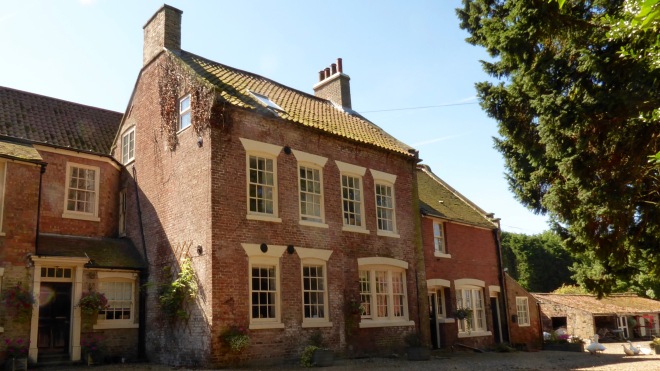
On 23rd May 1907, the Mayoress of Hull opened a new military rifle range at Rolston, for use by Militia, Volunteers and Yeomanry. The land was leased from Rolston Hall.  below – Rolston Hall.

On 23rd May 1911, a fire began in the kitchen chimney of Sledmere House, which 24 hours later had destroyed the whole house. Fire engines from Driffield and Malton attended. There were no injuries.


Rolston Hall.jpg


May 22nd

On 22nd May 1455, Ralph Babthorpe of Osgodby died fighting on the Lancastrian side in the 1st Battle of St Albans, as did Henry Percy of Leconfield. Thomas Percy and Thomas de Roos also fought on the Lancastrian side. James Pickering of Ellerton fought on the Yorkist side. (It was Richard, 3rd Duke of York, who led the Yorkists at St Albans, and was the father of Richard III.)

On 22nd May 1649, Charles Bacon of Norrth Ferriby had his estates sequestered, probably as head of a recusant family; apothecary Christopher Bacon probably of the same family, was suspected of being a Royalist agent in 1644.

On 22nd May 1778, diarist James Boswell arrived in Hull from Barton, viewed the newly opened Dock, and left for the tourist resort of Beverley, where he stayed overnight at the Tiger Inn, and met his relatives, the Bosvilles of Thorpe Hall, Rudston.

boswell

May 19th

On 19th May 1401, Isabel Fauconberg, of Skelton (nee Bigod at Settrington) died, and had 13 paupers dressed in russet attend her funeral.

On 19th May 1942, John William Collins, warden and Charles Andrews, soldier, were recommended for gallantry awards for rescuing horses from the LNER stables. Holderness Road, Hull, during an air raid. The raid targeted Alexandra and Victoria docks. 4 people were killed.


May 17th

On 17th May 1660, King Charles II’s accession to the throne was announced in Hull; from a gallows in the Marketplace the arms of the Commonwealth and effigies of Oliver Cromwell and Serjeant Bradshaw were hanged.

On 17th May 1881, after its first year of concerts, Hull Philharmonic Society recorded a loss of £15 12s8d.

On 17th May 1943, John Pulford, DFM, 23, was flight engineer on the ‘Dam Busters’ raid which destroyed the Mohne & Edersee dams, Germany. Died when his plane crashed in Sussex 12.2.1944. (b 24.12.1919 Sculcoates)

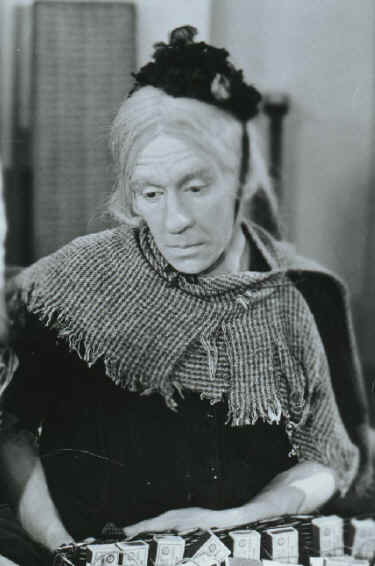
On 17th May 1954, Arthur Lucan died in his dressing room at the Tivoli Theatre, Paragon Street, Hull, during preparations for a new revue; Lucan was famous for playing Old Mother Riley in many films and shows.

Arthur_Lucan